Table of Contents >> Show >> Hide
- What Makes a Plant Great for Hanging Baskets?
- Best Flowering Plants for Sunny Hanging Baskets
- Best Plants for Shade or Morning Sun Hanging Baskets
- Best Foliage Plants for Hanging Baskets
- Best Indoor Plants for Hanging Baskets
- How to Choose the Right Basket Combination
- Care Tips That Keep Hanging Baskets Alive and Gorgeous
- Common Mistakes to Avoid
- Real-World Gardening Experiences With the Best Plants for Hanging Baskets
- Conclusion
- SEO Tags
Hanging baskets are the jewelry of a garden. A good one can make a plain porch look polished, turn a sunny patio into a mini flower show, and convince the neighbors you absolutely have your life together, even if you are watering in pajama pants. But the secret to a gorgeous basket is not luck. It is choosing plants that actually enjoy life above ground level, where soil dries faster, wind hits harder, and neglect gets noticed immediately.
If you want the best plants for hanging baskets, start by matching the plant to the light, heat, and maintenance level of the spot. Some plants bloom like they are trying to win an award. Others spill over the rim with dramatic foliage. A few do both and behave like overachievers. In this guide, you will find the best flowering and foliage plants for sunny baskets, shade baskets, and even indoor hanging planters, plus practical care tips that help your basket stay full instead of turning into a crispy cautionary tale by July.
What Makes a Plant Great for Hanging Baskets?
Not every pretty nursery plant belongs in a hanging basket. The best choices usually share a few traits: they tolerate frequent watering, perform well in containers, recover quickly from heat or stress, and either trail naturally or keep a tidy shape without becoming a tangled mess. In other words, you want plants with good manners.
For outdoor baskets, look for varieties labeled as trailing, mounding, heat tolerant, or container friendly. For indoor baskets, prioritize plants that handle limited root space, bright indirect light, and slightly irregular watering schedules. And no matter where the basket hangs, drainage matters. If the container cannot drain, your roots may stage a quiet rebellion.
Best Flowering Plants for Sunny Hanging Baskets
1. Petunias
Petunias are classic for a reason. They bloom heavily, come in nearly every color imaginable, and create that full, fluffy basket look people usually picture when they hear the phrase “summer porch flowers.” Trailing and wave types are especially good for hanging baskets because they spread fast and soften the basket edge.
They perform best in full sun and appreciate regular feeding. If you want nonstop flowers, deadheading older varieties helps, though many newer cultivars are bred to keep blooming without constant cleanup.
2. Calibrachoa
Often called million bells, calibrachoa looks like petunia’s smaller, slightly more organized cousin. It produces loads of little trumpet-shaped flowers and spills beautifully over the sides of a basket. It is one of the best hanging basket flowers for gardeners who want a dense waterfall of color.
Calibrachoa thrives in sun, prefers consistent moisture, and hates sitting in soggy soil. It is excellent for small spaces because the bloom-to-leaf ratio is outrageously good.
3. Verbena
Verbena brings clusters of flowers, bright color, and impressive heat tolerance. It works especially well in baskets that get blasted by afternoon sun. Many varieties trail nicely, and pollinators love them, which means your basket can double as a tiny flying restaurant for butterflies.
4. Lantana
If your porch feels like the surface of a skillet by midafternoon, lantana deserves a look. It handles heat well, flowers in vivid multicolored clusters, and keeps going when fussier plants begin writing farewell letters. It is a smart choice for hot climates and sunny patios where drought tolerance matters.
5. Scaevola
Scaevola, also called fan flower, is one of the most underrated plants for hanging baskets. Its fan-shaped blooms are charming, and its trailing habit gives baskets a relaxed, cascading shape. It is particularly valuable in hot, sunny positions where you want color without constant drama.
6. Ivy Geranium
Ivy geraniums offer glossy leaves and elegant flowers on trailing stems, making them ideal for hanging baskets with a slightly more formal look. They are especially pretty on porches, balconies, and entryways where you want structure as well as color.
Best Plants for Shade or Morning Sun Hanging Baskets
7. Fuchsia
Fuchsia is practically made for hanging baskets. The flowers dangle like tiny chandeliers, and the plant’s graceful habit is a perfect match for shady porches and cool, bright spaces. If you live where summers are mild, fuchsia can be spectacular. In hot regions, it usually performs best with morning sun and afternoon shade.
8. Impatiens
For easy color in shade, impatiens is hard to beat. It fills out quickly, blooms steadily, and does not require a lot of complicated care. Standard impatiens bring that soft cottage-garden look, while New Guinea impatiens offer larger flowers and bolder foliage. Both can make a dim porch look far more cheerful.
9. Begonias
Begonias are basket superstars because the group is so versatile. Tuberous begonias are known for large, lush flowers in partially shaded spots, while trailing and winged forms bring both bloom and movement. Some newer begonias even tolerate more sun than older gardeners might expect, which makes them useful in mixed-light locations.
10. Bacopa
Bacopa has tiny flowers but a huge impact. It trails neatly, softens basket edges, and pairs beautifully with bigger bloomers. White bacopa is especially popular because it brightens mixed plantings and makes every other flower color look more polished. Think of it as the basket equivalent of a crisp white shirt.
11. Lobelia
Lobelia is beloved for its vivid blue, purple, or white flowers and its delicate, airy texture. It shines in cooler weather and looks dreamy in spring baskets or in summer baskets located out of harsh afternoon sun.
12. Torenia
Torenia, often called wishbone flower, is an excellent choice for part shade. It blooms generously, handles humidity better than some traditional shade plants, and offers jewel-toned flowers that brighten low-light areas without demanding constant pampering.
Best Foliage Plants for Hanging Baskets
Flowers get the applause, but foliage plants are often what make a basket look lush even between bloom cycles. A smart hanging basket usually includes at least one good spiller with interesting leaves.
13. Sweet Potato Vine
Fast-growing and dramatic, sweet potato vine is famous for its trailing habit and bold foliage in lime green, bronze, or deep purple shades. It adds instant volume and contrast, especially in mixed baskets.
14. Dichondra ‘Silver Falls’
If you want a basket that looks like it belongs in a magazine, Dichondra ‘Silver Falls’ is a strong candidate. Its silvery stems can drape impressively, and the cool color pairs well with pink, purple, blue, and white flowers.
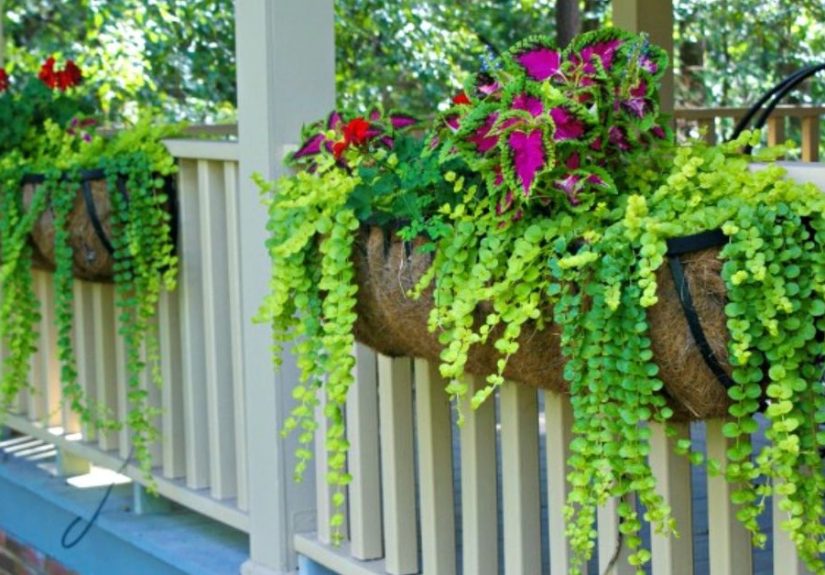
15. Creeping Jenny
Creeping Jenny brings chartreuse foliage and a loose, trailing habit that works beautifully in baskets, especially in part sun. It is cheerful, energetic, and impossible to ignore.
16. Coleus
Not all hanging baskets need flowers. Coleus proves that leaf color can be just as showy. Trailing and mounding varieties are particularly useful in shade or part shade baskets, where their patterned foliage can steal the entire performance.
Best Indoor Plants for Hanging Baskets
Indoor hanging baskets deserve better than being treated as afterthoughts. The right houseplants can turn empty vertical space into a lush feature.
17. Pothos
Pothos is one of the easiest indoor hanging plants around. It tolerates average household conditions, grows trailing vines, and forgives the occasional missed watering. For beginners, it is the botanical equivalent of a supportive friend.
18. Spider Plant
Spider plants arch beautifully and produce baby plantlets that dangle from the mother plant, creating a naturally layered hanging effect. They are easy to grow and excellent for bright, indirect light.
19. Boston Fern
Boston ferns are ideal when you want volume and softness. Their fronds create a full, fountain-like shape, especially in bright indirect light with higher humidity. They can be a little dramatic if allowed to dry out, but when happy, they are stunning.
20. String of Hearts
For a more delicate indoor look, string of hearts offers long trailing stems and charming small leaves. It suits modern spaces, shelves, and hanging planters where you want a lighter, more refined texture.
How to Choose the Right Basket Combination
A beautiful hanging basket is usually built around contrast. Mix upright plants, mounding plants, and trailing plants for the best effect. Gardeners often call this the thriller, filler, and spiller method, and yes, it sounds like a gardening action movie. But it works.
For example, a sunny basket might pair upright lantana with mounding calibrachoa and trailing dichondra. A shady basket could combine New Guinea impatiens, coleus, and bacopa. The goal is to match plants with similar light and moisture needs so one plant is not living its best life while another one is writing complaints.
Care Tips That Keep Hanging Baskets Alive and Gorgeous
Water More Often Than You Think
Hanging baskets dry out faster than in-ground beds because they have limited soil and more airflow. In peak summer, some baskets need water daily, and in extreme heat, even twice a day. Water thoroughly until excess drains from the bottom.
Use Quality Potting Mix
Always use a lightweight potting mix designed for containers, not garden soil. A good mix holds moisture while still draining well, which is exactly what basket roots need.
Feed Regularly
Heavy bloomers need fuel. A diluted liquid fertilizer every week or two, or a slow-release fertilizer mixed into the potting medium, helps flowers stay productive instead of fading early.
Deadhead and Trim
Removing spent blooms and cutting back leggy growth encourages fresh branching and better shape. If your basket starts looking stretched, a quick trim often brings it back surprisingly well.
Protect from Wind
Wind can dry baskets out faster and shred delicate blooms. If possible, hang baskets where they get the light they need without being blasted nonstop.
Common Mistakes to Avoid
The biggest mistake is choosing plants based only on looks. A shade-loving begonia in brutal full sun will not magically become adaptable because the basket is cute. Another common error is overstuffing a small basket with too many aggressive growers. It may look fabulous for two weeks and then turn into a root-bound soap opera.
Also, do not forget scale. Tiny flowers can disappear on a tall porch, while huge plants can overwhelm a small balcony. Match the basket size and plant vigor to the viewing distance and the space available.
Real-World Gardening Experiences With the Best Plants for Hanging Baskets
One of the most common experiences gardeners share about hanging baskets is that the “best” plant often depends less on beauty and more on behavior. Petunias may look amazing at the garden center, but if the basket hangs in a windy, blistering corner and nobody waters it by noon, calibrachoa or lantana may end up being the real hero. Many gardeners only discover this after one dramatic summer in which the basket goes from bridal shower pretty to toasted salad bowl in about five days.
Another common lesson is that shade baskets are often easier to maintain than full-sun baskets. Impatiens, begonias, coleus, and bacopa tend to stay fresher longer because they are not constantly baking overhead. Gardeners with covered porches often report that their shadier baskets hold color better and need less emergency watering. Meanwhile, sunny baskets can be absolutely spectacular, but they demand commitment. You do not casually own a full-sun hanging basket in July. You enter into a relationship with it.
People also learn quickly that foliage matters more than they expected. A basket filled only with flowers can look sparse between bloom flushes, while one anchored by sweet potato vine, dichondra, or coleus still looks intentional even when flowering slows down. That is why experienced gardeners often say the smartest baskets are not necessarily the loudest ones. They are the ones that still look good on an ordinary Tuesday afternoon.
There is also the surprise factor of mixed combinations. A gardener may plan for one plant to be the star, only to find that the spiller steals the whole show. Silver Falls dichondra is famous for this. It starts off politely, then suddenly becomes the plant everyone comments on. The same goes for bacopa, which often turns out to be the detail that makes a basket look full, soft, and professionally arranged.
Indoor gardeners have their own version of this story. They often begin with one pothos basket and soon realize hanging plants solve two problems at once: they decorate unused vertical space and stay away from pets, toddlers, or cluttered surfaces. Spider plants and pothos are popular not just because they are attractive, but because they are forgiving. And forgiveness, in plant terms, is a very underrated design feature.
Perhaps the biggest experience gardeners repeat is this: successful hanging baskets are rarely the result of buying the fanciest plant. They come from matching the plant to the place, paying attention to water, and accepting that a little pruning, feeding, and trial and error are part of the process. Once that clicks, hanging baskets stop feeling difficult and start feeling fun. And that is when the magic happens.
Conclusion
The best plants for hanging baskets are the ones that fit your space, your light, and your willingness to water before coffee. For sunny spots, petunias, calibrachoa, verbena, lantana, and scaevola are hard to beat. For shade, fuchsia, impatiens, begonias, bacopa, and coleus are reliable standouts. For indoor baskets, pothos, spider plants, Boston ferns, and string of hearts bring easy style without asking for a standing ovation every day.
Start with the right plant in the right place, add good drainage and regular care, and your basket can go from “nice enough” to “who planted that?” in a single season. Which is really the dream, apart from remembering to water it before the leaves send a passive-aggressive message.