Table of Contents >> Show >> Hide
- What Counts as the “Best” Weight Loss Medication?
- Who Should Consider Weight Loss Medications?
- Quick Comparison of the Best Weight Loss Medication Options
- The Top Options, Explained
- Where to Buy Weight Loss Medications Safely
- How to Choose the Right Medication for Your Goals
- Common Experiences People Report With Weight Loss Medications
- Final Thoughts
If you have ever searched for the best weight loss medications online, you already know the internet has two moods: “Here is a miracle shot” and “Here is a suspicious powder from a website that looks like it was built during the dial-up era.” Reality, thankfully, is more useful than either extreme.
Today’s weight loss medications can be genuinely effective, but the best option depends on your health history, your budget, your insurance coverage, how you feel about injections versus pills, and whether you want appetite control, fewer cravings, or a more aggressive obesity treatment plan. In other words, “best” is personal. It is not just about the medication that headlines the most TikToks.
In the United States, FDA-approved weight loss medications are meant to be used alongside a reduced-calorie eating plan, more physical activity, and long-term behavior changes. They are not magic. They are not cheating. And they are definitely not all interchangeable. Some are weekly injections, some are daily pills, some are gentler but less powerful, and some can be easier to afford or buy safely than others.
This guide breaks down the top weight loss medication options, who they may fit best, what to watch out for, and where to buy them safely in the U.S. It is informational, not personal medical advice, but it will help you walk into a doctor’s appointment sounding less overwhelmed and more like someone who has done their homework.
What Counts as the “Best” Weight Loss Medication?
The best medication is usually the one that matches four things at the same time: effectiveness, safety, affordability, and real-life fit. A medication can be clinically impressive and still be the wrong choice if you hate injections, cannot tolerate nausea, or your insurance treats obesity treatment like a luxury item instead of actual healthcare.
In broad terms, the newest GLP-1 and GIP/GLP-1 medications tend to produce more weight loss than older options. But older medications still matter. Some people do better on pills than shots. Some want something lower cost. Some mainly struggle with cravings rather than portion size. Others need a short-term jump-start rather than a long-term injectable plan.
That is why smart comparison beats hype. Your best option may not be your friend’s best option, your coworker’s best option, or your favorite influencer’s “I lost 40 pounds and also suddenly enjoy kale” option.
Who Should Consider Weight Loss Medications?
Prescription weight loss medications are generally considered for adults with obesity, or for adults with overweight plus at least one weight-related health condition such as high blood pressure, high cholesterol, type 2 diabetes, sleep apnea, or cardiovascular disease. They are usually recommended when diet and exercise alone have not produced enough progress or have not helped maintain weight loss.
That does not mean everyone who wants to lose ten pounds needs a prescription. These medications are designed for chronic weight management, not for chasing a beach-weekend emergency. They make the most sense when excess weight is affecting health, quality of life, or both.
It is also important to remember that pregnancy, certain medication interactions, some psychiatric histories, certain endocrine issues, and some gastrointestinal or thyroid-related concerns can change what is appropriate. A good clinician will screen for all of that before writing a prescription.
Quick Comparison of the Best Weight Loss Medication Options
| Medication | Type | How It’s Used | Best For | Main Tradeoffs | Where to Buy |
|---|---|---|---|---|---|
| Zepbound (tirzepatide) | Prescription injection | Usually once weekly | People seeking strong weight-loss results, especially with obesity-related conditions | GI side effects, cost, insurance hurdles | Licensed retail pharmacies, mail-order pharmacies, LillyDirect, approved telehealth-to-pharmacy channels |
| Wegovy (semaglutide) | Prescription medication | Brand access varies by formulation and fill channel | People seeking strong long-term weight management; also notable for certain cardiovascular-risk patients | GI side effects, cost, prior authorization | Licensed retail pharmacies, mail-order pharmacies, NovoCare/Novo-supported pharmacy channels |
| Saxenda (liraglutide) | Prescription injection | Daily | People who want a GLP-1 option but are not using newer agents | Daily injections, GI side effects | Retail and mail-order pharmacies |
| Qsymia (phentermine/topiramate) | Prescription pill | Daily | People who prefer a pill and want more punch than basic appetite suppressants | Can affect heart rate, mood, sleep, pregnancy safety concerns | Retail and mail-order pharmacies |
| Contrave (naltrexone/bupropion) | Prescription pill | Daily | People whose eating is tied to cravings, reward eating, or snacking patterns | Nausea, headache, blood pressure and mental health considerations | Retail pharmacies and official savings/mail programs |
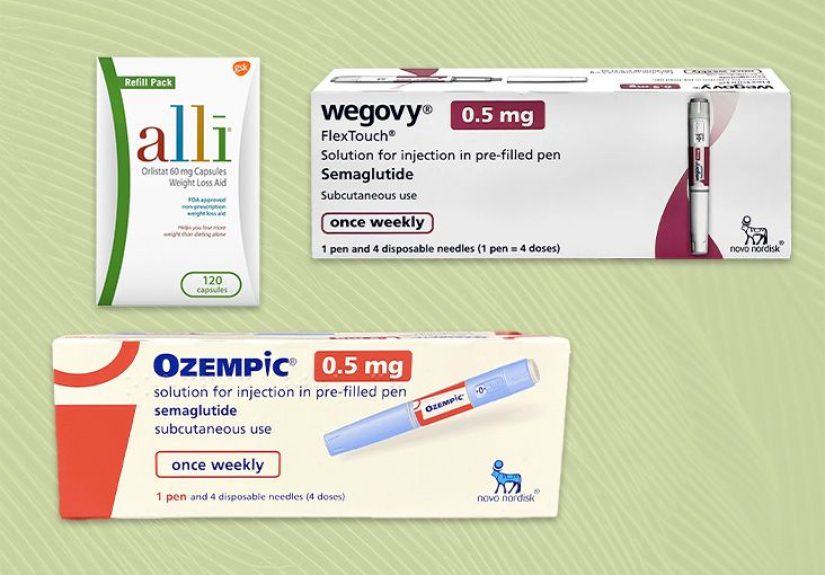
| Xenical / Alli (orlistat) | Prescription or OTC pill | With meals that contain fat | People who want a non-GLP-1 option; Alli is the only FDA-approved OTC weight-loss medication | GI side effects can be dramatic if your lunch gets reckless | Pharmacies, big-box stores, major online retailers, licensed online pharmacies |
| Phentermine | Prescription pill | Short-term use | People needing a lower-cost, short-term appetite suppressant | Not for long-term FDA-approved use, stimulant-like side effects | Retail and mail-order pharmacies |
The Top Options, Explained
1. Zepbound (tirzepatide)
Zepbound is one of the strongest prescription options currently available for chronic weight management. It works on GIP and GLP-1 pathways, which help regulate appetite, fullness, and food intake. In plain English, it helps many people feel satisfied sooner, eat less without white-knuckling every meal, and think about food a little less often.
This is often the medication people mean when they say they want “the best” weight loss drug right now. It is especially compelling for adults with obesity-related health problems and for people who have not had success with older medications. It has also gained attention beyond weight loss because it is approved for adults with obesity and moderate-to-severe obstructive sleep apnea.
The downsides are familiar: nausea, constipation, diarrhea, vomiting, dose titration, and cost. It is also not something you should buy from sketchy peptide sites or social-media resellers. The safe route is a licensed U.S. pharmacy, whether local, mail-order, or through official channels such as LillyDirect when appropriate.
2. Wegovy (semaglutide)
Wegovy remains a heavyweight in the weight-loss category. It is a semaglutide-based obesity medication that helps reduce appetite and slow stomach emptying, which can support steady calorie reduction over time. For many people, it is still one of the best evidence-based choices for long-term weight management.
What keeps Wegovy near the top is not just weight loss. It also has a specific FDA approval related to reducing the risk of major cardiovascular events in certain adults with obesity or overweight and established cardiovascular disease. That makes it especially interesting for patients who are not just managing size, but risk.
Like Zepbound, Wegovy can be expensive without coverage, and access may depend on insurance rules, prior authorization, and pharmacy availability. The safest places to buy it are licensed retail or mail-order pharmacies and official Novo-supported access channels. If a website promises semaglutide with no prescription, no clinician review, and overnight miracle vibes, close the tab and keep your credit card in its wallet.
3. Saxenda (liraglutide)
Saxenda is an older GLP-1 option, but older does not mean irrelevant. It can still be a reasonable choice for some people, especially if a clinician thinks it fits your health history or medication coverage better than newer agents.
Its biggest drawback is convenience: it is taken daily rather than weekly. That alone is enough to push some people toward other options. Still, for patients who tolerate it well and can access it affordably, Saxenda remains a legitimate long-term prescription weight-loss medication.
4. Qsymia (phentermine/topiramate)
If you want something effective in pill form, Qsymia deserves a serious look. It combines phentermine, an appetite suppressant, with topiramate, which can help reduce appetite and support weight control. For people who prefer not to inject themselves, this is one of the more powerful oral options.
Qsymia can be a strong fit for adults who want more than a mild appetite suppressant but are not ready for GLP-1 therapy. The tradeoff is that it is not a casual medication. It comes with important safety considerations, including pregnancy-related risks and potential issues involving mood, heart rate, sleep, or tingling sensations. This is a “talk through your history carefully” medication, not a random add-to-cart item.
5. Contrave (naltrexone/bupropion)
Contrave works differently from GLP-1 drugs. Instead of mainly slowing gastric emptying and amplifying fullness, it targets appetite and cravings through brain pathways involved in reward and hunger. That makes it especially interesting for people who say things like, “I’m not always hungry, but once I start snacking, the train leaves the station.”
For emotional eating, reward eating, or frequent “treat yourself” loops, Contrave can be more behaviorally aligned than some other medications. It may not produce the same headline-grabbing weight-loss numbers as the newest injectables, but it can be quite useful in the right patient. It is also available through pharmacies and official support or savings channels, which may make access simpler for some buyers.
6. Xenical and Alli (orlistat)
Orlistat is the classic fat-absorption blocker. Xenical is the prescription version; Alli is the lower-dose over-the-counter version. If you want a non-GLP-1 option and prefer not to take an appetite suppressant, orlistat is still on the board.
Its big selling point is accessibility. Alli is the only FDA-approved over-the-counter weight-loss medication, which makes it the easiest legal option to buy without a prescription. You can often find it at pharmacies, large retailers, and licensed online sellers.
Its big warning label, in real life, is your digestive system. If you eat a very high-fat meal while taking orlistat, your gastrointestinal tract may file a formal complaint. Oily stools, gas, urgency, and loose bowel movements are the reason this drug has both loyal fans and dramatic critics. Still, for the right person on a lower-fat eating plan, it can be practical and affordable.
7. Phentermine
Phentermine is a short-term prescription appetite suppressant that has been around for a long time. It is often cheaper than newer brand-name drugs, and that matters. A lot. In a perfect world, medical decisions would be purely clinical. In the real world, people also have rent.
This medication can help with short-term weight loss, but it is not generally the best long-term choice because its FDA approval is for limited-duration use. It may also cause insomnia, increased heart rate, dry mouth, and other stimulant-like effects. For some people, it is a useful starting point. For others, it is a bad match on day one.
Where to Buy Weight Loss Medications Safely
There are four legitimate buying routes in the U.S. First, local brick-and-mortar pharmacies, including national chains and independent pharmacies. Second, mail-order pharmacies connected to your insurance or pharmacy benefit manager. Third, official brand-supported direct pharmacy channels, such as LillyDirect for certain Zepbound fills or Novo-supported pharmacy access for Wegovy. Fourth, reputable telehealth platforms that use licensed clinicians and send prescriptions to state-licensed pharmacies.
The key word in all of those routes is licensed. Buy only from sellers that require a real prescription when the drug is prescription-only, list a real U.S. pharmacy, and allow verification of licensure. FDA safety guidance and NABP tools are there for a reason.
Here is what to avoid: websites selling semaglutide or tirzepatide as “research” products, pharmacies that do not ask for a prescription, social media sellers, and any store that sounds more like a secret club than a healthcare provider. FDA has repeatedly warned consumers about counterfeit, fraudulent, and improperly promoted compounded GLP-1 products. That is not a small technicality. It is a safety issue.
If you are shopping online, verify the pharmacy before buying. A legitimate online pharmacy should be state-licensed, transparent about contact information, and connected to normal prescribing processes. Surprise mystery medication is fun only in bad movies.
How to Choose the Right Medication for Your Goals
If your main priority is the strongest overall weight-loss effect, Zepbound and Wegovy usually lead the conversation. If your main priority is avoiding injections, Qsymia or Contrave may be more realistic. If your main priority is over-the-counter access, Alli is the obvious option. If your main priority is lower upfront cost, short-term phentermine may come up, though it is not the same kind of long-term solution.
You should also think about the pattern behind your eating. Are you hungry all the time? Do you feel full very slowly? Do cravings hit at night? Is stress-eating your real problem? Different medications may fit different patterns better.
And then there is the budget question, which refuses to be ignored. Some insurance plans cover obesity medications, some do not, and some cover them only after you jump through paperwork hoops that deserve Olympic judging. Before committing to any medication, ask about coverage, prior authorization, manufacturer savings, and the exact pharmacy route that gives you the best out-of-pocket price.
Common Experiences People Report With Weight Loss Medications
One of the most helpful things to understand before starting a weight loss medication is that the experience is usually less dramatic than the headlines and more complicated than the ads. For many people, the first week is not “I forgot food exists.” It is more like, “I got full faster, I am thinking about snacks less, and wow, my stomach has opinions.”
With GLP-1 or GIP/GLP-1 medications, people often describe an early shift in appetite rather than an instant transformation. Portions start shrinking naturally. The urge to keep picking at food may quiet down. Some say the constant background chatter about what to eat next gets noticeably softer. That mental change can feel almost as important as the number on the scale.
At the same time, early side effects are common. Nausea is the celebrity side effect because it gets all the press, but constipation, diarrhea, reflux, and a general “my stomach is negotiating with me” feeling are also common. Many people learn quickly that greasy meals, giant portions, and speed-eating are no longer clever ideas. The medication often teaches that lesson with the subtlety of a marching band.
People taking oral medications report a different kind of adjustment. With Contrave, some notice that cravings lose some of their sparkle. With phentermine, some feel energized and focused, while others feel too wired. With orlistat, the big experience is learning that your digestive tract becomes a brutally honest food reviewer. Eat in a way that matches the medication, and things may go smoothly. Ignore the instructions, and your afternoon may become unforgettable.
Emotionally, there can be mixed feelings even when the medication is working. Some people feel relieved because weight loss finally seems possible without constant hunger. Others feel frustrated that access is expensive, refills are stressful, or side effects make progress slower than expected. A very common real-world experience is discovering that weight loss medication is not a replacement for habits, but it can make healthy habits feel more achievable.
Another shared experience is the plateau. Many people lose steadily for a while and then hit a stretch where progress slows. That does not always mean the medication failed. It may mean dose adjustments, protein intake, strength training, sleep, and long-term expectations need attention. People do best when they treat the medication as one tool in a broader plan, not as the entire plan wearing a cape.
There is also the question nobody loves but everybody should ask: what happens if you stop? Many patients and clinicians report that appetite can return and weight regain can happen, especially if the habits supporting the medication are not solid. That is why conversations about long-term maintenance matter. The goal is not just losing weight. The goal is living in a way that helps you keep the progress you fought for.
In real life, successful use of weight loss medication often looks less glamorous and more practical than people expect. It looks like smaller dinners, more water, more protein, fewer impulsive drive-thru detours, some trial and error, and regular follow-up with a clinician. Not flashy, but very real. And real is what tends to work.
Final Thoughts
The best weight loss medications today are not defined by hype alone. Zepbound and Wegovy are leading options for many adults who want the strongest evidence-based results. Qsymia and Contrave remain valuable pill-based choices, especially for people who want oral treatment or need a different mechanism. Saxenda still has a role, and Alli remains the easiest legal over-the-counter entry point.
Where you buy these medications matters almost as much as which one you choose. Stick to licensed pharmacies, legitimate prescribers, official savings or direct-pharmacy programs when available, and verified online sellers. Avoid counterfeit, compounded, or “no prescription needed” traps that trade safety for convenience.
If there is one bottom-line takeaway, it is this: the best weight loss medication is the one you can use safely, afford realistically, tolerate consistently, and pair with a plan you can actually live with. Fancy marketing is nice. Sustainable results are nicer.