Table of Contents >> Show >> Hide
- Why This Blueberry and Peach Slab Pie Works
- Best Fruit for a Blueberry and Peach Slab Pie
- Blueberry and Peach Slab Pie Recipe
- How to Get a Thick, Sliceable Filling
- Homemade Crust vs. Store-Bought Crust
- Pro Tips for the Best Blueberry Peach Pie
- Serving Ideas
- How to Store Blueberry and Peach Slab Pie
- Common Mistakes to Avoid
- Frequently Asked Questions
- Conclusion
- Extra Experience Notes: What Baking This Pie Feels Like in Real Life
Some desserts are elegant. Some are practical. And some, like a blueberry and peach slab pie, boldly decide to be both while feeding a small army without asking for applause. This is the kind of summer dessert that shows up at a picnic, steals the spotlight from the burgers, and leaves everyone asking for “just one more tiny square” before taking a square the size of Nebraska.
If you love the sweet perfume of ripe peaches and the bright pop of juicy blueberries, this blueberry and peach slab pie recipe deserves a permanent place in your baking rotation. It has the buttery charm of a classic fruit pie, but it is baked in a rimmed sheet pan, which means easier slicing, easier serving, and a much better crust-to-filling ratio for people who believe flaky pastry is not a side character. Those people are right.
This recipe is built for real life: fresh summer fruit, a crisp golden crust, a filling that actually sets, and simple steps that do not require the stress level of a TV baking competition. Below, you will find the full recipe, expert pie-baking tips, common mistakes to avoid, serving ideas, and extra experience notes to help you turn a humble sheet pan into the most popular dessert on the table.
Why This Blueberry and Peach Slab Pie Works
A slab pie recipe is essentially a large-format fruit pie baked in a jelly-roll pan or sheet pan instead of a round pie dish. That shape gives you thinner layers, more edge pieces, easier transport, and slices that are ready for potlucks, barbecues, birthdays, and every summer gathering where dessert disappears suspiciously fast.
Blueberries and peaches make a smart team. Peaches bring mellow sweetness, soft texture, and that unmistakable summer flavor. Blueberries add color, brightness, and a little tang. Together, they create a filling that tastes deep and fruity instead of one-note sweet. Lemon juice sharpens the flavor, cornstarch helps thicken the juices, and a touch of vanilla rounds everything out so the pie tastes bakery-worthy without becoming fussy.
Best Fruit for a Blueberry and Peach Slab Pie
Peaches
Use ripe but still slightly firm peaches. If they are too hard, the flavor will be timid. If they are overly soft, the filling can become mushy and release too much liquid. Freestone peaches are easiest because the pits come out without a wrestling match. Peeling is recommended for the smoothest filling, though leaving the skins on is not a baking felony.
Blueberries
Fresh blueberries are ideal when they are in season, but frozen blueberries can work in a pinch. If using frozen berries, do not thaw them first unless you enjoy surprise puddles. Add a little extra cornstarch if your fruit seems especially juicy.
Blueberry and Peach Slab Pie Recipe
Yield
12 to 16 servings
Pan Size
One 10×15-inch jelly-roll pan or rimmed baking sheet with a 1-inch edge
Ingredients
- 2 homemade pie crusts or 1 double-crust slab pie dough recipe
- 5 cups peeled peaches, sliced about 1/2 inch thick
- 3 cups fresh blueberries
- 3/4 cup granulated sugar
- 1/3 cup cornstarch
- 1 tablespoon all-purpose flour, for dusting the pan and dough
- 2 tablespoons fresh lemon juice
- 1 teaspoon lemon zest
- 1 teaspoon vanilla extract
- 1/4 teaspoon ground cinnamon
- 1/4 teaspoon kosher salt
- 1 tablespoon unsalted butter, cut into small pieces
- 1 egg
- 1 tablespoon water
- 1 to 2 tablespoons coarse sugar or turbinado sugar, optional but highly encouraged
Optional for Serving
- Vanilla ice cream
- Fresh whipped cream
- A few extra blueberries and peach slices for garnish
Instructions
- Prep the oven and pan. Preheat your oven to 400°F. Lightly butter or line a 10×15-inch jelly-roll pan with parchment, leaving a little overhang if you want easier lifting later.
- Roll the bottom crust. On a lightly floured surface, roll one portion of dough into a rectangle large enough to fit the pan with a bit of overhang. Transfer it to the pan, press it gently into the corners, and chill it in the refrigerator while you prepare the filling.
- Make the fruit filling. In a large bowl, combine the peaches, blueberries, sugar, cornstarch, lemon juice, lemon zest, vanilla, cinnamon, and salt. Toss gently until the fruit is evenly coated. Let the mixture sit for 10 minutes so the sugar begins pulling out some juice and the flavors wake up.
- Fill the pie. Spoon the fruit mixture evenly into the chilled crust, spreading it gently into the corners. Dot the top with the small pieces of butter.
- Add the top crust. Roll the second dough portion into a rectangle. You can place it whole over the filling and cut vents, or slice it into strips for a lattice top if you want the pie to look like it has its life together. Seal the edges by pressing the top and bottom crusts together, then crimp.
- Brush and sprinkle. Beat the egg with 1 tablespoon water. Brush the top crust lightly with egg wash, then sprinkle with coarse sugar.
- Bake. Bake for 20 minutes at 400°F, then reduce the oven to 375°F and bake for another 25 to 35 minutes, or until the crust is deeply golden and the filling is bubbling noticeably through the vents or lattice openings.
- Tent if needed. If the crust starts browning too quickly, loosely cover the top with foil during the final 10 to 15 minutes.
- Cool completely. This part requires character. Let the pie cool for at least 3 to 4 hours before slicing so the filling can set. Cutting early is how good intentions become fruit soup.
How to Get a Thick, Sliceable Filling
The biggest difference between a glorious summer fruit slab pie and a hot fruity landslide is moisture control. Peaches and blueberries are both juicy, which is wonderful for flavor but dangerous for structure. Cornstarch is the key thickener here because it creates a cleaner, glossier filling than flour and lets the fruit flavor stay bright.
A few tricks help even more. First, use fruit that is ripe but not collapsing. Second, do not skip the lemon juice; acidity balances sweetness and keeps the pie from tasting flat. Third, bake until the filling is actually bubbling. That bubbling is not cosmetic. It tells you the starch has activated. Finally, let the pie cool completely. Yes, completely. Warm pie is delicious, but if you want neat slices, patience is the secret ingredient nobody wants to hear about.
Homemade Crust vs. Store-Bought Crust
Homemade crust gives you the flakiest texture and best buttery flavor, especially in a slab pie where crust matters a lot. But store-bought refrigerated pie dough is absolutely acceptable if your goal is to get dessert on the table before the peaches become a science project on the counter.
If using homemade dough, chill it before rolling and again after fitting it into the pan. Cold dough equals better layers, less shrinkage, and more dramatic pie confidence. If using store-bought crust, let it soften just enough to roll without cracking, but do not let it become floppy and warm.
Pro Tips for the Best Blueberry Peach Pie
- Choose ripe-firm peaches: Soft enough to smell amazing, firm enough to slice cleanly.
- Peel for a silkier filling: Optional, but worth it for texture.
- Use a metal pan if possible: It helps the bottom crust bake more evenly.
- Do not underbake: A pale crust and timid bubbling usually mean a runny filling later.
- Try a lattice top: It lets steam escape and makes the pie look extra inviting.
- Chill the assembled pie for 10 minutes before baking: Especially useful on a hot day when butter starts plotting against you.
Serving Ideas
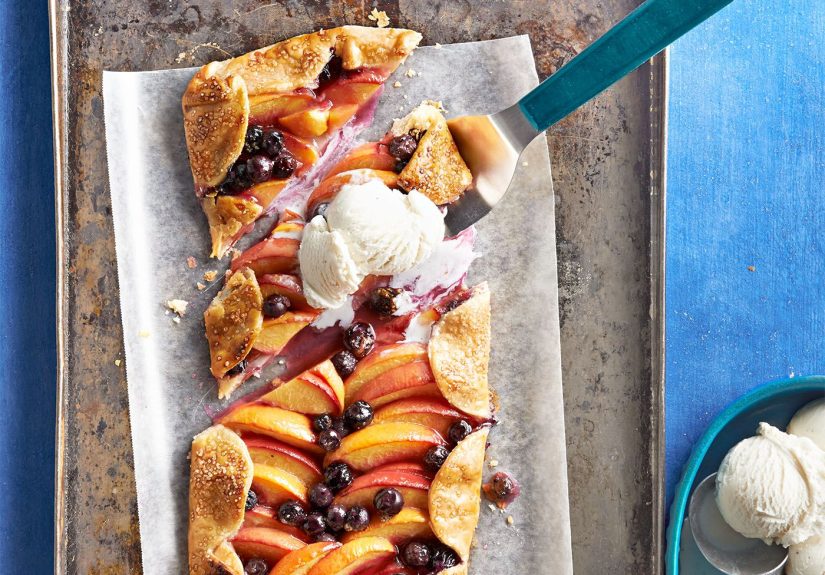
This blueberry and peach dessert is excellent on its own, but it becomes downright dangerous with a scoop of vanilla ice cream melting into the flaky corners. Whipped cream works too, especially if you lightly sweeten it with vanilla. For brunch-style serving, you can even cut smaller squares and plate them with coffee while pretending pie for breakfast is a bold culinary statement instead of a very good decision.
Because slab pie is easy to portion, it is ideal for cookouts, baby showers, church suppers, family reunions, and every event where someone says, “We only need a little dessert,” and then four people circle back for seconds.
How to Store Blueberry and Peach Slab Pie
Once cooled, cover the pie loosely and store it at room temperature for up to 24 hours. For longer storage, refrigerate it for up to 4 days. The crust will soften somewhat in the fridge, but the flavor stays terrific. To refresh slices, warm them briefly in a low oven. You can also freeze fully baked slices, wrapped well, for up to 2 months.
Common Mistakes to Avoid
1. Using overripe fruit
Very soft peaches can make the filling watery and jammy in the wrong way.
2. Skipping the cooling time
You might get delicious flavor, but you will not get clean slices.
3. Adding too much sugar
Peaches and blueberries are naturally sweet. Too much sugar can overwhelm the fruit and create excess liquid.
4. Rolling warm dough
Warm dough is sticky, hard to handle, and less flaky after baking.
5. Forgetting the bubbling test
If the filling is not bubbling in the center, it probably is not ready.
Frequently Asked Questions
Can I use frozen fruit?
Yes. Frozen blueberries work well. Frozen peaches can also work, but drain excess liquid if needed and add an extra tablespoon of cornstarch if the mixture looks loose.
Do I have to peel the peaches?
No, but peeled peaches give the filling a more tender texture and a cleaner bite.
What is the difference between a slab pie and a regular pie?
A slab pie is baked in a rectangular pan instead of a round pie dish. It feeds more people, slices more easily, and has a higher crust-to-filling ratio.
Can I make it ahead?
Absolutely. Bake it a day ahead, cool it completely, and store it covered. It slices beautifully the next day.
Conclusion
If you are looking for a dessert that feels classic, crowd-friendly, and just a little bit showy without being complicated, this blueberry and peach slab pie recipe checks every box. It delivers juicy fruit flavor, a golden flaky crust, and enough servings to make you look wildly prepared. It also gives you one of the best flavor pairings of summer in a format that is practical, portable, and wonderfully easy to share.
Make it for a backyard cookout, a family birthday, or the kind of weekend when the farmers market gets the better of you and you come home with too many peaches. That is not a problem. That is pie destiny.
Extra Experience Notes: What Baking This Pie Feels Like in Real Life
The first time I made a blueberry and peach slab pie, I had one goal: bring a dessert to a summer gathering that looked impressive without requiring a nervous breakdown. A round pie is lovely, but it can also feel like a high-stakes geometry exam. A slab pie, on the other hand, feels friendlier. It is rustic in the best way. You roll the dough into rectangles, fit it into a pan, pile in the fruit, and suddenly it looks like you know exactly what you are doing.
What surprised me most was how good the kitchen smelled while it baked. Peach desserts usually fill the room with that warm, floral sweetness that feels like July in edible form, but the blueberries add something deeper and brighter at the same time. It smells like summer got organized and decided to become dessert. When the pie comes out of the oven, the crust is deeply golden, the sugar on top sparkles, and the purple-blue juices bubble up around the peaches like they are announcing their arrival.
There is also something deeply satisfying about the slab pie format itself. It is less precious than a standard pie, which somehow makes it more fun. You are not worried about getting a perfect crimp or creating a bakery-window masterpiece. You are making a generous dessert meant to be sliced into squares and handed to people who will immediately smile before they even take a bite. That kind of dessert has good energy.
I also learned that this pie rewards patience in a very annoying but very real way. The cooling time matters. The pie looks ready. It smells ready. Your fork feels ready. But if you wait, the filling settles into that perfect texture where each square holds together instead of sliding across the plate. It is one of those moments where baking teaches the same lesson over and over: the hardest step is often doing absolutely nothing.
Another great thing about this recipe is how adaptable it feels once you make it a couple of times. You start noticing your own preferences. Maybe you like a little more lemon for brightness. Maybe you want a lattice top because it looks cheerful and lets more steam escape. Maybe you scatter a bit of coarse sugar over the crust because that sweet crunch makes the whole thing feel bakery-level. Once the basic method clicks, the pie becomes yours.
And then there is the serving moment, which is honestly where this pie shines. Unlike some desserts that require careful plating and a steady hand, slab pie is relaxed. You cut it into squares, slide a spatula underneath, and serve. It works at casual cookouts, holiday tables, neighborhood potlucks, and family dinners where people are already hovering near the kitchen. The corners are extra crisp, the center pieces are juicy, and every single person suddenly has a strong opinion about whether pie should be served with ice cream, whipped cream, or absolutely both.
So yes, this pie is delicious. But more than that, it is useful. It is the kind of dessert that turns seasonal fruit into something memorable, feeds more people with less stress, and makes homemade pie feel approachable instead of intimidating. In other words, it is exactly the kind of recipe worth keeping.