Table of Contents >> Show >> Hide
- Why This Copycat Cinnabon Cinnamon Rolls Recipe Works
- Ingredients for Copycat Cinnabon Cinnamon Rolls
- How to Make Copycat Cinnabon Cinnamon Rolls
- Tips for Soft, Gooey, Bakery-Style Cinnamon Rolls
- Common Mistakes to Avoid
- Make-Ahead, Storage, and Reheating
- Frequently Asked Questions
- The Experience of Making Copycat Cinnabon Cinnamon Rolls
- Final Thoughts
There are cinnamon rolls, and then there are mall-memory cinnamon rollsthe kind that perfume the air from three stores away, make your self-control file for unemployment, and arrive at the table wearing a glossy cream cheese frosting like a crown. This copycat Cinnabon cinnamon rolls recipe is for anyone who has ever wanted that same oversized, ultra-soft, gooey, cinnamon-swirled magic at home, without putting on real pants and driving to the mall.
What makes this version special is not some mysterious bakery sorcery. It is a smart combination of an enriched dough, a generous brown sugar-cinnamon filling, a patient rise, and a frosting situation that can only be described as gloriously excessive. The result is a pan of homemade cinnamon rolls with plush centers, tender edges, buttery spirals, and that rich cream cheese topping people “accidentally” lick off the knife.
If you have been searching for the best copycat Cinnabon recipe, this one is built to deliver bakery-style results while still being practical for a home kitchen. It is indulgent, yes. It is dramatic, absolutely. It is also surprisingly doable, even if your last yeast adventure left you emotionally unavailable for bread.
Why This Copycat Cinnabon Cinnamon Rolls Recipe Works
The goal here is not just to make a decent cinnamon roll. The goal is to make the kind of cinnamon roll that feels almost suspiciously soft and luxurious. To get there, the dough uses warm milk, eggs, butter, sugar, and enough flour to create structure without turning the rolls heavy. That combination creates a rich, tender crumb and helps the rolls stay soft instead of going from cloud-like to hockey puck by noon.
The filling matters just as much. A classic mix of softened butter, brown sugar, cinnamon, and a small pinch of salt creates that sticky, fragrant ribbon through every layer. Brown sugar adds moisture and depth, while a bold hand with the cinnamon gives the recipe the warm, nostalgic flavor people expect from a bakery-style cinnamon bun.
Then there is the frosting. A true copycat Cinnabon cinnamon rolls recipe needs cream cheese frosting, not a shy little drizzle that disappears the moment it touches a warm roll. This version spreads thickly over the top so it melts into the swirls, sinks into the edges, and creates that signature gooey finish. You are not here for restraint. You are here for cinnamon roll glory.
Ingredients for Copycat Cinnabon Cinnamon Rolls
For the Dough
- 1 cup whole milk, warmed to about 105–110°F
- 2 1/4 teaspoons active dry yeast
- 1/3 cup granulated sugar
- 2 large eggs, room temperature
- 1/3 cup unsalted butter, melted and slightly cooled
- 1 teaspoon kosher salt
- 4 1/2 to 5 cups bread flour
For the Filling
- 1/2 cup unsalted butter, very soft
- 1 cup packed light brown sugar
- 2 1/2 tablespoons ground cinnamon
- 1/4 teaspoon kosher salt
Optional Gooey Upgrade
- 1/3 cup heavy cream, poured over the risen rolls before baking
For the Cream Cheese Frosting
- 4 ounces full-fat cream cheese, softened
- 1/4 cup unsalted butter, softened
- 1 1/2 cups powdered sugar
- 1 teaspoon vanilla extract
- Pinch of kosher salt
- 1 to 2 tablespoons milk or heavy cream, as needed for texture
How to Make Copycat Cinnabon Cinnamon Rolls
1. Wake Up the Yeast
Pour the warm milk into the bowl of a stand mixer or a large mixing bowl. Sprinkle the yeast over the milk, then add a spoonful of the granulated sugar. Let it sit for 5 to 10 minutes, until foamy on top. If nothing happens, your yeast may be expired or your milk may have been too hot or too cool. That is not failure. That is useful information with a side of inconvenience.
2. Build the Dough
Add the remaining sugar, eggs, melted butter, salt, and 4 1/2 cups of flour. Mix until a shaggy dough forms. Knead with a dough hook for 6 to 8 minutes, or by hand for about 8 to 10 minutes, until the dough is smooth, elastic, and just slightly tacky. If it is sticking to everything like it is emotionally attached to your countertop, add the remaining flour a tablespoon or two at a time.
Transfer the dough to a lightly greased bowl, cover, and let it rise in a warm place until doubled in size, about 1 to 1 1/2 hours.
3. Make the Filling
In a small bowl, mix the brown sugar, cinnamon, and salt. Set it aside. The butter should be very soft, not melted. You want it spreadable so it stays where you put it instead of trying to escape during rolling like a tiny buttery jailbreak.
4. Roll and Fill
Turn the risen dough onto a lightly floured surface. Roll it into a rectangle about 16 by 12 inches. Spread the softened butter evenly over the dough, leaving a small border around the edges. Sprinkle the cinnamon-sugar mixture all over the butter and press it down lightly with your hands so it adheres.
5. Roll the Log
Starting from the long side, roll the dough into a tight log. Try to keep the roll even from one end to the other. This is the moment where your future cinnamon roll spirals are being decided, so give it some love.
6. Slice the Rolls
Cut the log into 12 even pieces. A serrated knife works, but unflavored dental floss is the hero move because it slices cleanly without smashing the layers. Arrange the rolls in a buttered 9-by-13-inch baking dish, leaving a little space between them.
7. Second Rise
Cover the pan loosely and let the rolls rise again for 30 to 45 minutes, until puffy. If you want an extra gooey, bakery-style bottom, pour the heavy cream gently over the tops and around the sides of the risen rolls right before baking. It sounds a little outrageous, but so does putting frosting on a breakfast pastry and calling it reasonable.
8. Bake
Preheat your oven to 350°F. Bake the rolls for 22 to 28 minutes, until lightly golden on top and cooked through in the center. Do not overbake. Cinnamon rolls should look soft and lightly bronzed, not aggressively tanned.
9. Frost Like You Mean It
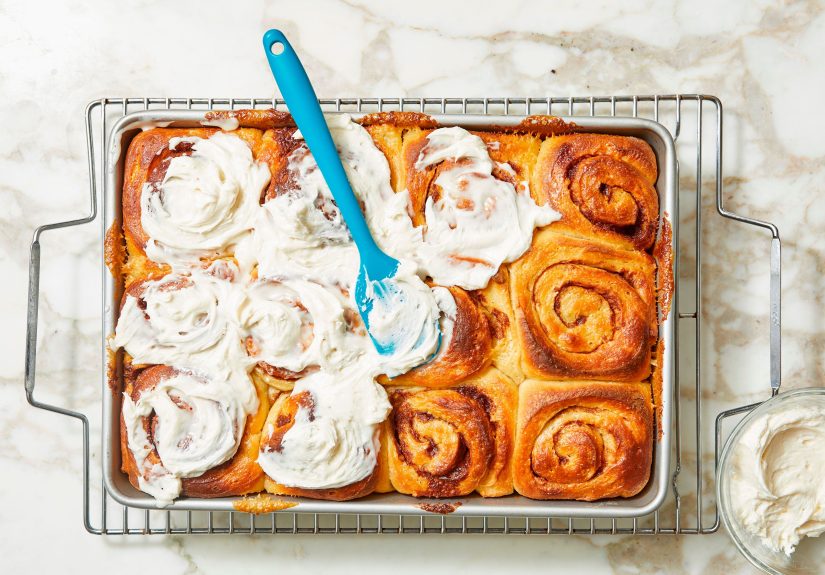
While the rolls bake, beat together the cream cheese and softened butter until smooth. Add the powdered sugar, vanilla, salt, and enough milk or cream to make a thick, spreadable frosting. Spread it over the warm rolls while they are still cozy from the oven so some of it melts down into the swirls and some of it stays thick on top. That contrast is the entire point of civilization.
Tips for Soft, Gooey, Bakery-Style Cinnamon Rolls
Use bread flour for a more bakery-like bite. All-purpose flour can absolutely work, but bread flour gives the dough a slightly chewier, more structured texture that feels closer to a classic copycat Cinnabon cinnamon rolls recipe.
Do not drown the dough in extra flour. A slightly tacky dough bakes up soft. A dry dough bakes up disappointing. Add flour only until the dough is manageable.
Let the dough fully rise. Under-proofed rolls can be dense and tight. Properly risen dough looks puffy and airy, and that translates into fluffy cinnamon buns after baking.
Roll the log tightly. Loose rolling creates gaps and uneven spirals. Tight rolling gives you those dramatic swirls that make people say, “Wait, you made these?” in a tone you should treasure.
Frost while warm, not blazing hot. If the rolls are too hot, the frosting liquefies into a sweet puddle. If they are too cool, the frosting just sits there like it does not know the assignment. Warm is the sweet spot.
Common Mistakes to Avoid
Using milk that is too hot
Yeast likes warmth, not a sauna. Aim for 105–110°F. Too much heat can kill the yeast and stop the dough from rising.
Overbaking the rolls
This is the fastest way to turn your dream breakfast into a cautionary tale. Pull the pan when the rolls are lightly golden and the center looks set.
Skipping the second rise
That second proof is what makes the rolls light and plush. Skipping it usually leads to tighter texture and less impressive oven spring.
Using cold frosting ingredients
Cold cream cheese and butter do not make silky frosting. They make lumpy frosting that looks like it lost a small argument.
Make-Ahead, Storage, and Reheating
If you want fresh cinnamon rolls in the morning without turning dawn into a flour-based panic, assemble the rolls the night before. After placing them in the pan, cover and refrigerate overnight. The next morning, let them sit at room temperature for 45 to 60 minutes until puffy, then bake as directed.
Store leftover frosted rolls in the refrigerator because of the cream cheese frosting. They keep well for about 3 days. For the best texture, warm individual rolls in the microwave for 15 to 20 seconds before serving. You can also reheat the whole pan, covered loosely with foil, in a low oven until warmed through.
Freezing works, too. You can freeze baked rolls tightly wrapped, then thaw overnight in the refrigerator and warm before serving. A fresh swipe of frosting after reheating makes them taste much closer to day-one magic.
Frequently Asked Questions
Can I make these cinnamon rolls without a stand mixer?
Yes. It takes a bit more elbow grease, but the dough comes together beautifully by hand. Knead until smooth and elastic.
Can I use all-purpose flour instead of bread flour?
Absolutely. The rolls will still be soft and delicious. Bread flour simply gives a slightly chewier, more bakery-style texture.
Why pour heavy cream over cinnamon rolls before baking?
It seeps into the dough and helps create a softer, gooier texture, especially around the bottoms and centers. It is optional, but highly persuasive.
How do I know when the dough has risen enough?
The dough should roughly double in size and feel puffy when gently pressed. If it still seems tight or dense, give it more time.
The Experience of Making Copycat Cinnabon Cinnamon Rolls
There is something wildly comforting about making homemade cinnamon rolls from scratch, especially a recipe that aims for that big, soft, bakery-style experience. It starts quietly enough: warm milk, sleepy yeast, a mixing bowl, and the sort of optimism people usually only have at the beginning of a vacation or a very organized Monday. Then the dough begins to come together, and suddenly your kitchen smells warm and buttery and full of possibility. By the time you start kneading, you are no longer just following a recipe. You are participating in a tiny domestic miracle.
The best part may be the rolling stage, when the dough stretches into a big rectangle and starts to look like the blueprint for happiness. You spread the butter, scatter the cinnamon sugar, and every inch of that surface promises a future swirl. Rolling it into a log feels weirdly satisfying, like wrapping up a present you already know you will love. Slicing it into neat rounds is even better. Each piece looks like a little edible spiral notebook full of excellent decisions.
Then comes the rise in the pan, and this is where the anticipation gets almost theatrical. The rolls puff up and lean gently into each other until they look like they are plotting something sweet. Once they bake, the whole house changes. The air fills with butter, cinnamon, caramel notes from the brown sugar, and that deeply unfair smell that makes everyone wander into the kitchen asking, “How long now?” The answer, usually, is “Not long,” though emotionally it feels like a century.
When the rolls come out of the oven, golden and soft, the frosting moment is pure drama. The cream cheese topping hits the warm surface and starts to melt into the crevices, turning glossy and irresistible. It is the kind of sight that makes people hover with plates before you have even finished frosting the last roll. And when you finally pull one apart, there is that signature stretch: tender layers, sticky filling, warm center, sweet tangy icing. It is soft enough to feel indulgent, rich enough to feel celebratory, and familiar enough to make people go quiet for the first bite. That silence is one of the highest compliments a baker can receive.
There is also a real emotional appeal to this kind of recipe. Copycat Cinnabon cinnamon rolls are not just a breakfast or a dessert. They are a whole mood. They belong at holiday mornings, lazy weekends, rainy afternoons, family brunches, and random Tuesdays that need rescuing. They are the kind of thing you make when you want your kitchen to feel alive, when you want the people you love to walk in and immediately smile, or when you simply want to prove that homemade can absolutely compete with a famous bakery chain.
And maybe that is why this recipe keeps earning a permanent place in people’s kitchens. It offers more than sugar and cinnamon. It offers ritual. You slow down enough to let dough rise. You get your hands messy. You fill the room with a smell that turns everyone into a cartoon character floating toward the oven. In a world full of rushed breakfasts and sad desk snacks, a pan of warm cinnamon rolls feels almost rebellious. They say: sit down, pour coffee, stay a while, and for heaven’s sake take the big one in the corner with extra frosting. Life is short. The cinnamon rolls should be generous.