Table of Contents >> Show >> Hide
- Start With the Feeling, Not the Furniture
- Create Outdoor Rooms, Even in a Tiny Yard
- Privacy Is the First Ingredient of a Backyard Retreat
- Use Vertical Space Like It Owes You Rent
- Bring in Shade, Shelter, and a Sense of Enclosure
- Layer Lighting Like a Designer, Not a Parking Lot
- Appeal to the Senses, Not Just the Camera
- Make the Furniture Feel Like Indoor Comfort That Learned Boundaries
- Keep the Palette Tight and the Materials Honest
- Design for Low Maintenance, or the Retreat Will Revolt
- Common Mistakes That Kill the Retreat Vibe
- A Designer-Inspired Formula for a Small Urban Backyard
- What the Experience Actually Feels Like Once the Space Works
- Final Thoughts
- SEO Tags
Urban backyards are funny little things. On paper, they are “outdoor space.” In real life, they are sometimes a grill, two folding chairs, a tired patch of grass, and a direct line of sight into three neighboring kitchens. Yet designers keep proving the same point: even a compact city yard can feel calm, layered, private, and a little bit luxurious when it is planned with intention.
The secret is not having more square footage. It is making the space work harder and feel softer at the same time. The best urban backyard retreat ideas combine privacy, comfort, lighting, planting, and structure so the yard feels like an outdoor room rather than leftover exterior square footage. Think less “random patio set on concrete,” more “tiny boutique hotel courtyard where your phone mysteriously becomes less interesting.”
Below, we break down the design moves experts return to again and again when turning a city backyard into a true escape. Whether your space is narrow, shady, sunny, paved, or squeezed between neighboring houses like the last parking spot on earth, these ideas can help you create a backyard oasis that feels personal, polished, and deeply exhale-worthy.
Start With the Feeling, Not the Furniture
One of the biggest mistakes homeowners make is shopping before they plan. A retreat is not created by ordering a sectional the size of a small yacht and hoping the yard sorts itself out. Designers usually begin by asking a better question: How do you want the space to feel?
Maybe you want a coffee-and-book corner in the morning, a softly lit dinner zone at night, and enough greenery to forget the alley exists. Maybe you want a space that feels Mediterranean, modern, tropical, or quietly naturalistic. The style matters, but the emotional target matters more. Calm, private, and restorative should guide every choice that follows.
Once you know the mood, you can create a simple priority list. Most urban backyards need some version of these five functions:
1. A place to sit comfortably
If the seating feels stiff, too exposed, or oddly arranged, the yard will never feel like a retreat. Comfort is not negotiable.
2. A sense of privacy
Without privacy, even the prettiest backyard can feel like a stage.
3. Shade or shelter
Retreats should not require sunglasses, heroic sunscreen, and a weather app open at all times.
4. Greenery and softness
Plants are what make a city space feel alive, layered, and less like a leftover construction zone.
5. Good lighting
If the backyard disappears after sunset, you are only using half of its potential.
Create Outdoor Rooms, Even in a Tiny Yard
Designers love the idea of “outdoor rooms” because it instantly makes a backyard feel intentional. Even a small urban lot can be divided into zones with furniture, planters, rugs, screens, or a change in material. The goal is not to cram in multiple destinations for the sake of it. The goal is to give the eye structure and the body a reason to settle in.
A bistro table near the kitchen door can become a morning coffee spot. A lounge chair tucked behind tall containers can feel like a reading nook. A bench with a side table beneath string lights can become the nighttime corner. When each zone has a clear purpose, the yard feels bigger because it feels organized.
Scale is everything here. Oversized pieces eat up visual breathing room. Instead, use fewer but better-sized elements. A slim bench, two deep lounge chairs, or a compact dining set often works better than one bulky sectional that leaves no circulation space. Designers also use rugs outdoors for the same reason they use them indoors: they visually anchor a zone and make it feel finished.
Privacy Is the First Ingredient of a Backyard Retreat
If your urban backyard feels exposed, start there. Privacy is what transforms a basic outdoor area into a sanctuary. The good news is that privacy does not have to mean building a fortress that makes the yard feel smaller.
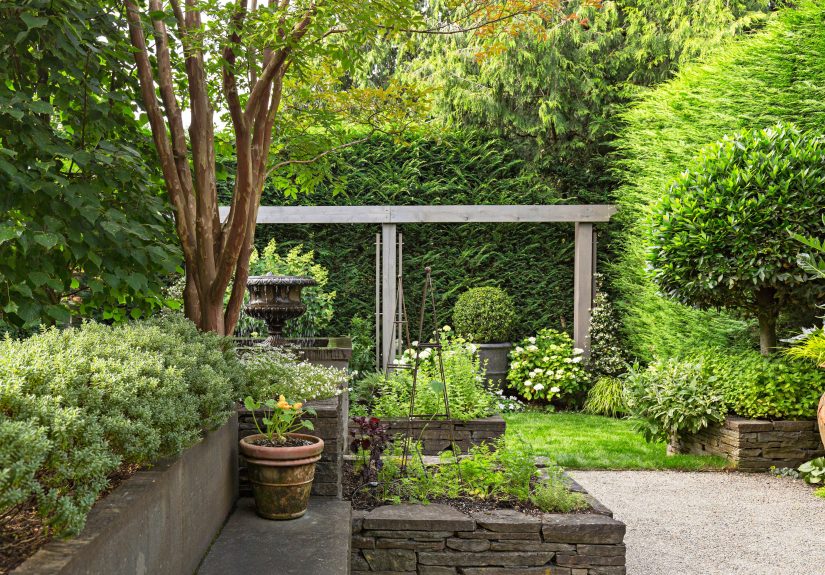
The smartest approach is layered privacy. Instead of relying on one giant solution, combine two or three lighter ones. A fence or wall may provide the base layer. Then you soften it with climbing vines, tall containers, decorative screens, narrow shrubs, or a pergola with curtains. This approach gives the yard enclosure without heaviness.
Wood slat screens are especially popular because they create separation while still letting light pass through. Decorative metal panels can add pattern and shadow. Outdoor curtains can make a patio feel airy and cocooned at the same time. Tall planter boxes with upright grasses or columnar shrubs are another favorite in tight spaces because they add height without demanding much footprint.
Furniture placement also plays a bigger role than many people realize. Turn lounge chairs away from neighboring views. Float seating around a focal point instead of aiming everything outward. A retreat should make you feel drawn inward, not visually flung into the next yard.
Use Vertical Space Like It Owes You Rent
Urban backyards are often short on width but rich in vertical opportunity. Designers treat walls, fences, trellises, and corners as part of the planting plan, not as empty boundaries. That is one of the fastest ways to make a small backyard feel lush.
Climbing vines, espaliered plants, wall planters, hanging pots, and tall narrow trees all help create the sense of a garden that rises around you. This matters because a retreat feels immersive. When everything stays low to the ground, the yard can feel flat and unfinished. Vertical planting adds enclosure, softness, and a welcome sense of abundance.
Containers are especially useful in urban spaces because they let you garden where the soil is poor, nonexistent, or suspiciously brick-adjacent. Mix heights and leaf shapes for the best effect. A tall structural plant, a mounding filler, and a trailing plant can make even one container feel generous. Repeat that combination throughout the yard and suddenly the space has rhythm.
Compact shrubs, narrow evergreens, and native selections for small gardens are also smart choices if you want beauty without constant pruning drama. Designers increasingly favor plants that provide structure and seasonal interest while staying in scale with smaller lots.
Bring in Shade, Shelter, and a Sense of Enclosure
Every retreat needs some form of overhead comfort. In urban backyards, that often comes from a pergola, shade sail, umbrella, canopy, or the filtered cover of a small tree. The reason this matters is simple: overhead elements make a space feel protected. A yard with no top layer can feel exposed, even when it is landscaped beautifully.
Pergolas are particularly effective because they help define a room outdoors. Add climbing vines, a slatted roof, or weather-resistant curtains, and the space becomes more intimate immediately. A good umbrella can also do heroic work in a small backyard, especially if it is offset and easy to reposition. Shade sails suit modern spaces and can visually connect awkward corners. Trees do double duty by offering both shade and privacy, which is a pretty efficient move for one plant.
Even a simple canopy over a dining area can change how often you use the yard. The most successful outdoor retreat designs remove friction. If the space is too sunny, too wet, too windy, or too visible, you will admire it more than you inhabit it.
Layer Lighting Like a Designer, Not a Parking Lot
Outdoor lighting is where a pleasant backyard becomes magic. It is also where many spaces go wrong. One overly bright floodlight does not create ambiance. It creates the feeling that someone is questioning you about where you were on Tuesday night.
Designers typically use layers. Start with practical lighting for safety: paths, steps, and entry points. Then add ambient lighting for mood: string lights, lanterns, sconces, candles, or portable rechargeable lamps. Finally, use accent lighting to highlight what makes the yard special, such as a tree, screen, planter cluster, fountain, or textured wall.
Warm light is key. You want glow, not interrogation. In a small urban backyard, a few carefully placed lights usually do more than a dozen scattered ones. Uplighting a tree can add depth. Lanterns near seating make the space feel intimate. A strand of café lights across a pergola can turn a plain patio into a place where even weeknight leftovers somehow feel charming.
Night design is real design. If your backyard only looks good at 2 p.m., it is not finished.
Appeal to the Senses, Not Just the Camera
A true retreat is sensory. It is not just attractive in photos; it feels good in person. That means considering sound, scent, texture, and movement.
Water features are one of the most effective design tools for urban yards because they add gentle sound that softens city noise. A small fountain can mask traffic, create rhythm, and make the space feel unexpectedly serene. You do not need a grand pond or resort-level installation. Even a modest bubbling fountain can do the job beautifully.
Fragrant plants can make the experience richer too. Lavender, rosemary, jasmine, mint, and other aromatic choices bring a soothing quality that helps the backyard feel like a destination. Grasses and airy perennials add movement, which makes the space feel alive and breezy. Natural materials such as wood, gravel, stone, terracotta, and linen-like outdoor textiles add tactile warmth that plastic-heavy spaces usually lack.
This is where many designer gardens win. They are not louder. They are more layered. You hear water. You brush past herbs. You see leaves moving. You smell something fresh after watering. Suddenly your urban backyard is doing what a good retreat should do: pulling you out of your head a little.
Make the Furniture Feel Like Indoor Comfort That Learned Boundaries
Backyard furniture used to be judged mainly on whether it survived the weather. Designers still care about durability, of course, but they also want outdoor spaces to feel as comfortable as indoor rooms. That means deep cushions, supportive chairs, soft textiles, and surfaces that make daily use easy.
Choose materials that can handle your climate and your patience level. Powder-coated metal, teak, all-weather wicker, performance fabric, and stone or concrete accents are all common designer picks because they age well and do not demand constant fussing. A retreat should not become a part-time maintenance internship.
Small backyards also benefit from flexible pieces. Benches with storage, stacking stools, nesting tables, and movable poufs make it easier to adapt the space for quiet nights or extra guests. The best urban backyard furniture does not just fit physically. It fits the pace of real life.
And yes, cushions matter. If the seat feels like punishment, nobody will linger long enough to feel restored.
Keep the Palette Tight and the Materials Honest
Designers often simplify color in small outdoor spaces. A tight palette makes a backyard feel calmer and more cohesive, which is exactly what a retreat needs. That does not mean everything should be beige and emotionally unavailable. It means the colors should relate to one another.
For a soothing look, try soft greens, warm neutrals, charcoal, wood tones, terracotta, muted blues, or creamy whites. Use brighter colors as accents rather than shouting from every corner. Too many competing finishes can make a small urban yard feel visually noisy.
Texture does a lot of heavy lifting here. Pair smooth stone with rough wood. Combine leafy planting with gravel or pavers. Add woven lanterns, ceramic planters, and outdoor fabrics with subtle pattern. When the material mix feels intentional, the space gains depth without chaos.
Design for Low Maintenance, or the Retreat Will Revolt
A backyard that looks amazing for one week and then becomes a guilt project is not a retreat. It is a beautifully landscaped reminder that Saturday is gone forever.
That is why more designers are leaning toward water-wise planting, smaller lawn areas, native or regionally appropriate plants, and durable hardscaping. In many climates, reducing turf and choosing drought-tolerant plants cuts back on watering, trimming, and general backyard drama. Native and adapted plants can also support pollinators and local ecology while keeping the design grounded in place.
Mulch, gravel, and well-planned planting beds can reduce weeds and evaporation. Drip irrigation can simplify watering. A limited palette of tough plants often looks more sophisticated than a crowded collection of random nursery impulses. In other words, discipline is attractive.
If you want the space to feel restorative, maintenance needs to be predictable. Calm design is partly visual and partly logistical.
Common Mistakes That Kill the Retreat Vibe
Even stylish urban backyards can miss the mark when a few common errors sneak in. The first is trying to do too much. A small backyard does not need a fire pit, full dining area, outdoor kitchen, hammock, projector screen, vegetable garden, and meditation corner all at once. Pick the functions you will actually use and let the space breathe.
The second mistake is ignoring scale. Furniture that is too big, planters that are too tiny, or pathways that are too cramped make the yard feel awkward fast. The third is under-lighting or over-lighting. Both can make a retreat less functional. The fourth is forgetting storage. Cushions, garden tools, and outdoor accessories need a home. Visual clutter is still clutter when it is outside.
Finally, many homeowners focus only on daytime appearance. But some of the best retreat moments happen at dusk, after dinner, with a soft lamp on and no urgent plans left. Design for that hour too.
A Designer-Inspired Formula for a Small Urban Backyard
If you want a practical blueprint, here is a combination that works remarkably well in many city yards:
Back layer: fence or wall softened with vines, tall planters, or narrow screening plants.
Middle layer: a pergola, umbrella, or small tree to create overhead comfort.
Main zone: one clearly defined seating area with comfortable furniture and a side table.
Softening layer: mixed containers with structural plants, herbs, grasses, and seasonal flowers.
Atmosphere layer: warm lighting, one water feature, and a restrained color palette.
That is often enough. Not because it is minimal, but because it is complete.
What the Experience Actually Feels Like Once the Space Works
The most interesting thing about a well-designed urban backyard is that the change is not only visual. It changes behavior. Before the yard feels like a retreat, people tend to pass through it. They step outside, look around, maybe water something, then head back in. After the design is right, they stay.
Morning feels different first. A chair that faces greenery instead of the neighbor’s recycling bins makes coffee taste suspiciously better. The air feels cooler when there is shade overhead and planting around the edges. Herbs release scent when you brush past them. A fountain or even a small bubbling water feature turns city noise into background texture instead of the main soundtrack. It becomes easier to read a few pages, answer fewer texts, and let your day start at a human speed.
Afternoons improve in a different way. The yard becomes useful instead of theoretical. A compact dining spot makes lunch outside feel effortless. A bench tucked into a planted corner becomes a place to pause between tasks. If there are layered plants and a bit of screening, the space begins to feel psychologically separate from the street and the surrounding buildings. That separation matters more than people expect. You are still in the city, but not so loudly in it.
Then evening arrives, which is when the retreat quality really earns its paycheck. Good outdoor lighting changes the entire emotional register of the backyard. Warm light on a fence, lanterns near a chair, and a soft glow through foliage create the same kind of comfort that makes a living room inviting after dark. The space stops being “the backyard” and starts feeling like an extension of home. Dinner lingers. Conversations stretch. A five-minute sit turns into forty.
There is also something deeply satisfying about a yard that does not demand constant correction. When the plants suit the conditions, the materials age well, and the layout supports real use, the space feels generous rather than needy. You spend less time managing it and more time enjoying it. That is the quiet luxury designers talk about without always naming directly.
And perhaps the biggest shift is this: a retreat-worthy urban backyard gives you private moments in a place that usually asks for public attention. Cities are wonderful, but they are busy, bright, loud, and full of accidental audience members. A backyard that feels enclosed, fragrant, comfortable, and softly lit gives something back. It gives you a place to land. Not a fantasy getaway two flights and a hotel confirmation away, but a daily one, right outside the door, where the chairs are already yours and nobody is charging resort fees.
Final Thoughts
If you want to make your urban backyard feel like a retreat, think like a designer and edit like a realist. Prioritize privacy. Create zones. Use vertical space. Layer lighting. Add scent, sound, and softness. Choose plants and materials that suit your climate and your schedule. Most of all, design for how you actually want to live outside, not for an imaginary lifestyle involving ten guests, artisanal cocktails, and suspiciously perfect weather every weekend.
The best urban backyard retreat ideas are not about extravagance. They are about intention. When every element supports calm, comfort, and ease, even a modest city yard can feel transporting. That is the beauty of good outdoor design: it does not have to make your home bigger. It just has to make your life feel better inside the space you already have.