Table of Contents >> Show >> Hide
- The Short Answer: Yes, But It Is Not a Magic Wand
- What Diatomaceous Earth Actually Is
- Why DE Is Only a Partial Fix for Stink Bugs
- So, When Does Diatomaceous Earth Help?
- How Pest Pros Usually Handle Stink Bugs First
- How to Use Diatomaceous Earth the Smart Way
- When DE Is Probably Not Worth the Trouble
- When to Call a Professional
- Final Verdict: Does Diatomaceous Earth Really Kill Stink Bugs?
- Real-World Experiences: What It Actually Feels Like to Use DE Against Stink Bugs
If stink bugs have turned your windowsills into a part-time bug airport, you are not alone. Every fall, homeowners start spotting those shield-shaped intruders creeping around curtains, clinging to screens, and generally acting like they pay rent. Naturally, many people go hunting for a low-fuss fix and land on one dusty favorite: diatomaceous earth.
It sounds promising. It is widely sold, often marketed as a lower-toxicity option, and has a reputation for flattening all sorts of creepy-crawly plans. But does diatomaceous earth really kill stink bugs, or is this one of those home-and-garden legends that sounds better than it works?
The honest answer is a little bit satisfying and a little bit annoying: yes, diatomaceous earth can kill stink bugs, but it is usually not the best standalone solution for a stink bug problem inside your home. Pest experts tend to view it as a support player, not the star quarterback. Translation: useful in the right place, under the right conditions, with the right expectations.
If you are wondering whether to dust it everywhere like powdered sugar on French toast, please step away from the duster. Here is what actually works, what does not, and how to use diatomaceous earth intelligently without turning your house into a chalky science experiment.
The Short Answer: Yes, But It Is Not a Magic Wand
Diatomaceous earth, often shortened to DE, can kill stink bugs. That part is real. It is not snake oil, and it is not relying on a mysterious “natural energy field” to do the job. It works mechanically, not chemically, by damaging the insect’s outer protective layer and drying it out.
That said, the phrase can kill matters here. It does not mean “will instantly solve your infestation.” Stink bugs are not like tiny cereal beetles wandering through a neat little trail of powder. They are seasonal invaders that sneak into wall voids, attics, soffits, and other hard-to-reach spaces. By the time you see them strolling across your lamp like they own the place, many are already tucked away in protected areas where surface dusts may not do much.
So yes, DE really can kill stink bugs. No, it is not usually the fastest, cleanest, or most effective main strategy for getting them out of your life.
What Diatomaceous Earth Actually Is
Diatomaceous earth is a powder made from the fossilized remains of tiny aquatic organisms called diatoms. Their shells are rich in silica, and when processed into pesticide products, the powder can work as a desiccant dust. In plain English, it wrecks an insect’s moisture barrier and helps dry the bug out.
This is one reason DE remains popular with homeowners. It is not working like a conventional poison that has to be sprayed into the air or absorbed in the same way as a synthetic insecticide. It is a physical control product. That sounds wonderfully straightforward, and in some settings, it is.
But there is a catch hiding in the fine print of reality: the insect has to contact the dust, and the dust has to stay dry and undisturbed. Once moisture, humidity, cleanup, or foot traffic enter the picture, performance can drop. That limitation matters a lot when you are talking about stink bugs, which are frustratingly good at appearing where you do not want them and disappearing where you cannot reach them.
Why DE Is Only a Partial Fix for Stink Bugs
1. Stink bugs are seasonal invaders, not typical indoor breeders
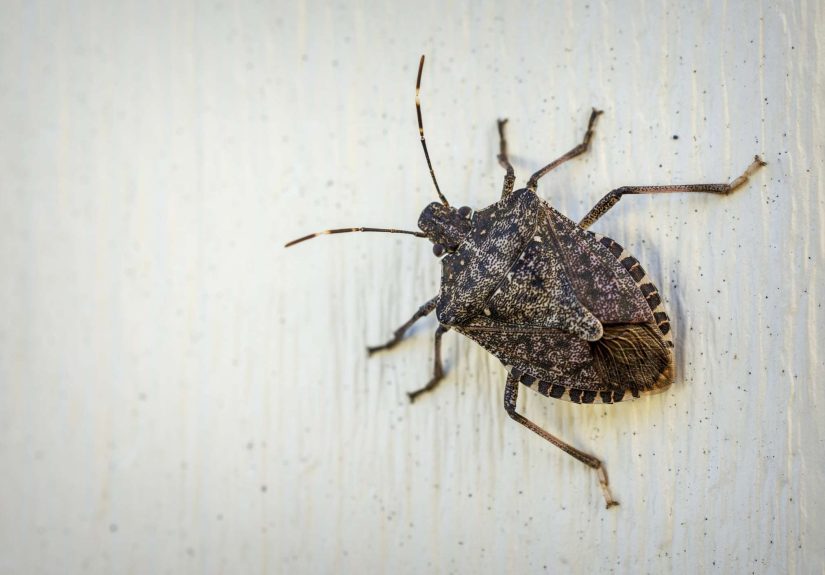
The most common home invader is the brown marmorated stink bug, and its whole routine is built around finding a sheltered place to overwinter. That means your house is not a buffet to them. It is a winter hotel. They are not usually reproducing inside, chewing up the structure, or turning your baseboards into a nursery. They are mostly hiding out, then blundering into view on warm days like tiny armored sleepwalkers.
That matters because treatments designed for breeding indoor pests are often less useful here. If the bugs are sheltering inside walls, a product sitting on the kitchen floor is not exactly intercepting the main traffic pattern.
2. DE only works where bugs crawl through it
Diatomaceous earth is not a force field. It does not radiate anti-stink-bug vibes across the room. For it to work, the bug must contact a dry, effective layer of dust. If the powder is applied in the wrong place, too heavily, or somewhere damp, your stink bugs may simply route around it like commuters avoiding construction.
This is why pest professionals usually recommend targeted application in cracks, crevices, dry voids, and likely travel routes instead of broad visible piles. A light application in the right place beats a dramatic snowstorm in the wrong place every single time.
3. Humidity is the enemy
DE performs best when dry. That sounds simple until you remember how many stink bug trouble spots are near windows, siding gaps, basements, garages, and exterior entry areas where moisture, condensation, or humidity can show up. If the dust clumps, gets damp, or is cleaned away, you lose much of the benefit.
4. Indoor pesticide use is often overrated for stink bugs
This is the part homeowners do not love hearing. Even when a product is legal and labeled for pest control, indoor pesticide treatments are often not the star answer for stink bugs. Once they are inside walls, around trim, or in attic spaces, they can avoid treated areas. That is why pest pros often put much more emphasis on prevention and physical removal than on trying to out-dust every bug that already got the memo about winter housing.
So, When Does Diatomaceous Earth Help?
DE can be genuinely useful when you use it like a precision tool instead of a panic powder. It may help in these situations:
- In dry cracks and crevices where stink bugs are likely to crawl
- In wall void access points or gaps around utility penetrations, if the label allows that use
- Along dry entry points in attics, garages, or unfinished spaces
- As part of a broader stink bug plan that also includes sealing entry points and removing visible bugs
Think of it as a backup goalie. Useful? Absolutely. Enough to win the season alone? Not usually.
How Pest Pros Usually Handle Stink Bugs First
Exclusion comes before extermination
If you talk to extension experts and pest management pros, the most consistent advice is almost boring in its practicality: seal the house. Caulk cracks. Fix torn screens. Add or repair weather stripping. Screen vents. Seal openings around pipes, siding, trim, cable lines, and utility entries. Check the attic. Check around window-mounted air conditioners. Then check again because stink bugs are basically tiny escape-room champions.
This approach works because it addresses the real problem: the bugs are getting in. Once the entry points are closed, next season gets dramatically easier.
Vacuuming beats squishing
For bugs already indoors, vacuuming is often the MVP move. It is quick, direct, and avoids the very specific regret that comes from smashing a stink bug and learning exactly why it got that name. Some homeowners prefer a dedicated handheld vacuum or a bag they can empty immediately outside. That is smart. Nobody wants their main vacuum smelling like a cilantro-onion prank gone wrong.
Soapy water is still weirdly effective
If you catch them in reachable spots, knocking them into soapy water works. It is not glamorous. It will not get featured in a luxury home magazine. But it is practical and satisfying in the quiet, old-school way that useful household tricks often are.
Indoor spraying is usually not the hero move
Homeowners often assume the best answer is a dramatic indoor spray mission. Pest pros usually disagree. Broad indoor treatments often miss hidden bugs, expose people and pets to unnecessary pesticide use, and solve less than you might hope. In severe cases, professionals may time exterior perimeter treatments or recommend building-focused exclusion work, but random indoor chemical warfare is rarely the elegant answer.
How to Use Diatomaceous Earth the Smart Way
If you still want to use DE, the smart version is all about labels, placement, and restraint.
Choose the right product
Use a product labeled for insect control. This is not the time for improvising with whatever bag of powder happened to be sitting near the garden gloves. A pesticide-labeled product gives you instructions for where it can be applied, how much to use, and how to reduce exposure risks.
Apply lightly, not like you are frosting a cake
More is not better with DE. A light dust in cracks, crevices, and dry voids is generally the goal. Big visible piles can actually make some insects avoid the treatment, create cleanup headaches, and increase the chances that people or pets disturb and inhale the dust.
Keep it in dry, low-traffic spots
DE works best where it can sit quietly and do its job. Good locations are places stink bugs use but people do not: gaps behind trim, entry cracks in unfinished areas, attic edges, and similar dry access points. The middle of the hallway? Less ideal. The kitchen counter? Absolutely not.
Do not ignore safety just because it is “natural”
Natural does not mean “breathe freely and toss it around like confetti.” Dusts can irritate eyes, skin, and lungs. Follow the product label. Avoid creating airborne clouds. Use appropriate personal protection when applying, especially if you are working in enclosed areas or have respiratory concerns.
Reassess after weather and cleanup
If the area gets damp, dusty, cleaned, or disturbed, DE may need attention. It is not a forever barrier. It is a condition-dependent tool. That is another reason pros rarely present it as a one-and-done solution for seasonal stink bug invasions.
When DE Is Probably Not Worth the Trouble
There are plenty of moments when diatomaceous earth is technically useful but practically annoying. For example:
- If bugs are already emerging from hidden wall voids all over the home
- If your main issue is large fall invasions from obvious exterior gaps
- If the target area is humid, exposed, or regularly cleaned
- If you are tempted to dust open living areas where people and pets will contact it
- If you need immediate results and do not want to wait for contact-based control
In those cases, spending your energy on exclusion and physical removal usually gives you a better return.
When to Call a Professional
You do not always need a pest control company for stink bugs, but there are times when it makes sense. If you are dealing with heavy annual invasions, hard-to-reach exterior entry points, multi-story access issues, or a house that seems to produce stink bugs from thin air all winter, a pro can help identify entry zones and design a practical treatment plan.
The best professionals will usually talk as much about sealing and prevention as they do about products. That is a good sign. If someone proposes a miracle dust-and-spray routine without mentioning exclusion, that is your cue to raise one skeptical eyebrow.
Final Verdict: Does Diatomaceous Earth Really Kill Stink Bugs?
Yes, diatomaceous earth really can kill stink bugs. It is not a myth, and it is not useless. But it works best as a targeted support tactic in dry, protected places where bugs actually travel. It is not the most reliable single answer for a home stink bug problem, especially once the insects are already tucked into wall voids or emerging throughout the house.
If you want the pest-pro version of the answer, it is this: use DE strategically if you like, but do not let it distract you from the big wins. Seal entry points. Repair screens. Add weather stripping. Vacuum visible bugs. Use soapy water when practical. Avoid crushing them unless you enjoy tiny clouds of eau de nuisance.
In other words, diatomaceous earth is a helpful sidekick. Just do not cast it as the superhero and then act surprised when the stink bugs refuse to roll credits.
Real-World Experiences: What It Actually Feels Like to Use DE Against Stink Bugs
A very common homeowner experience goes something like this: the first cold snap hits, a few brown bugs appear near a sunny window, and suddenly you notice them everywhere. One is on the curtain. One is behind the lamp. One is hanging upside down from the ceiling like it lost a bet. At that point, diatomaceous earth starts sounding incredibly attractive because it feels passive and powerful at the same time. Sprinkle a powder, let science do the rest, move on with your life. Very appealing. Also, not always how the story goes.
In real homes, people who try DE often report mixed results for a reason. When they use it carefully in dry cracks, around entry gaps in unfinished spaces, or in isolated void areas, they may notice fewer live stragglers over time. That is the best-case experience. It feels subtle rather than dramatic. You do not usually wake up to a cinematic pile of defeated invaders. Instead, you notice that the traffic slows, the sightings drop, and the problem feels less active. It is more “quiet improvement” than “instant revenge.”
But there is another very relatable experience too: people apply too much. They dust visible surfaces because that feels reassuring. They create powdery lines in open rooms, around baseboards, or near windows where the dust gets bumped, vacuumed, smeared, or dampened. Then they still see stink bugs emerging from hidden areas and conclude the product is worthless. In many cases, the issue is not that DE cannot work. It is that stink bugs are entering from places the treatment never really touched.
Another common experience is the expectation gap. Homeowners often expect DE to behave like a fast spray. It does not. It is slower, quieter, and dependent on contact. That can feel disappointing if you were hoping for instant results. Stink bugs are especially good at making you question your choices because they seem to teleport from one room to another. You treat one area, then find a bug strolling through a completely different one like it is giving your pest control plan a performance review.
People also tend to remember the emotional side of stink bugs just as much as the practical side. The smell. The jump-scare factor. The way one tiny insect can make a grown adult perform an improvised dance with a tissue box. In that context, DE is often most appreciated when it reduces repeat sightings in certain trouble spots. It gives homeowners the feeling that they are doing something preventative, not just reacting every single time a bug appears on the wall.
Perhaps the most realistic experience of all is this: homeowners get the best results when DE is one part of a grown-up stink bug plan. They seal gaps. They fix screens. They vacuum the visible bugs. They stop crushing them. Then, if they choose, they add a labeled desiccant dust in very specific dry areas. That combination tends to feel more effective and much less frustrating than relying on powder alone.
So if your dream is to scatter diatomaceous earth once and never think about stink bugs again, reality may tap you on the shoulder. But if your goal is to make your home less inviting, reduce the number of bugs that successfully wander in, and support a broader prevention strategy, DE can earn its keep. Not as a miracle, but as a useful, low-drama helper. And honestly, in the annual battle against seasonal houseguests with terrible manners, a useful helper is nothing to sneeze at. Literally. Please do not inhale the dust.