Table of Contents >> Show >> Hide
- The “Pregnancy Jar” Is Funny Because It Does What Words Often Can’t
- Why This Topic Hits So Hard
- What Research Says About Adults Without Children
- So, Was the Dollar Rule Petty or Perfect?
- What Families Should Understand Before They Ask
- Better Ways to Respond Than Asking About Babies
- Why This Story Resonates So Deeply
- Related Experiences That Make This Story Feel So Real
- Final Thoughts
There are few family questions more loaded than the seemingly casual, “So… when are you having kids?” It arrives at holiday dinners, birthday parties, weddings, brunches, and probably while you’re just trying to butter a roll in peace. Sometimes it’s framed as concern. Sometimes it’s passed off as a joke. Sometimes it comes with a wink so aggressive it deserves its own zip code. And for the people on the receiving end, it can feel less like small talk and more like emotional trespassing.
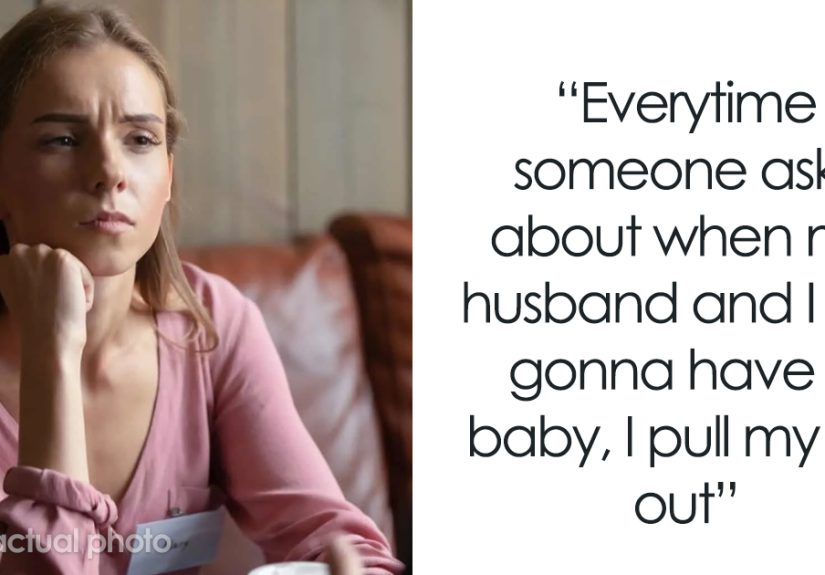
That’s why one woman’s now-viral solution struck such a nerve: every time a friend or family member brought up her not having kids, she pulled out a “pregnancy jar” and asked them to drop in a dollar. Suddenly, a nosy question came with a cover charge. Her family thought she was being rude. Plenty of readers thought she was brilliant. And honestly, that split reaction says everything.
The story is funny on the surface because it turns a deeply irritating social habit into a tiny financial inconvenience. But underneath the joke is a bigger truth about childfree adults, people facing fertility struggles, and anyone tired of being treated like their reproductive choices are public property. The dollar is not really the point. The point is the boundary.
The “Pregnancy Jar” Is Funny Because It Does What Words Often Can’t
The appeal of the jar is simple: it makes the invisible visible. Many people ask about children as if they are making harmless conversation, while the person being asked is left carrying the emotional cost. A dollar flips that script. It says, “If you want access to this topic so badly, at least acknowledge that you’re making me pay for it.” That is not cruelty. That is satire with excellent aim.
Humor works here because it exposes how absurd the question can be. Asking someone about kids is not like asking whether they’ve seen the latest hit show. For some adults, not having children is a thoughtful, settled choice. For others, it is tied to medical issues, finances, a difficult partnership history, grief, ambivalence, or simply a private season of life they do not wish to narrate at the dinner table. A supposedly light question can land like a brick.
And let’s be honest: people rarely ask this question once. They ask it repeatedly, with the persistence of a pop-up ad that somehow learned your family tree. The woman with the jar did not create the awkwardness. She itemized it.
Why This Topic Hits So Hard
Not Having Kids Means Different Things to Different People
One reason these conversations go sideways so fast is that outsiders tend to lump everyone into one category. But “not having kids” covers a lot of ground. Some adults are childfree by choice and completely at peace with that. Some are undecided. Some planned to become parents and changed course. Some would like children but have run into infertility, health complications, timing issues, or relationship realities. Some do not want children now and may never want them. Some do not feel a dramatic “baby fever” at all, and that does not make them broken, cold, or secretly incomplete.
That nuance matters, because the person asking usually doesn’t know which reality they’re poking at. They may think they’re making conversation. Instead, they may be walking straight into a deeply personal area with the confidence of someone wearing muddy shoes on a white carpet.
The Pressure Is Cultural, Not Just Personal
There is also a bigger social script at work. Women, especially, are often treated as if adulthood naturally progresses from dating to marriage to babies, with the same inevitability as a streaming service raising its prices. This expectation has a name: pronatalism, the broad cultural pressure that treats parenthood as the default, the ideal, or even the duty. In that worldview, not having children is not just a neutral life path. It is framed as a deviation that must be explained, defended, or corrected.
That is why people feel oddly entitled to ask follow-up questions. They do not simply ask whether you want kids. They ask why not. They ask if you will regret it. They ask whether your partner agrees. They ask who will take care of you when you’re older. They ask if your parents are disappointed. They ask whether you are “sure.” At some point, this stops being curiosity and starts feeling like an unsolicited audit of your life choices.
What Research Says About Adults Without Children
Recent research makes one thing clear: adults without children are not some tiny, mysterious fringe group wandering around society confusing the neighbors. They are a significant part of modern American life. Studies and surveys have found that a substantial share of U.S. adults do not have children and that many of them either do not want children or are unlikely to have them. Among younger adults who say they are unlikely to ever have kids, a major reason is simply that they do not want to. Other common reasons include wanting to focus on other priorities, concerns about finances, worries about the state of the world, and environmental concerns.
That alone should end the tired idea that every adult without kids is just “waiting for the right moment.” Sometimes there is no hidden countdown clock. Sometimes the answer is simply no. A complete sentence. No footnotes required.
Research also suggests that many adults without children see real benefits in that choice or circumstance, including more time for hobbies, more flexibility, easier saving, and sometimes greater ease in building a career or social life. At the same time, their experiences are not universally carefree. Some report being expected to work longer hours, take on extra responsibilities, or accept less flexibility than parents. In other words, the same society that pressures people to have kids can also quietly overburden those who do not.
There is another myth worth tossing directly into the pregnancy jar: the idea that childfree adults are doomed to regret their decision. Some research has found no evidence that older childfree adults experience more regret than parents. That finding will be disappointing to the people who love saying, “You’ll change your mind,” but great news for everyone else who would like to make adult decisions without being treated like a confused intern in their own life.
So, Was the Dollar Rule Petty or Perfect?
Probably both. And that is why it works.
On one hand, asking for a dollar is passive-aggressive in the way a glitter cannon is “a little festive.” It is a theatrical boundary. It invites people to feel mildly embarrassed, which is often the first time they fully realize they have crossed a line. On the other hand, subtle hints often fail with repeat offenders. A lot of people do not respond to discomfort until it becomes their discomfort.
The jar also succeeds because it is measurable. It turns a vague pattern into a visible one. If a relative has to pay three times in one weekend, they can no longer pretend they are “just asking once.” The jar keeps receipts. Emotionally and, hilariously, literally.
Still, this tactic is not for everyone. In some families, it will land as playful and effective. In others, it will spark drama, defensive speeches, and a cousin loudly announcing that “nobody can say anything anymore,” which is the traditional anthem of people who very much want to keep saying intrusive things. Boundaries do not have to be funny to be valid. Some people will prefer a direct script: “We’re not discussing children.” Others may go softer: “That topic is private for us.” Others may redirect: “Let’s talk about literally anything else, including tax forms.” All are fair game.
What Families Should Understand Before They Ask
Good Intentions Do Not Cancel Bad Impact
A family member may genuinely mean well. They may think they are expressing excitement, hope, or interest. But impact matters more than intent. If someone has already indicated discomfort, keeps changing the subject, or has asked for the question to stop, continuing to bring it up is not loving persistence. It is boundary-stomping in a cardigan.
Private Does Not Mean Hostile
Many people still interpret privacy as rejection. It is not. Saying, “I don’t want to discuss whether I’m having children,” is not an attack on family values, tradition, or your aunt’s deeply cherished dream of buying baby socks. It is a basic assertion of personal autonomy. Adults are allowed to keep parts of their lives private, even from people who share their DNA and a group text full of casserole updates.
Not Everyone Wants Advice
Another common mistake is assuming the topic invites strategy. Once the conversation starts, people often leap to suggestions: relax more, try sooner, wait longer, pray harder, freeze eggs, move to the suburbs, stop focusing on work, start focusing on work less, go on vacation, drink a smoothie, consult a horoscope. None of this is helpful unless the person asked for it. Reproductive decisions are not a broken printer that the whole office gets to troubleshoot.
Better Ways to Respond Than Asking About Babies
If families actually want closer relationships, there are far better questions than “When are you having kids?” Try asking what someone is excited about lately. Ask how work is going, what they are reading, where they are traveling, what they are building, learning, cooking, or planning. Ask about their dog, their new apartment, their ridiculous marathon hobby, their garden, their side project, their favorite show, their latest obsession with sourdough or vintage lamps or competitive pickleball.
See how easy that was? Entire conversations happened, and not one person had to defend their uterus.
If the topic does come up naturally, the respectful route is simple: listen, do not pry, and follow the other person’s lead. If they keep it brief, keep it brief. If they joke, do not assume that is an invitation to push. If they say it is private, believe them the first time.
Why This Story Resonates So Deeply
The viral appeal of the pregnancy jar story is not just that people love a clever comeback. It is that many adults have fantasized about some version of this exact move. Maybe not a jar, specifically. Maybe a buzzer. Maybe a swear jar with better branding. Maybe a donation link titled “Since You’re So Interested.” The fantasy comes from years of being nudged, questioned, warned, and second-guessed by people who assume reproduction is community property.
That is what makes the woman’s response feel less mean than overdue. She did not insult anyone. She did not expose anyone’s secrets. She did not make a speech about patriarchy over the mashed potatoes. She just attached a tiny cost to a habit that had been costing her peace. Frankly, that may be the most polite revolution imaginable.
Related Experiences That Make This Story Feel So Real
What makes the dollar-jar story so relatable is that countless adults have lived some version of it, even if they never turned the experience into a fund-raising campaign. The first common scenario is the family gathering ambush. Someone is just trying to survive a holiday meal, and suddenly the questions begin: “When are you two finally going to start a family?” Then comes the sequel nobody asked for: “You’re not getting any younger.” Then the franchise expands with a guest appearance from an aunt who says, “I just want grandbabies before I die,” as if emotional blackmail were a festive side dish. By dessert, the person without kids is no longer attending dinner; they are defending a dissertation they never agreed to write.
Another familiar experience happens in the workplace. Adults without children are often assumed to be more available, more flexible, and somehow less tired. They get handed late meetings, holiday shifts, and extra work because they supposedly have “fewer responsibilities.” This logic is flimsy at best. People without children may be caring for aging parents, managing health issues, building businesses, going to school, supporting siblings, volunteering, or simply protecting their own time like sane human beings. Yet the stereotype lingers: if you do not have kids, your schedule must be wide open and your life must be one giant uninterrupted brunch.
Then there is the bizarre moral commentary. People are often told they are selfish for not wanting children, only to be told in the next breath that they should have children because they would make cute babies, smart babies, athletic babies, musical babies, or babies who could finally carry on the family name like this is a medieval estate and not a split-level house in the suburbs. The contradiction is wild. On Monday, they are selfish for opting out. On Tuesday, they are expected to produce a child to satisfy someone else’s emotional storyline. That is not concern. That is projection wearing nice shoes.
For people who want children but are dealing with infertility, pregnancy loss, complicated health issues, or uncertainty, the experience can be even more brutal. A casual question can yank someone straight into grief they were not planning to revisit over appetizers. One reason these questions are so risky is that the asker usually has no idea what sits beneath the surface. They may assume they are making cheerful conversation, while the other person is suddenly trying not to cry into a paper plate.
And then there are the smaller, constant moments: the friend who forwards baby announcements with a pointed “Your turn!” the relative who interprets every vacation photo as proof someone is “too selfish to settle down,” the stranger who says, “You’ll understand when you’re a mom,” as though all wisdom is issued with a stroller. These experiences pile up. They are often dismissed one by one, but together they create a clear message: your current life is interesting, but not quite valid enough until it includes children. That is exactly why the pregnancy jar lands so well. It interrupts that message. It says the life a person has now is not a waiting room. It is their life. And it deserves respect without asterisk, apology, or baby registry.
Final Thoughts
So, is this woman a jerk for charging a dollar every time someone mentions her not having kids? Not really. If anything, she found a funny, memorable way to enforce a boundary that should have been respected for free. The real issue is not the jar. It is the habit that made the jar necessary.
People do not owe anyone a baby, a timeline, a fertility report, or a deeply personal explanation dressed up as holiday conversation. Some will become parents. Some will not. Some will be delighted about that. Some will grieve it. Some will feel both things at once. All of them deserve dignity.
And if a family cannot manage that basic level of respect, maybe they can at least bring cash.