Table of Contents >> Show >> Hide
- Why a New Perspective Makes a Famous Place Feel New Again
- 7 Ways to See Iconic Landmarks Differently (Without Becoming a Headline)
- 1) Change the clock: sunrise, blue hour, and late-night glow
- 2) Go higher: observation decks, hills, and “accidentally” scenic stairs
- 3) Go lower: ground-level details and “human scale”
- 4) Swap the season: snow, fog, rain, or the “off-peak glow”
- 5) Approach from an unexpected direction
- 6) Add context: a short story beats a long caption
- 7) Use the “frame within a frame” trick
- Landmarks Reimagined: Specific Examples From Around the World
- The Statue of Liberty (New York City): don’t skip the water approach
- The Golden Gate Bridge (San Francisco): look down, not just across
- The Grand Canyon (Arizona): trade “wow” for “wait, how is that real?”
- Mount Rushmore (South Dakota): widen the story beyond the faces
- The Lincoln Memorial (Washington, DC): go at night for mood and meaning
- Space Needle (Seattle): the best angle might be not from the top
- The Gateway Arch (St. Louis): make it about reflection and curvature
- The Eiffel Tower (Paris): go sidewaysironwork is the secret star
- The Colosseum (Rome): step back to see the city swallow history
- The Taj Mahal (Agra): see it as a composition, not a single shot
- Machu Picchu (Peru): the “classic viewpoint” is only the prologue
- How to Plan Your “New Perspective” Trip (So It’s Fun, Not Chaotic)
- Photography Tips for Fresh Angles (Even If You’re Not a “Camera Person”)
- of Experiences: What “New Perspective Travel” Actually Feels Like
- Conclusion: Make the Famous Feel Fresh
You’ve seen the postcards. You’ve seen the screensaver shots. You’ve probably seen that one friend’s “casual” photo
where they’re definitely holding up the Leaning Tower of Pisa with their hands (Oscar-worthy performance, truly).
But here’s the twist: famous places don’t get boringour angles do.
A “new perspective” doesn’t mean risking life and phone battery for a reckless selfie. It means changing the
how you look: the time of day, the route you take, the height you stand at, the season you visit, and
even the story you learn before you arrive. When you shift perspective, landmarks stop being background scenery and
start feeling like real places againfull of design choices, weird quirks, and “wait… I never noticed that” details.
Why a New Perspective Makes a Famous Place Feel New Again
Landmarks are visual shorthand: one glance and your brain labels the whole experience. “Statue of Liberty. Got it.”
“Grand Canyon. Big hole. Understood.” (Your brain is efficient. Also occasionally rude.)
But landmarks are layered: they change with light, weather, crowds, and context. A new viewpoint interrupts the mental
autopilot. Suddenly you’re not collecting proof you were thereyou’re paying attention. That’s when a landmark becomes
memorable again, even if you’ve “seen it” a hundred times online.
7 Ways to See Iconic Landmarks Differently (Without Becoming a Headline)
1) Change the clock: sunrise, blue hour, and late-night glow
Famous places often look most dramatic when the sun is being theatrical. Sunrise can soften harsh lines and reveal
color that mid-day flattens. “Blue hour” (that short window after sunset) turns glass, stone, and water into reflective
magic. Night lighting can highlight architectural details you’ll miss in daytimeplus it’s a lot easier to feel romantic
about a skyline when you’re not melting on a sidewalk.
2) Go higher: observation decks, hills, and “accidentally” scenic stairs
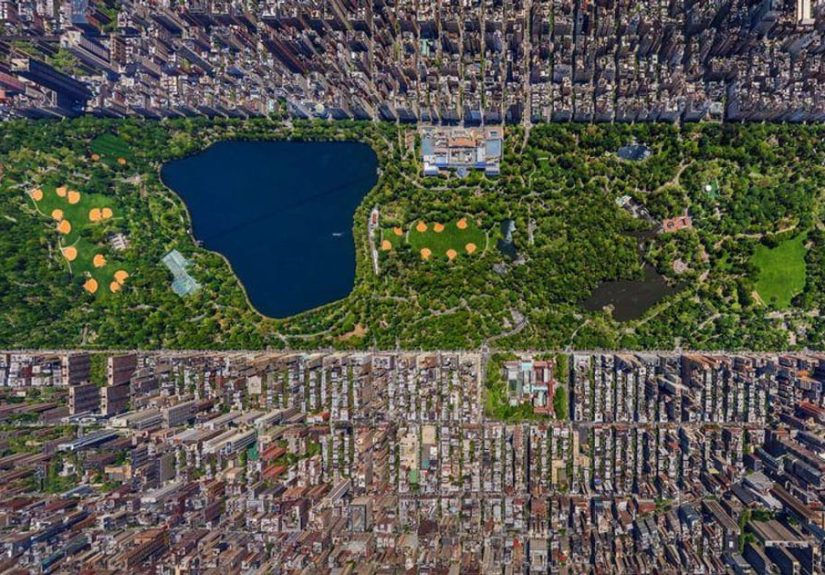
Elevation is an instant perspective upgrade. From above, you see how a monument fits into the city grid, the landscape,
or the coastline. You also understand why someone chose that spot in the first place (hint: visibility and drama).
Pro tip: sometimes the best view isn’t the famous towerit’s the nearby hill, rooftop bar, or park path nobody’s
hashtagging yet.
3) Go lower: ground-level details and “human scale”
Step back from the sweeping panorama and zoom in. What’s the stone texture? How do the steps wear down? What small
carvings or inscriptions hide in plain sight? When you get close, famous places stop being icons and start being objects
made by humansmeaning you’ll notice the imperfections, repairs, and design decisions that make them real.
4) Swap the season: snow, fog, rain, or the “off-peak glow”
Clear skies are overrated. Fog can turn a bridge into a floating ribbon. Rain makes streets reflective and colors richer.
Snow erases visual clutter and changes sound, too. Even shoulder-season light can make a place feel cinematic. The goal
isn’t perfect weatherit’s interesting weather.
5) Approach from an unexpected direction
Many landmarks are designed for a grand reveal from a “main” route. That’s great… for everyone. Try arriving by a
different neighborhood, a side street, a trail, or a ferry. A new approach can flip the story: what was once a backdrop
becomes the destination, and the “icon” turns into a surprising end-of-path moment.
6) Add context: a short story beats a long caption
A landmark’s history, symbolism, and engineering are basically a built-in “new perspective.” Learn one or two facts
before you gonothing intense, just enough to make you look differently. When you know what you’re seeing, you notice
more. And your photos stop being “big thing behind me” and start being “here’s why this matters.”
7) Use the “frame within a frame” trick
Instead of pointing your camera at the landmark like it owes you money, frame it through something: an archway, a window,
tree branches, reflections in water, or even a street scene with people. You get scale, narrative, and originalityall
without inventing a new filter called “I’m Unique, I Swear.”
Landmarks Reimagined: Specific Examples From Around the World
Below are famous places and landmarks seen from a new perspectivepractical angles that change how they feel and what
you notice. Consider this a menu of viewpoints: pick what fits your destination, mobility, schedule, and comfort level.
The Statue of Liberty (New York City): don’t skip the water approach
Most people think of Lady Liberty as a “stand on the island, take the photo” moment. But one of the best perspectives is
the approach itself: the skyline behind her, the harbor wind, and the sense of arriving by water the way so many immigrants
did historically. A ferry ride can turn the statue from a standalone icon into part of a bigger story about place, passage,
and first impressions.
The Golden Gate Bridge (San Francisco): look down, not just across
The classic viewpoint is a wide shot from a scenic overlook. Try a lower or steeper angle: from the shoreline with waves
in the foreground, or from a hill where you can see the bridge slicing through fog. When you look down the cables and
towers, the bridge stops being a “poster” and starts looking like a piece of working infrastructuregiant, geometric,
and surprisingly elegant.
The Grand Canyon (Arizona): trade “wow” for “wait, how is that real?”
The first view is always a jaw-dropper, but the new perspective comes when you change depth. Even short, safe trails
below the rim shift your understanding: layers become walls, colors become gradients, and “big” becomes “unreasonable.”
Sunrise and late afternoon light can make the geology read like a textured map rather than a single dramatic vista.
Mount Rushmore (South Dakota): widen the story beyond the faces
From the main viewing area, it’s easy to treat it like a quick bucket-list stop. A new perspective is to pay attention to
the surrounding Black Hills landscapethe granite, the forest, the scale, and the way the monument is placed within it.
When you consider the site’s broader history and symbolism, the experience becomes more complex than “giant heads” (which,
to be fair, is still a sentence your brain will enjoy repeating).
The Lincoln Memorial (Washington, DC): go at night for mood and meaning
In daytime, the Lincoln Memorial can feel like a must-do photo stop. At night, it becomes quieter and more reflective.
The lighting emphasizes symmetry and shadow, and the walk along the National Mall feels like a narrative path rather than
a checklist. The memorial’s scale reads differently when the crowd noise drops and you can actually hear your thoughts
(or at least your shoes).
Space Needle (Seattle): the best angle might be not from the top
Observation decks are fun, but the “new perspective” is often seeing the tower in the skyline, not just looking
out from it. Find a vantage point where the Space Needle becomes part of a layered city scenewaterfront, mountains,
neighborhoods, and weather rolling through. That’s when it stops being a single object and starts being a symbol of place.
The Gateway Arch (St. Louis): make it about reflection and curvature
The Arch is famous for its shape, but it’s even more interesting when you lean into geometry. Look for reflective surfaces,
puddles, and clean lines that echo the curve. Different distances change what the arch “does” visuallysometimes it frames
the city, sometimes it becomes a minimalist sculpture, and sometimes it looks like an elegant silver parenthesis around
the whole horizon.
The Eiffel Tower (Paris): go sidewaysironwork is the secret star
Yes, the full tower shot is iconic. But the new perspective is closer: the iron lattice detail, the beams, the repeating
patterns, and the way the structure feels both delicate and massive. From certain angles, the tower becomes less “tower”
and more “industrial lace.” It’s a great reminder that engineering can be art even when it’s holding up a mountain of tourists.
The Colosseum (Rome): step back to see the city swallow history
Inside, the Colosseum is about scale and structure. Outside, it’s about contrast: modern city motion wrapping around an
ancient landmark. A new perspective is to frame it with everyday lifetraffic, street scenes, or distant hillsso you feel
how history sits inside the present rather than living behind velvet ropes.
The Taj Mahal (Agra): see it as a composition, not a single shot
Many visitors aim for the straight-on symmetrical view. That’s beautifulbut try viewing it from a slightly offset angle
where the gardens, waterways, and surrounding environment become part of the composition. The Taj Mahal’s design is a
deliberate experience of approach, framing, and symmetry. When you notice the planned sightlines, you’re seeing the landmark
as an idea, not just a building.
Machu Picchu (Peru): the “classic viewpoint” is only the prologue
The famous overlook is unforgettable, but the new perspective comes when you move through the site and watch it change
shape: terraces align, walls reveal precision, and the setting becomes inseparable from the mountains. The experience is
less “photo moment” and more “architectural conversation with gravity.”
How to Plan Your “New Perspective” Trip (So It’s Fun, Not Chaotic)
Pick one perspective shift per landmark
Don’t try to do everything. Choose one twist: sunrise, water approach, side-route arrival, or a detail-focused walk.
One intentional choice can make a familiar landmark feel brand new.
Check access, rules, and closures early
Many famous places have timed entry, seasonal routes, restricted areas, or photography rules. A “new perspective” should
still be respectful and legal. If drones are restricted, skip them. If trails are closed, don’t “just hop the fence.”
The goal is a better view, not a better excuse.
Build in time for stillness
The best perspective shift often happens when you’re not rushing. Sit on a bench. Walk one extra block. Watch the light
change. Landmarks reward patience in a way that itineraries do not.
Photography Tips for Fresh Angles (Even If You’re Not a “Camera Person”)
Use people for scale
A landmark’s size is hard to understand without a reference point. A person in the frame (even a tiny silhouette) tells
the viewer what the landmark feels like in real life, not just in marketing.
Look for reflections
Water, windows, polished stone, and even sunglasses can add a surprising new perspective. Reflections create symmetry,
depth, and moodplus they make it look like you planned the shot on purpose.
Let the landmark be background sometimes
Tell a story: coffee on a street with a cathedral in the distance, a ferry wake with a skyline, a trail sign pointing to
a famous viewpoint. When the landmark isn’t the whole frame, it often becomes more interesting.
of Experiences: What “New Perspective Travel” Actually Feels Like
The first time I tried to see a famous place differently, it wasn’t dramatic. No helicopter. No private tour. Just a
stubborn decision to show up earlyso early that the city felt like it was still loading. I walked toward a landmark I’d
seen in a thousand photos, and for a moment I worried I was doing something pointless. Then the light shifted. Not in a
“Hollywood spotlight” way, but in a quiet, everyday waylike the world exhaled. The stone looked warmer. Shadows found the
carved details. The place didn’t change, but my brain finally stopped treating it like a logo.
That’s the secret: new perspective travel isn’t about rare access. It’s about attention. You start noticing how landmarks
behave. A bridge becomes a weather reportfog rolling in, wind pushing waves around pylons, metal humming faintly under
traffic. A memorial becomes a room with outdoor walls, where sound, footsteps, and silence are part of the design. A canyon
becomes less of a “view” and more like a layered history book that you can’t finish, because the pages are cliffs.
The funniest part is how small choices snowball. You take one side street instead of the main entrance and suddenly you’re
watching a landmark appear between buildings like a plot twist. You sit down for five minutesjust fiveand realize the
crowd has rhythms: waves of tour groups, pauses, the rare quiet pocket where you can actually hear birds instead of
narration. You look down at the ground and see worn stone steps that millions of shoes have polished into a soft shine,
like the place has been gently sanded by time.
And sometimes the “new perspective” is emotional, not visual. You read a short story about how the site was built or why it
mattered, and the landmark stops being a background prop for vacation photos. You feel the intention behind it. You notice
what it’s pointing toliterally, in the way it frames a horizon, and figuratively, in what it’s trying to say about a city,
a nation, a belief, or a moment in history.
My favorite perspective shift is the one that costs nothing: returning at a different time. Daytime is the loud version of a
landmarkbright, busy, obvious. Evening is the thoughtful version. Night is the version that seems to speak in lowercase.
When the lights come on and the crowds thin out, even the most photographed place can feel personal, like it’s finally yours
for a minute. You leave with fewer “perfect” shotsbut more real memories. Which, as it turns out, is the better souvenir.
Conclusion: Make the Famous Feel Fresh
Seeing famous places and landmarks from a new perspective isn’t about chasing rare angles for bragging rights. It’s about
breaking the autopilot. Show up when the light is interesting. Approach from a different route. Zoom in on details. Frame
the landmark inside a bigger story. The result is a travel experience that feels less like collecting checkmarksand more
like actually being there.