Table of Contents >> Show >> Hide
- What Is a French Upholstered Wing Chair?
- Why the Wingback Shape Still Works
- Signature Features of a French Upholstered Wing Chair
- French Country vs. French Provincial vs. Traditional Wing Chair
- Best Fabrics for a French Upholstered Wing Chair
- How to Choose the Right French Upholstered Wing Chair
- Where to Place a French Upholstered Wing Chair
- Styling Ideas for a French Upholstered Wing Chair
- Color Ideas That Work Beautifully
- How to Care for a French Upholstered Wing Chair
- Common Mistakes to Avoid
- Buying Tips: What Makes a Chair Worth It?
- of Real-Life Experience: Living With a French Upholstered Wing Chair
- Conclusion
A French upholstered wing chair is the furniture equivalent of a perfectly tied silk scarf: elegant, practical, and just dramatic enough to make the room feel intentional. It has the cozy high back of a classic wingback chair, the soft comfort of padded upholstery, and the graceful details associated with French country, French provincial, and Louis-inspired interiors. In other words, it is not just a chair. It is a small architectural moment with cushions.
Whether placed beside a fireplace, tucked into a bedroom corner, paired with a reading lamp, or used as a statement accent in a formal living room, this chair brings together comfort and character. Its winged sides create a cocoon-like shape, while curved arms, carved wood legs, linen-like fabrics, nailhead trim, tufting, and pale finishes give it that relaxed-but-refined French charm. The result is a seat that says, “Come sit down,” but in a very polite accent.
This guide explores what makes a French upholstered wing chair special, how to choose the right one, where to place it, which fabrics work best, and how to style it without making your room look like a museum where nobody is allowed to breathe near the furniture.
What Is a French Upholstered Wing Chair?
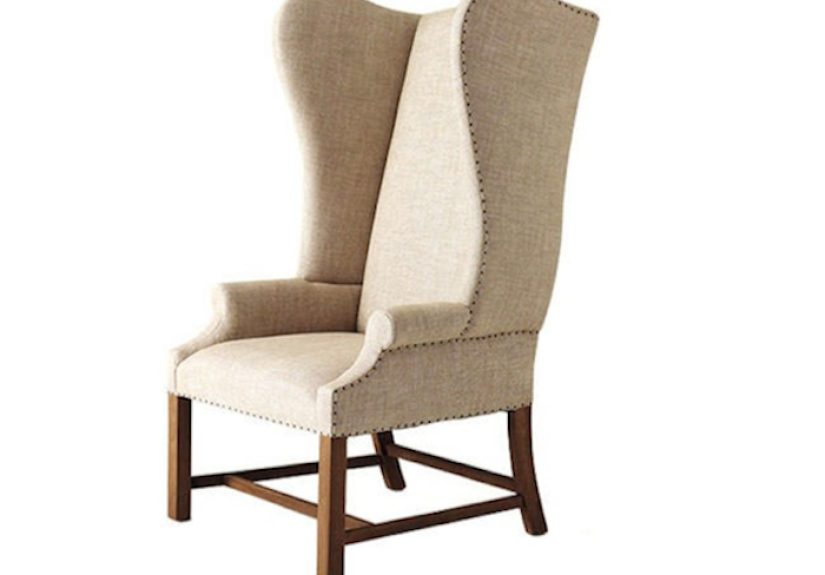
A French upholstered wing chair is a high-backed accent chair with side “wings” extending from the upper back, usually covered in fabric or leather and inspired by traditional French furniture forms. The word “upholstered” refers to the soft materials used to cover and cushion the chair, including fabric, padding, springs, foam, and sometimes webbing. This is what separates it from a purely wooden chair and makes it comfortable enough for reading, relaxing, or pretending to read while actually scrolling through your phone.
The French influence often appears in the chair’s silhouette and decorative details. You may see curved cabriole legs, weathered oak or birch frames, carved accents, button tufting, nailhead trim, linen-blend upholstery, cane panels, floral prints, or soft neutral colors such as ivory, beige, gray, cream, and muted blue. Compared with a heavy English wingback chair, a French version usually feels lighter, softer, and a little more romantic.
Why the Wingback Shape Still Works
The wingback chair has lasted for centuries because its design is both beautiful and functional. The tall back supports the body, while the side wings visually frame the sitter and create a sense of privacy. Historically, the shape helped shield people from drafts and heat near fireplaces. Today, most of us are not battling castle-level drafts, but the shape still creates a cozy, protected feeling.
That is one reason designers continue using wing chairs in living rooms, bedrooms, home offices, libraries, and reading nooks. They provide height in a room, break up low furniture lines, and offer a strong silhouette without requiring a huge footprint. A French upholstered wing chair can look formal, casual, rustic, romantic, or modern depending on the fabric and frame finish.
Signature Features of a French Upholstered Wing Chair
High Back and Curved Wings
The high back is the defining feature. It gives the chair presence and comfort, especially for reading or lounging. The wings curve outward from the sides of the back, making the chair feel enclosed without being bulky. In a French style chair, these wings may be gently rounded rather than sharply angular.
Soft Upholstery
French upholstered wing chairs often use linen, cotton blends, velvet, performance fabric, or textured polyester. Linen and linen-blend upholstery are especially popular because they suit the airy, natural look of French country interiors. For busy homes, performance fabrics are usually the smarter choice because they resist stains and wear better than delicate materials.
Nailhead Trim
Nailhead trim is a classic detail that outlines the chair’s arms, wings, or lower frame. Brass, bronze, pewter, or antique silver nailheads can add structure and shine. The trick is moderation. A little nailhead trim looks tailored. Too much can make the chair look like it is wearing armor.
Carved or Weathered Wood Legs
French-inspired chairs often feature exposed wooden legs in oak, birch, maple, or similar woods. Cabriole legs, tapered legs, fluted legs, and distressed finishes are common. A washed gray, whitewashed, or natural oak finish makes the chair feel relaxed and vintage, while dark wood creates a more formal look.
Tufting and Curved Arms
Button tufting, channel tufting, and rolled arms add depth and softness. These details are especially useful when the upholstery is plain because they create visual interest without requiring a bold print.
French Country vs. French Provincial vs. Traditional Wing Chair
Although these terms are often used together, they are not exactly the same. A French country wing chair is usually casual, rustic, and warm. It may have linen fabric, distressed wood, cane accents, or a floral pattern. A French provincial wing chair is a little more polished, with graceful curves and elegant proportions. A traditional wing chair may be more formal and can lean English, American colonial, or classic European depending on its lines.
If you want a relaxed farmhouse-style room, choose a French country upholstered wing chair with a washed wood frame and neutral linen. If you want a formal sitting room, choose a French provincial version with tufting, nailhead trim, and a more structured silhouette. If your style is transitional, look for a clean-lined wing chair with subtle French details rather than ornate carving.
Best Fabrics for a French Upholstered Wing Chair
Linen and Linen Blends
Linen is the classic choice for French interiors. It looks natural, breathable, and elegant without trying too hard. However, pure linen can wrinkle, stain, and fade more easily than synthetic or treated fabrics. A linen blend gives you a similar look with better durability.
Performance Fabric
Performance upholstery is ideal for homes with children, pets, coffee, red wine, or adults who claim they are “very careful” and then immediately drop salsa. Performance fabrics are designed to resist stains and daily wear, making them a practical option for family rooms and high-use reading chairs.
Velvet
Velvet adds richness and works beautifully in jewel tones, soft gray, dusty blue, or antique rose. A French upholstered wing chair in velvet can feel glamorous, especially with dark wood legs or brass nailheads. For everyday use, choose a durable performance velvet rather than a fragile decorative velvet.
Floral and Toile Prints
Floral prints, toile, ticking stripes, and faded botanical patterns are strongly associated with French country style. They work well when the rest of the room is relatively calm. If your sofa, curtains, rug, and wallpaper are already competing for attention, a floral wing chair may turn the room into a fabric argument.
How to Choose the Right French Upholstered Wing Chair
Measure the Space First
Before buying, measure the width, depth, and height of the area where the chair will sit. Wing chairs are often taller than standard accent chairs, so they need visual breathing room. Leave enough space around the chair for a side table, floor lamp, and comfortable walking paths.
Check Seat Height and Depth
A beautiful chair is less charming if your feet dangle like you are waiting outside the principal’s office. Look for a seat height that allows your feet to rest comfortably on the floor. A deeper seat is great for lounging, while a shallower seat works better for conversation areas or bedrooms.
Look at the Frame Construction
A sturdy French upholstered wing chair should have a solid wood or high-quality engineered wood frame. Better chairs may use reinforced joinery, corner blocks, dowels, or spring systems for long-term support. If the chair wobbles in the showroom, it is not “vintage character.” It is a warning.
Consider Cushion Fill
Foam cushions offer structure and support. Down-blend cushions feel softer and more luxurious but require fluffing. Spring-supported seats can improve comfort and help the chair hold its shape. For everyday use, aim for a balance between plushness and firmness.
Where to Place a French Upholstered Wing Chair
Beside the Fireplace
This is the classic placement. The chair’s historic shape naturally suits a fireside setting. Add a small round table, a reading lamp, and a textured throw. Suddenly, you have a cozy corner that looks like it knows how to pronounce “château.”
In a Reading Nook
A French upholstered wing chair is ideal for a reading nook because the high back and wings create a sense of enclosure. Place it near a window or in a quiet corner. Add a footstool if you want maximum comfort, especially for long reading sessions.
In the Bedroom
In a bedroom, this chair can serve as a dressing chair, a quiet coffee spot, or a place to toss clothes when you are pretending to be organized. Choose soft upholstery in cream, pale gray, or muted blue for a peaceful look.
In the Home Office
A wing chair can make a home office feel more personal and less like a tax preparation cave. Use it across from a desk for client seating, or place it in a corner for reading and planning. Leather, linen, or performance fabric all work well depending on the mood of the room.
Styling Ideas for a French Upholstered Wing Chair
Pair It With a Round Side Table
The curves of a round table balance the height and structure of the wing chair. A small wood, marble, or metal table gives you a place for books, tea, glasses, or the remote control that somehow disappears every evening.
Add a Slim Floor Lamp
A tall lamp enhances the vertical line of the chair and makes the area functional. Choose a brass lamp for warmth, a black metal lamp for contrast, or a ceramic lamp for a softer cottage feel.
Use a Pillow Carefully
Because wing chairs already have a strong shape, one pillow is usually enough. Try a small lumbar pillow in ticking stripe, velvet, floral, or textured linen. Avoid oversized pillows that push you off the chair like an overenthusiastic bouncer.
Balance Old and New
French upholstered wing chairs work best when mixed with modern pieces. Pair one with a clean-lined sofa, abstract art, a simple jute rug, or a sleek coffee table. This keeps the room fresh rather than overly themed.
Color Ideas That Work Beautifully
Neutral colors are the safest and most timeless choices. Beige, ivory, oatmeal, greige, taupe, and soft gray blend easily with many decorating styles. A pale blue or sage green chair adds color while staying calm. For drama, consider charcoal velvet, navy linen, moss green, or deep burgundy.
If the chair has a distressed wood frame, warm neutrals usually look best. If it has dark legs, richer fabrics can feel more grounded. If it has whitewashed wood, pale linen or cotton creates a breezy French country effect.
How to Care for a French Upholstered Wing Chair
Vacuum the upholstery regularly using a soft brush attachment to remove dust and crumbs. Rotate loose cushions if the chair has them. Keep the chair away from direct sunlight when possible, especially if the fabric is linen or cotton, because natural fibers can fade. Clean spills immediately according to the manufacturer’s care instructions.
For antique or vintage French wing chairs, inspect the frame, springs, and upholstery before buying. Reupholstering can be worthwhile, but it is not always cheap. If the frame is strong and the shape is beautiful, new fabric can turn an old chair into a custom-looking showpiece.
Common Mistakes to Avoid
Choosing Looks Over Comfort
A chair can have stunning carved legs and perfect upholstery, but if it feels like sitting on a decorative rock, it will become a very expensive sculpture. Always consider comfort, especially if the chair will be used daily.
Ignoring Scale
A tall wing chair in a tiny room can look overwhelming. A small chair in a grand living room can look lost. Match the chair’s scale to the room and nearby furniture.
Overdoing the French Theme
A French upholstered wing chair does not need a room full of roosters, lavender bundles, gilded mirrors, and signs that say “Bonjour.” Let the chair bring the French influence, then support it with subtle textures and balanced colors.
Buying Tips: What Makes a Chair Worth It?
A worthwhile French upholstered wing chair should combine style, comfort, and construction quality. Look for a strong frame, supportive seat, durable upholstery, clean seams, even nailhead placement, and stable legs. If you are buying online, review dimensions carefully and compare them with a chair you already find comfortable.
Budget-friendly versions can be great for guest rooms or occasional seating. Mid-range chairs often offer better fabrics and sturdier construction. High-end French wing chairs may include hand-applied finishes, premium upholstery, down-blend cushions, cane details, or artisan-level carving. The best choice depends on how often the chair will be used and how long you want it to last.
of Real-Life Experience: Living With a French Upholstered Wing Chair
The first thing people usually notice about a French upholstered wing chair is not the technical construction or the historical inspiration. It is the feeling. Put one in a room, and suddenly the space has a destination. Before the chair arrived, that corner may have been empty, awkward, or occupied by a plant slowly questioning its life choices. After the chair appears, the corner becomes a reading nook, a coffee spot, a conversation seat, or the unofficial “best place in the house.”
In daily use, the high back is one of the biggest pleasures. It supports the shoulders and creates a sense of calm that lower accent chairs do not always provide. The wings make the chair feel slightly private, which is wonderful in busy homes. You can sit there with a book and feel tucked away, even if someone nearby is loudly asking where the scissors went. The chair does not solve family chaos, but it does offer a dignified place to survive it.
Fabric choice makes a noticeable difference. A natural linen chair looks gorgeous, especially in soft daylight, but it may wrinkle and show stains faster than expected. That relaxed look is part of its charm, but it is not for everyone. A performance linen blend is often the better everyday option because it keeps the same casual French appearance while handling real life more gracefully. If pets are involved, textured fabrics in medium tones are forgiving. White linen with a black dog is a bold spiritual journey.
Placement also changes the experience. Near a fireplace, the chair feels traditional and cozy. Near a window, it becomes a morning coffee chair. In a bedroom, it adds hotel-like polish and gives you a place to sit while putting on shoes. In a home office, it softens the room and makes work feel less mechanical. The chair is versatile because it carries enough personality to stand alone but not so much that it refuses to cooperate with other furniture.
One practical lesson: add a small table immediately. Without a table, the chair becomes beautiful but slightly inconvenient. You need somewhere for a mug, phone, book, candle, or reading glasses. A footstool is also worth considering if the chair has a deep seat. It turns the chair from “nice accent piece” into “nobody bother me for twenty minutes.”
The best experience comes when the chair is styled simply. A lumbar pillow, a soft throw, a lamp, and one nearby surface are enough. Too many accessories can bury the silhouette. The French upholstered wing chair already has presence; it does not need a costume party around it. Let the curves, fabric, and frame do the talking.
Over time, this chair often becomes more than decoration. It becomes the seat guests choose first, the place where you drink tea at night, or the corner that makes the room feel finished. That is the quiet magic of a French upholstered wing chair: it is elegant, but it is not fragile; decorative, but still useful; classic, but flexible enough for modern life. It brings charm without shouting and comfort without looking sloppy. Honestly, if furniture could wink politely, this chair would.
Conclusion
A French upholstered wing chair is a smart choice for anyone who wants comfort, elegance, and timeless style in one graceful piece. Its high back, curved wings, soft upholstery, and French-inspired details make it useful in living rooms, bedrooms, offices, reading corners, and formal sitting areas. Choose linen or linen-blend fabric for an airy country look, performance upholstery for daily durability, or velvet for a more dramatic finish. Pay attention to scale, seat comfort, frame quality, and placement, and the chair will reward you with years of beauty and actual sit-down-and-stay-awhile comfort.
The secret is balance. Let the chair add charm without turning your home into a stage set. Mix old with new, soft with structured, and decorative with practical. When chosen well, a French upholstered wing chair does not merely fill a corner. It gives the whole room better posture.