Table of Contents >> Show >> Hide
Some bakers chase scale. Some chase trends. Some chase the kind of social-media fame that makes a croissant look like it needs its own publicist. Patrick O’Reilly of Cornrue Bakery seems more interested in something harder to fake: making bread that people genuinely remember.
That is a big reason Cornrue Bakery in Westport, County Mayo has become such a talked-about name among bread lovers. Patrick did not build the place on gimmicks, flashy branding, or a menu the size of a novella. He built it on patience, skill, restraint, and a clear belief that real bread should have depth, character, and a strong sense of place.
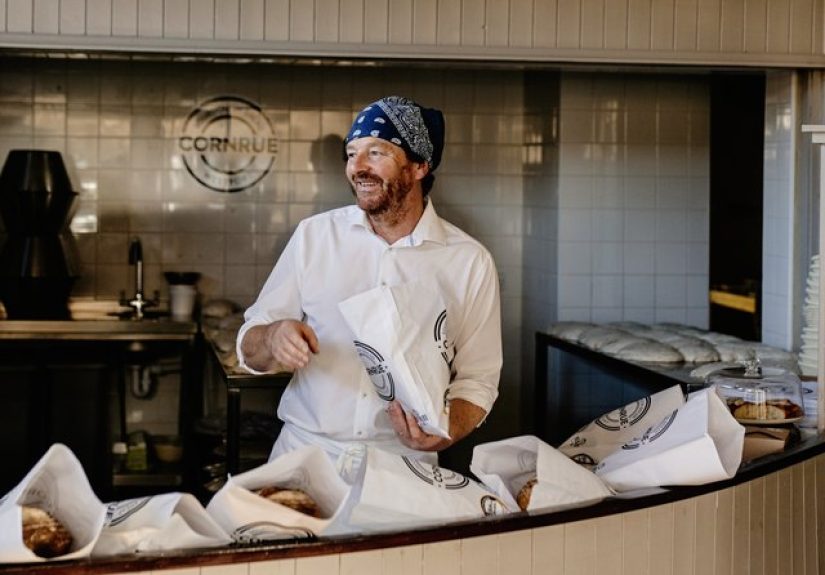
So who is Patrick O’Reilly of Cornrue Bakery, really? He is a baker, yes, but he is also a former restaurant professional, a trained cook, a thoughtful small-business owner, and a man who has turned sourdough into something close to a local language. Getting to know Patrick means getting to know the values behind Cornrue: quality over clutter, community over chaos, and time over shortcuts.
Who Is Patrick O’Reilly?
From restaurant floors to flour-dusted mornings
Patrick O’Reilly did not begin his career as the guy everybody associates with great sourdough in Westport. Before Cornrue Bakery became an award-winning name, he spent years working in fine dining in London. That background matters because it helps explain why Cornrue feels so deliberate. Patrick did not just fall into baking and get lucky; he arrived with a service mindset, a hospitality instinct, and an understanding that food is never only about food. It is also about experience, rhythm, and trust.
When he returned to Ireland, he found himself at a turning point. Restaurant management opportunities were not exactly falling from the sky, and that pushed him in a new direction. Instead of trying to recreate an old career, he decided to sharpen his cooking skills properly and enrolled at Ballymaloe Cookery School. That move turned out to be more than a career adjustment. It was the pivot that led to Cornrue.
There is something refreshing about that path. Patrick was not manufactured in a branding lab as “the sourdough guy.” He came to bread through work, observation, curiosity, and reinvention. In a food world that often loves instant mythology, his story feels grounded. It says, in effect, that expertise is often built the old-fashioned way: one long day, one smart decision, and one mistake at a time.
The Birth of Cornrue Bakery
A borrowed oven, a local appetite, and a very good idea
Cornrue Bakery officially began in spring 2017, but like many great food businesses, its real beginning was less polished than the final result. Patrick started baking overnight in a borrowed oven at a local restaurant. This is the kind of origin story that sounds romantic now, but probably felt slightly terrifying in real time. Borrowed oven. Overnight baking. Early sales. No glamorous montage, just hustle and dough.
From there, the loaves began reaching local shops in Westport, and demand grew. That growth was not random. People noticed the bread. They remembered it. They wanted more of it. Over time, Cornrue moved from a small operation into its own dedicated bakery and cafe, supported by the community that helped it take root in the first place.
The name “Cornrue” comes from a nearby hill, but Patrick has suggested that the name matters less than the quality of what is being made. That tells you a lot about his approach. The bakery is not trying to hypnotize you with branding poetry. It is trying to hand you a loaf that makes you reconsider what bread can taste like when somebody actually cares.
Today, Cornrue is more than a place to buy a loaf. It is a bakery, morning cafe, small grocery stop, and wine shop. But the bread remains the center of gravity. Everything else complements it. Nothing distracts from it. That kind of discipline is harder than it sounds.
Why Patrick O’Reilly’s Bread Stands Out
The five-day sourdough philosophy
If you want to understand Patrick O’Reilly of Cornrue Bakery, start with his relationship to time. Cornrue’s sourdough is naturally fermented over five days. In a world where people expect everything instantly, that timeline feels almost rebellious. Patrick has built his reputation on the idea that bread gets better when it is given the time it needs, not the time a business spreadsheet wishes it needed.
At Cornrue, the signature formula is beautifully spare: flour, water, salt. That simplicity is not minimalism for show. It is confidence. When a baker removes the noise, the technique has nowhere to hide. Long fermentation becomes the star. Flavor deepens. Texture improves. The loaf develops character, not just height.
Patrick has explained that he deliberately extends the sourdough process to create more flavor and longer-lasting bread. That is one of the defining ideas behind Cornrue. This is not bread made to be forgettable by dinner. It is bread meant to live with you for a while, evolving in flavor and proving that patience has a taste.
That philosophy also explains why Cornrue has earned such respect. In 2019, the bakery won gold at Blas na hÉireann in the sourdough bread category, a major recognition that helped confirm what local customers already knew. The bread was not just good for a small-town bakery. It was good, full stop.
And yes, there is a little poetry in all this, but it is practical poetry. Patrick’s method is not precious. It is disciplined. He is not asking bread to perform miracles. He is simply refusing to rush the parts that matter.
Small details, big difference
What makes a loaf memorable is often a chain of small decisions rather than one dramatic trick. Bakers who understand fermentation know that flavor is not some magic dust sprinkled on top at the end. It comes from process. That is one reason Patrick’s bread has such a strong identity. He treats fermentation as a craft, not a checkbox.
The result is bread that feels contemporary but rooted. It belongs to the current artisan-baking conversation, where long fermentation, naturally leavened dough, and careful handling are seen as marks of quality. At the same time, Cornrue avoids the exhausting self-importance that can sometimes hover around “serious bread.” The bakery’s voice is warm, inviting, and human. In other words, the bread is excellent, but nobody is making you solve a riddle before buying it.
Patrick’s Business Philosophy
Growing carefully instead of growing loudly
One of the most interesting things about Patrick O’Reilly is that he seems deeply aware of what he does not want Cornrue to become. In many industries, growth is treated like a moral commandment. Bigger means better. More locations, more products, more hours, more, more, more. Patrick’s view is more measured.
He has spoken openly about the limits of a bakery: only so much space, only so much cold storage, only so many hours in the day. That realism is not a lack of ambition. It is a mature understanding of sustainability. He wants a business that can survive, serve, and remain joyful, not one that expands itself into exhaustion.
That thinking also shapes Cornrue’s hours. The bakery operates in a way that supports a life, not just a revenue target. Patrick has connected those choices to family and work-life balance, and that detail matters. It gives the bakery a human scale. Cornrue does not feel like a machine designed to extract maximum output. It feels like a business built by somebody who wants excellence without sacrificing everything else that makes life worth living.
Ironically, that restraint may be part of what makes the bakery so appealing. Scarcity can sharpen demand, yes, but it also signals integrity. Customers understand that what Cornrue makes is limited because it is being made with intention. Running out of bread is inconvenient, sure, but it is also the kind of problem that tends to happen when people believe in what you are making.
The location that became an advantage
Patrick has also been honest about the fact that Cornrue is not in the absolute center of town. Early on, that looked like a disadvantage. But over time it became part of the business model’s quiet genius. The people who come to Cornrue are coming on purpose. They are not wandering in by accident looking for ice cream, a random sandwich, or whatever else happens to be trending this week. They are there for the bread, the coffee, the pastries, and the feeling of the place.
That turns foot traffic into something stronger: intent. For a bakery built around a highly specific point of view, that is gold.
More Than a Bakery
Coffee, cinnamon buns, wine, and a sense of place
Patrick O’Reilly of Cornrue Bakery is not only making loaves. He is building a morning destination. The bakery’s public-facing identity includes a light-filled cafe with coffee, toast, jam, scones, and bread. Fresh cinnamon buns appear later in the week, and Cornrue also stocks locally produced seasonal vegetables and a curated selection of natural wines.
This is where Patrick’s broader food background becomes especially visible. He is a trained sommelier with a particular interest in natural and organic wine, which adds an unexpected but fitting extra dimension to Cornrue. The place is not trying to become everything for everyone, but it does show how bread can anchor a wider food culture.
That matters because the best bakeries rarely succeed by selling only product. They succeed by shaping habits. They become part of someone’s morning, part of a conversation, part of a town’s self-image. Cornrue seems to understand that perfectly. It offers bread, yes, but also a reason to pause, look around, and enjoy where you are.
Why Patrick O’Reilly Matters in Modern Artisan Baking
A baker with a clear point of view
There are many talented bakers. What sets Patrick apart is clarity. He knows what kind of bakery he wants to run. He knows what kind of bread he wants to make. He knows what he values, and he seems unusually willing to let those values shape the business instead of watering them down for convenience.
That clarity shows up everywhere: in the long fermentation, in the compact menu, in the intentionally limited production, in the community focus, and in the refusal to overcomplicate what is already working. Cornrue is modern without being trendy. It is ambitious without being frantic. It is refined without feeling remote.
And Patrick himself comes across as someone who understands that a bakery can represent more than a business. It can represent a town, a standard, and a local confidence. When people travel specifically to buy bread from Cornrue, they are not just buying carbs. They are buying into a story about care, craftsmanship, and local pride.
In that sense, getting to know Patrick O’Reilly means understanding a larger lesson: the best food businesses are not always the loudest ones. Sometimes they are the places that keep showing up, keep doing the work, and keep making something with enough honesty that people feel it.
Extended Reflections: What the Cornrue Experience Really Feels Like
Five hundred more words, because one loaf of insight is never enough
To really understand Patrick O’Reilly of Cornrue Bakery, it helps to imagine the experience around the bread, not just the bread itself. Cornrue sounds like the sort of place that rewards people who arrive with purpose. You head there in the morning, probably a little hungry and definitely a little hopeful, because good bakeries inspire optimism. You know there is coffee. You know there is bread. You know there is at least a decent chance somebody ahead of you will buy the thing you were secretly planning to order. That, oddly enough, is part of the charm.
The physical setup matters. Cornrue is described as welcoming and light-filled, with easy parking for both cars and bikes. That may sound like a small practical detail, but practical details are what separate a lovely fantasy from an actual habit. A bakery becomes part of life when it is pleasant to reach, pleasant to enter, and pleasant to linger in. Cornrue seems built for exactly that kind of repeat relationship.
Then there is the product mix, which tells its own story. Great coffee. Toast and jam. Scones. Bread. Cinnamon buns later in the week. Seasonal vegetables. Natural wine. This is not a random collection. It feels curated by someone who understands how people eat in real life. You stop in for a loaf and a coffee, then notice vegetables you would be happy to cook that evening, then maybe eye the wine for later and tell yourself it is called planning, not impulse shopping. That is how food places become woven into a routine: one small excellent decision at a time.
Reviews and guide notes also suggest that Patrick is a welcoming presence, someone who can talk about food without turning it into a lecture. That matters more than people sometimes realize. Customers do not only remember flavor; they remember tone. A baker who makes you feel comfortable, curious, and well fed leaves a different kind of impression than one who acts like you need a glossary just to buy a loaf. Cornrue’s appeal seems tied to both craft and warmth, which is a powerful combination.
There is also something meaningful about a bakery that is closely tied to its town. Patrick has spoken about wanting people to come to the area and see that what is being made there is truly excellent. That pride shows up in the structure of the business. Cornrue is not built like a generic concept that could be dropped anywhere and function the same way. It feels rooted in Westport. The bakery’s story, its customers, its local produce, and even its carefully chosen pace all make more sense because of where it is.
And that may be the most memorable thing about getting to know Patrick O’Reilly: he does not seem interested in creating bread detached from life. He makes bread that belongs to a place, a family schedule, a team, a community, and a morning rhythm. In a time when so many businesses are encouraged to optimize themselves into blandness, Cornrue feels like the opposite. It has edges. It has standards. It has personality. It has enough confidence to stay small on purpose and enough quality to make people travel for it anyway.
That is no small accomplishment. In fact, it is the kind of accomplishment that tends to last.
Conclusion
Patrick O’Reilly of Cornrue Bakery is not simply an award-winning baker. He is a builder of routines, a believer in slow fermentation, and a business owner with the rare courage to define success on his own terms. His story moves from fine dining in London to Ballymaloe to a borrowed oven in Westport and finally to a bakery that has earned loyal customers, industry praise, and serious local affection.
What makes Patrick compelling is not just the bread, though the bread is clearly doing some heavy lifting. It is the combination of skill, perspective, and restraint behind it. Cornrue works because it knows exactly what it is: a bakery with soul, a strong sense of place, and a standard that does not blink.
For anyone interested in artisan bread, bakery culture, or the people who quietly elevate food in their communities, Patrick O’Reilly is worth knowing. And for anyone lucky enough to walk into Cornrue early enough to get the loaf they wanted, he is probably worth thanking too.