Table of Contents >> Show >> Hide
- Why Inventing New Dinosaurs Is So Addicting
- Step 1: Start With a Big Idea, Not the Details
- Step 2: Mix and Match Inspiration Like a Mad Scientist
- Step 3: Draw Your Totally New Dinosaur – Step by Step
- Step 4: Give Your Dinosaur a Mini Story
- Fun Prompts to Spark Your Next Dino Design
- Sharing Your Original Dinosaur Art (Even After the Challenge Is Closed)
- Practice Makes Prehistoric
- Real-Life Experiences: What Happens When People Invent Dinosaurs Together
- Final Thoughts
Somewhere between a T. rex and a doodle on the back of your math homework, a brand-new dinosaur is waiting
to be born. It doesn’t exist in any museum, no paleontologist has ever named it, and yet you can already
picture it stomping across the page in your sketchbook. That’s the magic behind the Bored Panda prompt
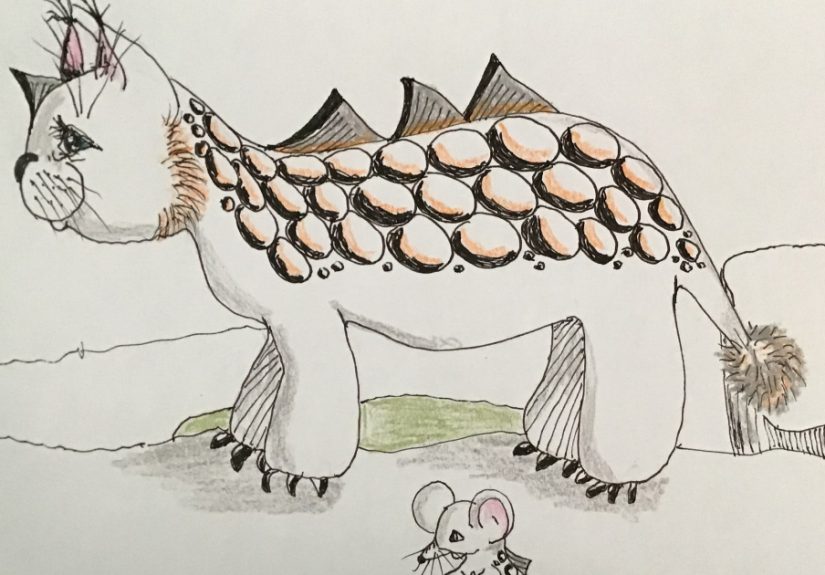
“Hey Pandas, Make Up And Draw A Totally New Dinosaur” – even if the original challenge is closed, the idea
is way too fun to retire.
This article is your invitation to grab a pencil, open a fresh document, or fire up your tablet, and design
your very own prehistoric superstar. We’ll talk about where ideas come from, how to turn a random thought
into a full character, and how to draw your dino step by step. Whether you’re a kid, a grown-up, or a
secretly-a-dinosaur-in-a-human-body, you’ll walk away with tools to invent creatures that feel funny,
fierce, and surprisingly believable.
Why Inventing New Dinosaurs Is So Addicting
Dinosaurs sit in that perfect sweet spot between science and imagination. On one hand, they’re real:
gigantic reptiles that ruled the planet long before humans showed up. On the other hand, nobody has seen
them alive – only their bones. That means your brain has a lot of creative wiggle room. You’re not limited
to realistic photos or strict color palettes. If you want a feathered, neon-blue, banana-loving
thunder-lizard, nobody can prove you wrong.
Making up dinosaurs is also a sneaky way to practice worldbuilding and character design. When you invent a
creature, you’re quietly answering a bunch of questions:
- Where does it live?
- What does it eat?
- Is it a hero, a villain, or the awkward comic relief?
- Can it fly, swim, burrow, or do interpretive dance?
The more you think about these details, the more your dinosaur becomes a living character instead of a
random blob with teeth. That’s why art teachers, parents, and even game designers love “make up your own
dinosaur” prompts – they stretch creativity, storytelling, and drawing skills all at once.
Step 1: Start With a Big Idea, Not the Details
Before you draw a single line, give your dinosaur a “hook” – one simple idea that makes it different.
Think of this as your elevator pitch:
- Cloudasaurus: A gentle giant that lives in the sky and walks on clouds.
- Metro-Raptor: A fast, slick dinosaur that sprints along subway tracks and loves city lights.
- Cactusaurus: A desert dino covered in soft, glow-in-the-dark spines and blooming flowers.
- Gelato-ceratops: A horned dinosaur that can freeze anything it roars at, like an ice-cream cannon.
Notice how each name hints at a place, a mood, or a special ability. You don’t need a full backstory yet,
just a main idea that makes you think, “Ooh, I want to see that.”
Ask Three Quick Questions
To sharpen your concept, answer three small questions about your dino:
- Environment: Is this dinosaur from jungle, desert, ocean, space, or city rooftops?
- Diet: Does it munch plants, chase prey, nibble on electricity, or eat emotions?
- Personality: Is it shy, chaotic, wise, clumsy, or always hungry?
A shy, swamp-dwelling herbivore will look and move very differently than a chaotic lava-lizard that eats
molten rock. You’re already designing the pose, shapes, and colors without even touching your pencil yet.
Step 2: Mix and Match Inspiration Like a Mad Scientist
Creature designers rarely pull ideas out of thin air. They borrow bits and pieces from animals, plants,
machines, and even furniture. Your dinosaur can work the same way.
Combine Real Animals
Pick two or three animals and mash them together:
- A crocodile’s jaw + a parrot’s beak pattern + a kangaroo’s legs.
- A whale’s smooth body + a cat’s expressive eyes + a bat’s wings.
- A chameleon’s color-changing skin + a porcupine’s quills + a giraffe’s neck.
Don’t copy exactly. Just borrow shapes and vibes: the curve of a horn, the fluff on a tail, the way a
bird’s wings fold.
Add Everyday Objects
Now toss in something unexpected from real life. What if your dinosaur’s back plates looked like skyscrapers?
What if its tail ended in a lantern? What if its frill was shaped like a pair of headphones?
These little details make your design memorable. Someone might forget “green dinosaur with teeth,” but they
won’t forget “nighttime dinosaur whose tail glows like a streetlamp.”
Step 3: Draw Your Totally New Dinosaur – Step by Step
Once you’ve got your idea, it’s time to bring it to life on paper (or screen). You don’t need fancy art
skills to start. The goal is not perfection; the goal is “Oh wow, I actually finished this.”
1. Start With Simple Shapes
Lightly sketch circles, ovals, and rectangles to build a rough skeleton:
- One big oval for the body.
- A circle or rectangle for the head.
- Thin cylinders for legs and arms.
- A long, curving line for the tail.
Don’t worry about details yet. Think of it like posing a balloon animal. Is your dinosaur hunched, proud,
sneaking, or leaping? Tilt the shapes to show energy and direction.
2. Block In the Silhouette
Trace around your simple shapes to create one clean outline. This is where you add the big features:
the curve of the neck, the thickness of the tail, the size of the claws. If the outline looks cool in
solid black, you’re on the right track – a strong silhouette is what makes characters instantly recognizable.
3. Layer in Features and Texture
Now decorate your dino with the fun stuff:
- Spikes, plates, feathers, or fluffy frills.
- Patterns like stripes, spots, spirals, or even tiny stars.
- Details that match the story – algae on a swamp dino, soot marks on a lava dino, clouds drifting around a sky dino.
Use shorter, repeated lines for rough textures like scales or fur. Use long, smooth lines for sleek,
slippery skin. Try not to draw every scale; suggest texture instead of detailing every single bump.
4. Bring the Face to Life
The face is where people connect emotionally with your creature. Small changes in the eyes and mouth can
completely transform the mood. A huge pupil with a tiny shine dot looks friendly. Narrow eyes and angled
brows look intense. A wide, curved mouth reads as a goofy grin; a jagged, open mouth screams “run.”
Think about your dinosaur’s personality and draw the face to match. A shy herbivore might peek out from
behind a leafy frill. A show-off raptor might smirk with one eyebrow raised. Yes, dinosaurs can absolutely
have eyebrows in your universe.
5. Add Color and Lighting
Color is another storytelling tool. Bright, saturated colors often feel playful or magical. Earthy tones
feel more grounded and realistic. You can mix them for contrast: maybe your swamp dino is olive green with
neon pink mushrooms growing on its back.
Don’t forget light and shadow. Even a simple shading pass – darker under the belly, lighter on the top –
can make your creature feel three-dimensional. Imagine where the light source is coming from (sun, moon,
lava, a spotlight at a dinosaur rock concert) and shade accordingly.
Step 4: Give Your Dinosaur a Mini Story
Great creature designs feel like they belong in a world. A quick backstory can help you decide on poses,
props, and expressions.
Try writing a tiny “dino bio” next to your drawing:
- Name: Sir Fluffadon IV
- Home: Cloud forests above a floating volcano.
- Favorite snack: Lightning-charged berries.
- Special skill: Can glide on storm winds and light up the sky with its frill.
- Daily problem: Keeps accidentally shocking its own tail.
This tiny character sheet turns your drawing into a story starter. Suddenly you can imagine comics,
picture books, game levels, or animated shorts starring your dinosaur.
Fun Prompts to Spark Your Next Dino Design
Staring at a blank page is the fastest way to convince yourself you’re “not creative.” Let’s fix that with
some easy prompts. Use these as starting points and twist them however you like.
- A dinosaur that lives in a modern city and has a job. What does it do for work?
- A dinosaur that’s only the size of a hamster but thinks it’s a T. rex.
- An underwater dinosaur that glows like a jellyfish and sings to communicate.
- A desert dinosaur that can store water in its tail like a cactus.
- A dinosaur made of clouds that changes shape with the weather.
- A time-traveling dinosaur that collects souvenirs from every era.
- A dinosaur that has evolved to live in outer space on a tiny asteroid.
You can even roll dice or pull random words from a hat: “ice,” “music,” “robot,” “cat” – boom, you’ve got a
frost-breathing robo-dino with cat ears who plays the electric guitar. You’re welcome.
Sharing Your Original Dinosaur Art (Even After the Challenge Is Closed)
The original Bored Panda prompt might be closed, but the spirit of it lives on anywhere people share their
takes on creative challenges. You can still:
- Post your dinosaur on social media with your own fun caption or fake “field guide” description.
- Turn it into a mini-comic or a short story and share both art and words together.
- Print it as a coloring page for friends, family, or students.
- Gather a few designs and create a “Dinosaur Trading Card” deck with stats like Speed, Cuteness, Drama.
If you’re posting online, remember basic safety: avoid sharing personal info, be kind in the comments, and
always credit other artists if their work inspired you. The best part of community art prompts is watching
fifty people take the same idea and twist it into fifty completely different creatures.
Practice Makes Prehistoric
No one draws a perfect dinosaur the first time. Behind every polished artwork you see online are heaps of
messy sketches, weird experiments, and “what was I thinking?” doodles. That’s normal. The important thing
is to keep drawing, keep playing with shapes, and keep asking, “What if?”
Try making a whole series of original dinosaurs over a month. Give yourself small, fun constraints:
- Week 1: Weather dinosaurs (rainstorm dino, snowstorm dino, rainbow dino).
- Week 2: Food dinosaurs (pizza dino, bubble-tea dino, broccoli warrior dino).
- Week 3: Music dinosaurs (drummer dino, opera-singer dino, DJ velociraptor).
- Week 4: Job dinosaurs (firefighter dino, librarian dino, astronaut dino).
By the end, you’ll have a whole “dino-verse” filled with characters that feel like they belong to you –
because they do.
Real-Life Experiences: What Happens When People Invent Dinosaurs Together
Creative prompts like “make up and draw a totally new dinosaur” might look simple, but they can turn into
surprisingly powerful experiences when people do them together. Here are a few ways this kind of challenge
plays out in the wild.
A Classroom Full of Tiny Paleontologists
Picture an elementary classroom on “dinosaur day.” The teacher has just finished reading a book about
prehistoric creatures. Instead of handing out a worksheet, they say, “Now you’re all paleontologists and
creature designers. Your job is to discover a dinosaur nobody has ever seen before.”
At first, a few kids freeze. They’re used to copying from the board, not inventing from scratch. But as the
teacher walks around and asks questions“Where does your dino live?” “Is it super fast or super strong?”
the classroom starts buzzing. One student decides their dinosaur lives in the school gym and eats lost
sneakers. Another imagines a gentle giant who carries kids to school when it snows. A third draws a tiny,
nervous dinosaur that hides in backpacks and loves crayons.
By the end of the lesson, the walls are filled with colorful creatures, each with a handwritten description.
Kids who normally say, “I can’t draw” are proudly explaining their designs to classmates. That’s the power
of an open-ended prompt: there’s no wrong answer, only more ideas.
Family Night at the Kitchen Table
Now imagine a rainy evening when the Wi-Fi is acting up and everyone is a little cranky. Instead of
doom-scrolling, someone tosses markers and paper on the kitchen table and announces a “New Dinosaur Contest.”
The rules are simple: you have 20 minutes to draw a dinosaur nobody has ever seen, then you present it to
the family like you’re on a nature documentary.
The results are glorious chaos. One parent creates an ultra-dramatic “Laundry-saurus” who folds clothes at
lightning speed but only on Tuesdays. A teenager designs a sleek, cyberpunk raptor that hacks vending
machines. A younger sibling draws a stubby, smiling blob with three tails and explains very seriously that
it’s a “triple-wag good-luck dinosaur.”
There’s laughter, a little friendly trash talk, and a lot of “wait, that’s actually cool.” Nobody remembers
the glitchy Wi-Fi anymore. The drawings end up magneted to the fridge, and for a while, everyone refers to
household problems in dinosaur terms: “We could really use a Dishwash-a-don right now.”
Online Communities and the Joy of Comparing Ideas
Online, challenges like the Bored Panda “Hey Pandas” series create the same magic on a bigger scale. People
from different countries, ages, and skill levels share their takes on the same prompt. One artist goes for
moody, dramatic lighting and realistic muscles; another uses bright, flat colors and simple cartoon shapes.
Someone who’s just starting out posts a wobbly but charming dino and gets encouraging comments instead of
criticism.
Seeing dozens or hundreds of responses to a single prompt is a sneaky art lesson. You realize how flexible
ideas really are. “Make a dinosaur” doesn’t lock you into one style; it invites you to bring your own
personality. That realization sticks around even after the challenge is technically closed. The next time
you face a blank page, you’ve got proof that there’s no single “correct” way to draw anything.
How These Experiences Change the Way You See Yourself
Most people carry around a quiet story in their head: “I’m not creative,” or “I can’t draw.” Finishing a
totally made-up dinosaur pokes a big hole in that story. You didn’t trace it. It wasn’t a stock photo. It
came out of your brain, through your hands, and onto the page.
Once you’ve invented one creature, it gets easier to believe you can invent othersaliens, robots, fantasy
pets, whole worlds. You start noticing shapes and patterns in everyday life and thinking, “That would make
a great tail” or “Those building windows look like dino scales.” Creativity stops being a rare lightning
strike and starts feeling like a habit you can feed.
That’s the secret gift of silly prompts like “Hey Pandas, Make Up And Draw A Totally New Dinosaur.” It’s not
just about dinosaurs. It’s about giving yourself permission to play, experiment, and surprise yourself. The
challenge may be closed, but the door it opens in your imagination stays wide open.
Final Thoughts
Your brand-new dinosaur doesn’t need to follow the rules of any textbook. It just needs to feel alive to
you. Start with a simple idea, mix in inspiration from the real world, build the design with basic shapes,
and let color and story do the rest. Whether you’re posting to an art community, hanging your dino on the
fridge, or keeping it in a sketchbook only you see, you’re doing something powerful: you’re creating
something that didn’t exist yesterday.
So, hey panda: grab that pencil. The prehistoric universe is waiting for your next weird, wonderful
invention.