Table of Contents >> Show >> Hide
- The Room That Helped Change Earth
- How a National Treasure Slid Toward Trouble
- The Rescue Mission Happened on Earth
- Not a Makeover. A Time Machine.
- Why This Resurrection Matters More Than Nostalgia
- From Near-Loss to Public Rebirth
- What the Restored Room Teaches Us Now
- Experiences Related to the Topic: What It Feels Like to Encounter Mission Control Again
- Conclusion
- SEO Tags
If walls could talk, the old Mission Control room in Houston would probably begin with, “Please stop touching my ashtrays.” This was not just another historic room with fading carpet and a glorious smell of old paperwork. This was the room where flight controllers helped guide the first Moon landing, managed Apollo 13’s life-or-death emergency, and turned impossible math into living, breathing astronauts coming home.
And then, for a while, it almost became a cautionary tale about what happens when a nation assumes its greatest rooms will somehow preserve themselves. Spoiler: they do not. Even legends can peel, fade, crack, and get patched with duct tape.
The story of Apollo-era Mission Control is not only about space history. It is about historic preservation, public memory, engineering culture, and the uncomfortable truth that national treasures can drift toward ruin while everybody assumes someone else is watching the gauges. Fortunately, this story has a happier ending. Mission Control did not stay abandoned in spirit. It came back. Carefully. Meticulously. Almost absurdly lovingly. In other words, exactly the way a place like this deserved.
The Room That Helped Change Earth
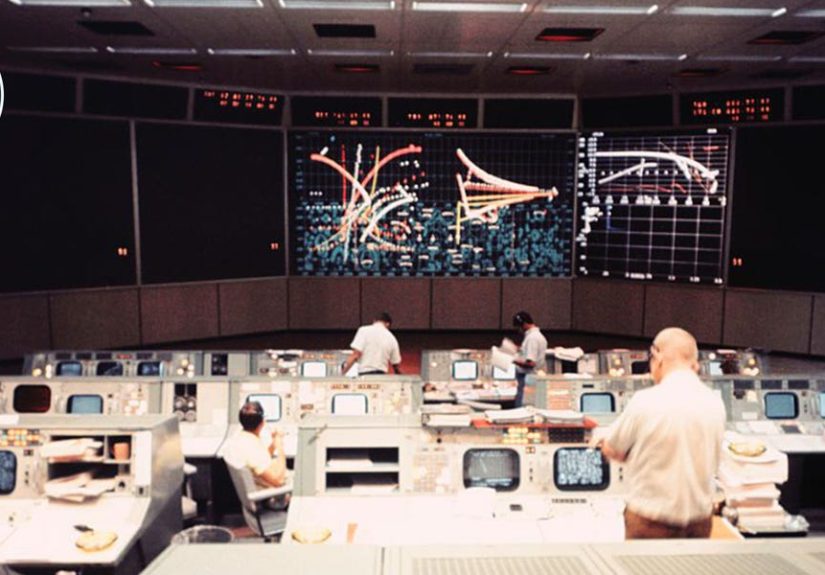
The Apollo Mission Control Center at NASA’s Johnson Space Center in Houston, inside Building 30, was more than a backdrop for famous radio chatter. It was the operational brain of America’s human spaceflight effort. From there, teams monitored Gemini missions, all Apollo flights, and later supported Skylab, Apollo-Soyuz, and shuttle-era operations before the historic room was retired from active use in the early 1990s.
This room became iconic because it represented something bigger than machinery. Mission Control turned flying into a disciplined team sport. Astronauts may have gotten the magazine covers, but the flight directors, controllers, engineers, and specialists in Houston built the method. Every console represented a specialty. Every headset carried responsibility. Every call had consequences. If the Moon landing was a giant leap, Mission Control was the unglamorous miracle that kept the leap from turning into a face-plant.
That matters because the title “Mission Control” is often used like a Hollywood shortcut, as if it means one cool guy in a vest barking orders. In reality, it meant a layered decision-making culture built on preparation, simulation, redundancy, and brutal honesty. Apollo 11, Apollo 13, and the rest were not won by swagger. They were won by checklists, systems thinking, and a room full of smart people who knew how to stay calm while the universe tried to be difficult.
How a National Treasure Slid Toward Trouble
The room’s historical value was recognized early. The Apollo Mission Control Center was designated a National Historic Landmark in 1985. But recognition and protection are not the same thing. That is the sneaky little plot twist in so many preservation stories: everyone agrees something is important, and then the carpet still ends up sad.
After the room was decommissioned in 1992, it was no longer an operational nerve center. Yet it remained visible, toured, admired, and heavily trafficked. Visitors passed through. VIPs toured it. Staff used the area. Over time, wear and tear took a serious toll. Items disappeared. Surfaces degraded. The room slowly lost its integrity as an authentic historic environment. It was still famous, but it was no longer truly itself.
That decline became official in 2015, when the National Park Service gave the site “threatened” status. For a room that had once helped land humans on the Moon, that was a sobering diagnosis. The problem was not one dramatic disaster. It was the far more common enemy of historic places: neglect by inches. A little budget pressure here. A little too much access there. A missing prop. A patched floor. A shrug. Before long, a world-changing room looked less like preserved history and more like history that had been left out in the garage.
And that would have been a cultural loss far beyond Houston. Mission Control is one of the rare places in American history where technology, politics, education, risk, and public imagination all converged. Letting it decay would have meant losing not just furniture and fixtures, but a physical record of how a nation once organized itself to do something astonishing.
The Rescue Mission Happened on Earth
The revival of Mission Control did not happen because someone casually decided it might be nice to freshen the place up. It happened because preservation advocates, NASA staff, retired flight controllers, and community partners treated the room like the mission it was. Former Apollo flight director Gene Kranz became one of the loudest and most influential voices pushing for action. Sandra Tetley, Johnson Space Center’s historic preservation officer, helped drive the effort with the kind of persistence usually associated with people who refuse to let history be replaced by a plaque and a shrug.
Planning documents and consultations gave the restoration real structure. NASA, preservation experts, the National Park Service, the Texas Historical Commission, and retired Apollo personnel worked to determine what “accurate restoration” should really mean. The goal was not a themed attraction. It was not “retro-inspired.” It was not “Apollo-ish.” The goal was to recreate the room as faithfully as possible to the Moon landing era, with extraordinary attention to detail.
Funding took creativity. NASA could not simply scoop up private donations for a specific project in the usual way, so Space Center Houston and the Advisory Council on Historic Preservation helped make the money flow where it needed to go. Space Center Houston launched a campaign to restore the room, supported by major backing from the City of Webster, Texas, plus public crowdfunding through a Kickstarter campaign. In a delightful twist, a room that once symbolized national ambition was partly saved by ordinary people saying, “Actually yes, this matters. Here’s my credit card.”
All told, the restoration effort landed in the neighborhood of $5 million. Which sounds like a lot until you remember this was not a kitchen remodel. This was an attempt to revive one of the most significant interiors in the history of human exploration without turning it into a fake movie set.
Not a Makeover. A Time Machine.
Every Console Had a Biography
One of the most fascinating parts of the restoration is how personal it became. The consoles were not treated as anonymous equipment. They were treated as artifacts connected to specific people, habits, and moments. The restoration team cataloged, studied, and restored the iconic control consoles with help from the Cosmosphere in Kansas. The room was returned to an Apollo-era configuration, with Apollo 15 often serving as a crucial reference point because it represented a peak in Apollo console development and was especially well documented.
That meant recovering not just the look of the consoles, but the lived-in character of the room. What brand of cigarettes was on a console? What kind of coffee cup did a controller prefer? What papers, pens, clipboards, headsets, and labels belonged there? This was preservation at the level of personality. In lesser hands, that would sound obsessive. Here, it was the whole point. Mission Control was not generic. It was intensely human.
Floor to Ceiling, Detail by Detail
The restoration team hunted for evidence like detectives with engineering degrees. A fragment of original carpet found under a pneumatic tube station helped reproduce the flooring. A scrap of wallpaper found behind a fire extinguisher helped recreate the wall covering. The ceiling pattern, light fixtures, fabrics, furniture finishes, and room layout were studied and rebuilt with astonishing care.
Some of the solutions were clever because preservation had to coexist with modern practical realities. For example, the team preserved historic components without destroying them, while incorporating hidden technological updates where needed for interpretive purposes. In other words, they made it work without bulldozing authenticity. That balance matters. A good restoration does not cosplay history. It reveals it.
The result was a room that looked as if the controllers had just stepped out for a break, possibly to grab coffee, possibly to save the mission, possibly both. It restored not only appearance, but atmosphere. And atmosphere is not fluff. In a place like this, atmosphere is evidence.
Why This Resurrection Matters More Than Nostalgia
It would be easy to frame the restored Mission Control room as a love letter to Apollo nostalgia. And sure, nostalgia is in the building. You do not recreate vintage wallpaper and rotary dials because you hate history. But the deeper value is not sentimental. It is educational and cultural.
The restored room corrects a common misunderstanding about how major achievements happen. Apollo is often remembered through a handful of names: Armstrong, Aldrin, Collins, Lovell, Kranz. Important names, absolutely. But Mission Control reminds visitors that success was institutional as well as individual. The Moon landing was a triumph of process, collaboration, training, and accountability. It happened because many people did difficult work in disciplined coordination.
That message lands especially well today, in an era that loves lone-genius myths and flashy disruption. Mission Control tells a different story. It says excellence can be methodical. It says teamwork can be heroic. It says preserving the places where big decisions were made helps future generations understand what competence actually looks like.
It also gives the public something rare: a physical connection to the culture of problem-solving. This is the room associated not just with Apollo 11’s triumph, but with the larger legacy of NASA’s human spaceflight mindset. Walk into it and you are reminded that history is not abstract. It happened in rooms. Around tables. At consoles. In fluorescent light. With coffee going cold and nerves running hot.
From Near-Loss to Public Rebirth
The restored Apollo Mission Control room reopened in June 2019, just in time for the 50th anniversary of Apollo 11. Public tours followed through Space Center Houston, allowing visitors to see the room not as a faded relic but as a vivid historical environment. Better yet, the experience was designed to bring the room to life through audio and interpretation, helping visitors understand not only what the room looked like, but what it felt like when the mission was unfolding.
That reopening was more than a ribbon-cutting. It was a statement that some places are worth saving in full resolution. Not summarized. Not approximated. Not reduced to a hallway display and a gift shop mug. Mission Control came back because enough people understood that authenticity matters, especially when you are preserving the setting of one of humanity’s greatest achievements.
And there is a nice poetic symmetry in that. Mission Control was once the place where teams solved impossible problems under deadline. Decades later, it became its own impossible problem, and a different team solved it.
What the Restored Room Teaches Us Now
The resurrection of Mission Control carries a lesson beyond NASA history. It shows that preservation is not about embalming the past. It is about keeping useful memory alive. When a society preserves the rooms where discipline, courage, and competence once changed the world, it gives itself a better chance of recognizing those qualities again.
This matters as the United States returns to lunar ambitions and deeper-space planning. Modern mission control rooms are sleeker, more digital, and far less likely to feature overflowing ashtrays and heroic quantities of brown coffee. But the restored Apollo room offers a foundation story. It shows where the culture came from. It reminds current and future engineers that they are not inventing excellence from scratch. They are inheriting it.
So yes, Mission Control came back from the brink. But the real resurrection was bigger than a room. It was the recovery of a national memory about how great work is done: with rigor, humility, collaboration, and a refusal to panic when the stakes get weirdly astronomical.
Experiences Related to the Topic: What It Feels Like to Encounter Mission Control Again
There is a difference between reading about Mission Control and experiencing it, even secondhand. Reading gives you facts. The room gives you scale. On paper, you know Apollo was historic. In person, or even in a vivid mental reconstruction of the restored space, you realize something stranger and more moving: the room is both smaller and bigger than you imagined. Smaller physically, because history tends to inflate square footage in our minds. Bigger emotionally, because once you understand what happened there, the place seems to vibrate with consequence.
Imagine walking toward the viewing area knowing that families once sat behind that glass while the mission played out in real time. Imagine seeing the restored consoles lit up, the front screens alive again, the chairs angled as if someone might return any second. Suddenly Apollo stops being a black-and-white montage and becomes a workplace. A tense, caffeinated, deeply human workplace.
That is one of the most powerful experiences related to this story: realizing that history’s grandest moments often happened in ordinary-looking settings. Not marble halls. Not science-fiction palaces. Just a room full of equipment, paperwork, and people trying very hard not to make a mistake. There is something comforting in that. Greatness did not require perfect glamour. It required competence under pressure.
The restored room also creates a surprisingly intimate experience. Because the details are so specific, you do not just see “NASA.” You see individuals. A headset here. A coffee cup there. A personalized setup. Evidence that the people who worked these consoles were not mythic beings manufactured by patriotic music. They were talented professionals, many of them remarkably young, showing up each day to do jobs that demanded precision and nerve.
That experience can hit different visitors in different ways. For some, it is patriotic. For others, it is emotional. For engineers and students, it can be deeply motivating. You look at the room and think: these people accomplished this with less computing power than a modern smartphone and a lot more pressure than most of us would care to order before lunch. The restored Mission Control room makes innovation feel less like magic and more like disciplined labor. That may be its most valuable lesson.
There is also a haunting quality to the place. Not spooky, exactly, but reverent. The restored environment captures a moment after achievement, as if the controllers have just left. That “just stepped away” quality makes the room feel suspended in time. It invites visitors to mentally replay what happened there: the long stretches of routine monitoring, the bursts of alarm, the clipped voices on the loops, the instant when data became decision and decision became survival.
For anyone interested in museums, preservation, or public history, this room is a master class in why authenticity matters. A replica can explain. An authentic place can persuade. It changes posture. It changes attention. People lower their voices in rooms like this, not because a sign tells them to, but because accuracy itself commands respect. The restored Mission Control room does not scream for attention. It earns it.
And maybe that is the most unforgettable experience tied to this story: the recognition that saving a place can also save a feeling. Before restoration, Mission Control risked becoming a story told about a room. After restoration, it became a room that tells the story again. That is a huge difference. One is remembrance at a distance. The other is living connection.
So when people describe the restored Mission Control as inspiring, they are not just being polite. The inspiration comes from proximity. You are standing near the architecture of competence. You are seeing what collective focus looked like when the mission mattered and the margin for error was painfully thin. In a noisy age full of hype, there is something almost radical about a room that reminds you progress is usually built by patient experts doing serious work together.
That is why Mission Control’s resurrection resonates so strongly. It is not merely a comeback story for a historic interior. It is an experience of recovering confidence in what people can build, protect, and pass on. The room came back from the brink, yes. But it also brings visitors back from a different brink: the modern temptation to believe history is disposable, expertise is boring, and old rooms cannot still teach new generations how to think big without thinking sloppy.
Conclusion
Houston’s historic Mission Control did not survive on fame alone. It needed advocates, money, research, craftsmanship, and an almost heroic level of attention to detail. Its comeback proves that preservation is not passive. It is an active choice to protect the places where human achievement became real.
In the end, Mission Control came back from the brink for the same reason Apollo succeeded in the first place: people cared enough to do the hard work correctly. No shortcuts. No cheap imitation. Just a determined effort to restore the room where calm minds once helped humanity do the outrageous. Not bad for a place with old carpet, complicated wiring, and one of the best comeback arcs in American history.