Table of Contents >> Show >> Hide
Guam has always looked like a postcard with a security clearance. It has beaches, palm trees, and enough tropical beauty to make your laptop wallpaper feel inadequate. But behind the island’s vacation-brochure looks, something much bigger is taking shape. Guam is being transformed into one of the most important pieces of America’s military architecture in the Indo-Pacific, a hardened hub designed to absorb pressure, launch power, and stay in the fight even if the region turns ugly in a hurry.
That transformation is not just about building more barracks or parking a few extra aircraft on a runway. It is a full-spectrum remake. The United States is expanding Marine Corps facilities, upgrading Andersen Air Force Base, strengthening logistics, adding housing, and building a layered air-and-missile defense network meant to protect the island from ballistic, cruise, and even hypersonic threats. In plain English, Guam is being engineered to do three things at once: survive a first strike, support a long campaign, and signal to rivals that America is serious about staying put in the Pacific.
That is why the phrase “Pacific fortress” no longer sounds like a dramatic magazine headline. It sounds like policy. And like most real policy, it comes with steel, concrete, billion-dollar budgets, and a very long list of practical headaches.
Why Guam Matters So Much
Guam’s value starts with geography. The island sits far closer to Asia’s flashpoints than the U.S. mainland does, while still being U.S. territory. That combination is gold for planners. Unlike bases hosted by allies, Guam gives Washington a place where it can build, store, launch, and train without having to negotiate every operational detail with another government. In military terms, it is both a forward position and sovereign ground.
That matters because the Indo-Pacific is no longer treated as a secondary theater. It is the main strategic stage for U.S. defense planning. As competition with China intensifies, the Pentagon wants forces that can move fast, disperse, resupply, and keep operating under threat. Guam fits that model almost too well. It is a platform for bombers, tankers, submarines, surveillance, logistics, and now missile defense. In other words, Guam is not just a base. It is a base system.
From useful outpost to central node
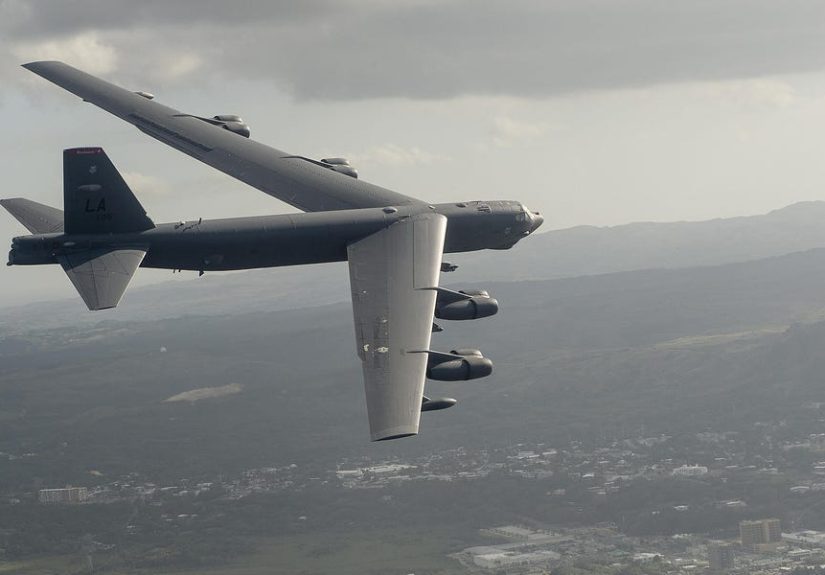
For years, Guam was already important, but the latest shift makes it more central than ever. Andersen Air Force Base has long supported bomber rotations, tanker operations, and munitions storage on a scale that gives the United States unusual reach in the Western Pacific. Naval Base Guam adds submarine and maritime muscle. Together, they form a rare combination: air, sea, fuel, storage, communications, and room for expansion, all on American soil.
That helps explain why U.S. planners increasingly see Guam not as a rear area, but as a front-line enabler. It may not sit closest to a crisis, but it is close enough to matter and far enough to be more survivable than some other positions in a conflict. That is a very attractive sentence in Pentagon math.
The New Architecture of a Pacific Fortress
A layered missile shield is the headline project
If Guam is becoming a fortress, missile defense is the moat, the wall, and the guy on the tower with binoculars. The United States is building a new Guam Defense System designed as a 360-degree shield, integrating sensors, command-and-control systems, radars, launchers, and interceptors across multiple sites on the island. This is not a single magic umbrella. It is a layered architecture meant to handle different kinds of threats at different phases of flight.
That distinction matters. A ballistic missile is not the same problem as a low-flying cruise missile, and neither behaves like a hypersonic weapon. The Pentagon’s answer is to combine capabilities rather than bet everything on one silver bullet. Guam already has a THAAD presence, but the newer concept is broader and much more permanent. The project is meant to unfold in phases over several years, turning Guam into the most ambitious land-based missile-defense experiment in the U.S. Pacific posture.
And yes, that is expensive. Very expensive. But from Washington’s perspective, the cost of not defending Guam is even higher. If the island is the hinge of U.S. regional logistics and power projection, then leaving it exposed would be like buying a vault and forgetting the door.
Airpower is getting a harder shell
At the same time, Andersen Air Force Base is being upgraded to support a wider range of operations and aircraft. Infrastructure work includes airfield improvements, maintenance facilities, utilities, fuel systems, roads, stormwater projects, and munitions-related construction. Some of this is tied to partner force activity, including plans connected to Singapore’s F-15 presence, but the broader strategic effect is obvious: Andersen is being reshaped to handle more traffic, more mission types, and more stress.
The logic here goes beyond runway length and hangar doors. U.S. strategy in the Pacific now emphasizes resilience and dispersal, especially under the concept of Agile Combat Employment. That means forces must be able to operate from multiple locations, move quickly, and keep functioning even when communications are strained or infrastructure takes a hit. Guam is central to that idea because it can serve as both a launching point and a sustaining hub.
Think of Andersen less as a normal air base and more as a heavily upgraded power strip for regional air combat, logistics, and recovery operations. Not glamorous, maybe, but wars are won as much by the quality of the wiring as by the shine on the aircraft.
Camp Blaz turns the Marine relocation into reality
The Marine Corps piece of Guam’s transformation is also becoming more concrete, literally and strategically. Marine Corps Base Camp Blaz, the first new Marine Corps base established in decades, is central to the long-planned relocation of Marines from Okinawa. That move is designed to spread U.S. force posture more widely across the Pacific and reduce overconcentration in one place.
The relocation is not theoretical anymore. Transfers have begun, and thousands of Marines are expected to move to Guam in phases. That gives the island a more substantial Marine Air-Ground Task Force footprint, which strengthens U.S. ability to train, stage, and respond across the region. The point is not simply to park Marines on another island. It is to create a posture that is more distributed, more resilient, and more politically sustainable over time.
In strategic language, this is force dispersion. In everyday language, it means Guam is becoming busier, more crowded, and far more central to any serious U.S. military plan in the Pacific.
More Than Bases: Guam Is Becoming a Warfighting Ecosystem
The biggest mistake people make when thinking about military buildup is imagining that it is just a pile of separate projects. One radar here, a barracks there, a few extra fences, maybe a PowerPoint deck with a lot of arrows. What is actually happening on Guam is much more integrated. The island is being shaped into a warfighting ecosystem, where missile defense, aviation, logistics, communications, housing, command centers, and allied access reinforce one another.
That is what makes the “Pacific fortress” label stick. A fortress is not just a wall. It is a whole system that lets defenders see better, move faster, store more, endure longer, and recover quickly. Guam’s transformation follows exactly that logic. Missile defense protects infrastructure. Infrastructure supports air and maritime operations. Housing and medical capacity support the people who run those operations. And resilience planning helps the whole structure keep working after a typhoon or an attack.
In other words, Guam is no longer being prepared only to host forces. It is being prepared to keep those forces functioning under pressure. That is a much bigger strategic jump.
The Costs and Friction Behind the Buildout
Housing is the most immediate strain
Fortresses may be built from concrete, but people still have to sleep somewhere. One of the sharpest local concerns is housing. As the military footprint grows, more service members, contractors, and families will need places to live. That demand lands on an island with limited land, high building costs, and an already tight housing market.
Officials have acknowledged the problem, and the Pentagon has moved toward additional housing initiatives. Even so, the numbers are sobering. Guam is expected to see a significant rise in military-related population over the next several years, and some of that demand will spill beyond the fence line. For local residents, that can mean higher rents, tougher competition for homes, and a feeling that strategic necessity is showing up in the real-estate listings.
That tension is one reason the buildup creates mixed reactions. Jobs and federal spending are real benefits. So are infrastructure improvements. But if the military’s timeline moves faster than civilian housing supply, local families are left playing defense in their own market.
Health care and support services feel the pressure too
Housing is not the only stress point. Health care capacity is another. As personnel and dependents increase, so does the need for clinics, specialists, emergency support, and public health infrastructure. Guam’s leaders have repeatedly argued that the island needs stronger federal investment in civilian systems, not just military facilities. That is a fair point. A modern military posture cannot run on a fragile civilian foundation forever.
This is where the shiny maps of missile interceptors meet everyday reality. A military buildup does not just require radars and runways. It needs schools, utilities, medical services, roads, power, water, and enough skilled workers to keep everything from breaking at once. Guam’s challenge is that it must absorb national-security priorities without letting local quality of life become collateral damage.
Environmental and cultural questions are not side issues
There is also the question of land, heritage, and environmental impact. Construction on Guam does not happen in a vacuum. It affects ecosystems, village life, traffic, cultural sites, and the way residents experience the island itself. Military planners often talk in the language of readiness, posture, and deterrence. Local communities often talk in the language of access, affordability, and stewardship. Both are talking about security. They are just using different dictionaries.
That tension is not likely to disappear. The more Guam becomes indispensable to U.S. strategy, the more important it becomes to manage the buildup in a way that does not treat local concerns like annoying footnotes. A fortress built without community trust may still stand, but it will stand awkwardly.
This Fortress Must Survive Storms Too
One of the smartest shifts in Guam’s transformation is that resilience now means more than missile defense. Super Typhoon Mawar exposed how vulnerable both civilian and military systems could be when power, water, roads, and communications take a beating. That experience pushed Guam toward more integrated planning for infrastructure recovery and modernization.
This matters because the island’s future risks are dual-use. Guam must prepare for military threats and natural disasters at the same time. The Pentagon can harden a site against attack, but if a storm knocks out the grid or snarls roads and logistics, readiness still takes a hit. So the new Guam strategy is not just about surviving adversaries. It is about surviving reality.
That is why resilience planning, infrastructure synchronization, and cross-agency coordination are becoming part of the story. The fortress model now includes energy reliability, communications redundancy, transportation capacity, and recovery speed. The island is being fortified against missiles, yes, but also against the Pacific itself, which is a notoriously unfriendly construction inspector.
Living Inside the Buildout: The Experience Behind the Strategy
To understand what this transformation really means, it helps to step away from the policy language and picture the lived experience of Guam during a historic military expansion. On paper, the story is about deterrence, distributed force posture, and integrated missile defense. On the ground, it is also about construction noise, traffic shifts, new housing pressure, unfamiliar acronyms, and the constant sense that the island is being asked to carry something much larger than itself.
For many residents, the buildup can feel like watching two versions of Guam exist at the same time. One is the Guam of family networks, village identity, Chamorro culture, fishing, church, school schedules, rising rents, and ordinary concerns about cost of living. The other is the Guam of airfield upgrades, defense budgets, environmental review documents, command centers, and visiting delegations talking about deterrence in the Western Pacific. Those two Guams are not separate, of course. They are colliding every day.
The experience is not one-note. Some people see opportunity. Military construction can create jobs, attract federal investment, and improve roads, utilities, and professional training. Businesses that support contracting, logistics, engineering, and services can benefit. Young people may see new career paths tied to skilled labor, public service, or military employment. For supporters of the buildup, the island’s strategic role is not just a burden; it is proof that Guam matters in a world where small places are often overlooked until a crisis hits.
But there is another side to that experience, and it is not hard to understand. When housing gets tighter, wages do not always keep up. When military allowances outcompete local budgets, families feel it immediately. When new facilities rise faster than civilian systems expand, residents worry that the island is being optimized for strategy rather than for the people who already live there. A fortress may look reassuring from Washington. From a neighborhood perspective, it can look like someone else’s emergency plan is rewriting your future block by block.
There is also an emotional dimension that strategic documents rarely capture. Guam is often described as an “unsinkable aircraft carrier,” a phrase that may sound clever in a briefing room but lands differently on an island where people actually raise children, care for elders, and remember storms, wars, and generations of military presence. Residents are not abstract terrain. They are the human context of every runway extension, every housing initiative, and every new layer of missile defense.
That is why the experience of Guam’s transformation is ultimately defined by negotiation. Not just between the United States and potential adversaries, but between military urgency and civic reality, between federal ambition and local consent, between readiness and livability. The island is being asked to become harder, faster, more durable, and more central to American power in the Pacific. The challenge is making sure it does not become less itself in the process.
And that may be the real test of America’s Pacific fortress. Not whether Guam can host more missiles, Marines, or aircraft. Not whether the island can be wired into a better command network or protected by a thicker shield. Those things matter. But the deeper question is whether the United States can build strategic strength on Guam while still treating Guam as a community, not just a platform. If Washington can manage that balance, the island becomes more than a fortress. It becomes a durable anchor for American strategy. If it cannot, then the buildup may still move forward, but it will do so with friction built into the foundation.
Conclusion
Guam is transforming itself into America’s Pacific fortress because U.S. strategy has changed, regional threats have grown, and the Pentagon no longer believes it can rely on vulnerable, lightly defended hubs in the Western Pacific. The answer is a tougher Guam: more missile defense, more infrastructure, more Marines, more logistics, and more resilience. It is a blueprint built for contested operations, not peacetime convenience.
But fortification is never just military. It is social, economic, environmental, and deeply local. Guam’s future will be shaped not only by command centers and interceptors, but also by whether housing stays affordable, whether civilian systems keep up, and whether island communities feel protected rather than pushed aside. That is what makes this story so compelling. Guam is not merely becoming stronger. It is becoming more consequential, more contested, and more revealing of how America plans to hold the Pacific in the years ahead.