Table of Contents >> Show >> Hide
- Introduction: When Capes Met the Bubble Economy
- The Early 1990s Boom: Everybody Was Buying Comics, But Not Always Reading Them
- The Death of Superman: A Great Story, a Dangerous Signal
- Grim, Gritty, and Extremely Armed
- Image Comics Changed the Game, Then Exposed the Risk
- Marvel’s Corporate Trouble: When Superheroes Met Wall Street
- Retailers Took the Hardest Hit
- Did the 1990s Almost Kill Superheroesor Just Bad Business?
- Experience Section: What It Felt Like to Live Through the 1990s Superhero Roller Coaster
- Conclusion: The Decade That Nearly Broke the Cape
- SEO Tags
Superheroes did not die in the 1990s, but for a few wild years, the industry selling them looked like it had been punched through a brick wall by Doomsday, then billed for the repairs.
Introduction: When Capes Met the Bubble Economy
Today, superheroes are everywhere. They run movie franchises, streaming shows, video games, lunchboxes, Halloween aisles, and at least three arguments at every fan convention. But in the 1990s, the superhero business nearly collapsed under the weight of its own hype. The decade gave readers some unforgettable comics, bold creator-owned experiments, and characters who still matter. It also gave the industry gimmick covers, speculator fever, distribution chaos, bankrupt publishers, and enough pouches to make a kangaroo feel underdressed.
The title “How The 1990s Almost Killed Superheroes” sounds dramatic, but the facts are dramatic. Comic shops closed by the thousands. Marvel filed for Chapter 11 bankruptcy protection in 1996. Collectors who thought every foil-stamped first issue would become a retirement plan learned a painful lesson: rarity matters, and a comic printed in the millions is about as rare as a cold French fry under a car seat.
So what happened? The short answer is that the superhero industry confused popularity with permanent demand. The longer, more interesting answer involves the direct market, superstar artists, Wall Street, polybags, Image Comics, the death of Superman, and a generation of readers who loved superheroes but got tired of being treated like walking wallets.
The Early 1990s Boom: Everybody Was Buying Comics, But Not Always Reading Them
The superhero market entered the 1990s with momentum. Batmania from the 1989 film had reminded mainstream America that capes could be cool. Marvel’s X-Men line was exploding. Comic shops had become cultural clubhouses where fans could discover new issues every week, debate continuity, and argue whether Wolverine could beat Batman. For the record, the real winner of that fight would be the publisher selling the crossover.
The boom was fueled by the direct market, a system in which specialty comic shops ordered books from distributors. Unlike traditional newsstand sales, many direct-market orders were nonreturnable. That meant retailers had to guess demand in advance. When demand looked endless, stores ordered aggressively. Publishers saw huge numbers and printed more. Collectors saw huge hype and bought multiple copies. The entire machine began feeding itself.
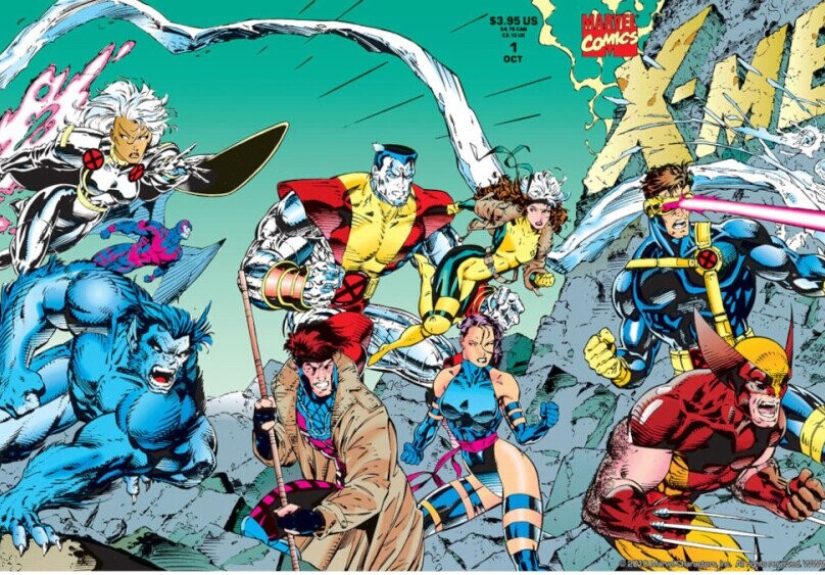
Marvel’s X-Men #1 in 1991 became the symbol of the moment. With multiple covers that could be collected separately or combined into one large image, it sold more than eight million copies across channels. X-Force #1, also from 1991, rode a similar wave with bagged trading cards and massive orders. These were not just comic books anymore. They were events, collectibles, lottery tickets, and colorful rectangles of financial optimism.
The Collector Mentality Took Over
In healthy collecting, people value history, scarcity, condition, and emotional attachment. In the 1990s, a lot of buyers skipped straight to “this will pay for my beach house.” Publishers encouraged that dream with first issues, variant covers, foil logos, holograms, embossed artwork, glow-in-the-dark effects, and sealed polybags that screamed, “Do not read me; I am allegedly important.”
The problem was simple: when everyone buys five copies of the same comic and stores them carefully, the future has plenty of copies. The comic does not become rare. It becomes a very shiny crowd.
The Death of Superman: A Great Story, a Dangerous Signal
Few events capture the 1990s superhero boom better than Superman #75, the famous issue in which Superman dies fighting Doomsday. The storyline was not a lazy stunt in creative terms. It had emotional weight, strong pacing, and a genuine sense of cultural shock. Superman was not just another hero; he was the hero, the original caped icon, the character your grandparents knew even if they thought “graphic novel” meant a book with too many naughty words.
When mainstream media reported that Superman would die, people who had not entered a comic shop in years suddenly appeared at the counter. Some bought the standard edition. Others bought the black polybag collector’s edition, which included extras like a memorial armband. The issue sold millions of copies and became one of the most famous comics of the decade.
But the event also taught publishers a dangerous lesson: shock sells. Death sells. Replacement heroes sell. Big headlines sell. Soon, superhero comics became crowded with universe-shaking events, dramatic costume changes, broken backs, clone confusion, temporary deaths, and relaunches that promised everything would change foreveruntil the next time everything changed forever.
When Every Issue Is Historic, Nothing Feels Historic
Readers can enjoy a major event. They can even enjoy several. But if every month brings another “collector’s item,” fatigue sets in. The emotional stakes begin to feel like marketing copy. The death of Superman worked because Superman mattered. The industry’s mistake was treating the sales spike as a formula rather than a unique cultural moment.
Grim, Gritty, and Extremely Armed
The 1990s superhero aesthetic did not come from nowhere. The 1980s had produced sophisticated, darker works like Watchmen and The Dark Knight Returns. Those stories challenged superhero mythology with intelligence and purpose. The 1990s often copied the surface: more shadows, more violence, more scowling, more leather, more guns, and more anatomy that appeared to have been assembled during an earthquake.
Characters like Wolverine, the Punisher, Cable, Venom, and Spawn reflected the decade’s appetite for antiheroes. Many were genuinely popular because they offered intensity and moral conflict. The issue was not darkness itself. Darkness can be powerful. The issue was excess without balance. Too many comics seemed to believe that a hero became mature by adding shoulder pads, gritted teeth, and a firearm roughly the size of a refrigerator.
Still, it would be unfair to dismiss the entire decade as a pouch-filled fever dream. The 1990s also brought meaningful experimentation. Milestone Media introduced a more diverse superhero universe with characters like Static, Icon, and Hardware. Image Comics helped normalize creator ownership on a large commercial scale. Vertigo, though not strictly a superhero line, expanded what mainstream comics could feel like. The decade was not creatively empty; it was creatively unstable.
Image Comics Changed the Game, Then Exposed the Risk
In 1992, several superstar Marvel artists left to form Image Comics, a company built around creator ownership. Todd McFarlane, Jim Lee, Rob Liefeld, Marc Silvestri, Erik Larsen, Jim Valentino, and Whilce Portacio represented a new kind of comic celebrity. Fans followed artists, not just characters. That was revolutionary.
Image launched with enormous energy. Youngblood, Spawn, WildC.A.T.s, Savage Dragon, and other titles looked louder, slicker, and more rebellious than much of what Marvel and DC were publishing. Spawn #1 became a sales monster, and Image proved that creators could build commercial power outside the traditional Big Two system.
But the new company also reflected the decade’s weaknesses. Some titles were late. Some stories felt secondary to style. The market was already overloaded, and retailers had to gamble on huge orders. Image was not the cause of the crash, but it became one of the clearest examples of how fast hype could inflate expectations beyond sustainable demand.
The Good Part of the Image Revolution
The most important legacy of Image was not big muscles or splash pages. It was creator control. The company showed that artists and writers could own their work, profit from their ideas, and challenge corporate publishing models. That lesson outlived the crash and helped shape modern comics in powerful ways.
Marvel’s Corporate Trouble: When Superheroes Met Wall Street
Marvel was the biggest name in American superhero comics, but size did not protect it. The company expanded aggressively into trading cards, stickers, toys, and licensing. It also became entangled in financial engineering and corporate battles that had very little to do with telling good Spider-Man stories.
As the market cooled, Marvel’s problems multiplied. Sales declined. The trading-card boom weakened. Top creators had already left for Image. The company’s attempt to control distribution through Heroes World created major logistical problems and helped destabilize the direct market. Retailers suddenly had to deal with a fractured distribution system, while other publishers made exclusive arrangements elsewhere.
In December 1996, Marvel filed for Chapter 11 bankruptcy protection. That sentence still sounds strange today because Marvel is now associated with billion-dollar films and global pop-culture dominance. But in the mid-1990s, the publisher of Spider-Man, the X-Men, the Avengers, and the Fantastic Four was in serious financial danger.
Heroes World and the Distribution Mess
Marvel’s move to self-distribute through Heroes World was supposed to give the company more control and profit. Instead, it strained retailers and contributed to a wider distributor war. Diamond Comic Distributors eventually emerged as the dominant player after acquiring Capital City Distribution. The system survived, but it became narrower and more fragile. For many comic shops, the turbulence was too much.
Retailers Took the Hardest Hit
When people talk about the 1990s comic crash, they often focus on publishers. But comic shop owners were on the front line. They had ordered stacks of “hot” books based on hype, customer demand, and publisher promises. When speculators disappeared, those stacks became dead inventory.
Imagine owning a small store and realizing that the expensive collector’s editions in your back room are not treasure. They are rent money wearing foil. That was the nightmare many retailers faced. Shops closed. Communities lost gathering places. Readers who depended on local stores had fewer places to discover new series. The crash damaged the ecosystem that had supported superhero comics for years.
The industry had trained customers to buy comics as products first and stories second. Once the products stopped looking profitable, many casual buyers left. The remaining readers were often the ones who cared about characters, writers, artists, and long-term storytelling. In a painful way, the crash revealed who was actually reading.
Did the 1990s Almost Kill Superheroesor Just Bad Business?
Superheroes themselves were never the real problem. People still loved Spider-Man, Batman, Superman, the X-Men, Wonder Woman, and the Hulk. The problem was the business model wrapped around them. Publishers overprinted. Retailers overordered. Collectors overinvested. Marketing departments overpromised. Characters were twisted into extreme shapes to chase trends. The result was a market that looked powerful until the moment everyone realized the floor was made of wet cardboard.
Yet superheroes survived because the core idea remained strong. A person puts on a costume and tries to do the right thing. That concept can handle darkness, humor, romance, tragedy, science fiction, street crime, cosmic adventure, and even the occasional clone saga. The 1990s nearly killed the superhero industry’s confidence, but not the appeal of heroism itself.
The Recovery Started With Readers
By the late 1990s and early 2000s, the industry slowly began rebuilding. Trade paperbacks became more important. Bookstores and libraries helped comics reach new audiences. Writers such as Brian Michael Bendis, Grant Morrison, Mark Waid, Geoff Johns, Ed Brubaker, and others helped refocus attention on story, character, and accessible entry points. Marvel’s film licensing eventually led to a cinematic rebirth, beginning modestly compared with today’s standards but growing into a global entertainment machine.
The lesson was not “never do events” or “never publish variants.” The lesson was that spectacle cannot replace trust. Readers will follow big moments when they believe the story matters. They walk away when every cover screams “historic” but the inside feels disposable.
Experience Section: What It Felt Like to Live Through the 1990s Superhero Roller Coaster
To understand how the 1990s almost killed superheroes, it helps to imagine the experience from ground level. Picture walking into a comic shop in 1992 or 1993. The walls are loud with color. New number-one issues are everywhere. A clerk is explaining which cover is the “real” collectible version. Someone is asking whether to keep a comic sealed in its bag. Another person is buying three copies: one to read, one to save, and one to trade when it becomes valuable. The air feels less like a bookstore and more like a tiny stock exchange where everyone is wearing a Batman T-shirt.
For a young fan, it was thrilling. Every week seemed to bring something huge. Superman died. Batman got his back broken. Spider-Man’s life became tangled in clone drama. The X-Men were everywhere. New heroes from Image looked like they had kicked open the door from another planet. The art was explosive, the colors were bold, and the attitude was turned up to eleven. Even the ads felt exciting. Everything was extreme, limited, exclusive, or “available while supplies last.” Naturally, supplies often lasted a very long time.
The emotional experience was complicated. On one hand, the decade made comics feel important. Mainstream news covered superhero events. Friends who did not usually read comics suddenly knew about Doomsday or Spawn. Comic shops felt like places where pop culture was being made in real time. There was a sense that fans were insiders, holding tomorrow’s valuable artifacts before the rest of the world caught on.
On the other hand, the excitement could become exhausting. Following stories often meant buying multiple titles. Crossovers spread across series you did not normally read. A casual fan might pick up one issue and discover it was chapter seven of twelve, continued from a special, interrupted by an annual, and resolved in a one-shot with a metallic cover. Reading comics started to feel like doing homework assigned by a very dramatic wizard.
Then came the disappointment. Many collectors eventually realized their “investment” books were common. Comic shops began discounting once-hot issues. Boxes of shiny covers appeared in bargain bins. The same comics that had been marketed as future gold could be found for less than the price of a vending-machine snack. That did not just hurt wallets; it hurt trust. Fans felt manipulated. Retailers felt abandoned. The magic faded.
But there was another experience too: rediscovery. After the bubble burst, many readers returned to the reason they loved superheroes in the first place. They wanted Peter Parker’s guilt and humor, not just a hologram. They wanted Batman’s detective work, not only a broken spine. They wanted the X-Men’s outsider metaphor, not only another crossover checklist. The crash forced a hard question: are comics valuable because someone says they are collectible, or because the stories stay with us?
The answer saved superheroes. The best 1990s lessons were learned by fans who kept reading after the hype left. They discovered that a comic does not need a foil logo to matter. A great issue can be quiet, strange, funny, heartbreaking, or cheap from a dollar bin. Sometimes the most valuable comic is not the one sealed in plastic. It is the one with worn corners because somebody actually loved it.
Conclusion: The Decade That Nearly Broke the Cape
The 1990s almost killed superheroes not by making them unpopular, but by making them overproduced, overhyped, and overpackaged. The industry mistook collectors for permanent readers and speculation for sustainable growth. It pushed shock events, variant covers, and extreme aesthetics until the market buckled. Marvel’s bankruptcy, retailer closures, and distribution chaos proved that even iconic characters could not rescue a broken business strategy.
Yet the superhero genre survived because its foundation was stronger than the bubble around it. Beneath the chromium covers and marketing noise were characters people still cared about. Superman could die and return. Batman could fall and rise. Marvel could go bankrupt and eventually become a film empire. Comic shops could close, but readers kept the stories alive.
The great irony is that the decade that almost killed superheroes also helped prepare their comeback. It exposed bad habits, elevated creator rights, expanded visual possibilities, and taught publishers that hype is not the same as loyalty. The 1990s were messy, excessive, sometimes ridiculous, and often fascinating. In other words, they were basically a superhero crossover event: too long, too loud, full of questionable costumes, but impossible to ignore.
SEO Tags
Note: This article is based on synthesized historical information from reputable U.S. comic industry, business, and pop-culture sources. It is written as original publication-ready content with no source-link artifacts or content reference tags included.