Table of Contents >> Show >> Hide
- Meet the Artichoke: What You’re Actually Eating
- Shopping for Artichokes Like You Mean It
- Tools and Ingredients You’ll Want Nearby
- How to Prep an Artichoke Without Losing Your Cool
- Method 1: Steamed Whole Artichokes (The Crowd-Pleaser)
- Method 2: Boiled or Simmered Artichokes (Fast, Forgiving, Sauce-Friendly)
- Method 3: Roasted Artichokes (For Crispy Edges and Drama)
- Method 4: Grilled Artichokes (Smoky, Charred, Backyard Hero)
- Method 5: Instant Pot, Pressure Cooker, and Microwave (Weeknight Cheats)
- How to Eat an Artichoke Without Looking Like You’ve Never Met One
- Sauces That Make Artichokes Sing
- Turning Artichokes into a Side Dish That Steals the Show
- Troubleshooting: If Your Artichoke Fights Back
- Artichoke Experiences You’ll Recognize (and Laugh About)
- Conclusion
Artichokes are the rare vegetable that doubles as dinner theater. You don’t just eat an artichokeyou
interact with it, peel it leaf by leaf, dip like you mean it, and eventually arrive at the heart like you’ve
been on a tiny, delicious quest. If you’ve ever stared at a fresh artichoke and thought, “Is this produce or a
medieval weapon?”congrats. You’re normal.
This guide will take you from “confused shopper holding a thistle” to “person casually serving a platter of
perfectly cooked artichokes like it’s no big deal.” We’ll cover how to pick them, prep them, cook them five
different ways, and turn them into a side dish that steals the spotlight from whatever main you lovingly
planned. (Sorry, main. It’s not personal.)
Meet the Artichoke: What You’re Actually Eating
A globe artichoke is an unopened flower bud. The outer leaves are tough and protective, the inner leaves get
progressively tender, and the prize at the center is the heartbuttery, nutty, and worth the
whole operation. Between the leaves and the heart lives the choke, a fuzzy, inedible patch
that looks like it belongs in a lint trap. You’ll remove it (either after cooking, or before if you’re working
with halves/hearts).
Shopping for Artichokes Like You Mean It
What to look for
- Heavy for their size: Weight = moisture = tenderness.
- Tight leaves: They should look closed-up and confident, not dry and flared out.
- Fresh stems: A moist-looking cut end is a good sign; avoid stems that look shriveled.
- Optional party trick: Gently squeezesome fresh artichokes “squeak.” It’s weird, but helpful.
How to store them
Artichokes prefer the fridge. Keep them cold and slightly protected from drying out (think loosely bagged, not
sealed like they’re going to space). If you want to be extra, you can store them stem-side down in a jar with a
little waterlike a bouquet, but make it dinner.
Tools and Ingredients You’ll Want Nearby
- Big pot with lid (or a steamer pot/basket)
- Tongs and a sharp knife
- Kitchen shears (snipping leaf tips is oddly satisfying)
- One lemon (two if you’re feeling luxurious)
- Salt, olive oil, garlic, bay leaf or herbs (optional, but fun)
- A small spoon (for removing the choke in halves/hearts)
How to Prep an Artichoke Without Losing Your Cool
Prepping looks dramatic, but it’s mostly just making the artichoke comfortable enough to cook evenly and sit
upright like it’s ready for its close-up.
Step-by-step prep for whole artichokes
- Rinse well: Artichokes have layers. Dirt loves layers. Rinse under cool water and gently separate leaves to flush out grit.
- Trim the stem: Cut the end off and peel the outer layer if it looks tough. Leave about 1/2–1 inch so it can sit upright.
- Remove rough outer leaves: Pull off the lowest leaves if they’re thick, torn, or look like they’ve had a hard week.
- Cut the top: Slice off about 3/4 to 1 inch from the top to remove the pointiest tips.
- Snip sharp leaf tips: Use kitchen shears to blunt the spikes. Not required for taste, but helpful for everyone’s fingers.
- Prevent browning: Rub cut surfaces with lemon, or keep artichokes in lemon-water if prepping several.
Prep notes for halves or hearts
If you’re roasting, grilling, or braising halves, slice the artichoke lengthwise and scoop out the choke with a
spoon (plus any tiny purple inner leaves that look more decorative than edible). Work quickly and use lemon to
stop browning.
Method 1: Steamed Whole Artichokes (The Crowd-Pleaser)
Steaming is the classic move: tender leaves, a rich heart, and no waterlogging. It also feels fancy while being
deceptively low-effortan ideal personality trait in a side dish.
How to steam artichokes
- Fill the pot: Add 1–2 inches of water. Toss in lemon halves, garlic cloves, bay leaf, or herbs if you want the steam to smell like you own linen napkins.
- Set up the steamer: Place a steamer basket inside. The water should not touch the artichokes.
- Add artichokes: Stand them upright (stem down). Cover tightly.
- Steam: Keep water at a steady simmer.
- Small/medium: ~25–35 minutes
- Large: ~35–50 minutes
- Extra-large: up to ~60 minutes
- Check doneness: A leaf near the center should pull out with a gentle tug, and a knife should slide into the base with little resistance.
Serve it like a scene-stealer
Drain upside down for a minute. Then serve warm or room temp with a bold dip (see sauces below). Add flaky salt,
lemon zest, or a drizzle of good olive oil right before serving. It’s the artichoke equivalent of putting on a
great jacket.
Method 2: Boiled or Simmered Artichokes (Fast, Forgiving, Sauce-Friendly)
Boiling works, especially if you’re feeding a crowd or you don’t have a steamer basket. The key is gentle
simmeringnot a volcanic rolling boil that flings leaves around like a salad in a hurricane.
How to boil artichokes
- Fill a pot with enough water to cover artichokes.
- Salt the water generously and add lemon halves (helps flavor and reduces browning).
- Simmer 30–45 minutes depending on size, keeping artichokes submerged (a small lid or plate inside the pot helps).
- Test as you would with steaming: leaf pull + knife into the base.
When boiling is the best choice
- You want a softer, very tender result.
- You plan to serve with assertive sauces (aioli, vinaigrette, salsa verde).
- You’re about to finish the artichokes another way (like grilling or stuffing and roasting).
Method 3: Roasted Artichokes (For Crispy Edges and Drama)
Roasting turns artichokes into a richer, deeper-flavored side dish with browned edges and “wait, what is that
incredible smell?” energy. The best roast methods either start with halves (choke removed) or use a quick
pre-cook so the interior gets tender before the outside goes too dark.
Roasted artichoke halves
- Trim and halve artichokes; scoop out the choke. Rub with lemon.
- Brush or drizzle with olive oil. Season with salt, pepper, and garlic (fresh or powder).
- Place cut-side down on a baking sheet. Add a splash of water or broth to the pan for a little steam boost.
- Cover tightly with foil and roast at 425°F for 20–25 minutes.
- Uncover, flip cut-side up, and roast 10–15 minutes more until browned and very tender.
Stuffed, roasted whole artichokes (the “holiday side” move)
For a true showstopper, lightly steam or boil whole trimmed artichokes first (so they’re partially tender), then
wedge seasoned breadcrumbs, herbs, garlic, and cheese between the leaves. Roast at 375°F until
golden and fully tender, usually 45–60 minutes depending on size. The end result looks like you planned a whole
event around a vegetable, which is always a power move.
Method 4: Grilled Artichokes (Smoky, Charred, Backyard Hero)
If steamed artichokes are elegant, grilled artichokes are the cool cousin who shows up in sunglasses and somehow
brings the best appetizer. The secret is par-cooking first; grilling alone won’t tenderize the heart in time.
How to grill artichokes
- Steam or boil whole artichokes until they’re about 70–80% cooked (still slightly firm at the base).
- Cool, then halve and remove the choke.
- Brush with olive oil and season well. Optional: marinate in lemon, garlic, and herbs for 15–30 minutes.
- Grill cut-side down over medium-high heat until charred, 3–6 minutes per side.
- Finish with lemon, flaky salt, and a sauce that doesn’t whisper (think garlicky aioli).
Method 5: Instant Pot, Pressure Cooker, and Microwave (Weeknight Cheats)
If you want artichokes on a Tuesday without committing to a whole lifestyle, modern appliances can help.
Pressure cooker / Instant Pot
- Add 1–1.5 cups water to the pot, plus lemon and garlic if you like.
- Set artichokes on a trivet. Cook on high pressure roughly 8–12 minutes for medium, 12–15 for large (exact time varies by size).
- Quick release or natural release depending on your preference; check tenderness and add a minute or two if needed.
Microwave (surprisingly legit)
- Place a trimmed artichoke in a microwave-safe dish with a splash of water and lemon.
- Cover tightly and microwave in intervals until tender (often 6–12 minutes depending on size and microwave power).
- Let it rest a few minutes before checking; steam continues cooking after the beep.
How to Eat an Artichoke Without Looking Like You’ve Never Met One
- Pull off an outer leaf.
- Dip the fleshy end into your sauce.
- Scrape the tender part off with your teeth (don’t eat the whole leafmost of it is tough).
- Repeat until you reach the pale inner leaves.
- When you hit the center, remove the fuzzy choke (it does not get better if you pretend it isn’t there).
- Eat the heart. Pause. Appreciate your life choices.
Sauces That Make Artichokes Sing
Artichokes are delicious solo, but sauces are where the “scene-stealing” part really happens. Pick one based on
your mood:
Classic lemon-garlic butter
Melt butter with grated garlic, lemon juice, pinch of salt, and a little black pepper. Optional: stir in chopped
parsley or a tiny pinch of chili flakes.
Fast aioli (no raw egg anxiety)
Mix mayo with grated garlic, lemon zest, lemon juice, salt, and a drizzle of olive oil. Add smoked paprika if you
want a tiny bit of drama.
Herby vinaigrette or salsa verde
Chop parsley (and/or basil), capers, garlic, and lemon; add olive oil and a splash of vinegar. This is bright,
briny, and makes artichokes taste like a very good restaurant decision.
Hollandaise (for “brunch is an event” energy)
If you’re serving artichokes with eggs, salmon, or steak, hollandaise turns a side dish into a statement.
Turning Artichokes into a Side Dish That Steals the Show
Build a platter, not a pile
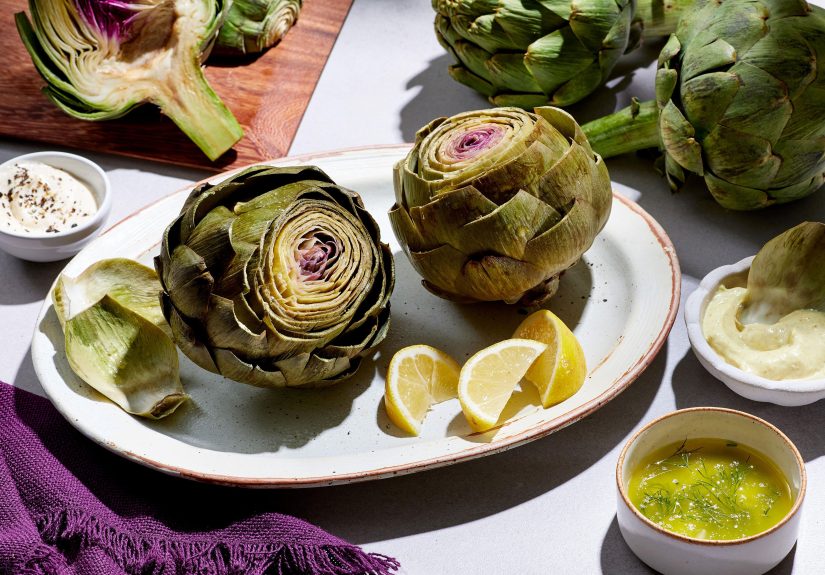
Serve whole steamed artichokes upright, or halved roasted/grilled artichokes cut-side up so people can see the
good parts. Add small bowls of sauce (two sauces = instant upgrade), lemon wedges, and a sprinkle of herbs.
Choose a “finishing touch”
- Flaky salt + lemon zest
- Parmesan shower (especially on roasted halves)
- Chili oil drizzle
- Toasted breadcrumbs with garlic and parsley
Pairing ideas (so it feels intentional)
- With roast chicken or steak: go classicsteamed + garlic butter or hollandaise.
- With fish: vinaigrette or salsa verde keeps things bright.
- With pasta: roasted halves + lemon + parmesan feels cohesive without trying too hard.
- With a vegetarian main: grilled halves + aioli turns “side” into “co-star.”
Troubleshooting: If Your Artichoke Fights Back
“The leaves are tough and stringy.”
It likely needs more time. Keep steaming/simmering and check again in 5–10 minutes. Also, very old artichokes can
be tougher no matter whatfreshness matters.
“The heart feels firm.”
The base is the last part to get tender. Test doneness by inserting a knife into the base near where the leaves
meet the stem. If there’s resistance, keep cooking.
“It tastes bitter.”
Some bitterness is normal (it’s a thistle bud, not a cupcake), but overly bitter can happen with older artichokes
or insufficient seasoning. Salt your cooking water, add lemon, and serve with a sauce that has acid and fat.
Artichoke Experiences You’ll Recognize (and Laugh About)
The first time you buy fresh artichokes, you’ll probably hold one in the produce aisle like you’re trying to
decipher an ancient relic. You’ll squeeze it (gently), someone on the internet said it might squeak, and for a
brief moment you’ll wonder if you’re the kind of person who squeaks vegetables for fun now. Welcome to the club.
Then comes the prep. You’ll rinse and turn the artichoke in your hands, noticing how sturdy it islike it was
designed by an engineer who didn’t trust humans. You’ll slice the top and feel oddly powerful, as if you’ve
successfully negotiated with a plant. The leaf tips will look mildly threatening, so you’ll start snipping them
with kitchen shears, one by one, thinking, “This is either self-care or a craft project.”
At some point, lemon becomes your best friend. You’ll rub it on cut surfaces because you read about browning, and
suddenly your kitchen smells like you’re about to open a coastal café with a chalkboard menu. If you’re prepping
several artichokes, you might set up a lemon-water bowl like a spa bath for vegetables. That’s when you realize
you’ve crossed a lineinto the good life.
Cooking brings its own tiny dramas. The lid will fog up. You’ll peek too early (we all do), releasing precious
steam like you’re letting the plot escape the book. You’ll decide to “just check one leaf,” and five minutes
later you’re still standing there, tongs in hand, narrating the situation to yourself like a sports commentator.
The temptation to rush is strong, but artichokes reward patience. When they’re ready, they go from stubborn to
cooperative almost all at once.
Serving them is when artichokes really flex. People gather. The platter lands. Dips appear. And suddenly everyone
is fully engaged in the most social vegetable on earth. Someone will ask, “How do you eat this again?” and
someone else will demonstrate with confidence (even if they only learned five minutes ago). Conversation gets
funnier, hands get messier, and nobody’s mad about it because artichokes are basically an edible excuse to slow
down.
And then: the heart. The collective realization that the best bite is waiting at the center. You scrape away the
fuzzy chokecarefully, like you’re unwrapping a gift you don’t want to ripand you end up with a tender, buttery
piece that tastes like the vegetable version of a standing ovation. This is when you understand why people get
a little dramatic about artichokes. You didn’t just cook a side dish; you hosted a tiny experience.
Conclusion
Cooking artichokes isn’t hardit’s just unfamiliar. Once you know what to trim, how to test for tenderness, and
which cooking method matches your mood (steamed and classic, roasted and bold, grilled and smoky), artichokes
become one of the easiest ways to make dinner feel special. Add a great sauce, present them like you meant it,
and you’ll have a side dish that absolutely steals the showno applause sign required.