Table of Contents >> Show >> Hide
- What Happens When Salt Dissolves in Water?
- How to Dissolve Salt in Water: 9 Steps
- Step 1: Choose the Right Salt
- Step 2: Measure the Water
- Step 3: Add a Small Amount of Salt First
- Step 4: Stir the Mixture Thoroughly
- Step 5: Use Warm Water for Faster Dissolving
- Step 6: Crush Large Salt Crystals If Needed
- Step 7: Keep Adding Salt Slowly
- Step 8: Check Whether the Salt Has Fully Dissolved
- Step 9: Store or Use the Saltwater Solution Properly
- How Much Salt Can Water Dissolve?
- Why Does Stirring Help Salt Dissolve?
- Does Salt Dissolve Faster in Hot or Cold Water?
- Common Mistakes When Dissolving Salt in Water
- Practical Uses for Dissolving Salt in Water
- Simple Example: Making a Basic Saltwater Solution
- Troubleshooting: Why Is My Salt Not Dissolving?
- Experience Section: What You Learn by Actually Dissolving Salt in Water
- Conclusion
At first glance, learning how to dissolve salt in water sounds like a job so easy it should come with a tiny graduation cap. Add salt. Add water. Stir. Done, right? Almost. But if you have ever watched salt stubbornly collect at the bottom of a glass like it is paying rent there, you already know there is a little more chemistry hiding in the kitchen.
Dissolving salt in water is one of the simplest ways to understand solutions, solubility, saturation, temperature, and the magic of polar molecules. Whether you are making a saltwater rinse, preparing pasta water, mixing a science experiment, creating brine for food prep, or just trying to win an argument with a spoon, the basic idea is the same: salt crystals separate into tiny charged particles and spread evenly through the water.
This guide explains how to dissolve salt in water in 9 clear steps, with practical examples, common mistakes, and a little science that will not make your brain pack a suitcase and leave. By the end, you will know how much salt water can hold, why warm water helps, why stirring matters, and what to do when the salt simply refuses to disappear.
What Happens When Salt Dissolves in Water?
Table salt is mostly sodium chloride, often written as NaCl. In a salt crystal, sodium ions and chloride ions are held together in a tight repeating pattern. Water molecules are polar, meaning one side has a slight positive charge and the other side has a slight negative charge. When salt meets water, the water molecules surround the sodium and chloride ions and pull them away from the crystal structure.
In plain English: water is very good at breaking up the salt’s little crystal club. The salt does not vanish, even though it looks like it does. It becomes evenly mixed throughout the water as dissolved ions. That invisible salt is still there, which is why saltwater tastes salty, conducts electricity better than plain water, and can leave crystals behind after the water evaporates.
How to Dissolve Salt in Water: 9 Steps
Step 1: Choose the Right Salt
Start with the salt you need for your purpose. Regular table salt dissolves quickly because the crystals are small and uniform. Sea salt, kosher salt, rock salt, and coarse salt can also dissolve, but larger grains usually take longer because there is less surface area touching the water at once.
If you are doing a science activity, table salt is the easiest choice because it gives predictable results. If you are cooking, the type of salt may affect flavor and measuring. A tablespoon of coarse kosher salt does not always equal a tablespoon of fine table salt by weight, so recipes can become dramatic if you measure carelessly. Salt is useful; it is also sneaky.
Step 2: Measure the Water
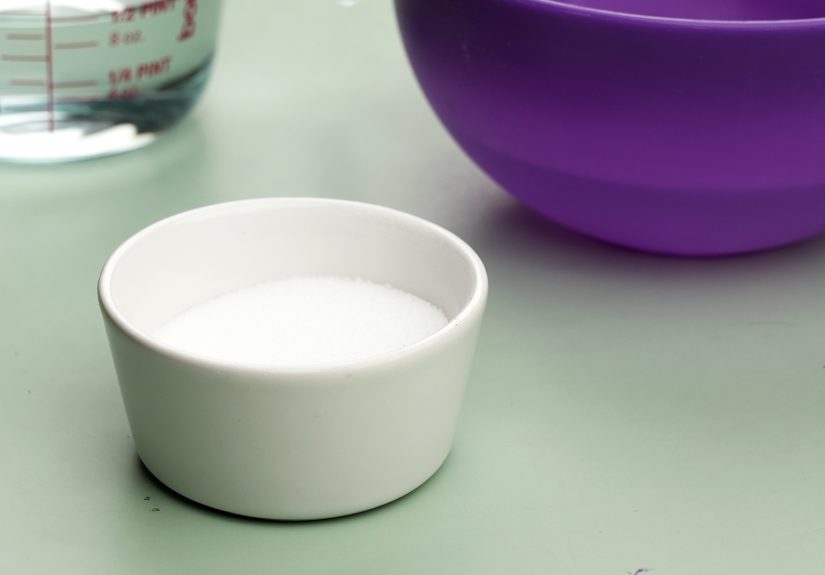
Use a clean glass, bowl, beaker, or measuring cup. For everyday use, 1 cup of water is a convenient starting amount. If you are doing a school experiment or comparing results, measure carefully so each test uses the same amount of water.
Water is the solvent in this situation, which means it is the liquid doing the dissolving. Salt is the solute, which means it is the substance being dissolved. Together, they form a saltwater solution. This vocabulary may sound fancy, but it is basically chemistry’s way of saying, “The water is doing the work, and the salt is along for the ride.”
Step 3: Add a Small Amount of Salt First
Do not dump in a mountain of salt immediately unless your goal is to create a tiny white beach at the bottom of the container. Add a small amount first, such as 1 teaspoon of salt to 1 cup of water. This gives the water enough room to separate and surround the salt particles efficiently.
Adding salt gradually is especially helpful when you need a clear solution. It also makes it easier to tell when the water is approaching its solubility limit. When all the salt disappears after stirring, the solution is still able to dissolve more. When salt remains at the bottom no matter how much you stir, you may have reached saturation.
Step 4: Stir the Mixture Thoroughly
Use a spoon, stir rod, or clean utensil to stir the water. Stirring does not magically increase how much salt can dissolve at a given temperature, but it helps the process happen faster. It moves fresh water into contact with the salt crystals and spreads dissolved ions throughout the container.
Without stirring, salt can still dissolve, but it may take longer. The crystals at the bottom dissolve into the nearby water first, and that salty layer needs time to spread. Stirring is the polite way of telling the molecules to stop standing around and mingle.
Step 5: Use Warm Water for Faster Dissolving
Warm water usually helps salt dissolve faster because warmer molecules move more quickly. This increased motion allows water molecules to collide with salt crystals more often and pull ions away more efficiently. For many kitchen and classroom uses, warm tap water is enough.
Temperature can also affect how much of a substance dissolves. For sodium chloride, the increase in solubility from cold to hot water is real but not as dramatic as it is for some other substances, such as sugar or potassium nitrate. Still, if your salt is dissolving slowly, warming the water can make the process smoother.
Step 6: Crush Large Salt Crystals If Needed
If you are using coarse sea salt, rock salt, or large crystals, crush them into smaller pieces before adding them to the water. Smaller grains dissolve faster because more surface area is exposed to the water. Imagine trying to melt one giant ice cube versus a tray of tiny ice chips. The tiny pieces do not have special powers; they simply give the surrounding liquid more places to work.
This step is useful for brines, science demonstrations, and any situation where you need the salt dissolved quickly. A mortar and pestle, rolling pin, or the back of a spoon can help break down larger crystals. Just make sure the tools are clean if the saltwater will be used for food.
Step 7: Keep Adding Salt Slowly
If you need a stronger saltwater solution, add more salt in small amounts. Stir after each addition and wait until the crystals dissolve before adding more. This method helps you avoid overshooting the limit and ending up with undissolved salt at the bottom.
At room temperature, water can dissolve only a limited amount of sodium chloride. Once it reaches that limit, the solution is called saturated. At that point, extra salt will not dissolve no matter how dramatically you stir. You could stir like a movie villain mixing a potion, and the salt would still sit there with confidence.
Step 8: Check Whether the Salt Has Fully Dissolved
Look closely at the bottom and sides of the container. If the water is clear and there are no visible grains, the salt has dissolved. If you see crystals, keep stirring for another minute. If they remain after thorough stirring, the solution may be saturated, or the crystals may need warmer water or more time.
For a simple test, let the mixture sit for a few minutes. Undissolved salt will settle at the bottom. A properly dissolved saltwater solution should look uniform from top to bottom, although it may not look different from plain water. Salt is very good at hiding after it dissolves. It is basically the ninja of pantry ingredients.
Step 9: Store or Use the Saltwater Solution Properly
Once the salt has dissolved, use the solution according to your purpose. For cooking, use it right away. For a classroom demonstration, label the container with the amount of salt and water used. For household uses, store it in a clean, covered container if it needs to sit for a short time.
If the water evaporates, salt crystals can form again. This is because the salt never truly disappeared; it was simply dissolved. When the amount of water decreases, the remaining water may no longer be able to hold all the dissolved salt, so crystals reappear. This is the same basic principle behind salt flats, sea salt production, and that mysterious crusty ring on a forgotten cup of saltwater.
How Much Salt Can Water Dissolve?
The amount of salt water can dissolve depends mainly on temperature and the amount of water. A useful classroom reference point is that about 36 grams of sodium chloride can dissolve in 100 grams of water at about room temperature. Once that limit is reached, the solution becomes saturated.
In everyday terms, this means a cup of water can dissolve several tablespoons of table salt, but not unlimited amounts. If you keep adding salt, eventually the extra salt will stop disappearing. That is not because the salt is lazy. The water molecules are simply already busy surrounding as many sodium and chloride ions as they can handle.
Why Does Stirring Help Salt Dissolve?
Stirring helps by constantly bringing fresh water into contact with salt crystals. Around each crystal, the nearby water quickly becomes salty. If that salty water just sits there, the process slows down. Stirring moves it away and replaces it with less salty water, which can dissolve more salt from the crystal surface.
Think of it like a crowded doorway. If everyone stands in front of the door, nobody else can get through. Stirring clears the doorway so more salt particles can move into the solution. It is not glamorous, but it works.
Does Salt Dissolve Faster in Hot or Cold Water?
Salt generally dissolves faster in hot water than in cold water because the particles move more quickly. However, sodium chloride is not as temperature-sensitive as some other solutes. Hot water helps with speed more than it massively changes the final amount that can dissolve.
For practical purposes, use warm water when speed matters. Use room-temperature water when accuracy matters in a controlled experiment. Use cold water when the recipe or activity specifically calls for it. Chemistry rewards details, which is annoying but also why cakes are not soup.
Common Mistakes When Dissolving Salt in Water
Adding Too Much Salt at Once
When too much salt is added immediately, it can clump at the bottom and take longer to dissolve. Add salt slowly and stir between additions for better results.
Using Very Large Crystals
Large crystals dissolve more slowly. Crush coarse salt or choose fine salt when you want a fast, even solution.
Expecting Salt to Disappear Forever
Dissolved salt can return as crystals when water evaporates. This is normal and does not mean the solution failed.
Confusing Dissolving with Melting
Salt dissolves in water; it does not melt in ordinary water. Melting means a solid changes into a liquid because of heat. Dissolving means particles separate and spread through a solvent.
Practical Uses for Dissolving Salt in Water
Saltwater solutions show up everywhere. In cooking, saltwater seasons pasta, vegetables, and brines. In science class, saltwater helps demonstrate solubility, density, conductivity, evaporation, freezing point depression, and crystal formation. In nature, dissolved salts are a major reason oceans are salty and why salinity affects water density.
Saltwater is also useful for simple demonstrations. You can dissolve salt in water, let the water evaporate, and observe salt crystals forming again. You can compare how quickly fine salt and coarse salt dissolve. You can test how temperature changes dissolving speed. These activities are simple, inexpensive, and much less likely to make the kitchen smell weird than most “creative” science projects.
Simple Example: Making a Basic Saltwater Solution
To make a basic saltwater solution, pour 1 cup of warm water into a clean glass. Add 1 teaspoon of table salt. Stir for 20 to 30 seconds until the water looks clear. If you still see grains, stir a little longer. For a stronger solution, add another teaspoon and repeat.
If you are making saltwater for food, follow the recipe rather than guessing. If you are making it for a science project, record your measurements carefully. “A little scoop of salt” may work in soup, but it will make your data look like it was collected by a raccoon wearing safety goggles.
Troubleshooting: Why Is My Salt Not Dissolving?
If salt is not dissolving, there are usually four possible reasons. First, you may have added too much salt and created a saturated solution. Second, the water may be too cold for quick dissolving. Third, the salt crystals may be too large. Fourth, the mixture may need more stirring time.
To fix the problem, try adding more water, warming the solution slightly, crushing the salt into smaller grains, or stirring longer. If extra salt still remains, the water has likely reached its limit. At that point, the solution is saying, “I am full,” and honestly, we should respect boundaries.
Experience Section: What You Learn by Actually Dissolving Salt in Water
The first time you dissolve salt in water with real attention, you may be surprised by how much is happening in such a quiet little glass. It looks simple, but it teaches a lot. When I have done this as a basic kitchen-style experiment, the biggest lesson is that patience matters more than force. Stirring wildly for three seconds does not work as well as stirring steadily for thirty seconds. Molecules do not care about your impatience. They are not impressed by wrist speed.
One helpful experience is comparing fine table salt with coarse sea salt. Put the same amount of each into separate cups with the same amount of water. Stir both the same way. The fine salt usually disappears faster because the smaller particles expose more surface area. This makes the experiment easy to understand without needing complicated equipment. You can see the difference with your own eyes, which is always nice because chemistry sometimes feels like it is happening behind a curtain.
Another useful test is comparing cold water and warm water. Add equal amounts of salt to each and stir. The salt in warm water usually dissolves faster. This is a great reminder that temperature affects particle movement. Warm water molecules move more actively, so they interact with the salt crystal more quickly. Cold water still works, but it is more relaxed about the whole situation. Cold water has weekend energy.
You can also learn a lot by intentionally adding too much salt. Start with warm water and keep adding salt one spoonful at a time. At first, everything dissolves. Then it slows down. Eventually, no matter how long you stir, some salt stays at the bottom. That is saturation in action. The water has reached the maximum amount of salt it can hold under those conditions. This moment is useful because it turns an invisible chemistry concept into something obvious.
One practical lesson from dissolving salt in water is that measurement matters. In cooking, a little extra salt can change the taste dramatically. In experiments, inconsistent measurements can ruin results. In cleaning or household mixtures, too much salt can leave residue after evaporation. The salt did not betray you; it simply followed the rules of solubility.
A final experience worth noticing is what happens after saltwater sits out. If the water slowly evaporates, salt crystals can appear again. This proves that dissolving is not the same as destroying. The salt remains in the solution, even when you cannot see it. Once the water leaves, the salt becomes visible again. It is a neat little reminder that everyday materials often have hidden behavior. A glass of saltwater may not look exciting, but inside it, charged particles are separating, moving, balancing, and occasionally preparing a comeback tour as crystals.
Conclusion
Dissolving salt in water is easy, but understanding it makes the process much more useful. Choose the right salt, measure your water, add salt gradually, stir well, use warm water when needed, and watch for signs of saturation. Whether you are cooking, experimenting, or simply curious, saltwater is a perfect example of chemistry hiding in plain sight.
The key takeaway is simple: salt dissolves when water molecules pull sodium and chloride ions apart and spread them evenly through the liquid. Stirring speeds things up, smaller crystals dissolve faster, and warm water often helps. But water has a limit, and once it is saturated, extra salt will remain visible. In other words, even water has a point where it says, “That is enough seasoning for today.”