Table of Contents >> Show >> Hide
- A 10-Second Cheat Sheet (Use This After Step 2)
- Step 1: Confirm You’re Looking at Adult Fruit Flies (Not Babies)
- Step 2: Immobilize the Fly Humanely So You Can Actually See Anything
- Step 3: Start With Overall Size and Body Build (Helpful, Not Holy)
- Step 4: Check the Abdomen Shape (Rounder vs. Pointier)
- Step 5: Inspect Abdomen Color and Banding (The “Tuxedo Tip”)
- Step 6: Look for Sex Combs on the Front Legs (Most Reliable for Many Drosophila)
- Step 7: Confirm With the Genital Area (When You Need a Tie-Breaker)
- Step 8: Use Behavior as a Backup Clue (Not Your Only Evidence)
- Step 9: Apply the “Two-Feature Rule” and Avoid Common Mistakes
- Quick Practice Routine (Because Your Eyes Need Reps)
- Conclusion
- Experiences and Real-World Notes (What People Learn After the First 50 Flies)
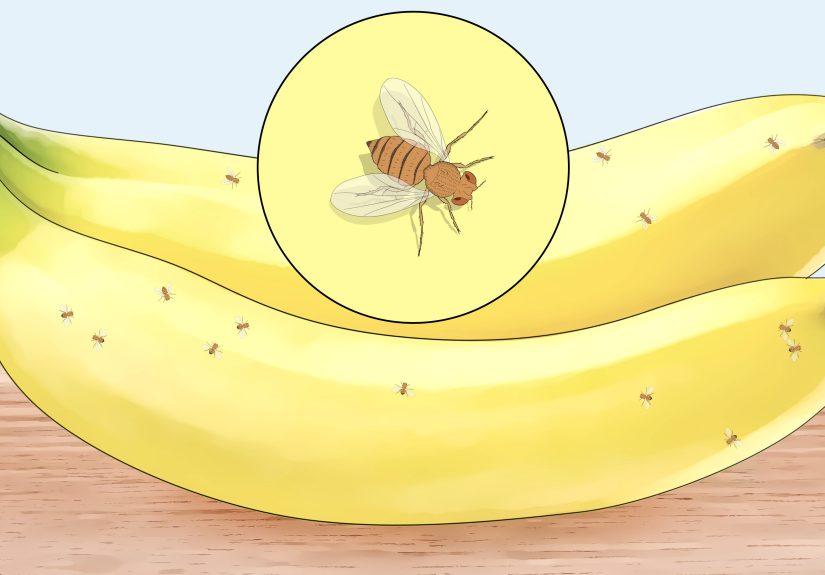
Fruit flies are basically the tiny reality-show stars of the insect world: they show up uninvited, throw a party on your bananas, and somehow multiply faster than your unread emails. Whether you’re doing a classroom lab, running a home science project, or just curious about the miniature drama happening in your fly trap, learning to tell male vs. female fruit flies apart is a surprisingly practical skill.
The most common “fruit fly” used in biology labs is Drosophila melanogaster, and most identification tips below are written with that (and closely related Drosophila species) in mind. If you’re dealing with random kitchen fruit flies, odds are good they’re Drosophila-type, but not guaranteedso treat this as a best-practice guide, not an unbreakable law of nature.
A 10-Second Cheat Sheet (Use This After Step 2)
- Most reliable: Males have sex combs (dark bristles) on the front legs; females don’t.
- Very common: Male abdomen tends to be rounder and darker at the tip; female abdomen is often more pointed with clearer banding.
- Sometimes helpful: Females are often slightly larger, but size alone will lie to you.
Step 1: Confirm You’re Looking at Adult Fruit Flies (Not Babies)
Sexing fruit flies works best with adult flies. Larvae (little wiggly “maggots”) and pupae (the “cocoon-ish” stage) don’t give you the external markers you need unless you’re using specialized methods. Aim for fully developed adults that are moving around normally.
One big pitfall: newly emerged adults (freshly “eclosed”) can look pale, soft, and not fully colored yet. Their abdomen pigmentation may not be finished, which can make male/female differences harder to see. If a fly looks like it just woke up from a nap and isn’t dressed yet, give it time before making your final call.
Step 2: Immobilize the Fly Humanely So You Can Actually See Anything
Fruit flies are about 2–4 mm long. Translation: they are not interested in holding still while you inspect them like a tiny airport security agent. To identify sex accurately, you’ll want a safe way to slow them down.
Two common, low-drama options
- Cold method (simple and accessible): Briefly chill the flies (for example, by placing the container on a cold surface or near ice) so they slow down. This is commonly used in labs for quick handling. Don’t freeze them, and don’t keep them chilled longer than necessary.
- Classroom/lab anesthesia (CO₂ or similar): Many labs use fly pads or chambers designed for fruit flies. If you’re in a classroom or lab, follow the instructor’s safety rules and keep exposure as short as practical.
Once a fly is still, place it on a white background (index card, paper, or a light tray) under a bright desk lamp. A 10× hand lens can work; a stereo microscope makes this dramatically easier.
Step 3: Start With Overall Size and Body Build (Helpful, Not Holy)
In many Drosophila cultures, males tend to be slightly smaller and a bit more compact, while females often look longer-bodiedespecially in the abdomen. But here’s the catch: food quality, crowding, temperature, and genetics can all affect size. So think of size as your opening clue, not your final answer.
Practical tip: compare two flies from the same vial at the same time. Size differences are easier to judge side-by-side than from memory.
Step 4: Check the Abdomen Shape (Rounder vs. Pointier)
Look at the back end of the fly (the abdomen) from above. In many common lab fruit flies:
- Males: abdomen tip often looks more rounded or blunt.
- Females: abdomen often looks more pointed, sometimes with a visible ovipositor area at the end.
This is one of the easiest traits to learn quickly, especially once you’ve checked a handful of flies and your eyes “click” to the pattern. Still, don’t use shape aloneuse it with Step 5 or Step 6 for confidence.
Step 5: Inspect Abdomen Color and Banding (The “Tuxedo Tip”)
In Drosophila melanogaster and many close relatives, the abdominal segments show stripe-like bands. The key difference is usually near the end:
- Males: the last segments often appear darker, sometimes forming a more solid dark patch at the tip. It can look like the fly is wearing a tiny dark “tuxedo bottom.”
- Females: banding tends to remain more clearly striped farther down the abdomen, with a less solid dark tip.
Why this works: abdominal pigmentation is often sexually dimorphic in these flies. But pigmentation can vary by strain and species, and newly emerged adults may not show the full pattern yetso combine this with Step 6 whenever you can.
Step 6: Look for Sex Combs on the Front Legs (Most Reliable for Many Drosophila)
If you only memorize one thing, make it this: male Drosophila often have sex combsspecialized dark bristleson the front legs (forelegs). Females do not.
How to spot them
- Use magnification (a microscope is ideal; a strong hand lens can sometimes work).
- Focus on the front pair of legs, near the “tarsal” area (the segments closer to the foot).
- Sex combs look like a short, dark, comb-like row of bristles rather than normal fine hairs.
Why sex combs are so dependable: they’re a male-specific structure associated with mating behavior in many Drosophila species. In practical terms, they’re a built-in “male marker” that doesn’t rely on body size guesses or lighting tricks.
Step 7: Confirm With the Genital Area (When You Need a Tie-Breaker)
If you have a microscope and a steady hand (or you’re simply determined), you can use the terminal abdomen structures as confirmation:
- Males: the underside near the tip often looks darker and more structurally complex, with visible claspers/arch-like features.
- Females: the tip is often lighter and more pointed, with simpler external structures.
This step is most useful when pigment patterns are unclear (young adults) or when you’re working with strains where color isn’t as obvious. It’s also how many people build real confidence: when abdomen shape + color says “male,” genital structures can give you that final “yep.”
Step 8: Use Behavior as a Backup Clue (Not Your Only Evidence)
Behavior can help, but it’s not the best first-line tool because flies don’t always perform on command. Still, you may notice:
- Males often show more obvious courtship behaviors (following, wing displays, persistent attention).
- Females may be seen probing surfaces and laying eggs if conditions are right.
Use behavior only as a supporting clue. Think of it like guessing who’s the lead singer by stage energyoften right, but occasionally very wrong.
Step 9: Apply the “Two-Feature Rule” and Avoid Common Mistakes
The fastest way to get accurate is to use at least two independent markers before you label a fly:
- Best combo: Sex combs (Step 6) + abdomen shape/pigment (Step 4 or 5)
- Good combo: Abdomen pigment (Step 5) + genital area (Step 7)
- Weaker combo: Size (Step 3) + behavior (Step 8) use only if you must
Common mistakes (and how to dodge them)
- Relying on size alone: Nutrition and crowding can produce small females and big males. Size is a clue, not proof.
- Trying to sex newly emerged adults too fast: Their coloration may be incomplete. If pigment is confusing, switch to sex combs.
- Lighting issues: Warm, dim light can hide abdominal banding. Use bright white light and a white background.
- Species differences: “Fruit fly” is a casual term. If you suspect a different species, prioritize structural markers (like sex combs) over color.
Quick Practice Routine (Because Your Eyes Need Reps)
- Pick 10 adult flies from the same vial/trap.
- Sort them into “probably male” and “probably female” using abdomen shape and color.
- Check sex combs on a few from each pile to see how accurate you were.
- Adjust your mental “pattern” and repeat. Your accuracy will jump fast.
Conclusion
Distinguishing male and female fruit flies isn’t about having superhero visionit’s about using the right markers in the right order. Start by immobilizing the flies so you can actually see them, then use abdomen shape and pigmentation as quick clues. When you want the most reliable confirmation (especially for common lab Drosophila), check for sex combs on the front legs. Add a tie-breaker by looking at the terminal abdomen structures, and you’ll be sexing fruit flies with confidenceno tiny magnifying glass detective hat required (but allowed).
Experiences and Real-World Notes (What People Learn After the First 50 Flies)
The funniest part about learning to distinguish male and female fruit flies is that the skill arrives in stageskind of like learning to recognize celebrities. At first, every fly looks like “a fly.” Then suddenly you’re saying things like, “Oh yeah, that one’s a malelook at the tuxedo tip,” as if you’ve always been fluent in fly fashion.
In classroom settings, a super common experience is the “size trap.” Someone confidently announces, “The big ones are females,” and for about two minutes, everyone agreesuntil the microscope comes out and reveals a big male with unmistakable sex combs. That moment is actually helpful: it teaches the lesson that body size is influenced by environment (food quality, crowding, temperature), so it’s not a courtroom-quality witness. After that, students (and curious adults) tend to treat size as a hint and move on quickly to better evidence.
Another real-life pattern: people fall in love with abdomen color… and then get betrayed by lighting. Under warm yellow light, those abdominal stripes can look muted, and the difference between “slightly darker tip” and “clearly darker tip” starts to feel like interpreting a moody indie film. Switching to bright, neutral lighting and using a clean white background often fixes the problem instantly. It’s not that your eyes are bad; it’s that the fly is the size of a sesame seed and your lamp is doing it no favors.
If you’re working from a DIY fruit fly trap at home (apple cider vinegar, fruit scraps, the usual suspects), it’s common to collect flies that vary in age. The newly emerged adults can be surprisingly confusing because they haven’t fully darkened yet. People often describe them as “pale” or “fresh-looking,” and that’s your cue to rely less on pigment and more on structureespecially the presence or absence of sex combs. In practice, this is where magnification becomes your best friend. Even a clip-on phone macro lens can be enough to spot the dark bristle patch if you stabilize the phone and get good light.
One of the most satisfying “aha” experiences happens when you use the two-feature rule consistently. You’ll sort a group by abdomen shape and banding, then confirm a few with sex combs. When your confirmation rate climbssay, 8 out of 10 correct, then 9 out of 10you can feel your brain building a reliable pattern library. That confidence matters if you’re doing anything that depends on correct sexing, like setting up controlled crosses, separating virgin females, or tracking population changes. It’s also just plain rewarding to watch your accuracy improve quickly with a repeatable method.
People who do this repeatedly often develop a practical workflow: they start with the fastest visual traits (abdomen shape/pigment), then only microscope-check the “uncertain” ones. That’s efficient and realistic. You don’t have to microscope-check every fly foreverjust long enough to calibrate your eyes. After a while, the rounded dark tip of many males stands out immediately, and you’ll save the close-up leg check for the tricky cases (young adults, odd strains, or questionable lighting).
And yessometimes you’ll still get a “wait, what?” moment. That’s normal. The point isn’t perfection; it’s building a process that catches errors. When you feel uncertain, go back to the most reliable marker you have access to (usually sex combs for common Drosophila). Treat it like checking a map instead of arguing with your instincts. The fly doesn’t care about your confidence, but your results will.