Table of Contents >> Show >> Hide
- What Is the Simple Device That Keeps a Car Battery Charged?
- Why Car Batteries Go Flat Even When You “Barely Use the Car”
- Why a Battery Maintainer Works So Well
- Battery Charger vs. Maintainer vs. Jump Starter
- How to Choose the Right Battery Maintainer
- How to Use a Battery Maintainer Safely
- Common Mistakes That Kill Batteries Anyway
- When a Battery Maintainer Makes the Biggest Difference
- Signs a Maintainer May Not Be Enough
- The Best Long-Term Strategy for Battery Life
- Real-World Experiences: What Drivers Learn After Using a Battery Maintainer
- Conclusion
If your car acts like it is auditioning for a drama series every time you turn the key, your battery may not be “bad” so much as chronically undercharged. That is an important distinction. Plenty of batteries fail because they sit too long, handle too many short trips, battle extreme temperatures, or quietly feed modern electronics while the car is parked. The good news is that the fix is often refreshingly unglamorous: a simple device called a battery maintainer, sometimes marketed as a battery tender or smart trickle charger.
And yes, this is one of those rare car tools that actually earns the phrase “set it and forget it.” It will not detail your wheels, improve your gas mileage, or make your old sedan feel like a sports car. But it can keep your car battery charged, reduce surprise no-start mornings, and help a healthy battery live a longer, less miserable life.
What Is the Simple Device That Keeps a Car Battery Charged?
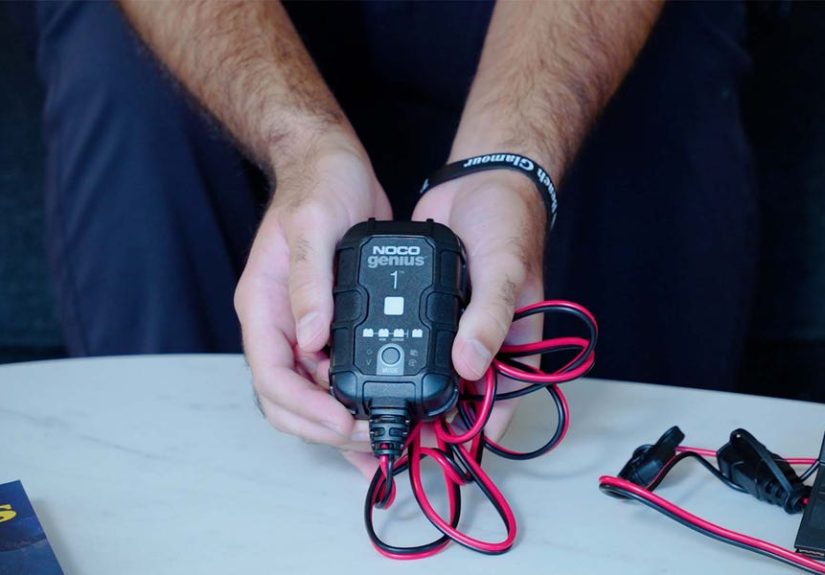
The simple device is a smart battery maintainer. It plugs into a standard household outlet and connects to your battery with clamps or a quick-connect lead. Unlike a traditional charger that is meant to recover a weak or dead battery, a maintainer is designed to keep an already decent battery at the right state of charge over time.
That distinction matters. A battery charger is the emergency room. A battery maintainer is the personal trainer who keeps you from needing the emergency room in the first place.
Modern maintainers monitor voltage and add a small amount of power only when needed. Better units switch automatically into a float or maintenance mode, which helps prevent overcharging. That makes them especially useful for:
- Cars that sit for days or weeks at a time
- Weekend cars, classics, project cars, and convertibles
- Vehicles stored during winter or summer
- Work-from-home households that barely drive
- Cars used mostly for short errands
Why Car Batteries Go Flat Even When You “Barely Use the Car”
This is the part that annoys people most. You do not drive the car much, so logically you feel like the battery should be resting peacefully. Instead, it behaves like a toddler after espresso.
1. Batteries naturally lose charge over time
All batteries self-discharge. Even when disconnected from your hopes and dreams, they gradually lose stored energy. Leave a battery sitting long enough and its charge level drops. Leave it undercharged too often and permanent damage becomes more likely.
2. Modern cars are never truly “off”
Keyless entry, alarm systems, memory seats, telematics modules, clocks, and onboard computers all sip power while the car is parked. Each individual draw may be tiny, but together they can slowly drain a battery like a thousand paper cuts.
3. Short trips are battery freeloaders
Starting the engine uses a burst of power. If you only drive five or ten minutes to the grocery store and back, your alternator may not fully replace what the battery just gave up. Repeat that routine for weeks and the battery never really catches up.
4. Heat and cold both make life harder
Cold weather slows battery performance right when your engine needs extra cranking power. Hot weather, meanwhile, can accelerate battery aging and damage over time. In other words, summer weakens the battery and winter exposes the weakness. Teamwork, but evil.
Why a Battery Maintainer Works So Well
A battery maintainer solves the exact problem most lightly used cars have: slow loss of charge while parked. It does not try to blast the battery back to life in a hurry. Instead, it gently keeps the battery topped off and stable.
That matters because lead-acid batteries, including many standard flooded, AGM, and EFB automotive batteries, prefer staying properly charged. Letting them sit low for long periods can encourage sulfation, which reduces capacity. A maintainer helps avoid that slow decline.
Think of it this way: a battery rarely fails in one dramatic movie scene. More often, it dies a little every week. The maintainer interrupts that process.
Battery Charger vs. Maintainer vs. Jump Starter
These tools get mixed up constantly, so here is the plain-English version:
Battery charger
Used to recharge a depleted battery. Great when your battery is weak or dead and needs recovery. Some are smart chargers with multiple modes.
Battery maintainer
Used to keep a battery charged during storage or light use. Best for prevention, not rescue.
Jump starter
Used to start the car right now. It is for emergency starting power, not long-term battery health.
If your goal is to keep your car battery charged with a simple device, the maintainer is usually the right answer. If the battery is already deeply discharged, you may need a proper smart charger first. If the battery is old and failing, neither tool is magic.
How to Choose the Right Battery Maintainer
Not every device fits every vehicle. Buying the cheapest box with a blinking light may save money today and create colorful language tomorrow.
Match the battery type
Start with your owner’s manual or the battery label. Many newer cars use AGM batteries, and some specialty applications may involve lithium-based 12-volt batteries. Your device must be compatible with the battery chemistry. A smart maintainer with dedicated modes for flooded, AGM, and lithium is the safest bet for households with multiple vehicles.
Stick with 12-volt automotive use
Most passenger vehicles use a 12-volt system, but always verify. The right maintainer should clearly state that it is suitable for 12-volt automotive batteries.
Look for automatic monitoring
The best maintainers automatically detect battery condition, switch to float mode, and resume charging only when necessary. That is the feature that separates a modern “smart” unit from an old-school gadget that may babysit your battery a little too aggressively.
Choose a modest amperage for maintenance
For battery maintenance, you do not need a monster unit. Lower-amperage maintainers are common and well suited to long-term connection. If you want one device that can both charge and maintain, a smart charger with maintenance mode can be a practical upgrade.
Helpful features worth paying for
- Reverse-polarity protection
- Spark-resistant design
- Weather resistance for garage or outdoor use
- Quick-connect pigtail for easy repeat use
- Clear battery-type settings
- Status lights that make sense to actual humans
How to Use a Battery Maintainer Safely
You do not need to be a master technician to use one, but you do need to be sensible.
- Park the car in a dry, well-ventilated area and turn it off.
- Confirm the device matches your battery type and voltage.
- Connect positive to positive and negative as directed by the device or vehicle manual.
- Then plug the unit into the outlet.
- Set the correct mode if the unit is not fully automatic.
- Leave it connected if the maintainer is designed for long-term use.
- When removing it, unplug first, then disconnect.
Basic? Yes. Important? Also yes. The biggest mistakes come from rushing, using the wrong mode, or assuming all batteries are interchangeable. They are not.
Common Mistakes That Kill Batteries Anyway
Using driving alone as your charging strategy
A lot of drivers believe a half-hour drive will fully recharge a low battery. Sometimes it helps, but it is not a dependable replacement for a plug-in device. Modern electrical systems have plenty to power, and the alternator is not a miracle worker.
Buying a maintainer when the battery already needs a charger
If the battery is severely discharged, a maintainer may not bring it back properly. That is like watering a plant after it has already become decorative mulch. Start with a smart charger or have the battery tested.
Ignoring battery age
If your battery is already near the end of its service life, a maintainer may delay problems but will not reverse aging. A seven-year-old battery is not “vintage.” It is suspicious.
Skipping corrosion checks
Dirty or corroded terminals can interfere with charging and starting. A maintainer helps the battery, but it cannot negotiate peace with crusty terminals.
Using the wrong mode on AGM or lithium-equipped systems
This is where people get into trouble. Some batteries need specific voltage control. If your car uses AGM or a specialized 12-volt battery, use a compatible smart unit and follow the manual.
When a Battery Maintainer Makes the Biggest Difference
The weekend car
You drive it on Saturdays, weather permitting, after checking three apps and consulting the heavens. The rest of the week, it sits. A maintainer is almost mandatory here.
The airport car
If your car spends long stretches parked while you travel, a maintainer at home before and after those periods can reduce the odds of coming back to a battery with the personality of cold oatmeal.
The winter storage car
Storage season is where maintainers really shine. Instead of letting the battery sit low for weeks or months, the device keeps it ready for spring. That means fewer surprise replacements and less ritual swearing in the garage.
The short-trip commuter
If your entire driving routine is daycare, coffee, pharmacy, back home, and maybe one dramatic turn through a drive-thru, your battery may never get a proper recovery charge. A maintainer can quietly make up the difference.
Signs a Maintainer May Not Be Enough
Sometimes the right answer is not “buy a smarter gadget.” Sometimes it is “your battery is done.” Have the battery tested if you notice:
- Repeated slow cranking
- Frequent jump-starts
- Battery age well beyond normal service life
- Swelling, leaking, or visible damage
- Electrical glitches after charging
A good maintainer preserves a healthy battery. It does not resurrect a truly failing one.
The Best Long-Term Strategy for Battery Life
If you want the practical, low-drama plan, here it is: keep the battery clean, keep the car driven when possible, avoid leaving accessories on, protect the vehicle from temperature extremes when you can, and use a smart battery maintainer whenever the car will sit for extended periods.
That is the whole secret. No folklore, no magical additives, no pretending the engine idling in your driveway is a wellness retreat for the battery. Just the right device, used the right way, at the right time.
Real-World Experiences: What Drivers Learn After Using a Battery Maintainer
Ask around and you will hear the same story in a dozen different accents. Someone has a perfectly good car that keeps ending up with a dead battery, and the problem feels random until they look at how the car is actually used. One driver may have a sporty coupe that only comes out on sunny weekends. Another may work from home and use the family SUV just twice a week. A third may have an older sedan parked outside through winter, taking short trips that barely warm up the engine. Different lifestyles, same result: the battery lives in a state of mild neglect.
One common experience is pure disbelief. Drivers assume that because the car starts “most of the time,” the battery must be fine. Then one cold morning it cranks slowly, the dashboard lights flicker, and confidence leaves the chat. After installing a maintainer, many people notice the first benefit is not technical at all. It is mental. They stop wondering whether the car will start after sitting for five days. That small reduction in uncertainty is a bigger quality-of-life improvement than most car gadgets deliver.
Another frequent lesson is that short drives are sneaky. People imagine they are using the car regularly because they are not literally storing it for the season. But five minutes to school, ten minutes to the store, and eight minutes back home do not always put back the energy used to start the engine, run accessories, and keep modern electronics alive. Drivers who add a maintainer often say the car suddenly feels more consistent. It starts faster, sounds healthier, and seems less moody. The battery was not being pampered. It was finally being fully supported.
Owners of classic cars, convertibles, and project vehicles tend to become the most loyal fans. They know the pain of planning a fun Saturday drive and being greeted by a dead battery instead. Once they switch to a maintainer, the routine gets easy: park, connect, walk away. Months later, the car is still ready. No heroic jump-start. No battery replacement roulette. No speech beginning with, “It ran great last time.”
Even people who are not “car people” usually appreciate the simplicity. The best maintainers do not demand constant attention. They just quietly do their job, which may be why owners become weirdly fond of them. A battery maintainer is not glamorous, but it is deeply satisfying in the way a reliable coffee maker is satisfying. It turns a recurring annoyance into a solved problem. And in the world of car ownership, that counts as luxury.
Conclusion
If your vehicle sits often, takes mostly short trips, or lives through seasonal storage, the easiest way to keep your car battery charged is with a smart battery maintainer. It is simple, affordable, and far more effective than hoping a quick drive will fix everything. Used correctly, it helps preserve battery health, improves starting reliability, and cuts down on those inconvenient “why is my car acting haunted?” moments. For many drivers, it is the smallest device that solves one of the biggest everyday ownership headaches.