Table of Contents >> Show >> Hide
- Why Clarinet Embouchure Matters
- How to Make a Correct Clarinet Embouchure: 7 Steps
- Step 1: Form the basic mouth shape before the clarinet touches your face
- Step 2: Put the right amount of mouthpiece in your mouth
- Step 3: Place the top teeth and seal the corners
- Step 4: Keep the chin flat and the jaw steady
- Step 5: Use fast, focused air and smart voicing
- Step 6: Hold the clarinet at a workable angle and support it correctly
- Step 7: Test, listen, and refine with a mirror and long tones
- Common Clarinet Embouchure Mistakes to Avoid
- A Simple Daily Practice Routine for Better Embouchure
- Experience-Based Section: What Clarinet Embouchure Really Feels Like in Real Life
- Conclusion
Note: This is clean body-only HTML prepared for web publication.
If your clarinet tone sounds like a duck arguing with a screen door, do not panic. That does not automatically mean you are doomed, untalented, or secretly cursed by a defective reed. More often, it means your clarinet embouchure needs a little adjustment. A correct clarinet embouchure is the foundation of good tone, clean response, steady intonation, and better endurance. In plain English: if your mouth setup is right, the clarinet becomes much less dramatic.
That said, clarinet embouchure is not a one-size-fits-all facial origami project. Different teachers use slightly different images and phrases. One says “say Q,” another says “think oh,” and another tells you to shape the lips like an inverted whistle. The exact wording may change, but the core idea stays remarkably consistent: the lower lip cushions the reed, the top teeth stabilize the mouthpiece, the corners seal in, the chin stays flat, and the air moves quickly and efficiently. When those pieces work together, the reed vibrates more freely, and the clarinet rewards you with a focused, centered sound.
This guide breaks the process down into seven practical steps, plus common mistakes, practice tips, and a longer experience-based section at the end so you can understand what this actually feels like in the real world, not just in the magical kingdom of perfect lesson-book diagrams.
Why Clarinet Embouchure Matters
A correct clarinet embouchure does far more than make you look serious in band photos. It controls how the reed vibrates. If your embouchure is too loose, the sound can become airy, spread, unstable, or flat. If it is too tight, the tone may turn small, sharp, pinched, or edgy. Bad habits also make articulation clumsy and high notes stubborn. In other words, embouchure problems have a sneaky way of showing up everywhere.
The good news is that a better setup usually improves multiple things at once. A player who learns to keep the chin flat, use enough mouthpiece, and support the clarinet correctly often notices a better tone within a single practice session. High notes pop out more easily. Long tones feel less exhausting. The sound becomes fuller, cleaner, and more consistent from low notes to the upper register. That is why teachers obsess over embouchure early on. They are not being fussy. They are trying to save you from future frustration.
How to Make a Correct Clarinet Embouchure: 7 Steps
Step 1: Form the basic mouth shape before the clarinet touches your face
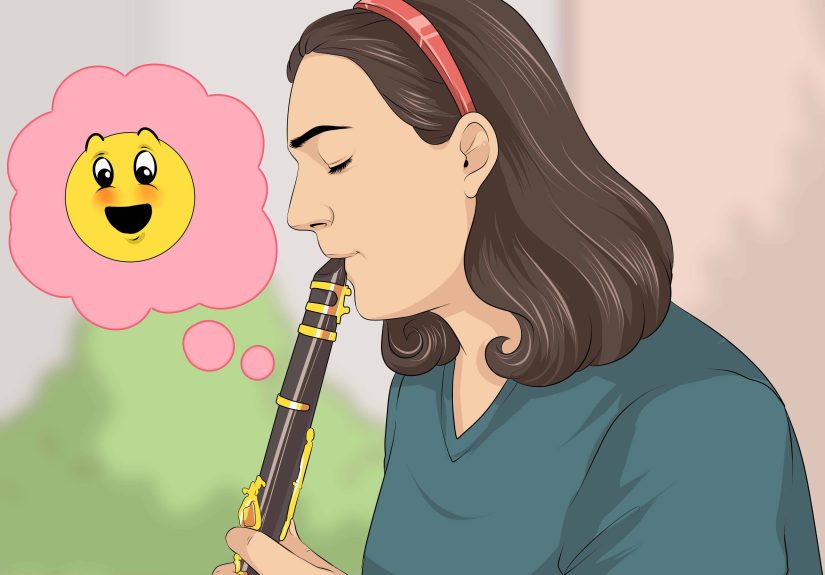
Before you even put the mouthpiece in your mouth, build the shape. Cover your bottom teeth gently with your lower lip so the reed rests on a soft cushion, not directly on your teeth. Then bring the corners of the mouth inward so they seal around an imaginary mouthpiece. Think firm, compact, and centered.
A helpful image is to say the letter “Q” silently. Many clarinet teachers love that cue because it naturally helps flatten the chin and bring the corners into a healthier position. Another useful image is an “oh” shape or an inverted whistle. The point is not to make your face look identical to someone else’s. The point is to create a compact, balanced setup that is ready to support the reed.
What you do not want is a smile embouchure. Smiling pulls the corners back toward the ears, tightens the lower lip, and pinches the reed. That may feel neat and controlled for a moment, but it usually produces a thin, tight, brittle sound. So yes, clarinet is one of the few activities where smiling can make things worse.
Step 2: Put the right amount of mouthpiece in your mouth
This is one of the biggest problems for beginners. Many players simply do not take in enough mouthpiece. They place the reed too close to the tip, then wonder why the tone is tiny, sharp, or reluctant to respond. The clarinet is not being rude. The reed just cannot vibrate properly if you choke it with too little mouthpiece in the mouth.
A simple rule is to place your top teeth on the mouthpiece and aim to have the lower lip contact the reed around the point where the reed begins to separate from the mouthpiece facing. That is a practical starting point, not a rigid law carved into a stone tablet. The exact spot can vary a little depending on your mouthpiece, jaw shape, and angle.
If your sound is pinched and you feel cramped, you may need a bit more mouthpiece. If the sound spreads wildly and squeaks show up like uninvited party guests, you may have taken too much. Use your ears. The right amount usually feels stable, resonant, and easier to play than you expected.
Step 3: Place the top teeth and seal the corners
Your top teeth should rest on the top of the mouthpiece to provide stability. This is the standard single-lip embouchure used by most clarinetists in the United States. The upper lip wraps naturally around the mouthpiece area, while the corners of the mouth seal inward toward it. Think of the corners as drawing in around the mouthpiece, not yanking backward into a grin.
The seal matters. If air leaks from the corners, the tone gets fuzzy and inefficient. If the grip is too loose, the sound turns broad and unfocused. If the grip is too tight, the tone gets sharp, tight, and small. A healthy clarinet embouchure feels secure, but not like you are trying to punish the mouthpiece for its life choices.
If your teeth slip on the mouthpiece, a mouthpiece patch can help with comfort and stability. It is a small thing, but sometimes small things keep practice sessions from turning into annoyance festivals.
Step 4: Keep the chin flat and the jaw steady
A correct clarinet embouchure usually includes a flat chin that points downward rather than bunching upward. If your chin wrinkles into a “raspberry” texture, the setup is likely collapsing. A flat chin helps create a more stable cushion for the reed and encourages a better tone.
Just as important, keep the jaw stable. New players often chew during slurs, jaw-shift between intervals, or bite harder for high notes. That usually creates scoops, unstable pitch, and a reed that feels strangled. High notes are not won through jaw violence. They respond better to enough mouthpiece, steady support, correct voicing, and relaxed control.
A great check is to play a long tone in front of a mirror. If the chin stays flat and the jaw stays quiet, you are on the right track. If your face looks like it is negotiating with the instrument every half-second, simplify and reset.
Step 5: Use fast, focused air and smart voicing
Embouchure is not just lips and teeth. The inside of the mouth matters too. Clarinetists often use vowel images like “ee,” “hee,” or even “cold air” to encourage a high, focused tongue position and a more efficient airstream. This helps create a compact oral cavity and a clearer tone.
That does not mean you should clamp everything shut or create tension in the throat. The goal is focused air, not panic air. Think of sending a thin, fast stream of air through the instrument rather than dumping a bucket of breath at it. A focused airstream supports tone, pitch, articulation, and response, especially in the clarion and upper registers.
If the sound gets fuzzy, try whispering “hee” before you play and keep that inner feeling. If the sound gets forced or shrill, check whether you are biting instead of using air support and voicing. Clarinet playing often feels like a team sport between the embouchure and the airstream. If one side gives up, everybody suffers.
Step 6: Hold the clarinet at a workable angle and support it correctly
The angle of the clarinet matters more than many beginners realize. If the instrument is held too wide or too low, the lower lip can end up too close to the tip of the reed, which often creates a pinched tone. A practical working angle for many players is roughly 35 to 45 degrees from the face, though anatomy can change the exact sweet spot a bit.
Your right thumb also plays a bigger role than people think. It supports the instrument and helps keep the mouthpiece stable against the top teeth. In fact, one of the easiest ways to help a student take in a bit more mouthpiece is to have them gently push up with the right thumb. Suddenly, the reed has room to vibrate, and the sound often improves immediately.
Do not puff your cheeks. Do not let the clarinet hang from your mouth like it is a coat rack. Support the instrument with your hands and thumb so your embouchure can stay consistent instead of becoming a desperate rescue mission.
Step 7: Test, listen, and refine with a mirror and long tones
A correct clarinet embouchure is not built by guessing. It is built by listening and checking. Use a mirror. Play long tones. Watch the chin. Check whether the corners stay sealed. Notice whether the sound changes when you take a tiny bit more mouthpiece or relax a little jaw pressure.
Long tones are boring in the same way brushing your teeth is boring: not thrilling, but incredibly effective if you would like to avoid future suffering. Start with middle-register notes, hold them steadily, and listen for a centered, even sound. Then move gradually across registers. If a note cracks, do not immediately assume the clarinet hates you. Ask better questions. Did the chin bunch? Did the jaw move? Did the corners leak? Did you back off the mouthpiece?
The best embouchure is not just the one that looks textbook-perfect in a still image. It is the one that produces a characteristic, stable, resonant clarinet sound. Your ears are the final judge.
Common Clarinet Embouchure Mistakes to Avoid
1. Smiling with the corners pulled back. This usually pinches the reed and brightens the tone in a bad way.
2. Rolling too much lower lip over the teeth. That can dull the tone and make the reed feel over-cushioned.
3. Using too little lower lip. This often creates a bright, edgy, uncomfortable sound.
4. Taking too little mouthpiece. The tone becomes small, sharp, and resistant.
5. Biting for high notes. This usually closes the reed and makes response worse, not better.
6. Puffing the cheeks. That weakens support and reduces control.
7. Letting the jaw chew. Unstable jaw motion creates sloppy slurs, uneven articulation, and pitch problems.
A Simple Daily Practice Routine for Better Embouchure
Try this quick routine for two weeks:
First minute: Form the embouchure away from the instrument in front of a mirror. Check lower lip, corners, and chin.
Next two minutes: Put in the mouthpiece and barrel or the full clarinet and play easy long tones in the middle register.
Next two minutes: Move between a few neighboring notes slowly without changing the jaw.
Next two minutes: Play soft attacks, aiming for clean starts without biting.
Final minute: Evaluate. Did the sound stay centered? Did high notes respond more easily? Did the corners stay sealed?
This routine is short enough to be realistic and useful enough to expose bad habits quickly. That is a nice combination.
Experience-Based Section: What Clarinet Embouchure Really Feels Like in Real Life
Here is the part method books often skip: learning a correct clarinet embouchure rarely feels magical on day one. More often, it feels weird, slightly awkward, and suspiciously different from what your face wants to do naturally. That is normal. A beginner’s first reaction is often, “This feels too firm,” while a teacher is thinking, “This is still much too loose.” There is a small but important gap between what seems correct and what actually works acoustically.
Many players go through a stage where they finally take in enough mouthpiece and are shocked by the result. The tone may suddenly become bigger, freer, and less stuffy. At the same time, they may squeak a little more for a few days because the reed is finally allowed to vibrate honestly. That is not always failure. Sometimes it is progress arriving in a noisy outfit.
Another common experience is discovering that the embouchure falls apart when crossing registers. A student can play low E beautifully, then climb upward and start biting as if high notes require intimidation. Once the player learns to keep the chin flat and the air focused instead of squeezing harder, the upper notes often settle down. It feels counterintuitive at first. You expect more pressure to help, but better coordination usually does more than brute force.
Returning adult players often describe a different problem: endurance. They remember how to make a sound, but after ten minutes the face gets tired and the corners leak. Usually, that means the muscles are trying to do too much work in the wrong way. A balanced embouchure should feel active, but not desperate. When the setup becomes more efficient, endurance improves because the player is no longer fighting the reed every second.
Students who also play saxophone sometimes report confusion because the clarinet embouchure feels more compact and demands a different relationship with the mouthpiece and voicing. The adjustment can be annoying for a while, but it also teaches control. Clarinet is very honest. It tells you immediately when the lower lip is wrong, when the mouthpiece angle is off, or when the tongue position has collapsed. Rude? Maybe. Helpful? Absolutely.
One of the most encouraging experiences comes from using a mirror consistently. Players often think their chin is flat until they see it wrinkling like a crumpled napkin. Or they think the corners are centered until the mirror reveals a full grin worthy of a school picture. Visual feedback speeds up learning because it exposes the gap between intention and reality. Once that gap becomes visible, improvement becomes much faster.
Finally, the most valuable long-term experience is learning to trust sound over appearance. Two clarinetists may not look exactly the same, especially if their teeth, lips, or jaw shapes differ. But if both create a stable seal, support the reed well, and produce a rich, centered tone, both may be functioning correctly. That is why experienced teachers listen first and adjust second. The embouchure is not a beauty contest. It is an acoustical setup.
So if you are working on your clarinet embouchure and it currently feels awkward, inconsistent, or frustrating, congratulations: you are having a very normal clarinet experience. Keep the setup compact, the chin flat, the corners sealed, the air focused, and the ego resilient. The face muscles will learn. The tone will grow. And eventually, the clarinet will sound less like a complaint and more like music.
Conclusion
A correct clarinet embouchure is not about looking severe, biting the reed into submission, or memorizing ten contradictory teacher metaphors. It is about building a stable, efficient setup that lets the reed vibrate freely. Cover the lower teeth with the lower lip, place the top teeth on the mouthpiece, seal the corners inward, keep the chin flat, use enough mouthpiece, support the clarinet well, and blow with focused air. Then refine it with a mirror, long tones, and honest listening.
Once those habits settle in, the entire instrument feels more cooperative. Tone improves. Response improves. Endurance improves. And perhaps most satisfying of all, your clarinet begins to sound like an instrument instead of a negotiation.