Table of Contents >> Show >> Hide
- The Quick Answer: How Do You Pronounce Louis Vuitton?
- Why This Name Is So Easy to Mispronounce
- How to Pronounce “Louis” Correctly
- How to Pronounce “Vuitton” Correctly
- French vs. English Pronunciation: What Is the Difference?
- Common Mispronunciations to Avoid
- A Simple Step-by-Step Method to Say It Naturally
- Why People Care So Much About Saying It Correctly
- Examples of How to Use It in Conversation
- Pronunciation Tips for Other French Luxury Brand Names
- Real-Life Experiences: Why “Louis Vuitton” Trips Up So Many People
- Final Thoughts
If you have ever stood in front of a mirror whispering “Louie Vee-ton? Lewis Vooton? Loo-ee Vwee… wait, what?” congratulations: you are wonderfully human. Louis Vuitton is one of those names that instantly sounds elegant, expensive, and just a little dangerous to say out loud if you are not sure you have it right.
The good news? Learning how to pronounce Louis Vuitton is much easier than most people think. The tricky part is that the French version and the English-friendly version are not exactly the same. One aims for native-style French sounds. The other aims for “I said it confidently at brunch and nobody blinked.” Both have their place.
In this guide, you will learn the French pronunciation, the common English pronunciation, the biggest mistakes people make, and a few memory tricks so your mouth stops panicking every time the brand name comes up. Fancy? Yes. Intimidating? Not after this.
The Quick Answer: How Do You Pronounce Louis Vuitton?
French pronunciation: lwee vwee-tohn (IPA: /lwi vɥitɔ̃/)
English-friendly pronunciation: LOO-ee vwee-TAHN or LOO-ee vwee-TON
Here is the simplest way to remember it:
- Louis sounds like lwee, not “Lewis.”
- Vuitton starts with a vwee sound, not “vee” and not “voo.”
- The ending is a soft, nasal tohn sound in French, not a hard, fully pronounced ton.
If you want one polished version that works well for most English speakers, go with LOO-ee vwee-TAHN. If you want to sound closer to French, aim for lwee vwee-tohn with a gentle nasal ending and no hard final “n.”
Why This Name Is So Easy to Mispronounce
Louis Vuitton is a French luxury house founded in the 19th century by Louis Vuitton, a trunk maker whose name became one of the most recognizable labels in fashion. That means the pronunciation follows French sound patterns, not standard American English ones.
And French, bless its stylish little heart, does not always say words the way English speakers expect. Letters can soften, endings can disappear, and nasal vowels can show up like surprise guests who were definitely not invited by your high school phonics teacher.
Three things usually trip people up:
1. “Louis” looks familiar, but it is not pronounced the familiar English way
In English, many people instinctively say Lewis or Loo-is. In French, Louis is much closer to lwee. It is smoother, quicker, and cleaner.
2. The “ui” in Vuitton is not obvious to English speakers
French combinations like ui do not behave like they do in English. In pronunciation guides, the sound is often simplified to something close to “wee” for English learners. That is why Vuitton often gets rendered as vwee at the start.
3. The ending is nasal
The final on in French is not a strong “on” or “ahn” with a clearly pronounced “n.” Instead, it is nasal, meaning some of the sound resonates through the nose. That is why a fully native French pronunciation sounds lighter and less clunky than the version many English speakers use.
How to Pronounce “Louis” Correctly
Let us isolate the first name first, because it causes a surprising amount of drama.
Correct French-style sound: lwee
Think of it like this:
- Start with “loo”, but make it shorter and lighter.
- Glide quickly into “ee.”
- Do not turn it into two heavy syllables like LOO-iss.
In other words, Louis should feel smooth, almost like one flowing beat: lwee.
Common wrong versions:
- Lewis
- Loo-is
- Loo-eez
If your version sounds like the name of a friendly accountant from Ohio, you may need another pass.
How to Pronounce “Vuitton” Correctly
This is the part where confidence usually leaves the building.
Best French-style approximation: vwee-tohn
Break it down like this:
- Vui- sounds close to vwee
- -ton is more like tohn, but nasalized
- The final n is not sharply pronounced
Many American speakers say vwee-tahn, and that is a perfectly common English-friendly version. It is not fully French, but it sounds far better than flattening the word into Vee-ton or Voo-it-ton.
The main goal is to avoid overpronouncing every letter. French pronunciation tends to be more fluid and less bouncy than English. So instead of stomping through the syllables, glide through them.
French vs. English Pronunciation: What Is the Difference?
If you are wondering whether you should use the French version or the English version, the answer depends on context.
Use the French pronunciation if:
- You want the most accurate version
- You are talking about the brand in a fashion or language context
- You enjoy getting these details right
Use the English-friendly pronunciation if:
- You want something natural and easy to say in American English
- You do not want to sound like you are auditioning for a Paris travel commercial
- You want to be understood quickly in everyday conversation
That is why you will hear slight variations even among stylish, educated, and perfectly competent speakers. Some go closer to lwee vwee-tohn. Others say LOO-ee vwee-TAHN. What matters most is avoiding the clearly off-target versions.
Common Mispronunciations to Avoid
Here are the versions that most often go sideways:
- Lewis Vee-ton very common, very wrong
- Loo-is Vooton sounds like the brand fell down the stairs
- Loo-ee Voo-tahn closer, but the start of Vuitton is still off
- Louie Vit-ton too English, too sharp, too many hard sounds
- Louis Vutton accidentally sounds like a cousin of “button”
If you can remember just one correction, make it this: Vuitton does not begin like “vee” or “voo.” It is much closer to vwee.
A Simple Step-by-Step Method to Say It Naturally
Step 1: Say “lwee”
Keep it light and quick.
Step 2: Say “vwee”
Think of the letter V glued to the word we.
Step 3: Add “tohn”
Make the ending soft. In French, do not hit the final n hard.
Step 4: Put it together
lwee vwee-tohn
Now say it three times without slowing down too much. Good pronunciation is not just about individual sounds. It is also about rhythm. The more naturally it flows, the better it sounds.
Why People Care So Much About Saying It Correctly
On one level, pronunciation is just pronunciation. Nobody is winning a trophy for saying a designer name correctly in the cereal aisle.
But on another level, names carry identity. Louis Vuitton is not just a product label. It is also the surname of a real French founder and the name of a historic fashion house. Saying it well shows attention to language, culture, and detail.
It also helps you sound more confident. And let us be honest: confidence does a lot of the heavy lifting in life. If you say a luxury brand name with the energy of someone defusing a bomb, people notice. If you say it smoothly and move on, people assume you know what you are doing.
So yes, this is partly about accuracy. It is also partly about avoiding that awkward moment where you say the name out loud and immediately wish time travel were real.
Examples of How to Use It in Conversation
Here are a few natural examples:
- “She saved for months to buy her first Louis Vuitton bag.”
- “I always wondered how to pronounce Louis Vuitton correctly in French.”
- “He said ‘Lewis Vee-ton,’ and I felt my soul leave my body for a second.”
- “The English-friendly version is fine, but the French pronunciation is smoother.”
Notice that in all of these examples, the name is treated naturally. That is the real goal. You are not trying to perform. You are trying to say it correctly without making it a whole theatrical event.
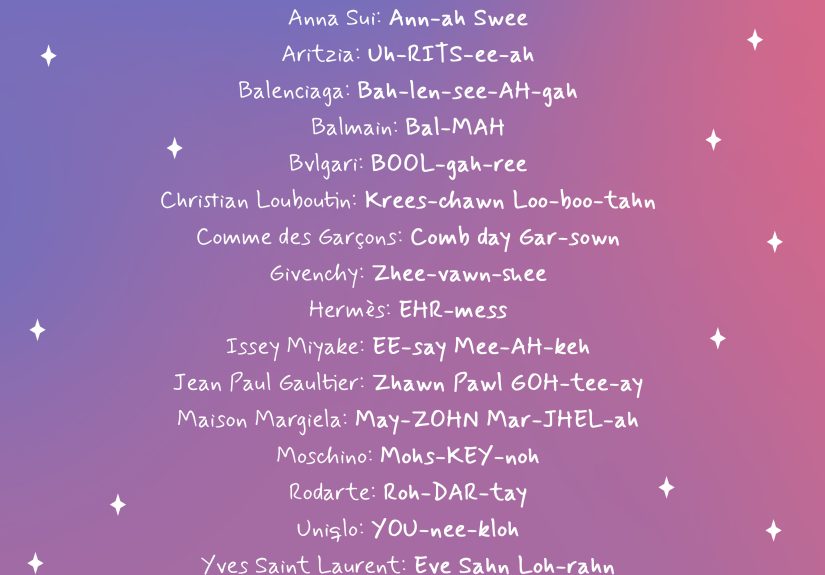
Pronunciation Tips for Other French Luxury Brand Names
If Louis Vuitton has taught you anything, it is probably this: French luxury names are not always phonetic for English speakers. Once you get comfortable with sounds like nasal vowels, rounded vowels, and softer endings, other names start feeling less scary too.
That does not mean you need to become a pronunciation wizard overnight. It just means your ear gets better with practice. And once you hear the patterns, brand names that once looked impossible suddenly feel manageable.
So yes, today it is Louis Vuitton. Tomorrow it might be Givenchy. Next week, maybe Balmain. Look at you, casually becoming the most linguistically prepared person in the group chat.
Real-Life Experiences: Why “Louis Vuitton” Trips Up So Many People
One reason this topic keeps coming up is that people usually do not learn the name in a classroom. They learn it in the wild. Maybe they see it on a handbag in a store window. Maybe they hear it in a song lyric, a fashion video, or a celebrity interview. Maybe a friend says it one way, a sales associate says it another, and suddenly everyone is pretending to be calm while privately wondering who is right.
That is what makes Louis Vuitton such an interesting pronunciation case. It sits at the intersection of fashion, pop culture, and language. Plenty of people know the brand before they ever hear a native French speaker say it. So they do what humans always do: they guess. And those guesses tend to be very English. “Lewis Vee-ton” feels logical if you are reading the name through an American English lens. Unfortunately, logic and French spelling are not always best friends.
A lot of awkward moments also happen in public. Someone might be chatting confidently about handbags, fragrances, or designer luggage, then hit the name like a speed bump. The sentence starts strong, the voice wobbles halfway through, and then comes the classic recovery move: saying it faster and hoping nobody noticed. Spoiler: everybody noticed, but kind people usually pretend they did not.
Travel adds another layer. If you hear the brand pronounced in Paris, the sound is often lighter, quicker, and more nasal than what you hear in American media. That can make English speakers feel like they have been saying a different word entirely. But that is normal. Lots of borrowed names shift when they move between languages. The goal is not perfection on day one. It is getting close enough to sound informed and respectful.
There is also the confidence factor. Some people overcorrect because they are afraid of sounding uninformed, and suddenly they are delivering the name with enough dramatic flair to power a small chandelier. Others go in the opposite direction and flatten it into the safest, most American version possible. The sweet spot is somewhere in the middle: accurate enough to honor the French, natural enough to fit an English conversation.
And honestly, that is what makes mastering this pronunciation satisfying. Once you know how to say it, a tiny social anxiety disappears. You stop hesitating. You stop mumbling. You stop mentally rewriting your sentence to avoid the word altogether. Instead, you say Louis Vuitton and keep it moving like the polished adult you were always meant to be.
So if this name has ever made you second-guess yourself, you are far from alone. It has confused shoppers, students, influencers, fashion fans, and probably a few people holding very expensive bags. The difference now is that you know what to listen for, what mistakes to avoid, and how to say it with ease. That is a surprisingly useful little win.
Final Thoughts
If you want the most accurate French pronunciation, say lwee vwee-tohn and keep the ending nasal, with no hard final “n.” If you want a smooth American English version that still sounds informed, LOO-ee vwee-TAHN works well in everyday conversation.
The biggest things to remember are simple: Louis is not “Lewis,” Vuitton begins with vwee, and the ending should sound softer than a fully pronounced English ton. Once those pieces click, the whole name gets much easier.
And that is the beauty of learning how to pronounce Louis Vuitton correctly. It is a small detail, but small details can make you sound smarter, more polished, and far less likely to panic in the middle of a sentence. Which, frankly, is always in style.