Table of Contents >> Show >> Hide
- Why This 13-Picture Idea Is So Instantly Compelling
- What Happens When Reading Turns Visual
- Why Readers Love Book-Inspired Art So Much
- How Artists Translate a Novel Into an Illustration
- Why Projects Like This Matter Beyond Pretty Pictures
- Experiences From the Sketchbook Side of Reading
- Final Thoughts
- SEO Tags
Some people finish a novel and write a review. Some text their friends in all caps. And then there are the glorious overachievers who close the book, stare into the middle distance for five dramatic seconds, and turn the whole reading experience into art. That is exactly why the idea behind I Read Books And Then Draw Illustrations Based On Them (13 Pics) lands so well. It is not just a cute internet concept. It is a visual love letter to reading.
At its core, this kind of project does something readers immediately understand: it proves that books do not stay on the page. They leak into your head, your mood, your daydreams, and apparently your sketchbook too. A single illustration inspired by a novel can capture fear, longing, suspense, or wonder faster than a long explanation ever could. One brushstroke can say, “Yes, I finished this book, and no, I have not emotionally recovered.”
That is what makes book-inspired illustration such a satisfying topic for readers, artists, and anyone who has ever highlighted a quote like it was a sacred text. When someone reads deeply enough to translate a story into an image, they are doing more than fan art. They are interpreting tone, isolating symbols, choosing emotional details, and building a fresh doorway into the same fictional world. It is part reading response, part visual criticism, and part creative obsession. Frankly, that is a pretty great combo.
Why This 13-Picture Idea Is So Instantly Compelling
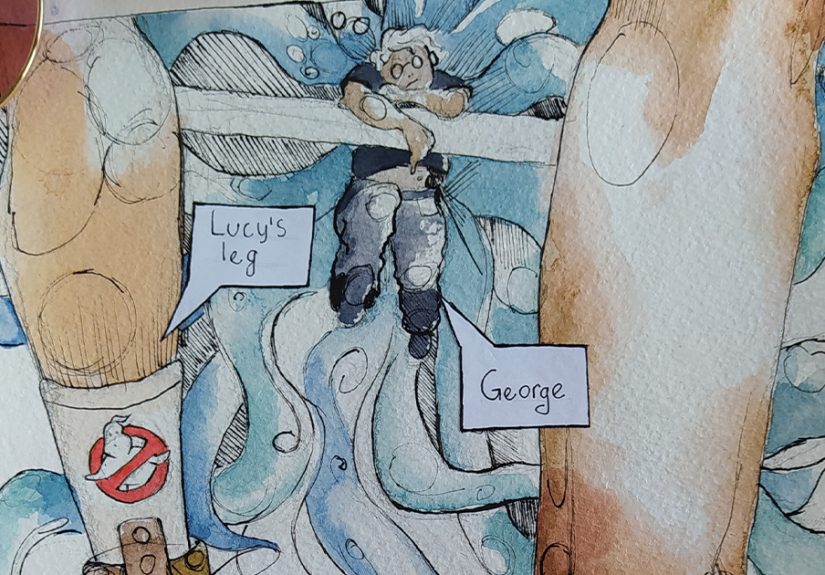
The premise behind this title is wonderfully simple: read books, then make illustrations based on them. But simple ideas are often the most magnetic because they leave room for personality. In the original post that inspired the title, the featured drawings were based on stories by authors such as Stephen King, Agatha Christie, H.P. Lovecraft, Robert R. McCammon, Charlie N. Holmberg, and the Lockwood & Co. series. That range matters. It tells readers right away that illustration is not reserved for one genre, one style, or one kind of imagination.
Horror, mystery, fantasy, supernatural fiction, and eerie adventure all behave differently on the page, so they also behave differently in art. A book like The Mist invites atmosphere and menace. And Then There Were None practically begs for tension and isolation. Misery leans into claustrophobia. Selephais opens the door to surreal dream imagery. When an artist responds to books like these, the illustrations become more than pretty add-ons. They become mood studies with a literary heartbeat.
That is the secret sauce here. Readers are not only looking at artwork. They are also measuring how faithfully the image captures the emotional temperature of the book. Did the drawing get the dread right? Did it nail the loneliness, the weirdness, the elegance, the creeping doom, the tiny glimmer of hope? Book lovers are excellent at this game because they do not just remember plots. They remember feelings.
The illustrations feel like receipts for a reading life
There is also something deeply charming about seeing a person’s bookshelf turn into a visual portfolio. Anyone can say, “I love reading.” But when someone consistently turns stories into finished art, it reveals a level of attention that feels intimate and serious. These illustrations function almost like receipts for a reading life. They show what kinds of stories cling to a person’s imagination long after the final page.
That is probably why projects like this get such warm reactions online. They combine two communities that already overlap: people who love books and people who love pictures. Put those together and you get an audience that is ready to zoom in, compare interpretations, argue affectionately about scenes, and suddenly add three new titles to their reading list. Not bad for a post with 13 images and a very good idea.
What Happens When Reading Turns Visual
Reading has always had a visual side, even when there are no pictures on the page. Strong readers naturally build scenes in their minds. They imagine the hallway, the storm, the candlelight, the monster, the kitchen table, the expression on a character’s face when everything goes sideways. This is one reason illustration based on books feels so natural: the art simply externalizes what many readers are already doing privately.
That process is more powerful than it looks. Turning a story into an image requires selection. The artist has to choose what matters most. Is it the setting? The object? The posture of a character? A piece of weather? A single symbolic detail that unlocks the entire mood? That act of choosing is where reading becomes interpretation. Suddenly the story is not just being consumed. It is being reassembled.
And that is where the best book-inspired illustrations shine. They do not try to summarize every chapter like a panicked student before an exam. Instead, they distill the book to one emotionally loaded moment. A great illustration says, “This is the image the book left burning in my mind.” It does not need to explain everything. In fact, some of the strongest pieces leave room for mystery, which is very on-brand for literature.
Books become visual memory
Once a story is translated into an image, it often becomes easier to remember. Readers may forget minor plot mechanics, but they remember the feeling of a figure standing in a doorway, a house swallowed by fog, or a bright object glowing against a dark landscape. Illustration gives memory a place to hang its coat. It turns abstract recall into something shaped, textured, and visible.
This is one reason reading and art make such a good pair. The two forms strengthen each other. Reading feeds the imagination; drawing gives that imagination form. Then the finished image sends readers back to the text with fresh attention. It is a beautiful little loop, and unlike many loops on the internet, this one is actually healthy.
Why Readers Love Book-Inspired Art So Much
It validates the private movie in your head
Every reader quietly directs a mental adaptation while reading. Casting choices are made. Lighting is assigned. Entire production budgets are imagined. Then you see an illustration based on the same book, and suddenly you are comparing your private movie to someone else’s. That comparison is half the fun. Sometimes the artwork matches your inner vision so perfectly it feels spooky. Other times it surprises you and reveals an angle you missed.
That surprise is valuable. A good illustration can sharpen your understanding of a text by emphasizing something subtle: a repeating object, a mood shift, a character’s vulnerability, or the strange beauty hiding inside a dark scene. It nudges readers to notice how much of a story lives beneath the literal plot.
It creates a social way to talk about books
Book discussions can be wonderful, but they often drift toward plot recap. Art changes the conversation. Instead of asking only, “Did you like it?” people start asking, “Why did this scene get chosen?” or “Why does this palette feel so right?” or “How did this artist manage to make the book look exactly as unsettling as it felt?” That kind of response is richer, more specific, and honestly more fun.
It also invites people who may be intimidated by literary analysis to join the conversation through image and emotion. You do not need a graduate seminar voice to say, “This drawing captures the loneliness of the book perfectly.” You just need eyes, memory, and a heart that got sucker-punched by fiction.
It turns fandom into something lasting
Book-inspired illustration is also a form of fandom with staying power. Instead of posting a quick reaction and moving on, the artist lingers. They commit time, style, and craft to a story. That creates a different kind of tribute. It says the book was not just entertaining. It was artistically generative. It made something else possible.
That matters in a reading culture that often moves too fast. So many titles are discussed in a burst and then swallowed by the next release cycle. Illustration slows that down. It gives a book a second life, one that can travel through social media, portfolios, galleries, print shops, or a personal archive of work inspired by reading.
How Artists Translate a Novel Into an Illustration
First, they read for atmosphere
The strongest literary illustrations usually begin with mood, not mechanics. Before the artist decides what to draw, they need to know how the book feels. Is it bleak, feverish, playful, dreamlike, sharp-edged, tender, eerie, or chaotic? Atmosphere acts like a compass. Without it, the drawing may be technically fine but emotionally wrong, which readers can spot from a mile away.
Then, they choose a single anchor
Trying to draw the whole book is a one-way ticket to frustration town. Smart artists pick one anchor: a location, a confrontation, a symbolic object, or a visual motif that represents the wider story. The image does not have to be literal either. Some of the best literary art leans symbolic rather than cinematic. A cracked doorway, a floating key, a shivering silhouette, or a burst of unnatural color can say more than a full scene with twelve characters.
Finally, they leave space for the viewer
Good book-inspired art does not overexplain. It gives enough detail to create recognition, but enough ambiguity to keep the mystery alive. That balance is important because books themselves rely on the reader’s imagination. An illustration should feel like an invitation, not a closed case file.
This is especially true for stories in horror, fantasy, and mystery, where suggestion often does more work than exposure. Show too much and the magic leaks out. Show too little and the image loses force. The sweet spot is where the drawing whispers, “You know exactly what this is if you have been there.”
Why Projects Like This Matter Beyond Pretty Pictures
It would be easy to dismiss a post like this as simple internet charm, but that would undersell what is happening. Projects built around reading and illustration reinforce the idea that books are not passive objects. They are catalysts. They produce memory, discussion, identity, and new work. They make people want to draw, write, collect, reread, and recommend.
That ripple effect is good for readers, good for artists, and good for books themselves. It encourages slow attention in a fast-scroll culture. It reminds us that visual storytelling and literary storytelling are cousins, not rivals. And it proves that the gap between reading and making is often much smaller than people assume. Sometimes the distance between “I loved this book” and “I made art because of it” is only one sketchbook page.
There is also a useful lesson here for creators who feel pressure to invent from nothing. You do not always need to wait for a thunderbolt of originality. Sometimes your next creative project is already sitting on your nightstand with a bookmark in chapter nine. Reading is not a detour from making art. For many artists, it is the ignition switch.
Experiences From the Sketchbook Side of Reading
One of the most interesting experiences connected to reading and drawing is how differently a book behaves once you know you might illustrate it later. You stop reading like a tourist and start reading like a detective with a pencil. Suddenly you notice recurring colors, strange objects, weather patterns, doorways, windows, shadows, birds, bones, hands, mirrors, staircases, and all the tiny details that authors slip into a story like breadcrumbs for the visually obsessed. A normal reader may think, “Great scene.” A reader-artist thinks, “That scene has composition.”
Another experience that sneaks up on you is how drawing a book can expose what affected you most emotionally. You may assume the biggest plot twist will be the image you want to make, but then your hand reaches for something quieter: the lonely hallway, the abandoned coat, the final look between two characters, or the single lamp in an otherwise dark room. That is when you realize illustration is not just about what happened. It is about what stayed with you. Sometimes the heart of the story is not the loudest scene. It is the one that kept tapping on your brain three days later like a polite ghost.
There is also a funny tension between accuracy and feeling. Many artists who illustrate books know this struggle well. Do you draw exactly what the text says, or do you draw what the text felt like? Those are not always the same thing. A technically accurate image can still feel lifeless, while a stylized, interpretive piece can somehow capture the soul of the story better than a strict visual translation. That is where the real creative challenge lives. You are not making courtroom evidence. You are making emotional evidence.
Then there is the experience of rereading through art. Once you finish an illustration, the book changes in your memory. It becomes attached to the piece you made. The story is no longer only words in sequence; it becomes a visual landmark in your own creative life. You might remember where you were sitting when you finished the chapter, what song was playing while you sketched, or the exact moment you realized the composition finally clicked. Books do that. They crawl into the memory cabinet and label the folder themselves.
Sharing the finished art creates another layer of experience altogether. Readers who know the book often respond instantly and emotionally. They do not just say, “Nice drawing.” They say, “You captured the dread,” or “This is exactly how that chapter felt,” or “Now I want to reread it immediately.” That is a special kind of feedback because it confirms the illustration is doing what literary art should do: creating recognition. It becomes a bridge between one person’s reading experience and another person’s memory of the same text.
And for people who have not read the book yet, the experience is different but equally interesting. The illustration becomes a trailer without spoilers, a mood-board invitation into the world of the story. A well-made image can spark curiosity faster than a summary ever could. Someone may scroll past a drawing inspired by The Mist, Spellmaker, or And Then There Were None and think, “I have no idea what is going on here, but I absolutely need to know.” That is a powerful service to literature. It turns art into a reading recommendation.
Perhaps the best experience of all is the simplest one: joy. There is real joy in finishing a book, loving it enough to respond creatively, and building your own visual archive of what you have read. Over time, those illustrations start to look like a portrait of your reading life. Not a neat one, of course. More like a wonderfully chaotic museum of obsessions, moods, monsters, moonlight, and favorite sentences translated into shape and color. And honestly, that sounds like a pretty excellent museum to visit.
Final Thoughts
I Read Books And Then Draw Illustrations Based On Them (13 Pics) works because it taps into something readers already know: books are visual, emotional, and wildly generative. They give us scenes we cannot shake, symbols we keep carrying, and moods that refuse to leave quietly. Turning those impressions into illustrations is not just a fun side project. It is a powerful way of reading out loud with images.
Whether you are an artist, a devoted reader, or a person who has ever looked at a fictional setting and thought, “I need to see this outside my own head,” this concept has obvious appeal. It celebrates reading as an active art form. It proves that stories do not end when the last page turns. Sometimes they pick up a paintbrush.