Table of Contents >> Show >> Hide
- Why This Preview Clip Is More Than a Throwaway Tease
- What Happens in the Clip: Hank Hill’s Version of a Rock Concert
- Jack McBrayer’s “Debut” Energy Fits Arlen Like a Glove (A Very Polite Glove)
- The Revival Context: What’s Different, What’s the Same, and Why It Matters
- Modern Life in Arlen: Zoom Calls, Rideshares, and “Are We All-Gender?”
- Returning Cast, New Voices, and the Practical Reality of Time
- Is the Revival “Political”? Sort ofIn the Original King of the Hill Way
- What to Watch for After This Clip
- How to Watch the Revival (and Why This Clip Landed So Well)
- Fan Experiences: Watching the Preview Clip and Riding the Revival Wave
- Conclusion
- SEO Tags
The best part about a King of the Hill comeback is that it doesn’t need fireworks, multiverses, or a surprise dragon cameo to feel “big.” It just needs Hank Hill looking at something deeply, sincerely, weirdly American and whispering the kind of reverent awe usually reserved for vintage propane tanks. And in the latest revival preview clip, Hank finds his version of Disney World: a guided tour through a George W. Bush museum exhibitcomplete with a tour guide who sounds suspiciously like Jack McBrayer.
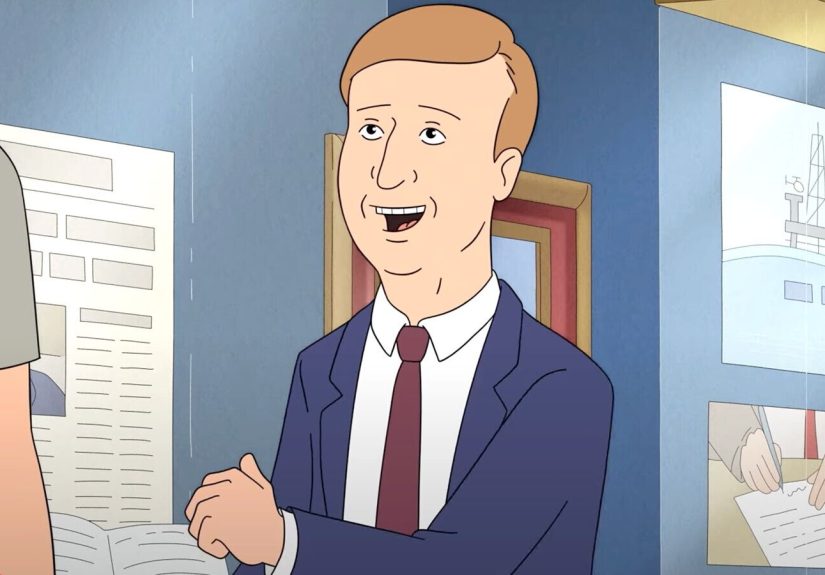
Yes, that Jack McBrayerforever beloved as Kenneth the Page, patron saint of wide-eyed enthusiasm and polite chaos. In the clip, that signature warmth gets funneled into a museum-guide performance that’s part civic history, part golden-retriever energy, and part “sir, please stop hugging the display case.” It’s a small moment, but it’s also a perfect snapshot of what this revival is aiming for: the same old Hank, dropped into a slightly updated world, reacting with absolute conviction to whatever’s in front of himwhether that’s an all-gender restroom sign, a rideshare rating, or a presidential baseball.
Why This Preview Clip Is More Than a Throwaway Tease
A lot of revival marketing leans on nostalgia like it’s a crutch: “Remember this catchphrase?” “Remember this character?” “Remember oxygen?” King of the Hill tends to play it smarter. The George W. Bush museum clip isn’t just a wink; it’s a thesis statement. It shows how the show can keep its gentle, character-first comedy while letting time passbecause the funniest thing about Hank Hill isn’t that he’s “out of date.” It’s that he takes everything seriously, even when the thing he’s taking seriously is a museum display featuring a pen.
The clip also signals that the revival still understands tone. King of the Hill never played like a shouty sitcom. It’s a show where the punchline is often a pause, a sigh, a soft “yup,” or Hank’s face doing math in real time. A museum tourstructured, polite, and full of facts that only one person in the group truly cares aboutis basically a comedic greenhouse for Hank Hill. Put him in there and watch the humor grow naturally. Like a well-watered lawn. With edging.
What Happens in the Clip: Hank Hill’s Version of a Rock Concert
The Setup: A Field Trip for Adults Who Don’t Need Permission Slips
In the preview scene, Hank visits Dallas’ George W. Bush library/museum with Peggy, Nancy, and Dale. Hank is visibly thrilledlike a kid at a science center, except the science is “history memorabilia” and the gift shop probably sells ties. The tour guide is even more thrilled than Hank, which is how you know you’re about to hear a voice that sounds like it runs on sunshine and manners.
The Moment: The Baseball, the Pen, and Hank’s Awe
Hank zeroes in on a famous baseballone associated with President Bush throwing the first pitch at a 2001 World Series gameand reacts like he’s witnessing a sacred artifact. The guide, delighted that Hank is fully locked in, gushes with the kind of enthusiasm museum employees only get when someone finally reads the placard instead of asking where the bathroom is. The scene then moves to another exhibit: a pen connected to legislation about offshore drilling. Hank responds with breathy admirationan emotional response so sincere it becomes the joke.
This is classic King of the Hill comedy: a character’s authenticity turned up just enough that the world around them looks slightly funnier. Hank isn’t written as a cartoon dummy; he’s written as a man who has a core belief system, a deep respect for order, and a heart big enough to be moved by “a pen that did important paperwork.” In any other show, this scene would be a cheap political jab. Here, it’s more like: “Look at Hank being Hank.” And somehow, it works.
Jack McBrayer’s “Debut” Energy Fits Arlen Like a Glove (A Very Polite Glove)
Whether or not the clip’s guide is officially named and credited in the marketing, the voice performance has the telltale McBrayer sparkle: upbeat, earnest, and slightly too excited for the amount of oxygen available in a public building. That vibe is a terrific match for King of the Hill, because the show loves characters who are sincere to the point of being comedic. Hank is sincere. Peggy is sincere. Even Dale is sincerehe’s just sincerely wrong in seventeen directions at once.
McBrayer’s comedy superpower is turning enthusiasm into something oddly specific and human. In the museum-guide role, that enthusiasm becomes a foil for Hank’s own deep-focus seriousness: the guide is thrilled to be performing; Hank is thrilled to be learning; Peggy is probably making mental notes about how she could do this tour better; and Dale is… well, Dale is Dale. That mix creates the kind of scene King of the Hill has always done best: four people in the same place, experiencing completely different realities, none of them technically “wrong.”
The Revival Context: What’s Different, What’s the Same, and Why It Matters
A Time Jump That Actually Serves the Comedy
The revival brings the Hills forward in time, with Hank and Peggy returning to Arlen after years spent working a propane job in Saudi Arabia to secure retirement. That setup does two smart things at once: it gives the characters a believable reason to be away, and it creates a natural comedic engine when they return. Arlen didn’t freeze in amber. Technology moved on. Social norms shifted. People started ordering things with apps Hank doesn’t trust. And now Hank has to figure out how to live in a town that looks familiar but feels subtly different.
Bobby Grows Up, and That Changes the Whole Family Dynamic
A key update is Bobby: he’s older now, living in Dallas and working as a chef. That alone is loaded with storytelling potential, because Bobby was always the character who tried on identities like hats at a department store: comedian, magician, philosopher, deli meat enthusiast. Making him a chef lets the revival keep that curiosity, while also giving him adult stakescareer pressure, relationships, and the weird reality of being someone’s “grown child.”
The best versions of King of the Hill never mocked Bobby for being different; they mocked the world for not knowing what to do with him. Adult Bobby still has the same heart, but now he’s navigating adulthood with that same “I’m trying my best!” energy. Meanwhile, Hank is facing the hard truth that parenting doesn’t end when your kid grows upit just changes flavor. (And Hank prefers his flavor to be classic, not fruit-forward.)
Modern Life in Arlen: Zoom Calls, Rideshares, and “Are We All-Gender?”
The trailer and early previews make it clear the revival isn’t trying to turn King of the Hill into a social-media sketch show. It’s using modern life as background texturethe same way the original used suburban routines, local politics, and neighborhood dramas. Hank encountering a Zoom call isn’t funny because “old man hates technology.” It’s funny because Hank’s first instinct is to handle conflict like a responsible adult from his era: directly. You can’t “kick someone’s ass over Zoom,” and Hank’s offended that the world removed a perfectly functional option.
The show also uses modern culture as a mirror for Hank’s values: he’s not a villain, he’s not a hero, he’s a person with a deeply held belief that things should make sense. When things don’t make sense, he doesn’t explodehe squints at them. That squint is doing a lot of work. It’s basically the revival’s unofficial logo.
Returning Cast, New Voices, and the Practical Reality of Time
Revivals come with an emotional math problem: how do you honor what came before while acknowledging what changed? The King of the Hill revival does it by bringing back much of the core voice castMike Judge, Kathy Najimy, Pamela Adlon, Stephen Root, and others while also addressing recasting where needed. Some beloved performers are no longer with us, and the show handles those transitions as carefully as a series built on community should.
It also reflects a broader shift in animation casting: certain roles are being updated, and new actors are stepping in for characters where representation matters. That’s not a lecture; it’s simply the reality of making a modern season of a show that originally ran across multiple decades. A thoughtful revival doesn’t pretend the world didn’t change. It finds comedy in the change without losing empathy for the people living through it.
Is the Revival “Political”? Sort ofIn the Original King of the Hill Way
The George W. Bush museum clip is a good example of the show’s approach. It isn’t yelling a message. It’s observing behavior. Hank is genuinely delighted by the museum exhibits. Dale likely treats the same exhibits like a conspiracy buffet. Peggy might be offended the tour guide didn’t ask her to lead the group. The humor comes from character reactions, not from a screenwriter trying to win an argument on the internet.
Reviews and coverage around the revival have described it as more focused on cultural and generational dynamics than on turning every plot into a current-events debate. That tracks with what made the original so rewatchable: it could touch politics, faith, class, and identity while still feeling like a warm show about neighbors who borrow tools and argue about lawn care.
What to Watch for After This Clip
More “Small” Scenes That Say a Lot
If the revival stays faithful to its strengths, the biggest laughs won’t come from giant set pieces. They’ll come from little moments: Hank trying to rate a driver, Peggy trying to feed a vegan, Bobby trying to act like he has his life together, and Dale accidentally becoming influential because he confidently says nonsense at the exact right volume. The Bush museum scene is a promise that the writers still trust small moments to do big comedic work.
Guest Voices That Make Sense, Not Just Headlines
A good guest star in animation doesn’t feel like stunt casting; it feels like the character always existed and we’re just meeting them now. Jack McBrayer as a museum tour guide is exactly that kind of casting: specific, tonal, and funny even before you know who it is. His voice brings instant character, but it doesn’t overpower the scene. It supports Hank’s experience, which is the point.
How to Watch the Revival (and Why This Clip Landed So Well)
The revival season debuted as a 10-episode drop on Hulu, making it easy to go from “I’ll just watch the preview clip” to “It’s 2 a.m. and I’ve been thinking about propane accessories for four hours.” That binge-friendly format also makes a teaser like the museum scene more effective: it’s a bite-size reminder that the show’s voice is still intact, and that the jokes are still coming from people being themselvesnot from the show trying to become something it was never meant to be.
And honestly, that’s why the Jack McBrayer moment hits. It’s not just “Hey, you recognize that actor!” It’s “This is the exact kind of character the King of the Hill universe would have.” A too-happy tour guide. A too-serious Hank. A too-chaotic Dale. A Peggy who refuses to be ignored. Comedy doesn’t need to be complicated when the characters are this well built.
Fan Experiences: Watching the Preview Clip and Riding the Revival Wave
If you’ve ever been a longtime fan of a show that disappears for years and then suddenly comes back, you know the emotional roller coaster. There’s excitement, obviouslyfollowed immediately by suspicion. You don’t want a revival; you want a time machine. You want the old comfort without the awkward feeling that someone rearranged the furniture in your brain. That’s why a simple preview clip can feel like a “trust test.” Does the rhythm still sound right? Do the characters still feel like themselves? Does Hank still speak in that steady, careful cadence that makes every sentence sound like a man building a fence?
The George W. Bush museum clip tends to reassure people fast because it plays like vintage King of the Hill. It’s not trying to win the internet. It’s not rushing to cram in ten topical references per minute. It’s letting you settle into the scene the way the show always did: a quiet setup, a few small character beats, then a laugh that sneaks up on you. Hank’s delighted seriousness is instantly familiar. Peggy’s reactions feel like Peggy. And Dale’s presenceno matter what form it takesadds that unpredictable spice, like someone shaking paprika onto a grilled cheese.
There’s also a very particular fan joy in recognizing a voice before you recognize the face. Animation fans do this all the time: you hear three syllables and your brain goes, “Wait… is that…?” Jack McBrayer is especially fun to spot because his voice carries personality like it’s wearing a name tag. For many viewers, the experience is almost physical: a grin forms before you even confirm it’s him. And once you do, you start watching the scene differentlycatching the subtle line readings, the earnest emphasis, and the way the guide’s enthusiasm contrasts with Hank’s reverence. It becomes a little game layered on top of the story.
Another common experience is what you might call “the Hank Hill mirror effect.” You watch Hank treat a museum exhibit with sincere respect, and you realize: you, too, are treating a piece of pop culture with sincere respect. You’re basically doing the same thing Hank is doingstanding in front of something from your past, feeling weirdly emotional about it, and hoping it still means what it used to mean. The show has always been good at that kind of gentle reflection, where it makes you laugh and then makes you quietly admit, “Okay, yeah… that’s me.”
Finally, there’s the communal side. A clip drops, and suddenly people are quoting it, debating it, replaying it, and sharing the kind of hyper-specific observations only fans would care about: “That pause was so Hank.” “Peggy’s tone is perfect.” “Dale would absolutely do that.” “That tour guide sounds like Kenneth from 30 Rock!” That shared language is part of why King of the Hill has stayed alive between seasons for so long. The revival isn’t just new episodes; it’s a new excuse for fans to gather around the same old emotional campfire except now the campfire is probably a group chat, and someone’s sending a GIF of Hank blinking slowly.
Conclusion
Jack McBrayer’s apparent King of the Hill debut in the revival preview clip works because it’s not trying too hard. It’s a perfectly sized cameo in a perfectly sized scene: Hank on a tour, a guide who’s thrilled to be there, and a handful of lines that remind you exactly what makes this show special. The revival doesn’t need to reinvent King of the Hill. It just needs to drop Hank Hill into a slightly updated America and let him react honestlyone polite, confused, deeply principled moment at a time.