Table of Contents >> Show >> Hide
- Why the Jackery Explorer 300 is a budget favorite
- Jackery Explorer 300 specs (the quick, useful version)
- What the Explorer 300 can power (and what it definitely can’t)
- Charging the Explorer 300: the “two-cord” advantage and solar reality
- How to tell if the “sale” is actually good
- Explorer 300 vs. newer models: should you upgrade instead?
- Buyer checklist: avoid the three most common mistakes
- Experiences: what owning an Explorer 300 is actually like (the stuff specs don’t tell you)
- Conclusion
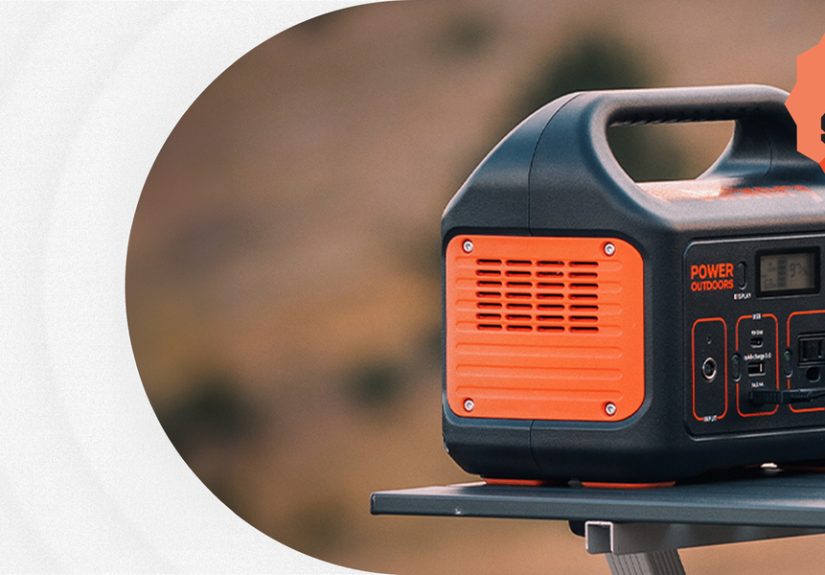
There are two kinds of people in the world: the ones who pack a portable power station “just in case,” and the ones who end up charging their phone from a rental car’s USB port like it’s 2011. If you’ve been eyeing the Jackery Explorer 300 and noticed it’s showing up in a solid discount window again, you’re not imagining thingsthis little orange lunchbox of electricity is frequently one of the best-value picks when the price drops.
And here’s the trick: with portable power stations, the “best” option isn’t always the biggest or fanciest. It’s the one that quietly keeps your essentials alivephones, laptops, lights, Wi-Fi gearwithout making you buy a rolling suitcase full of battery. The Explorer 300 hits that sweet spot with a compact build, practical port selection, and enough output to handle most small electronics (with a few important caveats we’ll get into).
Why the Jackery Explorer 300 is a budget favorite
The Explorer 300 is built around a roughly 293Wh battery and a 300W inverter (with a higher peak for brief surges). In human terms: it’s meant for small-to-medium device charging, not running a kitchen appliance marathon. Reviews consistently praise it as a compact, easy-to-use option for camping, blackouts, and “my house has one outlet and it’s currently occupied” situationswhile also pointing out that it’s not the right tool for high-wattage heating or cooking gear.
When it goes on saleoften dipping under the usual list pricing you’ll see at major retailersit becomes especially compelling. Deal roundups have highlighted discounts that push it into “impulse buy” territory for anyone who wants reliable backup power without stepping up to heavier, pricier units.
Jackery Explorer 300 specs (the quick, useful version)
Here’s what matters most when you’re deciding if this power station fits your needs:
- Battery capacity: about 293Wh (roughly 293.8Wh).
- AC output: up to 300W continuous, with a higher peak for brief startup surges.
- Weight: about 7.1 lbeasy to carry one-handed.
- Ports: typically includes 2 AC outlets, USB-C PD, USB-A ports (including a fast-charge port), and a 12V car-style DC output.
- Charging options: wall (AC adapter), car outlet, or solar input (with compatible panels).
- Battery management: built-in protections (BMS) and stable AC waveform for sensitive electronics.
Translation: it’s designed to be simple, stable, and portablemore “charge all the things” than “power your entire life.”
What the Explorer 300 can power (and what it definitely can’t)
Great for: phones, laptops, cameras, lights, and Wi-Fi survival
The Explorer 300 shines when you use it as an “electronics command center.” Think:
- Charging multiple phones and tablets over a weekend trip
- Keeping a laptop topped up while you work remotely
- Running LED lighting for a campsite or emergency room lighting at home
- Powering a modem/router setup long enough to keep Wi-Fi alive during an outage (a surprisingly morale-boosting feature)
- Charging camera gear, drones, handheld GPS devices, radios, and other outdoor tech
In other words, it’s ideal for the stuff that makes modern life feel normal: communication, light, and “please let me send this one email.”
Okay-ish for: small DC loads and short bursts of AC under 300W
If an appliance stays under 300 watts and doesn’t have a big startup surge, the Explorer 300 can often handle it. But this is where you need to stop guessing and start reading labels.
A simple rule: if the device label says Watts (W), you’re golden. If it only lists Amps (A), you can estimate watts with W = V × A (in the U.S., most household AC devices are ~120V).
Not for: high-watt cooking, heating, or “I brought my entire kitchen”
Many popular “outdoor comfort” items exceed 300W: electric kettles, coffee makers, hot plates, space heaters, hair dryers, and most microwaves. Independent testing and reviews frequently flag this limitation: the Explorer 300 is excellent for small electronics, but it’s not the model to buy if your goal is brewing coffee off-grid or running a heater in a tent (also: please don’t).
If you’re shopping specifically to run high-watt appliances, you’ll want to move up to a higher-output class (and usually a much larger battery). For this unit, the win is portability and valuenot brute force.
Charging the Explorer 300: the “two-cord” advantage and solar reality
One reason the Explorer 300 remains popular is recharge flexibility. You can charge it from a wall outlet, a 12V car socket, or a compatible solar panel. Under certain setups, you can also speed up charging by combining inputs (for example, pairing wall charging with USB-C Power Delivery input), which can cut down the time it takes to get back to a useful charge level.
A few practical charging notes:
- Wall charging: easy and predictablebest for topping up before a trip or after an outage.
- Car charging: convenient for road trips, slower than wall charging, but great for “keep it topped off between stops.”
- Solar charging: awesome in theory, weather-dependent in reality. Full sun matters. Angle matters. Clouds laugh at your plans.
If you’re considering solar, it’s smart to treat panels like “range extenders,” not magical infinite power. A portable solar panel can keep you going indefinitely if your daily usage matches what you can collect. If you plan to run a laptop hard for eight hours a day, you’ll want enough panel wattage and sun exposure to keep up.
How to tell if the “sale” is actually good
Portable power stations are famous for two things: being incredibly useful, and being perpetually “on sale.” So how do you know when the Explorer 300 deal is worth jumping on?
Look for a price that’s meaningfully below the common list price
Deal coverage from mainstream tech and gear outlets has repeatedly called out the Explorer 300 when it drops into the sub-$200 range, and especially when it approaches the ~$169 “lowest we’ve seen” neighborhood. Another recent deal roundup pegged it around $179 versus a higher list price. The exact number changes (sometimes hourly), but those thresholds are a helpful sanity check.
Don’t ignore refurbishedif you’re okay with it
Refurbished units can be a strong value play when available from reputable sellers, especially if they come with a warranty window. If your goal is “backup power for router + phones during storms,” refurbished can be the difference between waiting for the perfect deal and actually owning the thing before the next outage.
Watch bundles (but only if you actually want the panel)
You’ll often see “solar generator” bundles that pair the Explorer 300 with a foldable panel (commonly a 100W class panel). Bundles make sense if you’ll truly use solarcamping, RV travel, or emergency readinessbecause buying the panel later sometimes costs more. If you’re mostly an “outage backup” buyer, you may be perfectly happy charging from the wall and saving the cash.
Explorer 300 vs. newer models: should you upgrade instead?
Jackery’s lineup has evolved, and you’ll see newer variants like “Plus” models that often use different battery chemistry (commonly longer-cycle lithium iron phosphate), updated port layouts (more USB-C), and faster charging.
Here’s the simplest decision framework:
- Choose the Explorer 300 if you want a proven, compact power station at the best possible price and you mainly need small-device power.
- Consider a newer “Plus” style model if long cycle life, more USB-C, or modern feature upgrades matterand the price gap isn’t huge.
The sale math matters. If the Explorer 300 is deeply discounted, it can be the better buy even if the newest model is technically “better.” But if the prices are close, it can be worth stepping up for longevity and charging improvements.
Buyer checklist: avoid the three most common mistakes
- Buying for the wrong wattage. If you want coffee makers, heaters, or cooking appliances, a 300W station will disappoint you. Buy for your actual loads.
- Forgetting conversion losses. Your device won’t run for “293 hours at 1 watt” in real life. Inverter and efficiency losses mean the usable energy is lower than the raw battery number. That’s normaljust plan for it.
- Assuming solar equals unlimited power. Solar is incredible, but it’s not a cheat code. You’re harvesting sunlight, not summoning lightning.
Experiences: what owning an Explorer 300 is actually like (the stuff specs don’t tell you)
Let’s talk real lifebecause nobody buys a power station to admire its watt-hour rating like it’s a museum placard. You buy it for the moments when the normal plan fails and you still want your day to function.
Scenario #1: The “soft outage” that turns into a workday.
You wake up, the power’s out, and your phone immediately becomes your emotional support flashlight. The Explorer 300 is perfect for this kind of chaos. Instead of rationing battery percentages like a post-apocalyptic accountant, you plug in the essentials: phone, laptop, maybe a desk lamp, andif you’re luckyyour router. The surprisingly comforting part is how quiet it is compared to a gas generator. No fumes, no noise drama, no “please don’t run that in the garage.” You just… keep working. Not forever, but long enough to send files, join a meeting, and avoid explaining to your boss that your deliverable was eaten by a thunderstorm.
Scenario #2: Camping without the “roughing it” tax.
The Explorer 300 is the difference between “fun outdoors weekend” and “why is my headlamp blinking in Morse code for help?” It’s small enough that you actually bring itbecause the best emergency gear is the gear that isn’t too annoying to pack. You can recharge phones, run string lights around a picnic table, keep a camera charged, and top off a GPS or radio. If you’re a remote-worker-on-the-road type, it’s also a solid way to keep a laptop alive while you work from a campsite or cabin. The key is expectations: it’s not a mobile kitchen. If you try to power a hot plate, it’ll remind youpolitely, through physicsthat you bought a 300W unit.
Scenario #3: The road trip “power buffet.”
In the car, the Explorer 300 becomes a portable charging hub that keeps the back seat from turning into a low-battery riot. Phones, tablets, wireless headphones, a camera, maybe even a small faneverything gets fed. The car-charging option is especially handy because it lets you trickle power back into the station while you’re driving. You arrive with more charge than you left with, which feels like cheating, but it’s actually just planning.
Scenario #4: Emergency prep that doesn’t take over your closet.
A full-size generator is fantastic… if you have storage space, fuel storage, and the willpower to maintain it. The Explorer 300 is the opposite: compact, easy, and “grab-and-go.” It’s realistic emergency prep for apartments, small homes, and anyone who wants backup power without turning into a part-time mechanic. Keep it topped up, store it in a sane place, and you have a ready-to-go option for lights, communications, and small electronics when the grid takes a surprise nap.
The most honest takeaway: you stop thinking about it as a “power station” and start thinking of it as a stress reducer. It’s not meant to run everythingjust the things that keep your life from sliding off the rails. And when the sale price drops into that “wow, that’s actually reasonable” zone, it’s one of the easiest upgrades you can make to your emergency kit or travel setup.
Conclusion
If you’ve been waiting for the right moment to grab a portable power station that’s genuinely easy to carry, easy to use, and strong enough for the devices most of us care about, a Jackery Explorer 300 sale is one of the best times to buy. The sweet spot is simple: it’s a budget-friendly way to get reliable backup power for phones, laptops, lights, and networking gearwithout paying for capacity you’ll never use or hauling something that requires its own gym membership.
Just remember the golden rule: buy for your wattage needs. If your plan involves coffee makers and heaters, step up to a higher-output model. If your plan involves staying connected, staying lit, and staying sane during trips and outages, the Explorer 300 is exactly the kind of practical pick that earns its spot in the closet.