Table of Contents >> Show >> Hide
- The Goldfish Confession That Hooked Everyone
- Why This Tiny Story Felt Bigger Than It Was
- Kelly Ripa’s Parenting Style Has Always Been More Honest Than Precious
- Joaquin’s Story Gives the Confession More Depth
- Why Audiences Trust This Family Dynamic
- What Kelly Ripa’s Confession Really Says About Parenting
- More Experiences Related to This Story That Parents Will Instantly Recognize
- Conclusion
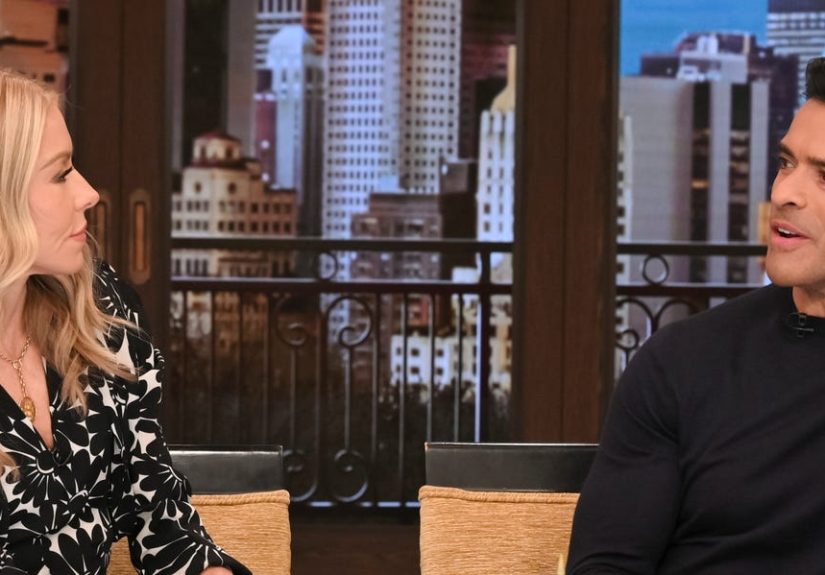
Celebrity parenting stories usually come in two flavors: suspiciously polished or delightfully chaotic. Kelly Ripa’s confession about her son Joaquin lands squarely in the second camp, which is exactly why people paid attention. In March 2025, Ripa and her husband, Mark Consuelos, casually revealed on Live with Kelly and Mark that when Joaquin was younger, they sometimes replaced his carnival goldfish after one died. Kelly’s punch line was the kind of sentence that instantly made parents across America point at the screen and laugh: he never seemed to know.
Now, on paper, that sounds tiny. It is not a constitutional crisis. It is not a memoir-worthy scandal. It is, in fact, the most parent thing imaginable. But that is also what made it such a smart celebrity story. Kelly Ripa did not confess to a dramatic family secret. She confessed to a very ordinary act of emotional damage control, the kind that lives in the same parenting drawer as “the tooth fairy is stuck in traffic” and “that loud toy is probably out of batteries forever.”
And because this story involves Joaquin Consuelos, the youngest of Kelly and Mark’s three children, it also opened the door to something more meaningful: a look at how Ripa has publicly approached motherhood over the years. Funny? Absolutely. Slightly sneaky? Sure. But also deeply invested, fiercely protective, and a lot more grounded than celebrity-family coverage usually allows.
The Goldfish Confession That Hooked Everyone
The confession itself was wonderfully unglamorous. During a light on-air conversation about goldfish, Kelly and Mark explained that Joaquin used to win them at local fairs. Like many parents, they ended up becoming emergency pet managers. And, also like many parents, they learned the cruel truth about childhood pets: those fish were not exactly planning long retirements in Boca.
So the couple did what countless moms and dads have done in secret: they swapped out the deceased fish for similar ones. Parenting, as it turns out, is occasionally a low-budget witness protection program for aquatic animals.
What made the moment work was not just the reveal. It was Kelly’s tone. She did not try to turn the anecdote into some sweeping lesson about motherhood. She delivered it with the ease of someone who knows the audience will understand immediately. That confidence matters. The best celebrity stories are rarely the ones where stars insist they are just like us. They are the ones where they accidentally prove it.
There is also something very on-brand about the whole episode. Ripa and Consuelos have built a long-running public image around chemistry, candor, and the kind of married banter that suggests someone is always 15 seconds away from being lovingly roasted. A goldfish replacement operation fits that household energy perfectly.
Why This Tiny Story Felt Bigger Than It Was
Part of the reason the anecdote resonated is simple: it came at a time when Joaquin was no longer a little kid. By 2025, he was finishing college, and his parents were openly talking about how emotional that milestone felt. So the goldfish confession had an unexpected side effect. It collapsed time.
One minute, the public was hearing about a boy bringing home fair-prize fish. The next, they were hearing about the same child graduating from the University of Michigan. That contrast is basically parenting in one emotional jump cut. A child you swear was just small enough to believe the same goldfish had miraculously survived another week is suddenly old enough to finish college, juggle theater and wrestling, and move into adult life.
Kelly leaned into that feeling in her public comments about Joaquin’s graduation. She and Mark joked that they were “not ready” for their youngest to leave the University of Michigan behind. She even teased the idea of going back to college herself, partly because Joaquin’s academic finish line stirred up her own unfinished education story. That mix of humor and sincerity is central to why the parenting confession landed so well. It was never just about a fish. It was about the speed of time, the weirdness of letting go, and the fact that parents are often still adapting long after the kids have grown.
Kelly Ripa’s Parenting Style Has Always Been More Honest Than Precious
Ripa’s most effective public parenting moments tend to avoid the usual celebrity-parent trap: she does not present motherhood as a perfectly lit lifestyle brand. Instead, she often talks about family life as messy, funny, exhausting, and occasionally ridiculous. That honesty gives stories like the Joaquin confession extra weight.
Over the years, she has talked about embarrassment, boundaries, jobs, school stress, and the bizarre reality of raising children while the public feels like it has watched them grow up. She has also made it clear that she and Mark tried to keep their children grounded, even while those kids grew up in a very unusual environment. She has spoken about her children working part-time jobs and about the comfort she feels knowing they were able to graduate without crushing student debt, while still understanding that privilege should not become entitlement.
That is an important distinction. The Ripa-Consuelos household may be famous, but the parenting philosophy she describes sounds less like “celebrity dynasty” and more like “please become a decent adult and maybe answer my texts.” It is practical, not performative.
Support Over Image
One of the strongest parts of Kelly’s public record as a parent is the way she has discussed Joaquin’s learning differences. She has spoken openly about his dyslexia and dysgraphia and about how emotional the journey was for the family. At one point, she recalled Mark becoming choked up over the simple fact that there was a time he worried Joaquin might not get to college at all.
That context changes how the goldfish anecdote reads. It stops being just a cute celebrity clip and becomes part of a much larger story about a family that spent years doing the real work of parenting: advocating, finding support, sticking with remediation, and not reducing a child to a diagnosis. Kelly has described dyslexia as a misunderstood learning difference, and her language around Joaquin often emphasizes growth, effort, and resilience rather than limitation.
In celebrity coverage, children can easily become accessories to a parent’s image. In Kelly’s case, the opposite has often been true. When she talks about Joaquin, she tends to emphasize his process, not just his milestones.
Joaquin’s Story Gives the Confession More Depth
By the time the goldfish story made headlines, Joaquin was hardly the little kid of the anecdote. He had already built a college path that sounds exhausting just reading it. At Michigan, he balanced athletics and performance, with official university material describing him as both a wrestler and a student in the School of Music, Theatre & Dance. That is not exactly a schedule built for lounging dramatically on a sectional with a stress ball.
He also earned Academic All-Big Ten honors, and his university profile tied together several strands that make his story especially compelling: discipline from wrestling, growth as a performer, and serious academic follow-through. In other words, the child whose parents once quietly cycled through replacement goldfish became the young man balancing mat work, stage work, and a full college experience.
That arc matters. Parenting stories feel sentimental when they stop at nostalgia. They feel meaningful when they connect childhood tenderness to adult capability. Kelly’s confession works because the audience can see both versions of Joaquin at once: the fair-loving kid and the accomplished young adult.
From Empty Nest to Proud Parent Victory Lap
Kelly and Mark have not exactly hidden the fact that becoming empty nesters hit them hard. When Joaquin left for college, Kelly described the goodbye as brutally painful. Later, both parents admitted that the house felt strange and quiet, like they were staring at each other and the dogs wondering what on earth came next.
That makes their later comments about Joaquin’s graduation especially touching. Instead of pretending they were breezing through the transition, they sounded like parents who were still emotionally negotiating every new phase. They were proud, thrilled, and slightly in denial all at once. Honestly, that may be the most accurate parenting cocktail ever invented.
Even more charming is the fact that Kelly’s response to Joaquin’s graduation included joking about enrolling in college herself. That is classic Ripa: make the emotional thing funny, then let the feeling sneak in through the side door.
Why Audiences Trust This Family Dynamic
There is a reason viewers continue to respond to stories about Kelly, Mark, and their kids. The family’s dynamic does not feel heavily managed. It feels lived-in. Kelly has talked before about how her children had a kind of “group childhood” because so many viewers watched them grow up. That could sound creepy in someone else’s phrasing. With her, it comes off as oddly warm and even grateful.
She seems to understand the strange contract of long-term daytime TV fame: if people have spent years hearing stories about your children, they will always feel a little invested in how those children turn out. The smart move is not to overshare everything. The smart move is to share just enough human detail to keep the relationship real. A goldfish confession is perfect for that. It is intimate without being invasive, revealing without being exploitative.
And importantly, it lets Joaquin remain the hero of his own story. The anecdote is about something done for him, but the larger story around it is about what he has built himself.
What Kelly Ripa’s Confession Really Says About Parenting
At its heart, the confession says something parents rarely admit out loud: sometimes good parenting is not about delivering the truth in its harshest possible form. Sometimes it is about timing. Sometimes it is about protecting softness while a child is still young enough to need it. Sometimes it is about deciding that a lesson can wait until later and that, for now, a similar-looking goldfish will do just fine.
That does not mean lying is a parenting superpower. It means judgment is. Parents are constantly making tiny calls that never make it into books or speeches. Is this the moment to correct, explain, toughen up, hold back, or quietly replace the fish and move on with your evening? Kelly’s story works because it honors those tiny, absurd decisions.
It also reminds readers that parenting is rarely one-note. You can be funny and deeply serious. Protective and realistic. Proud and not ready. Kelly Ripa’s public comments about Joaquin have consistently lived in that tension, which is probably why the story traveled so well. The fish was funny. The family dynamic felt true.
More Experiences Related to This Story That Parents Will Instantly Recognize
What makes the Joaquin story so sticky is that it taps into a whole catalog of family experiences that almost never look dramatic from the outside but feel huge inside a home. Many parents know the strange pressure of preserving innocence for just a little longer. It might be a replaced goldfish, a reassembled school project, a “fixed” stuffed animal that is clearly held together by determination and the last three glue sticks in the house, or a confident bedtime explanation about why the hamster is suddenly “sleeping in a different box.” None of these moments wins awards. All of them live forever in family lore.
There is also the experience of watching a child struggle in one stage of life and thrive in another. That is part of why Kelly’s broader comments about Joaquin resonate beyond celebrity coverage. So many parents have memories of school meetings, worried late-night conversations, tutor appointments, tears in the car, and the quiet fear that the world may not know how to meet their child where that child is. Then, years later, that same child is doing something that once felt impossible. Maybe it is college. Maybe it is a first job. Maybe it is simply confidence. The details vary, but the emotional whiplash is universal.
Then comes the empty-nest chapter, which never seems real until it is. Parents spend years wanting five uninterrupted minutes to drink coffee in peace, and then one day the house is too quiet and the silence feels deeply suspicious. You stop cooking for an army. You no longer hear a door slam at the exact wrong moment. You find yourself missing things you swore drove you crazy. A pile of shoes by the door becomes, in hindsight, a love language.
Another recognizable part of this story is the way humor becomes a family survival tool. Some households process everything through long emotional speeches. Others process things by making jokes in the kitchen while pretending nobody is sentimental. Kelly and Mark clearly belong to the second category. A lot of families do. Humor lets people admit they are feeling a lot without having to stage a dramatic monologue under a chandelier.
And finally, there is the biggest experience of all: realizing that parenting never becomes simple just because children become adults. It merely changes costume. You go from protecting them from sadness over a fish to cheering them through graduation, careers, moves, and the complicated business of becoming themselves. The stakes feel different, but the instinct is the same. You still want to soften the hard edges when you can. You still want to stand back when you should. You still look at this grown person and, somewhere in your head, see every earlier version at once.
That is why Kelly Ripa’s parenting confession about Joaquin landed so well. Underneath the laugh is a feeling almost every parent knows: love often shows up in ridiculous little acts, and years later, those are the stories that explain a family best.
Conclusion
Kelly Ripa’s confession about replacing Joaquin’s goldfish was funny on the surface, but it endured because it reflected something much more durable than a punch line. It captured the whole emotional contradiction of parenting: you protect, improvise, joke, worry, and somehow blink your way from carnival fish to college graduation. In Joaquin’s case, that journey has included learning differences, academic grit, athletic discipline, artistic ambition, and a family that seems to meet every chapter with equal parts pride and wisecracks.
That combination is what gives the story real staying power. Not the celebrity. Not the clip. Not even the confession itself. The staying power comes from the fact that the story feels familiar. Kelly Ripa may be famous, but in this moment she sounded like what she has often sounded like at her best: a mom trying to love well, laugh often, and hold on while time speeds recklessly forward.