Table of Contents >> Show >> Hide
- Start With Function (Because Pretty Doesn’t Cook Dinner)
- Choose a Layout That Matches Your Life (Not Just Your Pinterest Board)
- Cabinets, Counters, and Backsplashes: The “Big Three” That Set the Style
- Color, Materials, and Finishes That Feel Current (But Won’t Age Overnight)
- Lighting: The Make-or-Break Detail People Forget
- Storage and Organization Ideas That Also Look Good
- Decorating Touches That Instantly Upgrade the Space
- Design Ideas by Style (So You Can Commit Without Overthinking)
- Conclusion
The kitchen is the only room where you can simultaneously cook, eat, work, host, and question every life choice you’ve made since buying that
“statement” pendant light online at 1:00 a.m. The good news: great kitchen decorating and design isn’t about chasing trends or turning your home into a
showroom. It’s about creating a space that flows, functions, and still looks good when there’s a rogue pile of mail on the counter.
Below are practical, style-forward kitchen decorating and design ideascomplete with smart layout tips, finish combinations, and small changes that
make a big visual impact. Whether you’re planning a remodel or just trying to make your kitchen feel less “sad breakroom,” you’ll find options for
every budget and style.
Start With Function (Because Pretty Doesn’t Cook Dinner)
Before you pick paint swatches or fall in love with a backsplash that costs the same as a used car, get your layout right. A beautiful kitchen that’s
awkward to use will slowly turn you into a person who yells “MOVE!” while boiling pasta. Function first, décor secondalways.
Think in zones, not just “the work triangle”
The classic work triangle (sink, cooktop, fridge) still matters, but modern kitchens often operate in zones: prep, cooking, cleanup, storage, coffee
or beverage station, and sometimes a “drop zone” for keys and backpacks. If multiple people use the kitchen at once, zones are your sanity plan.
- Prep zone: countertop space near the sink, cutting boards, knives, mixing bowls.
- Cooking zone: range/cooktop, spices, oils, utensils, pot drawers.
- Cleanup zone: sink, dishwasher, trash/recycling, towels, cleaning supplies.
- Storage zone: pantry, fridge, dry goods, everyday dishes.
- Beverage zone: coffee machine, mugs, tea, water bottles, maybe a mini fridge if you’re living your best life.
Use clearances as your “no-regrets” checklist
Decorating is fun. Clearances are not. But if you want your kitchen to feel comfortable (and not like a narrow airplane aisle), spacing matters.
Common guidelines suggest generous work aisles for cooking areas and enough room around islands so people can pass without performing a sideways crab
shuffle.
If you’re remodeling, plan for comfortable walkways, door swings, and chair pull-out space at islands or peninsulas. In day-to-day life, these details
are the difference between “welcoming” and “why are we bumping hips at breakfast?”
Choose a Layout That Matches Your Life (Not Just Your Pinterest Board)
Galley kitchens: lean into the sleek
Galley kitchens get a bad rap, but they can be incredibly efficient. The trick is to keep surfaces visually light: reflective or pale countertops,
streamlined cabinet fronts, and vertical storage. Add personality with hardware, lighting, and a runner rug that can handle spills (because it will).
Decor idea: Add one “hero” elementlike a bold backsplash or dramatic pendantthen keep everything else simple to avoid visual clutter.
L-shaped kitchens: the flexible crowd-pleaser
An L-shape is great for open-concept living because it naturally creates space for a dining nook or island. Use the corner wisely (lazy Susans, pull-out
shelves, or deep drawers) so it doesn’t become a black hole where spatulas go to retire.
Decor idea: Add open shelving on the shorter wall for display and easy reach, and keep the longer run more closed for a clean look.
U-shaped kitchens: maximum storage, maximum “chef energy”
U-shaped layouts offer tons of counter space and storage. The key is to avoid feeling boxed in: mix uppers and open shelves, use lighter colors on top,
and consider glass-front cabinets to add depth.
Islands and peninsulas: design the “social magnet” carefully
Islands are the unofficial headquarters of modern life: snacks, homework, laptops, and the friend who always perches exactly where you’re trying to
chop onions. Make yours earn its keep with storage, outlets, and lighting that supports tasks.
- For small kitchens: try a narrow island, a rolling cart, or a peninsula that adds seating without blocking flow.
- For big kitchens: consider two islands (prep + seating) or an island plus a separate beverage/coffee station.
Cabinets, Counters, and Backsplashes: The “Big Three” That Set the Style
Cabinets: warm woods, timeless doors, and smarter storage
Cabinetry drives the entire look of your kitchen. Lately, homeowners and designers have been moving beyond the all-white-everything era and embracing
warmththink wood tones, softer neutrals, and nature-inspired colors. If you want longevity, focus on classic door styles (like Shaker) and invest in
interior organization (pull-out trash, spice pull-outs, deep drawers for pots).
Two-tone cabinets (like a wood island with painted perimeter cabinets) add depth without going full “color explosion.” If you’re
cautious, use color on lower cabinets or the island and keep uppers light for an airy feel.
Countertops: pick your “daily reality”
The right countertop depends on how you live. If you cook often, prioritize durability, stain resistance, and easy cleaning. Quartz remains a popular
choice for its consistency and low maintenance, while natural stones like quartzite bring unique movement (and typically require sealing).
- Budget-friendly look: consider high-quality laminate or butcher block in low-splash areas.
- Luxury look: dramatic veining in stone or quartz, plus a thicker edge profile for visual weight.
- Practical tip: choose finishes that hide crumbs and water spotsyour future self will thank you.
Backsplashes: go taller, bolder, or more seamless
The backsplash is the jewelry of the kitchen. Want timeless? Classic tile in a fresh layout (stacked, herringbone, vertical). Want “wow”? Consider a
slab backsplash (sometimes called a countersplash when the countertop material runs up the wall) or tile that extends to the ceiling behind the hood.
Decor idea: If your cabinets are busy (wood grain, heavy detail), choose a calmer backsplash. If your cabinets are simple, the
backsplash can be the star.
Open shelving: stylish… with a warning label
Open shelves can make a kitchen feel more spacious and personal, especially in small spaces. But they also require a bit of “curation discipline.”
Display your prettiest and most-used items (glassware, bowls, cookbooks), and avoid turning it into a chaotic museum of mismatched mugs.
Color, Materials, and Finishes That Feel Current (But Won’t Age Overnight)
Choose a palette with one “main character” and two supporting roles
A simple formula makes your kitchen look intentional:
one dominant color (cabinets or walls),
one secondary (island, backsplash, or counters),
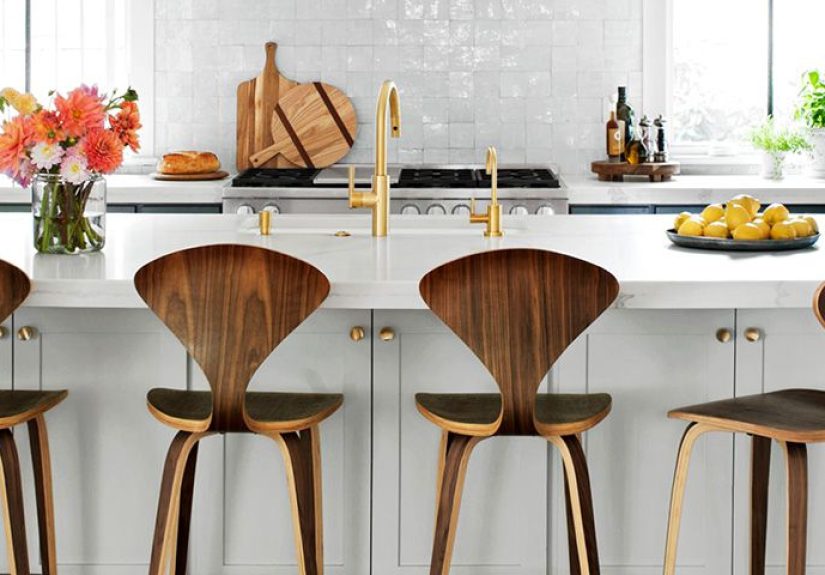
and one accent (hardware, lighting, stools, décor).
Easy color combinations that work in real homes
- Warm white + natural wood + black accents: bright, modern, and cozy.
- Sage green + brass + creamy stone: calm, earthy, and elevated.
- Navy + warm wood + polished nickel: classic with depth.
- Soft greige + matte black + textured tile: neutral, but not boring.
Mixed metals: yes, you can do it
Mixing metals looks designer-approved when it’s intentional. Pick one dominant metal (like brushed nickel or matte black), then add a secondary (like
brass) in a smaller dose. The trick is to repeat each finish at least twice so it looks like a plan, not a shopping accident.
Texture is the shortcut to “high-end”
If your kitchen feels flat, it probably needs texture: reeded or fluted cabinet details, woven stools, handmade-look tile, natural wood, or stone with
movement. Texture adds depth even in neutral kitchens.
Lighting: The Make-or-Break Detail People Forget
Great kitchen lighting is layered. You want ambient light (overall brightness), task light (where you prep and cook), and accent light (mood and
sparkle). If you rely on one ceiling fixture, you’ll get shadows in all the wrong placeslike a horror movie, but with onions.
Three lighting layers to include
- Ambient: recessed lights, flush mounts, or a central fixtureoften on dimmers.
- Task: under-cabinet lighting, pendants over islands, focused lighting over the sink.
- Accent: toe-kick lighting, interior cabinet lights, or a statement sconce.
Decor tip: pendants are both lighting and sculpture
Pendants over an island do more than illuminatethey set the tone. Keep scale in mind: small pendants over a large island can look like the kitchen is
wearing tiny earrings to a formal event. If you’re unsure, go slightly larger or choose a multi-light linear fixture.
Storage and Organization Ideas That Also Look Good
Make drawers your best friend
Wide drawers are easier than lower cabinets for pots, pans, and dishes. Add dividers for utensils and deep drawers for small appliances, so your
countertop stops looking like an electronics store.
Pantry upgrades: from basic to “why didn’t we do this sooner?”
- Clear containers for dry goods make inventory obvious (no more buying your fifth bag of rice).
- Pull-out shelves improve access and reduce wasted space.
- Hidden pantry doors can keep visual clutter down in open-concept kitchens.
- Scullery/butler’s pantry (if you have space) creates a “messy prep” zone out of sight.
Small kitchen decorating trick: unify what’s visible
In smaller kitchens, a little visual calm goes a long way. Matching canisters, coordinated dish towels, and a consistent countertop “vignette” (like a
tray with oils + salt + pepper) make the room feel designed, not crowded.
Decorating Touches That Instantly Upgrade the Space
Hardware: the easiest “mini makeover”
New cabinet pulls can change the entire vibe for a fraction of the cost of new cabinets. Classic bar pulls feel modern, knobs feel traditional, and
mixed hardware can look custom (for example, knobs on uppers and pulls on lowers).
Art in the kitchen: yes, it belongs there
Kitchens are allowed to have personality. Add framed art, a small gallery wall, or a vintage print. If you’re worried about splatter, place art away
from the range or use a wipeable frame.
Rugs and runners: warmth, color, and comfort
A washable runner adds softness and protects floors in high-traffic zones. Choose patterns that camouflage crumbs (this is not pessimism; it’s wisdom).
Plants: the cheapest “designer move”
A herb garden by the window or a small potted plant on open shelving adds life instantly. Bonus: basil makes you feel like a person who has it all
together, even if you don’t.
Design Ideas by Style (So You Can Commit Without Overthinking)
Modern kitchen decorating ideas
- Flat-panel cabinets, minimal hardware, and a limited color palette.
- Statement lighting in sculptural shapes.
- Slab or full-height backsplashes for a seamless look.
Transitional kitchen design ideas
- Shaker cabinets, mixed metals, and warm neutrals.
- Classic countertops with a modern backsplash pattern.
- Traditional comfort with clean-lined stools and lighting.
Farmhouse (but make it fresh)
- Warm wood tones, soft whites, and matte black accents.
- Simple open shelving with curated everyday pieces.
- A practical, hardworking sink and cozy lighting.
Small kitchen decorating and design ideas
- Use lighter colors up top to visually lift the room.
- Maximize vertical storage and add a peg rail or hooks.
- Consider a slim rolling island for extra prep space.
Conclusion
The best kitchen decorating and design ideas don’t start with trendsthey start with how you actually use the space. Nail the flow, choose finishes that
fit your maintenance tolerance, and add personality through lighting, hardware, color, and a few intentional décor choices. When the kitchen works well,
it automatically feels betterbecause you’re not fighting it every time you make toast.
Real-World Experiences and Lessons (500+ Words)
Here’s what tends to happen in real kitchens after the paint dries and the novelty wears offbased on common homeowner priorities, remodel takeaways,
and the kinds of “wish we’d done that” moments designers hear again and again.
1) People almost always wish they added more lighting. Not just prettier fixturesmore useful light. Under-cabinet lighting is
the classic example: it seems optional until you’re chopping vegetables in your own shadow like a movie villain. A lot of homeowners end up adding it
later because it improves both function and mood instantly. Dimmers also get rave reviews because they let your kitchen pivot from “work mode” to
“wine-and-snacks mode” without changing a single décor item.
2) Storage wins over aestheticseventually. Open shelving looks gorgeous… right up until you realize you now have to keep your dishes
photogenic. Many people love a mix: a small open-shelf moment for frequently used items and décor, plus closed storage for everything that
shouldn’t be seen by polite company (hello, giant salad spinner). Deep drawers for pots and pans are another fan favorite; once you live with them,
lower cabinets can feel like crawling into a cave.
3) The island is either a dreamor a daily traffic jam. When an island is too big for the room, it turns cooking into an obstacle
course. When it’s sized well, it becomes the heart of the kitchen. A common “I’d do it again” choice is adding outlets to the island. People use them
constantlychargers, mixers, laptops, slow cookersso the island stops being just a countertop and becomes a true work zone.
4) Countertops are an honesty test. If you love the look of a high-maintenance surface, you can absolutely choose itjust be honest
about your habits. Some homeowners discover too late that they’re not “wipe it immediately” people. Materials that handle stains, mess, and heat with
less fuss tend to keep people happier long term. Even color and finish matter: super-polished, dark surfaces can show water spots and fingerprints
faster than a toddler can find a clean wall.
5) Color choices feel scary… until they feel perfect. Many homeowners start conservative and then wish they’d added more personality.
That’s why islands and lower cabinets are popular places for colorless commitment than painting every cabinet, but still high impact. Nature-inspired
greens, warm neutrals, and stained woods tend to feel inviting rather than trendy. And if you’re nervous, bring color in through “swappable” elements:
rugs, stools, art, and hardware.
6) The most-loved kitchens feel personal. Not clutteredpersonal. A framed print that makes you smile, a small shelf of cookbooks you
actually use, a bowl that lived in your family’s kitchen for decades. These are the details that keep a kitchen from feeling like a staged listing photo.
It’s also why people often report being happiest when they design around their routines: if you drink coffee daily, a beverage station is not a luxury;
it’s a quality-of-life upgrade you’ll use 365 days a year.