Table of Contents >> Show >> Hide
- What Are Sailing Mechanics?
- Start With the Wind: The Invisible Engine
- Learn the Points of Sail From Your Living Room
- Build a Dry-Land Points-of-Sail Drill
- Understand Sail Trim Without Touching a Sail
- Use Telltales as Your Sailing Dashboard
- Practice Tacking and Jibing on the Floor
- Learn the Parts of the Boat Before Boarding
- Study Balance: Why Boats Heel and How Sailors Respond
- Use Sailing Simulators and Online Courses
- Learn Navigation Rules Before You Need Them
- Study Marine Weather From Home
- Practice Knots Until Your Hands Know Them
- Create a Dry-Land Sailing Mechanics Study Plan
- Common Beginner Mistakes You Can Fix Before Sailing
- How Dry-Land Learning Improves Your First Day on the Water
- Dry-Land Experience Notes: What It Feels Like to Learn Before You Sail
- Conclusion: Your First Sailing Lesson Can Start Anywhere
Learning sailing mechanics without leaving dry land sounds a little like learning to swim on a sofa. Suspicious? Maybe. Impossible? Not at all. Before a sailor ever trims a jib, calls a tack, or tries to look calm while a boom swings across the cockpit like a politely dressed baseball bat, there is a lot that can be learned from shore.
Sailing is not just “boat plus wind equals adventure.” It is a beautifully practical system of forces, angles, balance, timing, weather judgment, and rope work. The good news is that many of the hardest ideas are easier to understand when your feet are not sliding across a wet deck. Dry-land learning gives beginners time to study how wind moves around sails, why a boat cannot sail straight into the wind, how tacking and jibing work, what lines do, and why sailors say things like “ease the sheet” when nobody nearby is holding a bedspread.
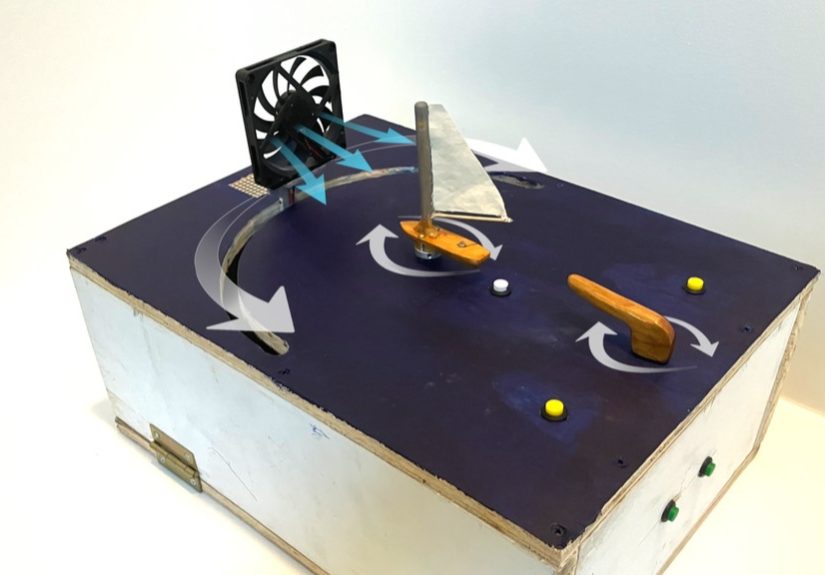
This guide shows you how to learn sailing mechanics from home, in a classroom, at a marina dock, or even with a fan, a toy boat, and enough curiosity to make your neighbors nervous. It will not replace real time on the water, but it will make your first day aboard feel far less like decoding pirate algebra.
What Are Sailing Mechanics?
Sailing mechanics are the physical and practical principles that make a sailboat move, turn, slow down, and stay balanced. They include wind direction, sail shape, hull resistance, keel or centerboard function, rudder control, sail trim, boat balance, and crew coordination.
In plain English, sailing mechanics answer the big beginner questions: Why does the boat move forward when the wind is coming from the side? Why do sails sometimes flap like angry laundry? Why does the boat lean over? Why do sailors pull some ropes tighter and let others out? And why, after all this, does everyone still look so happy?
The Big Idea: A Sail Is More Than a Wind Catcher
Many beginners picture a sail as a big cloth bag that catches wind from behind. That is true when sailing downwind, but it is only part of the story. On many points of sail, the sail acts more like a vertical wing. Air moves around both sides of the sail, pressure changes, and the boat is pulled forward and sideways at the same time. The keel, centerboard, or daggerboard resists that sideways slide, converting much of the force into forward motion.
Think of it as a polite argument between wind and water. The wind pushes and pulls on the sail. The underwater foil says, “No, we are not simply drifting into the snack bar.” The result is forward motion.
Start With the Wind: The Invisible Engine
Sails are the engine of a sailboat, but wind is the fuel. Before learning fancy knots or captain-like vocabulary, learn to identify wind direction. Everything else depends on it.
At home, you can practice by watching flags, smoke, leaves, fountain spray, or weather apps. Ask yourself: Where is the wind coming from? If a boat were pointed north, would the wind hit the bow, beam, stern quarter, or stern? This small habit builds the mental compass every sailor needs.
True Wind vs. Apparent Wind
True wind is the wind moving across the land or water. Apparent wind is the wind felt on the moving boat. If you ride a bicycle on a calm day, you still feel air on your face. That is apparent wind created by your motion. A sailboat experiences the same effect.
This matters because sails are trimmed to apparent wind, not just the forecast wind direction. As the boat speeds up, slows down, or changes course, the apparent wind shifts. That is why sailors constantly adjust sails. They are not fidgeting. Well, not only fidgeting.
Learn the Points of Sail From Your Living Room
The points of sail describe a boat’s direction relative to the wind. This is one of the most important sailing fundamentals, and it is perfect for dry-land practice.
No-Go Zone
A sailboat cannot sail directly into the wind. If the bow points too close to the wind, the sails luff, meaning they flap without producing useful power. This area is called the no-go zone or irons. Beginners can imagine it as the sailing version of a “do not enter” sign.
Close-Hauled
Close-hauled is sailing as close to the wind as the boat can efficiently go, usually at an angle rather than straight into it. The sails are trimmed in tight, and the boat often heels more. This is where sail trim, steering, and balance become very noticeable.
Beam Reach
A beam reach happens when the wind comes across the side of the boat. It is often comfortable, fast, and easier for beginners to understand. If sailing had a “starter mode,” the beam reach would be a strong candidate.
Broad Reach and Run
On a broad reach, the wind comes from behind at an angle. On a run, the wind comes from nearly straight behind. The sails are eased out, and the boat may feel calmer, although downwind sailing has its own hazards, especially accidental jibes.
Build a Dry-Land Points-of-Sail Drill
You can practice points of sail with a paper arrow, a toy boat, or even your phone. Place an arrow on a table to show wind direction. Move the “boat” around the arrow and say the point of sail out loud: close-hauled, close reach, beam reach, broad reach, run. Then decide whether the sails should be pulled in, eased halfway, or let far out.
This sounds simple because it is. It is also powerful. Many beginner mistakes come from losing track of wind direction. If you can mentally locate the wind before stepping aboard, you are already ahead of the person asking whether “port” is the left side or a fancy dessert wine.
Understand Sail Trim Without Touching a Sail
Sail trim is the art of adjusting sails for wind angle, wind speed, and boat balance. At the simplest level, pull the sail in as you point closer to the wind and ease it out as you turn away from the wind. But good trim involves more than “tight” or “loose.”
Angle of Attack
The angle of attack is the angle between the sail and the apparent wind. If the angle is too small, the sail luffs. If it is too large, airflow stalls. When the angle is right, air flows smoothly and the boat accelerates.
A dry-land way to understand this is to hold your hand out of a moving car window at low speed, safely and only if you are not driving. Tilt your palm slightly and feel lift. Tilt too much and your hand becomes a draggy paddle. A sail works with similar principles, though with more elegance and fewer bugs.
Draft and Sail Shape
Draft is the depth or fullness of a sail’s curve. A deeper sail can create more power, which helps in light wind or choppy water. A flatter sail reduces power and drag, which helps when wind increases. Sailors adjust draft with controls such as halyards, outhauls, cunninghams, sheets, vangs, and backstays, depending on the boat.
Twist
Twist describes how much the upper part of the sail opens compared with the lower part. Wind is often stronger higher above the water, so the top of the sail may need a slightly different angle than the bottom. Too little twist can stall the upper sail. Too much twist can spill power. Dry-land diagrams and sail-trim videos are excellent for studying this before you ever grab a mainsheet.
Use Telltales as Your Sailing Dashboard
Telltales are small strips of yarn, fabric, or ribbon attached to sails. They show airflow. When telltales stream smoothly aft, the sail is usually happy. When they flutter, lift, droop, or dance like they just heard disco, the airflow is disturbed.
You can learn telltale logic from diagrams, simulators, and videos. A common beginner rule is: if the inside telltale flutters, ease or bear away; if the outside telltale flutters, trim in or head up. Different boats and conditions add nuance, but the basic idea helps new sailors connect invisible wind to visible clues.
Practice Tacking and Jibing on the Floor
Tacking and jibing are turning maneuvers. A tack turns the bow through the wind. A jibe turns the stern through the wind. Both can be learned conceptually on dry land, and doing so saves confusion later.
Dry-Land Tack Drill
Stand in an open area and imagine you are the boat. Point your chest close-hauled on one tack. Say, “Ready about?” Then rotate your “bow” through the wind to the opposite close-hauled angle. Imagine the jib crossing the foredeck and being trimmed on the new side.
Yes, you may look ridiculous. That is part of sailing. The sea rewards those who can be humble in advance.
Dry-Land Jibe Drill
Now imagine sailing downwind. Turn so your stern passes through the wind. Visualize the boom crossing from one side to the other. Practice saying, “Prepare to jibe,” “Jibing,” and “Control the boom.” The key lesson is that a jibe can be more forceful than a tack because the mainsail and boom may cross quickly if not controlled.
Learn the Parts of the Boat Before Boarding
A beginner who knows basic boat anatomy learns faster on the water. Start with these terms:
- Bow: front of the boat.
- Stern: back of the boat.
- Port: left side when facing forward.
- Starboard: right side when facing forward.
- Mast: vertical spar that supports the sails.
- Boom: horizontal spar attached to the mainsail.
- Mainsail: primary sail behind the mast.
- Jib or genoa: headsail in front of the mast.
- Sheet: a line used to trim a sail.
- Halyard: a line used to raise a sail.
- Rudder: underwater steering surface.
- Keel or centerboard: underwater foil that resists sideways drift.
Once these words become familiar, sailing instruction becomes much easier. Instead of hearing “ease the jib sheet” as mystical dock wizardry, you will understand it as “let out the rope controlling the front sail.” Much better.
Study Balance: Why Boats Heel and How Sailors Respond
Heeling is when the boat leans under sail. Some heel is normal. Too much heel can slow the boat, increase weather helm, and make the crew suddenly interested in religion.
Dry-land learning helps you understand why heel happens. Wind pressure on the sails creates a sideways force. The hull, keel, ballast, and crew weight resist that force. Sailors reduce excessive heel by easing sails, flattening sails, reefing, changing course, or moving crew weight.
Weather Helm and Lee Helm
Weather helm means the boat tends to turn toward the wind. A little weather helm can be useful, but too much makes steering tiring and inefficient. Lee helm means the boat tends to turn away from the wind, which can be unsafe and awkward. Sail trim, mast rake, sail balance, and heel all influence helm feel.
You can learn this concept through diagrams showing the center of effort above the water and the center of lateral resistance below it. When these forces are balanced, the boat feels controlled. When they fight each other, the tiller tells the tale.
Use Sailing Simulators and Online Courses
Modern sailors have dry-land tools that previous generations would have traded a barrel of hardtack for. Online sailing courses, interactive diagrams, and sailing simulators can teach points of sail, sail trim, tacking, jibing, reefing, navigation, and marine weather basics.
A good simulator lets you change wind direction, adjust sails, steer through different points of sail, and watch boat speed respond. This feedback loop is valuable because beginners often need repetition. On the water, repetition depends on weather, instructor time, traffic, and whether someone dropped a winch handle into the cockpit again. At home, you can practice until the pattern clicks.
Learn Navigation Rules Before You Need Them
Sailing mechanics are not only about making the boat move. They are also about moving safely around other boats. Beginners should study basic navigation rules, including crossing situations, overtaking, head-on approaches, sound signals, and navigation lights.
A simple dry-land exercise is to use toy boats on a table. Create crossing situations and decide which vessel should stand on and which should give way. Practice until the logic feels natural. On the water, decisions must be made calmly and early. The best time to learn right-of-way rules is before a powerboat, kayak, ferry, and paddleboard all appear to be auditioning for the same small patch of water.
Study Marine Weather From Home
Weather is part of sailing mechanics because wind strength, wind direction, gusts, squalls, waves, current, and visibility change how a boat behaves. Learning weather from dry land is not optional homework; it is seamanship.
Start with marine forecasts, not just general weather apps. Learn the difference between wind speed and gusts, wave height and period, tides and currents, small craft advisories, fog, frontal passages, sea breezes, and thunderstorms. Watch how forecasts compare with what actually happens at nearby buoys or waterfront webcams.
Over time, you will begin to connect numbers to experience. Ten knots may sound mild. Twenty knots in a small boat may feel sporty. Twenty knots against current in a narrow channel may feel like the boat signed up for a gym membership without asking you.
Practice Knots Until Your Hands Know Them
Sailing uses knots because boats need secure, adjustable, reliable connections. The best dry-land skill you can build with a spare piece of rope is knot tying. Start with a bowline, figure-eight stopper knot, cleat hitch, clove hitch, square knot, and round turn with two half hitches.
The goal is not to know fifty knots. The goal is to tie a few useful knots correctly, quickly, and under mild pressure. Practice while watching TV. Practice with your eyes closed. Practice tying a cleat hitch on a chair leg. Your furniture may be confused, but your future dock lines will thank you.
Create a Dry-Land Sailing Mechanics Study Plan
Here is a practical four-week plan for learning sailing mechanics without leaving dry land.
Week 1: Wind and Boat Language
Learn boat parts, port and starboard, windward and leeward, and basic sailing commands. Practice identifying wind direction outdoors. Draw a sailboat and label the mast, boom, mainsail, jib, rudder, keel, sheets, and halyards.
Week 2: Points of Sail and Sail Trim
Study the no-go zone, close-hauled, reaches, and run. Use a tabletop model to practice sail positions. Learn what happens when sails are overtrimmed, undertrimmed, or correctly trimmed.
Week 3: Maneuvers and Safety
Practice dry-land tacking and jibing sequences. Learn basic crew commands. Study life jacket fit, float plans, navigation rules, and emergency communication basics. Safety knowledge is not the boring chapter; it is the chapter that lets the fun chapters continue.
Week 4: Weather, Knots, and Simulation
Read marine forecasts daily. Compare forecast wind with real observations. Practice essential knots. Use a simulator or online course to connect wind angle, sail trim, steering, and speed.
Common Beginner Mistakes You Can Fix Before Sailing
Many beginner sailing mistakes start on land as misunderstandings. Fix those early and your first sail will be smoother.
- Ignoring wind direction: Always know where the wind is coming from.
- Confusing sheets with sails: Sheets are lines that control sails.
- Thinking tighter is always better: Overtrimmed sails can stall and slow the boat.
- Forgetting the boom: Respect it. It is not decorative.
- Skipping safety basics: Life jackets, weather checks, and float plans matter.
- Learning knots only by watching: Your hands must practice, not just your eyeballs.
How Dry-Land Learning Improves Your First Day on the Water
When you finally step aboard, dry-land learning pays off immediately. You will recognize the parts of the boat. You will understand why the instructor cares so much about wind direction. You will know that a flapping sail is giving you information, not throwing a tantrum. You will hear commands and respond faster because the vocabulary is already familiar.
Most importantly, you will have mental bandwidth available. Instead of spending the whole day asking what a sheet is, you can pay attention to feel: the pressure in the tiller, the sound of water along the hull, the change in heel after easing the mainsail, the moment the jib fills on a new tack. That is where sailing becomes addictive.
Dry-Land Experience Notes: What It Feels Like to Learn Before You Sail
The first experience of learning sailing mechanics on dry land is often a funny mix of confidence and confusion. You may begin with a diagram of points of sail and think, “Easy enough.” Then you rotate the imaginary boat, move the wind arrow, and suddenly your brain starts tying itself into a decorative knot. This is normal. Sailing is spatial. It asks you to think in angles, motion, and invisible forces. The trick is to slow it down until the pattern becomes familiar.
One of the most useful dry-land experiences is watching the wind in everyday life. A flag outside a store becomes a sailing lesson. Leaves in a parking lot become a wind indicator. Steam from a coffee cup on a breezy patio becomes a tiny weather station. After a while, you stop seeing wind as “air moving around” and start seeing it as direction, pressure, and opportunity. This shift is subtle, but it is the beginning of sailor thinking.
Another memorable experience is practicing knots at home. At first, a bowline can feel like a magic trick performed by a rabbit, a hole, and a tree that refuses to cooperate. After twenty repetitions, your fingers begin to understand. After fifty, you can tie it while talking. After a hundred, you start looking for things around the house that “need” a bowline. Laundry basket? Secured. Chair? Secured. Dog leash? Please ask the dog first.
Simulator practice can also be surprisingly revealing. Many beginners discover that turning the boat without adjusting sails produces disappointing speed. The simulator does not flatter you. If the sails are wrong, the boat slows. If you trim correctly, speed improves. This immediate feedback helps build cause-and-effect thinking: steer, trim, observe, adjust. That loop is the heartbeat of sailing.
Dry-land maneuver practice may feel silly, but it builds sequencing. Saying “ready about” and walking through a tack in your living room teaches order: prepare, turn, cross the wind, switch sides, trim on the new tack, settle the boat. When you later do it on water, the motion is no longer completely new. You have rehearsed the choreography. The boat adds motion, sound, spray, and adrenaline, but the basic dance steps are already in your head.
The biggest dry-land lesson is humility. You learn that sailing is simple in concept but rich in detail. Pull a rope, and the sail changes shape. Change course, and the apparent wind shifts. Ease the main, and the boat stands up. Forget the weather, and the weather may introduce itself with enthusiasm. Every piece connects.
By the time you leave dry land, you will not be a complete sailor. No honest course, book, or simulator can give you the feel of a real hull moving through real water. But you can become a prepared beginner, and that is a powerful thing. You will board with better questions, safer habits, and a clearer understanding of what the boat is trying to tell you. Sailing will still surprise you. That is part of the charm. But it will not feel like a foreign language spoken entirely in rope.
Conclusion: Your First Sailing Lesson Can Start Anywhere
You do not need a marina slip, a yacht club blazer, or a dramatic sunset to begin learning sailing mechanics. You can start with wind direction, diagrams, knots, online courses, marine forecasts, simulators, and a humble piece of rope. Dry-land learning gives you the foundation: how sails create power, how boats balance forces, how trim changes performance, how tacks and jibes work, and how safety decisions begin before launch.
When you eventually step aboard, you will still have plenty to learn. Good. That is sailing. The water is the final classroom, but dry land is where you can build the vocabulary, confidence, and mechanical understanding that make the first lesson safer, smarter, and much more fun. Learn the mechanics now, and when the sails fill for real, you will know why the boat comes alive.
Note: This article is for educational preparation and does not replace certified sailing instruction, local boating laws, proper safety equipment, or supervised on-water practice.