Table of Contents >> Show >> Hide
- The Day the Showroom Got a Personality Upgrade
- Why IKEA Uses “Fake” Images in the First Place
- So Why Do Those Framed Stock Photos Feel So Weird?
- IKEA’s Store Design Is Basically a Story Funnel
- The “IKEA Effect” and Why This Prank Feels Weirdly Relatable
- What Brands Can Learn From Two Faces in 100 Frames
- A Quick Reality Check: Don’t Copy the Prank in Real Stores
- Extra: of “Been There” IKEA Experiences (The Safe, Relatable Version)
IKEA is famous for selling you a nightstand in a flat box and the confidence to believe you are, in fact,
a nightstand-building professional. But the real magic of IKEA isn’t the hex keyit’s the illusion.
Not the “this couch is affordable” illusion (that part is true), but the “real people live like this”
illusion. Every showroom is staged like a tiny, functional movie set: the socks folded, the cereal box
artfully turned toward the aisle, the bedside water glass suspiciously free of fingerprints.
And then there are the framed photos. You’ve seen them: the perfectly lit, vaguely cheerful faces that
look like they were generated by an algorithm trained exclusively on the concept of “pleasant brunch.”
They’re meant to make a display feel lived-in. Sometimes they do. Sometimes they feel like a haunted
LinkedIn profile in a frame.
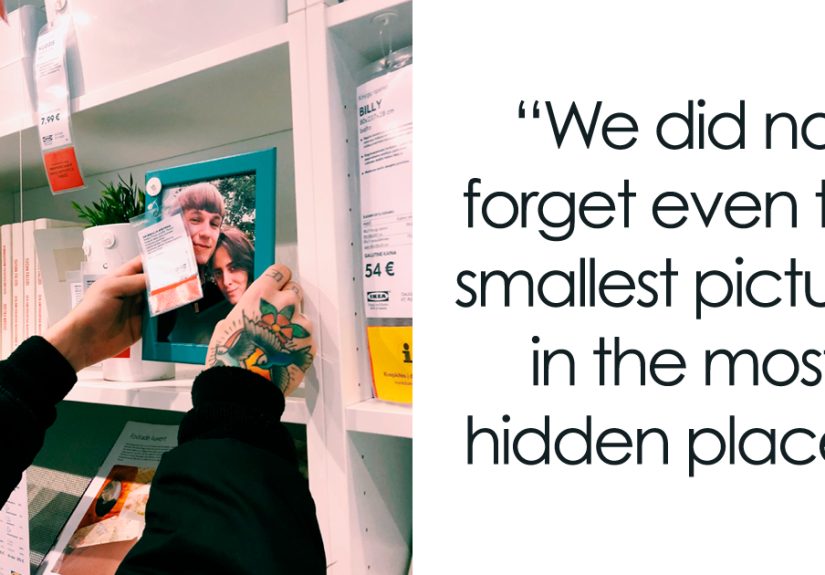
Which is how one playful couple (in IKEA Vilnius, Lithuania) decided to do the funniest possible thing:
swap those bland, “fake-family” photos for pictures of themselvesturning the showroom into a personal,
unexpected photo album that shoppers would stumble upon like an Easter egg hunt for human beings.
The Day the Showroom Got a Personality Upgrade
The prank worked because it targeted something incredibly smallbut emotionally loud. Those framed photos
are background noise until they’re not. Once you notice them, you can’t unsee how carefully they’re used
to sell a feeling: “This isn’t just furniture. This is a life you could be living.”
The couple’s twist was simple: what if the “life” in the frames wasn’t a generic family enjoying generic
sunlightbut two real people with real trips, real selfies, and the kind of “we were definitely laughing
at something” candid moments that make photos feel human? Suddenly, the showroom wasn’t just staged. It
was personalized. And because IKEA’s room sets are designed to feel familiar, the new photos didn’t look
out of placethey looked oddly… correct.
That’s the sneaky brilliance of the idea: it didn’t scream “PRANK!” like a whoopee cushion. It whispered
“Wait… are those the same two people in every frame?” and let your brain do the rest.
Why it landed so well
- It was harmlessly confusing. Nobody tripped. Nothing exploded. It was just uncanny in the funniest way.
- It hijacked a prop, not a product. The furniture stayed IKEA. The vibe got remixed.
- It turned “stock-life” into “story-life.” Shoppers weren’t just browsingthey were discovering a plot.
Why IKEA Uses “Fake” Images in the First Place
Let’s be fair to IKEA: they’re running a global visual operation that makes Hollywood look like a
group project. Even outside showrooms, IKEA’s marketing is built on imagescatalogs (historically),
websites, in-store signage, and those perfectly staged room scenes that convince you you need six
identical glasses “because hosting.”
One reason IKEA imagery can feel so polished is that a large portion of it isn’t traditional photography.
Over time, IKEA has leaned heavily into CGI and 3D rendering for product visualsespecially for
“single product on a clean background” images. It’s not a conspiracy; it’s logistics. Rendering can be
faster to update, easier to standardize across markets, and more flexible when you need the same sofa in
fifteen colors and six lighting scenarios.
The practical perks of CGI (a.k.a. “fake, but make it efficient”)
- Consistency at scale: Lighting, angles, and colors can be controlled precisely, which matters when customers shop online.
- Faster updates: If a product changes slightly, you can update the model instead of reshooting everything.
- Flexible storytelling: The same item can appear in multiple room styles without shipping props around the world.
- Less waste: Fewer physical shoots can mean fewer prototypes and less transport.
IKEA even formally retired the famous printed IKEA Catalog as part of a broader digital shift, pointing
toward changing customer behavior and the growth of digital experiences. The brand is essentially saying:
“We’ll still inspire youjust not necessarily with a book that your dog sleeps on.”
So Why Do Those Framed Stock Photos Feel So Weird?
Because they’re not there to be looked at. They’re there to be felt.
In a staged room, every object is a cue. The throw blanket says “cozy.” The bowl of lemons says “I eat
fruit, not just vibes.” The framed photo is supposed to say “people live here.” But “people live here”
is a delicate message. If the photo looks too perfect, it reads like a prop. If it looks too random, it
breaks the aesthetic spell. The result is often a middle ground that feels… sterile.
The prank flipped that. It replaced sanitized cues with something unmistakably real: repetition. The same
two faces, again and again, in different rooms. It created a hidden thread through the storea
mini-narrative woven into IKEA’s narrative engine.
Authenticity beats perfection (and your brain is in on the joke)
Humans are pattern-hunters. We notice faces fast. We notice repeated faces even faster. And once we spot
a pattern, we start building explanationswho are they, why are they everywhere, what is going on?
That little moment of “Wait a second…” is fun. It’s the same reason people love Easter eggs in movies
and recurring jokes in sitcoms. The prank turned a retail background detail into an interactive game.
IKEA’s Store Design Is Basically a Story Funnel
IKEA doesn’t just sell furniture; it sells momentum. The store layout nudges you through staged rooms
before you reach the warehouse section, which means you “live” in the ideas before you “buy” the items.
This isn’t accidental. It’s a retail strategy that keeps you exposed to more scenes, more objects, and
more “Oh, that would be nice” moments than a straight-line store ever could.
Some writers connect IKEA’s flow to classic retail psychology concepts like the Gruen effectwhere an
immersive shopping environment increases unplanned purchases. Whether you call it a “maze,” a “journey,”
or “how did I get here and why am I holding eight tealights,” the point is the same: IKEA is designed
to turn browsing into imagining.
Where the prank fits the system
A showroom already functions like a stage. The prank didn’t fight the stageit added a subplot. The
couple’s photos didn’t disrupt the furniture story; they enhanced the “people live here” layer by making
it feel oddly specific. It’s the difference between a generic sitcom apartment and an apartment where you
notice the same two friends in every framed photo. Suddenly you’re watching.
The “IKEA Effect” and Why This Prank Feels Weirdly Relatable
There’s also a psychological angle that makes the prank feel satisfying: the famous “IKEA effect.” In
research, people often value something more when they’ve put labor into itespecially when the task is
successfully completed. That’s one reason assembling furniture can make you oddly proud of a shelf you
would not have complimented if it arrived pre-built.
The prank has a similar emotional flavor. It’s not just “look, we swapped photos.” It’s “we did a weird,
coordinated creative project in a space designed to make you imagine a life.” It’s DIY energy applied to
retail theater. And because IKEA already trains your brain to picture yourself in the room, seeing
actual people (the same people) in the frames short-circuits the fantasy in a funny way.
Translation: it feels like someone doodled in the margins of the catalog
The prank is essentially culture-jamming at a micro scale. It takes a polished brand environment and
adds a human fingerprint. Not destructivejust mischievous. The humor comes from the contrast:
billion-dollar brand staging versus two people going, “What if this became… us?”
What Brands Can Learn From Two Faces in 100 Frames
The funny part is that the prank doubles as a marketing case study. It highlights something brands
constantly wrestle with: authenticity is hard to manufacture. You can style a room to the millimeter and
still have it feel like nobody’s ever eaten there. But one slightly imperfect, personal detail can make
the entire scene feel more believable.
IKEA has leaned into customer-created photos in other ways, tooencouraging people to share images of IKEA
products in real homes, because real homes are messy in a way that sells trust. The staged showroom sells
aspiration. The real-life photo sells confidence: “This can actually work in your space.”
Specific takeaways (without the trespassing part)
- People crave real signals. The smallest “this is genuine” cue can beat a hundred perfect props.
- Story beats aesthetic. A narrative detail keeps attention longer than a perfectly matched pillow-and-throw combo.
- Personalization is sticky. When viewers feel like they discovered something, they remember itand share it.
A Quick Reality Check: Don’t Copy the Prank in Real Stores
Here’s the unglamorous adult sentence in the middle of the fun: swapping props in a retail store without
permission can be treated as vandalism or trespassing, even if your intentions are comedic and your
photos are adorable. It also creates headaches for employees who didn’t sign up to be background actors
in your bit.
If what you love is the creative conceptturning generic “stock-life” into personal storytellingthere are
ways to capture that vibe without messing with public spaces. Recreate an “IKEA showroom” corner at home,
style a mini room set, then swap in your own photos as the finishing touch. You get the comedy and the
memory, and nobody has to file an incident report about “suspiciously photogenic couple.”
Extra: of “Been There” IKEA Experiences (The Safe, Relatable Version)
If you’ve ever gone to IKEA with your partner, you already know it’s not a storeit’s an event. You walk
in with a simple mission (“We need a lamp”) and leave with a cart full of objects you didn’t know existed,
plus a strong opinion about which shade of beige is “warmer.” There’s a specific momentusually around
the third staged bedroomwhen you stop shopping and start auditioning for a lifestyle.
The showrooms make it easy. You sit on a couch that feels suspiciously perfect, and for five seconds your
brain goes, “This is me now. I’m a person who owns matching cushions.” Then you see the framed photo on
the side table and it’s a smiling stranger enjoying a smiling sunset, and the spell breaks just a little.
Not because the photo is offensivebecause it’s too neutral to feel real. It’s like your living room is
being narrated by a customer service voice.
That’s why the “replace the stock photos with photos of ourselves” concept hits such a nerve. Couples
collect tiny shared artifactsinside jokes, blurry selfies, a picture taken too quickly before someone
says “wait, my hair,” a snapshot from a trip where everything went wrong but you still laughed the whole
time. Those images aren’t perfect, and that’s exactly why they feel like home. When you imagine those
photos sitting inside a pristine showroom, it’s instantly funny: the polished fantasy gets interrupted by
a real relationship with real history.
And honestly, even without any prank, IKEA trips already have prank energy. You test a chair like you’re
judging an Olympic event. You open and close drawers you have no intention of buying. You whisper “we can
definitely build this” with the confidence of someone who has never met an instruction booklet at 11 p.m.
You take a picture of a room set “for inspiration,” then never look at it again, because the real souvenir
is the argument you had about whether a rug should be “light” or “the color of anxiety.”
If you want the spirit of the prank without the store part, the best version is the one you can keep.
Pick a corner of your home, style it like a tiny showroom, and then do the funniest “too-personal”
finishing touches: your own framed photos, your own ridiculous captions, your own “this is our life”
artifacts. The joke becomes a time capsule instead of a stunt. Years later, you won’t remember which lamp
you boughtbut you’ll remember that you once turned a plain wall into a mini story about the two of you,
complete with a photo that makes you laugh every time you pass it.