Table of Contents >> Show >> Hide
- The stethoscope is a symbol, not a job description
- The physicians behind the tests
- The physicians behind the images
- The physicians behind the screen
- The physicians behind prevention, policy, and population health
- The physicians connecting hospitals, communities, and science
- Why this stereotype matters more than people think
- What the pandemic really taught us about doctoring
- Experiences that bring this truth to life
- Conclusion
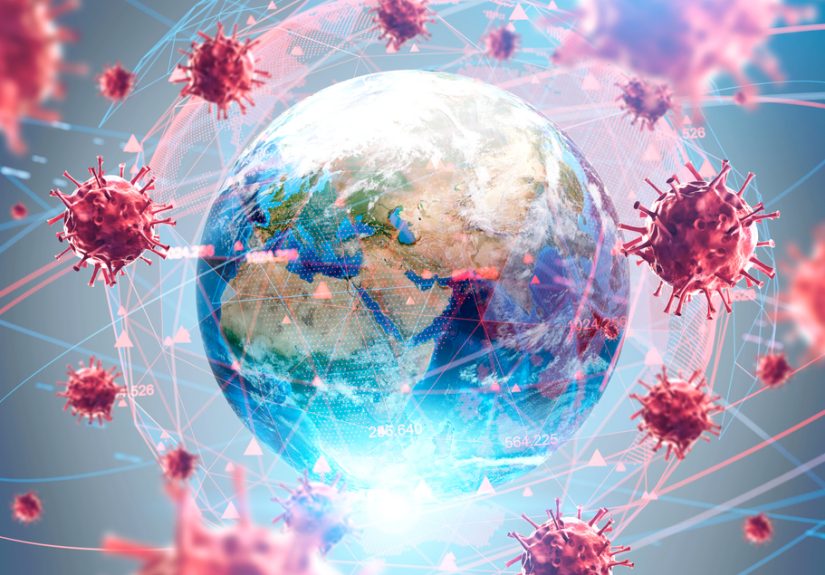
Pop culture has done a remarkable job of convincing the public that every physician spends the day charging through hallways with a stethoscope around the neck, a coffee in one hand, and a life-changing diagnosis in the other. It is a great visual. It is also incomplete. The pandemic made that painfully clear.
When COVID-19 upended everyday life, the image of the “real doctor” often centered on the ICU, the emergency department, and the bedside. Those physicians absolutely mattered. They mattered enormously. But they were never the whole story. Behind every ventilator setting, every testing protocol, every telehealth appointment, every imaging report, every infection-control memo, and every vaccine-confidence campaign stood physicians who were doing medicine without looking like the TV version of medicine.
Some doctors spent their days in labs, not exam rooms. Some interpreted scans in dim reading suites instead of listening to lungs with a stethoscope. Some advised health systems, businesses, schools, and public agencies on how to reduce spread and protect staff. Some cared for patients through a laptop camera. Some guided policies that affected entire communities, not just one bedside at a time.
That does not make them less physician. It makes medicine broader, smarter, and more honest than the stereotype allows.
The stethoscope is a symbol, not a job description
The stethoscope is useful, iconic, and instantly recognizable. It says “doctor” in one glance. But medicine has never been defined by a single tool. A surgeon is not reduced to a scalpel. A radiologist is not reduced to a CT scanner. A pathologist is not just a microscope with a parking pass. A psychiatrist is not “only” a conversation. A preventive medicine physician is not “just policy.”
Physician work includes diagnosis, risk assessment, pattern recognition, communication, decision-making, leadership, ethics, and accountability. During a pandemic, those skills spread across hospitals, clinics, laboratories, public-health departments, and virtual platforms. The stethoscope may remain a beloved symbol, but the pandemic reminded us that symbols are not systems.
Real medicine is messier than the cliché. It includes the doctor who calls a family from a video platform, the doctor who validates a new test before dawn, the doctor who reads a chest CT that changes a treatment plan, and the doctor who helps a health system decide how to protect workers and patients at scale.
The physicians behind the tests
Pathologists and laboratory medicine specialists were central from day one
One of the most revealing pandemic lessons was how much of modern medicine depends on physicians most patients never meet face to face. Pathologists are physicians who specialize in diagnosing disease, and during COVID-19 they were not hanging around in the background waiting for a dramatic monologue. They were helping build the diagnostic backbone of the response.
That meant validating assays, interpreting testing performance, distinguishing diagnostic testing from antibody testing, troubleshooting supply shortages, working with hospital leadership, and helping ensure that test results were accurate enough to guide real decisions. In plain English: they helped answer the question everyone was asking, all the time, everywhere “Does this person have COVID-19, and what do we do next?”
That is not glamorous work in the movie-trailer sense. Nobody scores it with thunder and violin. But it is deeply clinical. A flawed test can derail isolation decisions, delay treatment, confuse contact tracing, or mislead an entire institution. When pathologists kept labs running and results trustworthy, they were practicing medicine in one of its most consequential forms.
In a pandemic, the physician who protects the integrity of a test may influence more patient outcomes in a single week than the stereotype of bedside medicine can even imagine. No stethoscope required.
The physicians behind the images
Radiologists helped make an invisible illness visible
COVID-19 taught the public a crash course in oxygen levels, inflammation, and ground-glass opacities, which is not the sort of phrase most people expected to casually learn over breakfast. Radiologists, however, were already fluent in the visual language of disease. They helped health systems understand what imaging could and could not do, when chest imaging was helpful, and how to interpret findings in context.
That balance mattered. Imaging was not a magic screening shortcut for every patient, especially when reliable laboratory testing was available. But in appropriate situations, radiologists and imaging teams played an essential role in evaluating lung involvement, identifying atypical presentations, supporting management decisions, and helping clinicians sort through a fast-moving and sometimes confusing disease.
Radiology also reveals something important about public expectations of physicians. The radiologist may not be the one entering the room with a stethoscope. Yet that physician may be the person whose interpretation changes the course of care in minutes. A chest image can shift a differential diagnosis, escalate concern, support a transfer, or highlight a complication that would otherwise remain hidden.
In other words, the doctor in the reading room is still in the fight. They are simply fighting with expertise, image analysis, and clinical judgment instead of bedside symbolism.
The physicians behind the screen
Telehealth did not make medicine less real
If the stethoscope stereotype had one giant nemesis during the pandemic, it was telehealth. Suddenly, physicians were caring for patients through webcams, phones, secure messages, remote monitoring tools, and hybrid workflows. To some people, this looked like a temporary workaround. In reality, it exposed how many parts of medicine depend more on thought, communication, continuity, and access than on physical proximity alone.
Telehealth surged quickly because it solved an immediate problem: how to keep people connected to care while reducing exposure risk. Family medicine groups used it. Internal medicine practices used it. Specialists used it. Public-health leaders and professional societies pushed guidance so physicians could adapt quickly and safely. Patients who might have skipped care entirely could still be evaluated, counseled, triaged, and followed.
Psychiatry offered one of the clearest examples. The specialty was especially well suited to remote visits, and adoption soared. For many patients, the doctor they needed most during the pandemic was not the one listening to a chest with a stethoscope. It was the psychiatrist helping them survive fear, grief, isolation, panic, insomnia, depression, substance use, or the mental strain of prolonged uncertainty.
And this was not a niche trend. Telehealth remained meaningfully higher than pre-pandemic levels even after the emergency phase eased, with some specialties especially psychiatry standing out for sustained use. That matters because it proves something bigger than convenience: plenty of high-value physician work happens through conversation, interpretation, and follow-up, not just physical examination.
The pandemic did not invent that truth. It just put it on full display.
The physicians behind prevention, policy, and population health
Preventive medicine doctors worked beyond the exam room
There is a category of physician work that many people barely see until a crisis hits: the medicine of systems. Preventive medicine physicians sit at the intersection of clinical care and public health. That means they think not only about one patient in one room, but also about disease patterns, risk communication, screening strategy, workplace safety, population-level prevention, and what communities need before a crisis becomes a catastrophe.
During the pandemic, these doctors were especially valuable because COVID-19 was never just a bedside problem. It was an epidemiology problem, a communication problem, a logistics problem, a vaccine-confidence problem, a workplace problem, and an equity problem. Physicians trained in preventive medicine and occupational medicine were well suited for exactly that kind of challenge.
They worked on return-to-work policies, community messaging, vaccination efforts, health-system planning, and interventions designed to reduce risk before more people became sick. Their expertise was built for questions like: How do we protect workers? How do we reach vulnerable groups? How do we reduce exposure? How do we scale prevention instead of reacting one crisis at a time?
That is physician work, too. It is clinical thinking projected outward onto an entire population.
The physicians connecting hospitals, communities, and science
Infectious disease specialists carried more than consult lists
Infectious disease physicians became some of the most visible experts of the pandemic, yet even then the public often underestimated the range of what they were doing. They were not only consulting on individual COVID-19 cases. They were helping develop treatment protocols, support infection-prevention efforts, interpret evolving evidence, advise public agencies, communicate with the media and community, and guide other clinicians trying to care for patients in the middle of uncertainty.
This is where the phrase “not all physicians wear a stethoscope” becomes less like a clever headline and more like a practical truth. Some physicians function as medical translators between research, operations, policy, and direct care. Infectious disease specialists were often exactly that. They connected the latest evidence to real-world decisions, sometimes hourly, while the science itself was still moving.
Their work was part clinical medicine, part systems leadership, part public communication, and part endurance sport. Again, not flashy. Very physician.
Why this stereotype matters more than people think
It is tempting to shrug and say, “Who cares? Everyone knows doctors do different things.” But the stereotype still has consequences. When the public imagines physicians only as bedside figures with stethoscopes, entire specialties become easier to overlook. That affects recognition, funding, recruitment, respect, and even the way young trainees imagine what medicine can be.
It also distorts how we talk about value. The physician who prevents an outbreak cluster, builds a safer workflow, interprets a critical image, safeguards testing quality, or keeps a patient stable through telehealth is not doing “less real” medicine. In many cases, that physician is the reason the bedside team can function effectively at all.
There is also a morale issue here. A lot of doctors whose work became indispensable during the pandemic were simultaneously under-seen. They were essential, but not always celebrated in the same cinematic way. That mismatch can fuel frustration and burnout. When society praises only the most visible version of doctoring, it misses the teamwork that makes modern care possible.
What the pandemic really taught us about doctoring
If the pandemic taught medicine anything, it is that doctoring is not defined by props. It is defined by responsibility. Physicians are the people trained to make difficult clinical judgments under uncertainty, using evidence, experience, ethics, and accountability. Sometimes that happens at the bedside. Sometimes it happens in a lab. Sometimes it happens through a camera, a dashboard, a public briefing, an imaging console, or a protocol meeting that nobody outside the health system will ever see.
The physician workforce is more diverse in function than the public image suggests, and that diversity is not a side note. It is a strength. A pandemic does not only need bedside clinicians. It needs diagnosticians, data interpreters, communicators, telehealth experts, prevention specialists, public-health strategists, and doctors who can care for both individuals and systems.
So yes, many physicians wear stethoscopes. Some wear them every day. But the deeper lesson is this: medicine is larger than the symbol hanging around a neck. The pandemic stripped away the illusion that healing always looks the same. Sometimes it looks like a lab report. Sometimes it looks like a scan. Sometimes it looks like a policy memo. Sometimes it looks like a psychiatrist’s video window opening right on time.
And sometimes the most important doctor in the story is the one you never physically see at all.
Experiences that bring this truth to life
The most powerful way to understand this topic is to imagine how pandemic medicine actually felt for the physicians whose work happened outside the stereotype. Picture the pathologist arriving before sunrise to review testing workflows, worrying not only about scientific accuracy but also about whether the lab has enough supplies to make it through the week. There is no dramatic bedside scene. There is a quieter kind of pressure: thousands of people may act on the result of work done in this room. That physician knows a delay or an error does not stay in the lab. It ripples into treatment, staffing, travel, school attendance, and family decisions.
Now picture the radiologist during a surge. The room is dim, the monitors bright, the inbox relentless. Scan after scan arrives with clinical questions attached: worsening shortness of breath, possible complications, new chest pain, unexplained decline. The radiologist may not be standing next to the patient, but the patient is still there in every decision. A report has to be fast, careful, and useful. It has to communicate uncertainty without causing paralysis. It has to help other clinicians move. That is not detached medicine. It is concentrated medicine.
Then there is the preventive medicine or occupational medicine physician, the one sitting in long planning calls while everyone else wishes the planning would magically plan itself. This doctor is thinking about exposure risk, workforce protection, vaccine messaging, ventilation, equity, sick-leave realities, and what happens when policies look good on paper but fall apart in the real world. Their “patients” may include an entire staff, a school district, a manufacturing site, or a community clinic network. The work can feel invisible because success often looks like a disaster that never fully happens.
A psychiatrist’s experience during the pandemic adds another layer. The visit is virtual. The patient is at home, maybe sitting in a car for privacy, maybe whispering so children in the next room cannot hear. The doctor is not listening to a heartbeat through a stethoscope, but is listening for something just as urgent: hopelessness, mania, panic, psychosis, relapse, grief. A stable internet connection becomes part of the care plan. A calm voice becomes a medical tool. For many patients, those appointments were not optional add-ons. They were lifelines.
And then there is the infectious disease specialist, answering question after question in an environment where the evidence keeps shifting. What should the protocol be now? Which patients need isolation? What do we tell staff? What do we do with limited resources? How should the public understand this risk? That physician is often carrying a strange mix of authority and uncertainty at the same time. They are expected to know, to guide, and to reassure, even while the science is still unfolding in real time.
These experiences may look different, but they share a common thread. Each physician is practicing medicine through judgment, expertise, and responsibility rather than through a familiar prop. That is the heart of the story. The pandemic did not reduce medicine to one image; it exploded that image. It showed that physicians can heal, lead, diagnose, counsel, and protect in many forms. Some carry stethoscopes. Some carry laptops, scan reports, epidemiology data, testing algorithms, or treatment guidelines. All of them carry the weight of decisions that matter.
Once you see that, the title stops sounding surprising. Of course not all physicians wear a stethoscope, even during a pandemic. The real surprise is that we ever imagined otherwise.
Conclusion
The pandemic changed many things, but one of its clearest lessons was this: the physician workforce cannot be reduced to a single image. Doctors cared for patients at the bedside, through telehealth, in labs, in imaging departments, in public-health systems, and in strategy rooms where the next critical decision was being shaped. Recognizing that range is not just good branding for medicine. It is a more accurate way to understand how modern health care works. When we broaden our picture of what a physician looks like, we also broaden our appreciation for the many ways physicians protect lives, guide systems, and keep care moving when the world feels stuck.