Table of Contents >> Show >> Hide
- The Fire That Rewrote a Town
- One Year Later, Rebuilding Was Real but Slow
- The Hardest Part Wasn’t Hope. It Was Housing.
- Insurance, Costs, and the Fine Print of Starting Over
- Paradise Wasn’t Just Rebuilding. It Was Rethinking Itself.
- Schools, Businesses, and the Return of Ordinary Life
- Why Recovery Takes Longer Than the News Cycle
- What the Experience Felt Like, Day to Day
- Conclusion
One year after the Camp Fire tore through Paradise, California, rebuilding was no longer just a construction story. It was a story about grief with a tool belt on. About people who lost kitchens, photographs, porches, pets, routines, and in far too many cases, the people they loved most. In November 2019, Paradise was not “back.” It was not even close. But it was no longer only a scar on the map, either. It was something harder to describe and somehow more impressive: a town learning how to live in the middle of recovery.
That distinction matters. Big disasters often get flattened into before-and-after photos, as if recovery were a dramatic reveal on a home makeover show. But rebuilding Paradise was never going to happen with a catchy soundtrack and a weekend deadline. The Camp Fire was the deadliest and most destructive wildfire in California history. It killed 85 people, destroyed more than 18,000 structures, and erased most of the town’s housing. A year later, the smoke was gone, yet the consequences still hung in the air like fine ash: housing shortages, insurance battles, trauma, price spikes, and the giant question that followed every losshow do you rebuild a home when the whole community around it is still missing?
The Fire That Rewrote a Town
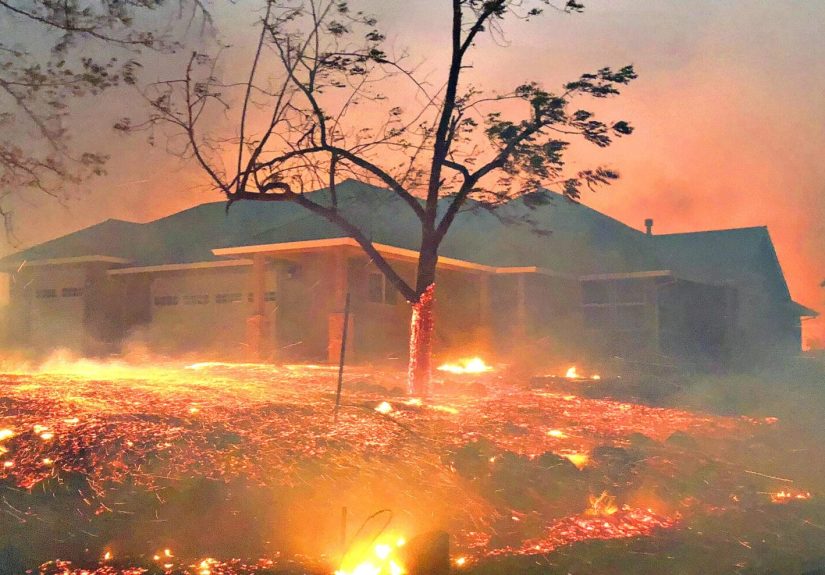
When the Camp Fire exploded on November 8, 2018, it moved with terrifying speed. In a matter of hours, Paradise went from a mountain town with a strong small-town identity to a place defined by evacuation bottlenecks, burned neighborhoods, and staggering loss. More than 13,000 homes were wiped out. Schools, businesses, churches, and familiar landmarks disappeared. Thousands of people fled with minutes to spare, some abandoning vehicles as roads jammed and fire closed in.
That kind of destruction does not leave behind a tidy recovery timeline. It leaves behind empty lots, concrete slabs, and entire families trying to answer practical questions while still processing emotional shock. Where do we live now? Can we afford to come back? Is insurance enough? Will the town have grocery stores, schools, clinics, and jobs? Will it be safe? Those questions shaped every rebuilding decision made in Paradise during that first year.
By late 2019, the town looked less like a finished comeback and more like a giant, dusty workshop. Officials and residents had made real progress, especially on cleanup. Crews had removed more than 3.6 million tons of debris from nearly 11,000 enrolled properties in one of the largest debris-removal operations California had ever seen. That was an enormous achievement, and it mattered because you cannot rebuild on top of toxic remains and twisted metal. Before new framing and fresh paint come the unglamorous essentials: hazardous waste removal, soil clearing, inspections, and safety sign-offs. Recovery begins with the part nobody puts on a postcard.
One Year Later, Rebuilding Was Real but Slow
By the first anniversary of the fire, there were undeniable signs of life in Paradise. A handful of homes had been completed. More were in the pipeline. Some businesses had reopened. Paradise High School was back in session, and football games once again brought people together. Hope had not vanished. It had just traded in its dramatic speech for a hard hat.
Still, the pace of rebuilding felt painfully slow to many survivors, and for understandable reasons. A year after the fire, only about a dozen homes had actually been rebuilt, even though hundreds more were moving through the permit and planning process. That sounds shocking until you remember what rebuilding required. First came cleanup. Then permitting. Then financing. Then labor shortages. Then insurance questions. Then material costs. Then the fact that thousands of families across one region were all trying to do versions of the same thing at the same time. Recovery was not a line. It was a traffic jam.
And yet, those few newly finished homes mattered far beyond their numbers. They were proof that Paradise was not frozen in the day it burned. Every poured foundation and framed wall pushed against the fear that the town might become a memorial instead of a community. In a place where so much had been erased, visible progress carried emotional weight.
The Hardest Part Wasn’t Hope. It Was Housing.
If there was one issue that exposed how brutal post-fire recovery can be, it was housing. Paradise had lost most of its homes in one blow, and nearby communities were suddenly asked to absorb thousands of displaced people. The region’s rental market, already tight before the fire, was overwhelmed almost immediately. Available units were snapped up. Prices jumped. Families doubled and tripled up. Some people moved in with relatives. Some rented far from work and school. Some lived in trailers. Some stayed in temporary accommodations much longer than they ever expected.
This was not just an inconvenience. It changed the social shape of recovery. Families that had once lived in separate homes pooled resources and moved in together. People who wanted to return to Paradise could not always find a way to do it. Others worried that if they left too long, they would lose their place in the community altogether. The town had not merely lost buildings; it had lost the everyday physical infrastructure that allows a life to function with dignity and privacy.
Even temporary housing became complicated. Early in 2019, some residents living in RVs on their burned lots were told they had to leave until properties were cleared and certified safe. The rule was rooted in health and cleanup concerns, but for survivors it felt like one more wrenching reminder that “going home” was no longer a simple act. FEMA and state agencies supported hundreds of households with temporary housing units and shelter assistance, but the need remained larger than the available options. Disaster housing is not just about roofs. It is about time, location, affordability, stability, and whether a family can remain connected to school, work, doctors, and each other.
Insurance, Costs, and the Fine Print of Starting Over
Then there was insurance, a topic capable of turning even the calmest homeowner into someone who suddenly understands the true poetic meaning of the word “deductible.” For many Camp Fire survivors, insurance money did not magically solve the rebuilding puzzle. Some policies did not stretch far enough to match rising construction costs. Others came with delays, disputes, or gaps that left homeowners scrambling. Even some residents whose homes survived found themselves hit with non-renewals or expensive new coverage problems, making the prospect of returning even harder.
That financial squeeze changed who could rebuild quickly and who could not. Families with savings, stable jobs, or strong insurance positions had more options. Older residents, renters, low-income households, and people already living on the edge faced steeper odds. Recovery after a wildfire can look equal from a distanceeveryone lost somethingbut up close, it is deeply unequal. Some people navigate paperwork. Others drown in it.
Construction costs added another layer of strain. Labor demand surged across the region, materials were expensive, and competition for contractors was intense. Rebuilding a house after a fire is not like replacing a roof after a storm. It means competing in a crowded market while trying to rebuild not just one structure, but an entire town at once.
Paradise Wasn’t Just Rebuilding. It Was Rethinking Itself.
One of the most important realities a year later was that Paradise did not want to rebuild exactly as it had been. The town’s recovery planning began to focus not just on replacing homes, but on reducing future risk. Local leaders and residents discussed evacuation routes, safer road connections, defensible space, building standards, and a broader vision for a more resilient town. The official long-term recovery plan was built around five goals: making Paradise safer, more welcoming, stronger, better, and greener.
That sounds ambitious because it was. But after a catastrophe of this scale, ordinary reconstruction was not enough. Residents had lived through what happens when a vulnerable landscape, aging infrastructure, severe weather, and a fast-moving fire collide. Rebuilding without change would have felt less like resilience and more like denial.
So the question became not simply, “Can Paradise come back?” but, “What kind of Paradise should come back?” That meant thinking about ignition-resistant materials, better vegetation management, stronger code enforcement, clearer evacuation planning, and town design that acknowledged the wildfire reality of modern California. It also meant confronting uncomfortable truths: safer construction can cost more, and not every resident has the same ability to pay for resilience upgrades. In disaster recovery, the smartest ideas still have to survive the budget meeting.
Schools, Businesses, and the Return of Ordinary Life
For all the talk of permits and debris tonnage, some of the strongest signs of recovery came from ordinary routines. Paradise High School reopened in 2019, and students returned even when many had been displaced to other towns. That mattered. Schools do more than educate; they reassemble community. They give children schedules, parents contact with one another, and towns a sense that tomorrow still exists.
The same was true for businesses. One year after the fire, reopening shops and services became symbolic milestones. A functioning town needs coffee, groceries, repairs, and places to meet. It needs businesses not only for commerce, but for confidence. Every reopened storefront pushed back against the eerie feeling that Paradise might remain permanently paused.
And then there was football. In many towns, a high school football game is entertainment. In Paradise, after the Camp Fire, it became something elsea reunion, a ritual, a public declaration that the community still recognized itself. Crowds showed up not just to watch a game, but to stand in the same place and feel, for a couple of hours, less scattered.
Why Recovery Takes Longer Than the News Cycle
The first anniversary of the Camp Fire revealed a truth that disaster experts know well and the rest of us tend to learn the hard way: rebuilding is not the same as recovery. Recovery includes grief, health, employment, schooling, infrastructure, trust, and mental stamina. A new house can go up while a family still feels permanently uprooted. A cleared lot can look like progress while a resident remains unable to afford construction. A town can reopen and still feel emotionally unfinished.
That is why the one-year mark in Paradise carried two stories at once. One was about visible progress. The other was about invisible burdens. Survivors were still dealing with trauma triggers, long commutes, unstable housing, insurance frustration, and the daily administrative grind of starting over. Even the smell of smoke from routine burn operations or power shutoffs aimed at preventing another catastrophe could reopen fear. Disaster recovery is not linear, and it is rarely quiet.
Still, the most remarkable thing about Paradise a year later was not that it had solved its problems. It had not. It was that so many residents kept choosing the place anyway. They kept filing paperwork, clearing lots, attending school, opening businesses, coaching teams, showing up to public meetings, and imagining a future for a town that had every reason to lose its nerve. That is what rebuilding looked like in real life: not a triumphant montage, but a thousand stubborn acts of return.
What the Experience Felt Like, Day to Day
To understand “Paradise Fire victims rebuild a year later,” you have to picture more than lumber and permits. You have to picture the emotional choreography of living in recovery. Imagine waking up in a rental an hour away from the place you still call home. Imagine driving back up the ridge to meet a contractor, check a mailbox that stands beside an empty lot, or sit through another conversation about soil clearance, insurance payouts, and whether the foundation can be reused. Imagine trying to sound normal while discussing things no one should ever need to know in such detail.
For many survivors, the first year after the Camp Fire was a strange mix of urgency and suspension. Everything felt late, and everything also felt unfinished. People were making huge decisions while mentally exhausted. Should they rebuild the old floor plan or start fresh? Should they come back at all? Could they afford a safer home with updated codes and better materials? Would their children want to return? Would the town have enough services? It is hard to dream big when your daily calendar already includes grief, paperwork, and three phone calls that somehow all end with, “We’ll need to review that and get back to you.”
There was also the strange loneliness of shared disaster. Paradise survivors were surrounded by people who had been through the same event, yet each loss was painfully specific. One family missed their old deck and dogwood tree. Another missed grandparents who never made it out. Another missed the ordinary blessing of living five minutes from school, church, and work. Even among neighbors who understood one another, recovery was personal.
And yet, the first year also produced a kind of rugged intimacy. Families moved in together. Grandparents, adult children, and grandchildren learned to share space in ways they never planned to. Friends became landlords, babysitters, rides to school, and unofficial therapists. People learned where to find donated supplies, which contractors returned calls, how to stream school meetings from temporary housing, and how to keep a sense of humor alive when life looked like an endless stack of forms. In that context, even small victories felt huge: a passed inspection, a reopened classroom, a functioning coffee shop, a Friday night game, a front door finally hung on new hinges.
There was pain in every part of that year, but there was also stubbornness, and stubbornness can be a very useful rebuilding material. Paradise survivors did not spend the first anniversary pretending everything was fine. They knew better. They had seen too much for cheap optimism. What they had instead was tougher and more believable: a battered kind of hope, one that did not ignore risk, cost, or heartbreak. It simply refused to let loss have the final word. A year later, that may have been the clearest sign of recovery of all.
Conclusion
A year after the Camp Fire, Paradise was still carrying immense loss, but it was also doing something profoundly difficult: rebuilding without illusions. The town’s recovery showed that disaster resilience is not about fast headlines or miracle turnarounds. It is about clearing debris, finding housing, reopening schools, redesigning roads, arguing over permits, and decidingagain and againthat a place is still worth the trouble of saving. Paradise fire victims were not simply rebuilding houses a year later. They were rebuilding the conditions that make a community possible.