Table of Contents >> Show >> Hide
- Who Is the Activist Behind the Headline?
- Why the Free-Seat Debate Took Off
- The Alleged Run-In With the Law, Carefully Told
- Why She May Have Gone Quiet
- What This Story Says About Airline Policy in America
- The Social Media Trap Hidden Inside the Story
- Experiences Related to This Topic: Why So Many People Feel Something About It
- Conclusion
- SEO Tags
For a while, Jae’lynn Chaney was impossible to miss online. She built a following by arguing that air travel should stop treating plus-size passengers like a problem to be solved with a credit card swipe. Her message was simple, provocative, and tailor-made for the internet: if airlines make seats smaller and smaller, why should larger travelers be forced to pay more just to exist in the cabin?
That argument made her famous. It also made her a magnet for backlash. Supporters saw a body-size advocate calling out a travel system that often feels cramped, inconsistent, and humiliating. Critics saw a demand for special treatment in an industry where everyone already feels folded into economy class like a receipt in a tight jeans pocket.
Then the tone of the conversation changed. Reports later emerged that the plus-size activist who demanded free seats on planes had a serious legal scare tied to an alleged disturbance, after which she appeared to largely step away from public posting. The internet, of course, did what the internet does best: it turned a complicated human story into a splashy headline, a morality play, and a comment section demolition derby all at once.
But beneath the viral framing is a more layered story about activism, online fame, airline policy, and the strange cost of becoming the face of a deeply polarizing issue. The headline may be dramatic, but the real story is bigger than one influencer’s silence. It is about how public advocacy can collide with private struggle, and how a debate that started with airline seats now says a lot about modern internet culture.
Who Is the Activist Behind the Headline?
Chaney became widely known in 2023 after launching a petition urging the Federal Aviation Administration and airlines to adopt clearer accommodations for plus-size travelers. Her proposals included free additional seating for passengers who needed more room, better staff training, more accessible restrooms, and more transparent communication about airline policies.
That campaign struck a nerve because it tapped into a travel frustration many people already understand: airline seats are not getting roomier, patience is not getting deeper, and comfort is often sold like a premium add-on rather than treated like part of the ticket. Chaney framed the issue not as a luxury request but as a fairness issue. In her view, plus-size passengers were being charged extra to receive the same basic transportation everyone else gets.
The message traveled fast because it sat right at the intersection of three guaranteed internet accelerants: identity, money, and airplanes. Mention body politics, airline rules, and who should pay, and you have basically lit a social-media campfire with jet fuel.
Why the Free-Seat Debate Took Off
The campaign became popular partly because it asked a question airlines never fully answer in a way that satisfies everyone: what counts as an accessibility issue, what counts as personal comfort, and who should absorb the cost? That is not just a pricing question. It is a question about dignity, safety, logistics, and the limits of a one-size-fits-all travel model.
Supporters of Chaney’s position argued that travel infrastructure is built around narrow assumptions about bodies. They pointed out that plus-size passengers can face embarrassment at the gate, difficulty fitting in seats, trouble with armrests or seatbelts, and inconsistent treatment depending on the airline, airport, crew, and even the mood of the day. Critics, meanwhile, argued that buying more space is no different from any other passenger paying more for extra legroom, premium economy, or an additional seat.
That tension did not disappear when the original wave of debate cooled. In fact, it stayed relevant because airline policies kept evolving. Southwest, long viewed as relatively accommodating through its “Customers of Size” approach, changed its policy in 2026 after its broader move toward assigned seating. That shift reignited criticism from travelers and advocates who said the new system made a difficult situation feel more expensive, more subjective, and more public.
In other words, the activist at the center of the old controversy may have stepped back, but the issue she spotlighted is still very much on the runway. The free-seat debate never really ended. It just changed terminals.
The Alleged Run-In With the Law, Carefully Told
This is where the story needs to slow down and breathe, because sensational headlines often sprint past nuance like it is trying to catch a connecting flight.
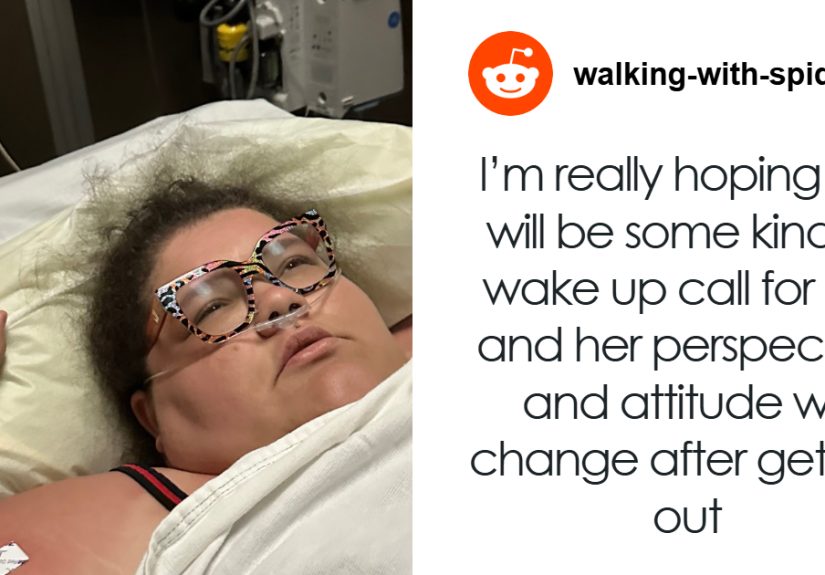
Later reports, citing court-record-based accounts, said Chaney was arrested after an alleged disturbance at a hospital in Washington state in early 2025. Those reports said the incident led to charges including assault and resisting arrest. They also said the case was later dismissed after a court-ordered evaluation. That distinction matters. A reported arrest is not the same thing as a conviction, and a viral headline is not a court ruling.
That is exactly why this story has to be handled with care. It is tempting for internet coverage to turn a person from “controversial activist” into “cautionary tale” in one dramatic swing. But real life is usually messier than a headline and less satisfying than a comment thread wants it to be. Legal trouble, health struggles, public criticism, and social media pressure can all pile together until the person at the center of the storm becomes less of a public figure and more of a human being trying to disappear for a while.
So yes, the legal reporting became part of Chaney’s public story. But the ethical way to discuss it is to stay grounded: it was reported as an alleged incident, not a proven legend carved into internet stone, and later reporting said the case was dismissed. Anything more dramatic than that is usually where journalism ends and performance begins.
Why She May Have Gone Quiet
Once a creator becomes famous for a polarizing cause, silence can say almost as much as a new post. And in Chaney’s case, the quiet itself became news. Observers noticed that the activist who once posted boldly about airline policy, accessibility, and body-size treatment seemed to retreat from the spotlight after the reported legal episode.
That is not hard to understand. Social media rewards intensity, but it rarely protects the people generating it. The same platforms that amplify a cause can quickly become hostile once a creator stumbles, gets sick, faces personal upheaval, or becomes too easy to mock. One week you are a movement. The next week you are reaction content.
There is also a broader truth here: going viral for a social issue does not magically solve the private pressures in someone’s life. In many cases, it multiplies them. The audience grows. Expectations harden. Every post becomes evidence. Every break becomes “disappearance.” Every personal crisis gets folded into the public brand whether the person wants that or not.
So when a headline says someone “lies low,” it can sound suspicious, strategic, or dramatic. Sometimes it is simply what people do when the noise gets too loud. They log off. They vanish. They stop volunteering their pain to an audience that has confused access with ownership.
What This Story Says About Airline Policy in America
One reason this story keeps resurfacing is that the underlying travel issue remains unresolved. Airline policies for plus-size passengers in the United States are still inconsistent. Some carriers require passengers who cannot fit comfortably in one seat to purchase an additional seat. Some offer refunds only under certain conditions. Some frame the issue around safety and comfort but leave the practical judgment to staff on the ground. That creates a messy reality where the rule may exist on paper, but the lived experience can still depend on who is working the gate.
That inconsistency is a big reason advocacy around this issue gained traction in the first place. Many plus-size travelers say the hardest part is not merely the seat itself. It is the uncertainty. Will they be accommodated? Will they be embarrassed? Will they be forced to explain their body to a stranger in public? Will the policy be applied evenly, or visually, or awkwardly, or not at all until boarding becomes a small social horror show?
At the same time, airlines operate in a business model built around tight margins and tighter cabins. Seats are inventory. Space is revenue. And in a plane full of paying passengers, every policy that grants more room to one person raises questions about cost, fairness, and operational consistency. That is why the debate remains so heated: both sides can point to real-world consequences.
The Social Media Trap Hidden Inside the Story
The article title sounds like gossip, but the bigger lesson is about internet fame. Chaney did not just talk about airline seats. She became a symbol in a much larger culture war about body image, health, accommodation, and personal responsibility. Once that happens, it gets harder for the public to see the person underneath the symbol.
Online audiences love a simple script. Hero. Villain. Hypocrite. Victim. Redemption arc pending. But people do not actually live in those categories. A person can raise a real issue and still become a polarizing messenger. A campaign can expose a valid problem while also inviting criticism. A public figure can be both unfairly mocked and fairly challenged. The internet hates that kind of complexity because complexity is bad for engagement and terrible for dunking.
That may be why this story still generates attention. It offers several narratives at once. Some see it as proof that activism became too performative. Some see it as another example of society mocking larger bodies while ignoring broken systems. Some see it as a warning about influencer culture itself, where every personal struggle is eventually recycled into content, backlash, or both.
Experiences Related to This Topic: Why So Many People Feel Something About It
Stories like this hit a nerve because they echo real experiences, even for people who have never heard of the activist at the center of the headline. Ask a plus-size traveler about flying, and the answer often begins long before takeoff. It starts with dread while booking, with seat maps, armrests, and the mental math of whether the flight will be full. It continues at security, at the gate, in the aisle, and in that split second before sitting down when a passenger silently wonders whether the seat will become a public test.
Ask a seatmate, and you may get a different kind of honesty. Some passengers say they feel awkward admitting they want their own space preserved. They do not want to embarrass anyone, but they also do not want to spend hours squeezed into half a seat while pretending not to notice. That discomfort is real too. Airline policy often leaves ordinary passengers to negotiate a problem they did not create.
Ask a gate agent or flight attendant, and the issue gets even more complicated. They are often the ones expected to enforce rules that sound neat in policy language and painfully messy in real life. Few employees want to tell a traveler they need another seat. Fewer still want to do it in front of a line of strangers holding carry-ons and opinions. But when policies are vague or inconsistently enforced, frontline staff become the face of a system everyone is already mad at.
Then there is the experience of being online while all this unfolds. Some people who followed Chaney probably agreed with her and felt seen for the first time. Others likely watched out of disbelief, annoyance, or curiosity. But social media does not reward calm understanding. It rewards extremes. A travel debate turns into a culture war. A person becomes a meme. A serious conversation about access becomes a referendum on morality, health, money, and who deserves comfort in public.
That is why this story lingers. It reflects the emotional traffic jam many people feel around body size and travel. Shame. Defensiveness. Empathy. Irritation. Solidarity. Fatigue. Everyone brings something to the conversation because almost everyone has felt uncomfortable on a plane for some reason. The difference is that some discomfort is expected, while some becomes politicized the moment it is named aloud.
In the end, the experiences tied to this topic are not just about one activist or one headline. They are about what happens when private discomfort becomes public policy, and when public policy gets tested by real bodies, real budgets, and real emotions. That is why one person’s rise, backlash, and retreat can capture so much attention. It is never just about her. It is about the uneasy truth that modern air travel works poorly for a lot of people, and nobody agrees on who should fix it first.
Conclusion
The headline about a plus-size activist who demanded free seats on planes and then went quiet after an alleged run-in with the law practically writes itself for the outrage economy. But the more interesting version of the story is not a cheap punchline. It is a snapshot of modern advocacy under pressure.
Chaney became visible because she attached herself to a real and unresolved travel problem. She became controversial because her proposed solution challenged how airlines price space and how the public thinks about fairness. And she became headline material again because later legal reporting collided with the public persona she had built online.
That combination makes for irresistible internet drama, but it should also invite a little restraint. Airline policies remain inconsistent. Size discrimination remains a real concern in many settings. Social media still turns complicated people into flat symbols at alarming speed. And when those symbols crack, the crowd usually learns nothing except how to refresh faster.
So the best takeaway is not to cheer, sneer, or canonize. It is to recognize that this story sits at the crossroads of travel, dignity, commerce, and online culture. Those issues are not going away. The activist may have gone quiet, but the argument she helped amplify is still very much in the air.