Table of Contents >> Show >> Hide
- What a Psych Ward Actually Is
- How Admission Usually Happens
- What the First Day Feels Like
- What a Typical Day on the Unit Looks Like
- Why the Rules Can Feel So Strict
- What Treatment Actually Happens
- What It Feels Like Emotionally
- What Families and Loved Ones Should Know
- What Discharge Usually Looks Like
- Common Myths vs. Reality
- Extra Experiences: What Staying on a Psych Ward Can Feel Like From the Inside
Let’s start by clearing the fog machine, firing the horror-movie director, and escorting every wild stereotype out of the building. For a lot of people, the phrase psych ward sounds like something lifted from a creepy screenplay: locked doors, dramatic shouting, mysterious clipboards, and one sad sandwich under fluorescent lighting. Real life is usually far less cinematic and far more practical.
A modern psychiatric unit is, at its core, a medical setting designed to help people through an acute mental health crisis. That can mean severe depression, mania, psychosis, overwhelming anxiety, dangerous impulsivity, medication problems, or a situation where someone is no longer safe or functional at home. In other words, it is not a punishment chamber. It is a place built around stabilization.
That word matters. Stabilization is not the same thing as magically fixing a person’s whole life in three and a half days with a juice cup and a group therapy worksheet. It means helping someone become safer, steadier, clearer, and connected to the next step in treatment. Sometimes that next step is outpatient therapy. Sometimes it is a partial hospitalization program. Sometimes it is family support, medication follow-up, or a completely new care plan.
If you have ever wondered what it is actually like to stay in a mental hospital, the honest answer is this: it can feel scary, boring, helpful, frustrating, exhausting, relieving, awkward, and life-changing, sometimes all before lunch. It is both more human and more ordinary than people expect. And yes, there may still be bad coffee. Some traditions survive every medical advance.
What a Psych Ward Actually Is
A psych ward, more accurately called an inpatient psychiatric unit, is usually part of a general hospital, a behavioral health hospital, or a specialized psychiatric facility. Most short-term inpatient units are designed for people who need close support and observation during a crisis, not for long-term residence. The goal is to reduce immediate danger, evaluate what is going on, begin treatment, and prepare for a safe transition back into the community.
That is one of the biggest shocks for first-time patients and families: the stay is often more structured and more medically focused than expected. It is less “tell us about your dreams for six months” and more “let’s figure out what is happening, what you need right now, and how to keep you safe.”
People often arrive in one of two ways. They come in voluntarily, meaning they agree to admission with a clinician, or they are admitted involuntarily under state law because they are considered an immediate danger to themselves, a danger to others, or unable to care for their basic needs. That legal part varies by state, which is why the exact rules can feel like a confusing mashup of healthcare, paperwork, and vocabulary nobody asked for.
How Admission Usually Happens
Admission rarely begins with a dramatic slow-motion entrance while everyone gasps. More often, it starts in an emergency department, crisis center, or psychiatric urgent care setting. There is usually an intake process that includes questions about current symptoms, medical history, mental health history, medications, substance use, sleep, stressors, and immediate safety concerns.
Patients may meet with nurses, a psychiatrist, a therapist, a social worker, or more than one clinician in a short stretch of time. This part can feel repetitive because everyone seems to ask versions of the same question. That is not because the hospital is running a secret audition for “Most Enthusiastic Clipboard Holder.” It is because different team members are gathering information from different clinical angles.
The intake process can also include checking belongings, changing clothes, skin or safety checks, and reviewing what items can stay on the unit. For many people, this is the first emotionally difficult moment. Handing over your phone, charger, sharp objects, medications, or certain personal items can feel abrupt or even humiliating. But the logic is usually straightforward: psychiatric units are designed around safety for everyone on the floor, not just comfort for one person.
Voluntary vs. Involuntary Admission
If someone is admitted voluntarily, they are agreeing that inpatient care is needed. That does not mean they are thrilled about it. It usually means they and a clinician believe the situation has crossed the line from “this is bad” to “this needs intensive support now.”
If someone is admitted involuntarily, the situation is more legally structured. The hospital may hold the person for evaluation and stabilization according to state law. This is one of the most misunderstood parts of mental health care. Involuntary admission is not supposed to be a casual decision or a family member’s revenge plot after Thanksgiving dinner. It is a legal response to serious risk or severe impairment.
Even when someone is hospitalized involuntarily, that does not mean they lose all voice or rights. Patients still have rights related to privacy, explanation of treatment, and, depending on the situation and the law, participation in decisions about care. Hospitals may also explain advance directives, patient advocates, complaint processes, and consent policies.
What the First Day Feels Like
The first day on a psych ward is often the weirdest day. You are in a new environment. The rules are unfamiliar. Your emotions may already be running a full marathon. You may be sleep-deprived, frightened, numb, embarrassed, angry, or all of the above with a bonus side of confusion.
Many units have locked or controlled doors. That can be jarring, especially for people who are already feeling trapped by their thoughts. The locked-door reality is one reason psychiatric hospitalization feels so intense emotionally. Even when staff members are kind, the environment itself can make people feel exposed and disoriented.
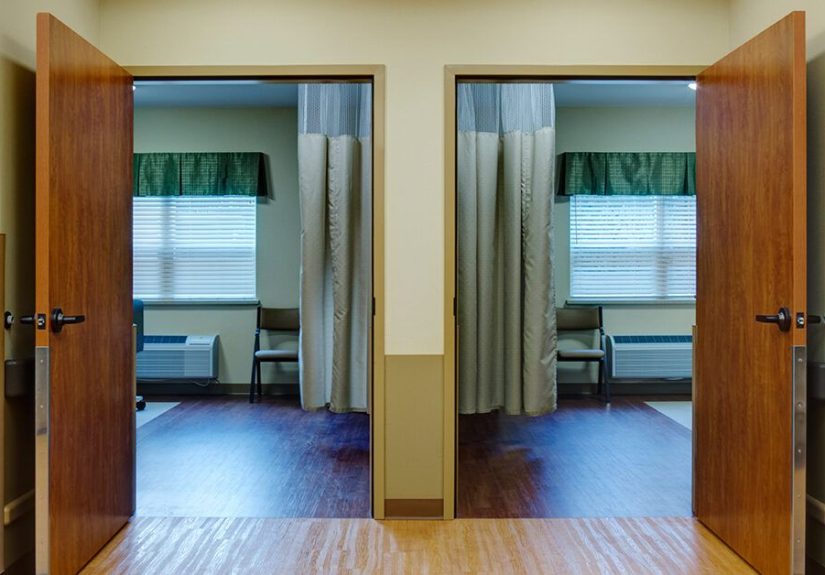
The room may be more basic than a typical medical floor. That is not because anyone is trying to create a miserable aesthetic. It is because psychiatric units are usually arranged to reduce risk. Furniture may be simple. Décor may be limited. Some personal items may be restricted. The environment is meant to be secure, not glamorous. Nobody is checking in for the complimentary spa robe.
At the same time, many units try to preserve dignity where they can. Patients may receive clean clothes, hygiene supplies, meals, snacks, bedding, and access to shared activity spaces. Some units have puzzles, books, art materials, board games, or television access in common areas. The overall feeling is often somewhere between a hospital floor, a school schedule, and the world’s least optional wellness retreat.
What a Typical Day on the Unit Looks Like
One of the most surprising things about inpatient psychiatric care is how scheduled it can be. Structure is not there to annoy people, although it sometimes succeeds beautifully at that anyway. The routine is there because predictability can help lower chaos.
A typical day may include waking up early, getting medications, eating breakfast, attending group sessions, meeting briefly with a psychiatrist, speaking with a therapist or social worker, eating lunch, going to another group, having downtime, eating dinner, and getting evening medications. Add in safety checks, visitors if allowed, phone time if available, and the occasional awkward small talk with strangers over a jigsaw puzzle, and you have the basic outline.
Group therapy is common, though “therapy” can mean different things. Some groups focus on coping skills, stress management, emotional regulation, relapse prevention, communication, or psychoeducation. Others are more discussion-based. Some are very useful. Some feel like they were built by a committee that had a deep and personal relationship with dry erase markers.
Patients also typically meet with psychiatrists or prescribers to review symptoms and medications. Medication adjustments are one of the central reasons people are admitted. Inpatient care allows clinicians to observe changes more closely and respond faster than would usually be possible in ordinary outpatient care.
Why the Rules Can Feel So Strict
Let’s talk about the part people complain about most: the rules. Psychiatric units often restrict shoelaces, belts, cords, razors, glass, certain toiletries, electronics, and other personal items. Some units do not allow cell phones or internet-enabled devices at all. Visitors may be limited. Access to certain areas may be supervised. Doors may stay locked. Staff may check in frequently.
To the patient, this can feel infantilizing. To the hospital, it is risk management. The challenge is that both things can be true at once.
Good inpatient care tries to balance safety with dignity. That is not easy. Psychiatric hospitalization often happens when someone is vulnerable, distressed, and already feeling unlike themselves. Restricting access to comfort items can make that harder. But hospitals also have to think about the safety of every patient on the unit, not just the person who says, quite reasonably, “I promise I only want my hoodie.”
Privacy is another reason for device restrictions. In many units, phones and smart devices are limited because cameras, recording, messaging, and internet access create real privacy problems in a shared clinical space. That rule can feel brutal in the modern world, because losing your phone now feels a little like losing your external brain. Still, for many hospitals, the tradeoff is considered necessary.
What Treatment Actually Happens
A psych ward is not just a holding area with better paperwork. Actual treatment happens there, though it may look different from the therapy people imagine from movies or social media clips.
Treatment may include psychiatric evaluation, medication initiation or adjustment, psychotherapy, group sessions, family meetings, occupational or recreational therapy, case management, and discharge planning. In some cases, hospitals also address withdrawal, co-occurring substance use issues, sleep disruption, medical problems affecting mental health, or severe mood and thought symptoms that make outpatient care unsafe or ineffective in the moment.
The focus is usually practical. Can the person sleep? Eat? Think clearly enough to make decisions? Participate in treatment? Stay safe? Return home? Need a different level of care? Hospitals are often trying to answer those questions quickly, because inpatient care is usually meant to stabilize the crisis, not solve every long-standing issue.
That can frustrate patients who finally arrive in crisis and then realize nobody is going to unravel ten years of pain in one dramatic breakthrough by Wednesday. But when inpatient care works well, it creates a bridge. It gets a person from danger and chaos to the next level of care with more stability, better insight, and a clearer plan.
What It Feels Like Emotionally
This part matters because the emotional experience of hospitalization is often more complicated than the clinical summary in the chart. A person may feel relief that someone else is finally helping. They may also feel shame that things got this bad. They may feel safer than they have in weeks, while also feeling stripped of privacy and control.
For some people, inpatient care is the first time they sleep through the night in a while. For others, it is the first time they realize how exhausted they are. Some cry from fear. Some cry from relief. Some refuse groups for a day and then slowly begin participating. Some want to go home within an hour of arrival and then, a few days later, admit they were not okay to leave yet.
And boredom? Boredom is a very real roommate on psychiatric units. There can be long stretches of waiting: waiting for the doctor, waiting for group, waiting for the social worker, waiting for medication, waiting for discharge, waiting for time itself to stop stretching like cold taffy. That boredom is not meaningless, though. Sometimes it is the first quiet a person has had in months.
What Families and Loved Ones Should Know
If someone you love is hospitalized, you may expect constant updates. In reality, privacy laws and consent rules may limit what staff can share. That can be frustrating for families who are terrified and trying to help. Still, many hospitals encourage family involvement when appropriate, especially for discharge planning and aftercare.
Families can often help by providing medication history, behavior changes, recent stressors, outpatient provider information, and practical support for discharge. The goal is not to become the assistant manager of the psych ward. It is to help create continuity once the person leaves.
One of the most important realities of inpatient care is that discharge is not the finish line. It is a handoff. If the plan after discharge is weak, the hospitalization may help in the short term but not hold up well in real life.
What Discharge Usually Looks Like
Discharge planning often begins earlier than patients expect. That is because hospitals know the next step matters almost as much as the stay itself. Before leaving, patients may receive medication instructions, referrals, follow-up appointments, crisis resources, recommendations for therapy or intensive outpatient care, and guidance about what to do if symptoms worsen again.
Ideally, discharge does not feel like, “Congratulations, you survived group therapy, now please vanish into the parking lot.” Ideally, it feels coordinated, clear, and realistic. The strongest discharge plans answer practical questions: Who is prescribing medication? When is the next appointment? Where will the person stay? What support exists at home? What warning signs should be taken seriously? What happens if the crisis returns?
That is why a good psych ward stay is not just about the bed, the groups, or the meds. It is about what comes next. Inpatient care should lower the temperature of the crisis and build a safer runway for recovery.
Common Myths vs. Reality
Myth: A psych ward is basically a prison.
Reality: It is a medical environment with safety rules, legal policies, and restricted movement, but its purpose is treatment and stabilization.
Myth: Everyone there is violent or “crazy.”
Reality: Most patients are overwhelmed, frightened, exhausted, severely depressed, psychotic, manic, or otherwise in crisis. Many are more likely to withdraw than to cause chaos.
Myth: Hospitalization means failure.
Reality: Sometimes hospitalization is what it looks like when a person finally gets the level of care they needed all along.
Myth: One stay fixes everything.
Reality: Inpatient care is often the first stabilizing chapter, not the whole book.
Extra Experiences: What Staying on a Psych Ward Can Feel Like From the Inside
Imagine walking into a place you never wanted to need. You are tired, emotionally scraped raw, and suddenly everything is reduced to basics: your clothes, your sleep, your medication, your safety, your next hour. The outside world gets quiet fast. Your phone is gone. Your schedule belongs to the unit. The ordinary distractions that usually let you outrun your mind are suddenly unavailable, which can feel terrifying at first.
Then something strange often happens. After the shock wears off, the unit starts to become understandable. You learn the rhythm. Breakfast comes at a certain time. Med pass happens when it happens. A nurse checks in and remembers your name. The social worker asks the hard questions without looking scared by the answers. Someone in group says something unexpectedly honest, and suddenly the room feels less like a collection of strangers and more like a group of people who all crashed into the same storm from different directions.
You may still hate being there. Plenty of people do. You may hate the bland walls, the rules, the waiting, the plastic utensils, the constant interruption of sleep, or the awkwardness of crying in a building where everyone can spot emotional collapse from fifty feet away. But you may also notice small things that matter more than expected: a night of actual rest, a medication that finally takes the edge off, a clinician who explains things clearly, a moment when your thoughts stop racing quite so hard, a realization that you are safer than you were yesterday.
Some people remember a psych ward as frightening. Some remember it as a turning point. Many remember it as both. It can be humbling to need that much help. It can also be deeply human. A person enters feeling broken open by crisis and finds, at minimum, a pause in the free fall.
That is the truth many articles skip. A psych ward stay is not glamorous, mystical, or neatly inspirational. It is usually messy, deeply uncomfortable, and profoundly ordinary. It involves paperwork, uncertainty, tired nurses, hard conversations, institutional rules, and the slow work of becoming stable enough to rejoin your own life. Yet inside all that ordinary mess, something important can happen: a person gets held long enough for the crisis to loosen its grip.
So what is it like to stay in a mental hospital? It is often not what people fear, not exactly what they hope, and much more real than the stereotypes. It is structure when life has become chaos. It is support when functioning has collapsed. It is a short-term, imperfect, often necessary place where the goal is not to define a person by their worst moment, but to help them survive it and move forward.