Table of Contents >> Show >> Hide
- Meet The Green Man: A Pub That Went Missing (Without Actually Leaving)
- How Does a Pub Get Buried Alive?
- A Medieval Castle With a Coffee Sign: The Decor That Refused to Die
- Why the Glasses Are Still Unwashed (And Why You Should Not Be the One to Wash Them)
- The Pub as a “Third Place”And What Happens When It Disappears
- Could It Ever Reopen? The Economics of Resurrecting a Time Capsule
- What The Green Man Teaches Us About Preservation (Accidental and Otherwise)
- Conclusion: A Toast to the Strangest Pub Story in Britain
- Extra: Experiences That Make This Story Hit So Hard ( of Pub Time-Travel Energy)
Some places age like fine wine. Others age like… a pint glass that’s been “resting” since the early ’90s.
Under a busy shopping center in Loughborough, England, there’s a pub that basically rage-quit reality in 1993 and never logged back on. It’s called The Green Man, and it’s the kind of story that makes you wonder if urban planners secretly hate joyor if they’re just really committed to retail square footage.
When photos of the space resurfaced decades later, it looked less like an abandoned bar and more like a museum exhibit titled: “The 1990s: Please Mind the Dust.” Pint glasses still sit where someone left them. Snack packets remain on tables. A sign cheerfully announces coffee. And yes: those glasses are still unwashedbecause there’s been no bartender, no dishwasher, and no last call for nearly three decades (at the time the story went viral).
This isn’t a ghost story. It’s arguably stranger: a real, sealed-off pub “trapped in time,” preserved by accident beneath modern commerce like a boozy time capsule hiding under your sneakers while you shop for phone cases.
Meet The Green Man: A Pub That Went Missing (Without Actually Leaving)
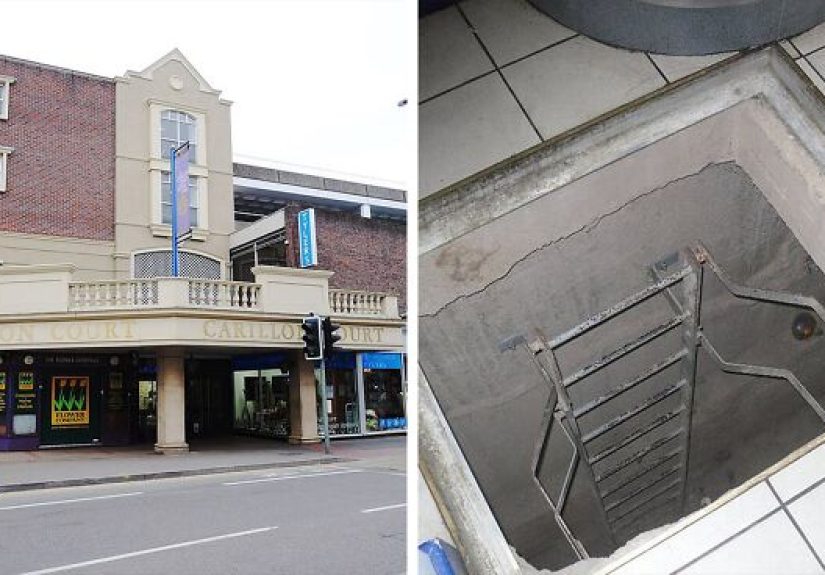
The Green Man wasn’t perched on a picturesque village green. It lived underneath what became the Carillon Court shopping center, tucked away like a secret level in a video gameexcept the reward was ale, not extra lives.
By accounts shared in reporting and follow-up coverage, The Green Man shut down in 1993. Above it, the town kept moving: stores changed hands, retail trends shifted, and the shopping center grew into the kind of place you visit when you need socks and mild existential dread.
Down below? The pub stayed putlargely intact. That’s the key detail: it wasn’t demolished. It wasn’t redecorated. It was effectively buried, sealed off during renovation work and left behind like a suitcase in an attic, only bigger and with better murals.
What People Found Inside
- Dusty pint glasses and barware still in place
- Tables that look like customers just stepped out “for a quick smoke” in 1993
- Snack remnants (the kind of pub peanuts that could survive a nuclear winter)
- Medieval-themed decor that makes the average sports bar look emotionally unavailable
One report describes pint glasses stacked on shelves and a wall mural featuring knights charging across grassy landscapes. Another detail that feels oddly specificand therefore incredibly believableis a sign that reads: “Kenco Coffee Served Here.” Because nothing says “castle vibes” like instant coffee branding.
How Does a Pub Get Buried Alive?
Most businesses close with a whimper: a handwritten note, a “for lease” sign, and a slow fade into local memory. The Green Man got the deluxe treatment: it was sealed off and forgotten in place.
Think about that for a second. Somewhere between “we need to renovate this shopping center” and “we should probably finish before Christmas,” someone made a series of decisions that resulted in a pub becoming an underground artifact.
The Perfect Recipe for an Accidental Time Capsule
- Location: A basement-level venue under a retail complexeasy to wall off, hard to miss once you know it’s there.
- Renovation priorities: Retail square footage and safe public access tend to win over “preserving the vibes.”
- Cost barriers: Restoring and reopening a sealed space can be expensive (and complicated) enough to keep it sealed.
In other words: the pub didn’t survive because it was protected. It survived because reopening it would be a headacheand in the modern world, “too much hassle” is basically a force of nature.
A Medieval Castle With a Coffee Sign: The Decor That Refused to Die
If you’re going to become a legend, it helps to look dramatic while you do it. The Green Man’s interior has been described as castle-like, with striking murals and architectural flourishes that feel more banquet hall than basement bar.
That medieval theme matters. It’s part of why the photos hit so hard: you’re not just seeing a closed pubyou’re seeing a whole aesthetic frozen mid-performance. A space designed to feel ancient… becoming genuinely historic by accident.
The Details That Make It Weirdly Moving
It’s easy to laugh at dusty bar stools. But the small stuff carries emotional weight:
- An abandoned pint that looks like it was set down during a conversation
- A snack packet that never made it to the trash
- Furniture arranged like the night ended normally
It’s the kind of scene that makes you think about how ordinary moments become artifacts. One day you’re complaining about the jukebox. Decades later, your half-finished peanuts are historical evidence.
Why the Glasses Are Still Unwashed (And Why You Should Not Be the One to Wash Them)
Let’s address the headline detail: yes, the glasses are still unwashed. No, this is not a “quirky British tradition.” It’s what happens when a place closes and nobody cleans up because nobody canor nobody has a reason to.
In normal food-and-drink operations, glassware sanitation is not optional. Proper warewashing relies on heat or chemical sanitizers, specific temperatures, and a process designed to reduce contamination. In a sealed, abandoned environment, none of that is happening. Instead, time does what it always does: dust settles, materials degrade, and whatever was left behind becomes a science project with ambiance.
So Why Not Just Clean It Up and Reopen?
Because reopening isn’t “wipe the bar and call it a day.” A long-sealed underground venue raises a whole checklist of problems:
- Access: You need a safe entrance that meets modern standards (not a “climb down and hope”).
- Ventilation and air quality: Underground spaces can trap moisture and odors, and may need major upgrades.
- Structural and electrical updates: Decades of code changes add up fast.
- Sanitation overhaul: Everything would need deep cleaning, replacement, or professional restoration.
Ironically, the very thing that makes The Green Man fascinatingthe untouched scenealso makes it expensive to revive. Time capsules are great. Time capsules with plumbing are… complicated.
The Pub as a “Third Place”And What Happens When It Disappears
Part of why this story travels so well (across oceans and social feeds) is that it taps into something bigger than one weird buried bar. Pubs aren’t just places to drink. In British and Irish culture especially, the pub often functions as a classic “third place”a social space that’s not home and not work, where people can talk, unwind, and feel like a regular even if they’re only regular-ish.
The concept of the third place is widely discussed in American cultural analysis too, especially when communities talk about loneliness, remote work, and the slow evaporation of casual social life. A pub is the opposite of optimized productivity: it’s built for conversation, trivia nights, and the sacred ritual of pretending you’re only going to have one.
Why a Buried Pub Feels Like a Metaphor
Because it literally is one. The Green Man sits under retail storefrontsmodern consumer life on top, old community ritual below. It’s hard not to read that as symbolism, even if the original cause was more “construction decisions” than “poetry.”
And the wider context matters: modern pressures on pubs (rising costs, changing habits, and post-pandemic turbulence) have made the pub’s community role more fragile than it looks from a cozy booth.
Could It Ever Reopen? The Economics of Resurrecting a Time Capsule
At various points, potential developers have reportedly looked at the space and backed awayoften because of cost. One quoted remark even joked about the modern retail instinct to turn properties into convenience stores, while suggesting that even a major chain might not want a shop down there.
And that makes sense. Retail thrives on visibility and foot traffic. A sealed basement pub requires the opposite: investment before revenue, infrastructure before vibes.
If Someone Did Reopen It, What Would They Do With It?
There are a few plausible paths that wouldn’t destroy what makes it special:
- Micro-museum + bar concept: Preserve part of the space as a viewing area, operate a modern bar nearby.
- Guided tours: Treat it like an urban archaeology site rather than a functioning venue.
- Pop-up events: Limited, controlled accessmore “heritage experience” than “Friday night out.”
But any approach would need to balance safety with authenticity. If you modernize too much, you lose the spell. If you modernize too little, you risk creating the world’s most atmospheric hazard report.
What The Green Man Teaches Us About Preservation (Accidental and Otherwise)
There’s a reason “time capsule” stories go viral: they short-circuit our sense of progress. We expect the past to be archived neatlyphotos, museums, maybe a few dusty VHS tapes. But the Green Man is the past in 3D, sitting in the dark like it’s waiting for someone to unpause it.
Preservation usually requires intention: planning, funding, and a committee that meets too often. The Green Man’s preservation was accidentalcloser to the way sealed sites sometimes retain objects for decades because oxygen, light, and human interference can’t reach them.
And that’s the emotional punchline: the pub survived not because anyone saved it, but because everyone moved on.
Conclusion: A Toast to the Strangest Pub Story in Britain
The Green Man’s charm isn’t that it’s “gross.” The charm is that it’s human: half-finished pints, casual clutter, and evidence that people once gathered there for the low-stakes magic of being together.
At the time the images circulated widely, it had been “trapped in time” for about 27 yearslong enough for a whole generation to grow up, get smartphones, and start paying extra for cocktails served in jam jars. Today, it’s been even longer, and that only deepens the feeling that this place isn’t just abandonedit’s paused.
So here’s to The Green Man: the pub that became an underground legend, the only bar where the glasses never get washed, and the closest thing we have to a “1993” button you can presswithout needing a DeLorean or a playlist of Britpop.
Extra: Experiences That Make This Story Hit So Hard ( of Pub Time-Travel Energy)
You don’t need to climb into a sealed basement under a shopping center to understand why people obsess over this story. If you’ve ever walked into an old pubwhether in London, a small English town, or a tourist-friendly “British-style” place in the U.S.you’ve probably felt that tiny jolt of time travel. It’s not paranormal. It’s sensory. The lighting is warm, the wood is worn smooth, and the room seems designed to absorb your day like a sponge with better taste in beer.
What makes a pub feel like a time machine isn’t just the furniture. It’s the rhythm. You order at the bar, you find a spot, you settle in. Someone’s dog is acting like it owns the building. Someone else is defending a trivia answer with courtroom intensity. Even if the decor has been updated, the vibe often stays stubbornly familiar: pubs are built for conversation that has nowhere to be.
And then there are the little “this could be 1993 or 2023” details. The slightly sticky table edge. The chalkboard menu that looks like it’s been written by the same hand since the invention of chalk. The regulars who nod at each other like they’re members of a secret society whose initiation ritual is simply showing up again next week. In a good pub, you can be alone without feeling lonely, because the room itself is socialeven silence feels like part of the community soundtrack.
The Green Man takes that familiar feeling and cranks it up to eleven, because it isn’t just “old-school.” It’s literally preserved. That’s why the unwashed glasses are so creepy-funny: they’re proof that a normal night ended and never got its cleanup scene. It’s like someone hit pause on a movie right before the credits and walked away from the remote for decades.
If you want a safer version of that feeling (highly recommended), you can chase “pub time travel” the normal way: visit historic pubs, look for places with stories in the walls, and pay attention to the non-Instagram details. Sit where the wood is most worn. Read the plaques you’d normally ignore. Order something classican ale, a stout, a simple pub mealand slow down enough to notice how the room works. The best pubs don’t rush you. They don’t need to. Their whole job is to make time feel a little less sharp around the edges.
And if you ever find yourself romanticizing a truly abandoned place like The Green Man, remember: the magic isn’t the dust. The magic is the people. The real time machine is the moment a pub turns strangers into neighborspreferably with clean glassware and a bartender who’s still very much alive.