Table of Contents >> Show >> Hide
- The Tree-Trunk Arnie That Broke the Internet (In the Best Way)
- Why Arnold Works So Well as a Wooden Statue
- How Do You Carve a Life-Size Person Out of a Tree Trunk?
- When the Wood Fights Back: Grain, Cracks, and the Beauty of “Imperfection”
- Tools, Technique, and Safety (Because Chainsaws Are Not “Vibes-Based”)
- Preserving a Wooden Statue So It Doesn’t Turn Into “Modern Art (Accidentally)”
- Arnold Statues Are Kind of a Thing (And That’s Not an Accident)
- What Makes This Project So Shareable?
- Quick Questions People Ask About Tree-Trunk Sculptures
- Bonus: of “Experience” What It Feels Like to See a Tree Trunk Turn Into Arnold
- Conclusion
Somewhere, a tree fell down… and instead of becoming firewood, it became Arnold. Not “a statue of Arnold,” not “inspired by Arnold,” but an
unmistakably life-size, muscles-for-days, “I’ll be back” energy Arnold Schwarzeneggercarved straight out of a single tree trunk.
If that sounds like a joke, it’s only because your brain is trying to protect you from how cool it is. This is the kind of project that makes you
stop scrolling, stare, and whisper, “Waithow is that even possible?” (Followed closely by, “How heavy is that thing?”)
The Tree-Trunk Arnie That Broke the Internet (In the Best Way)
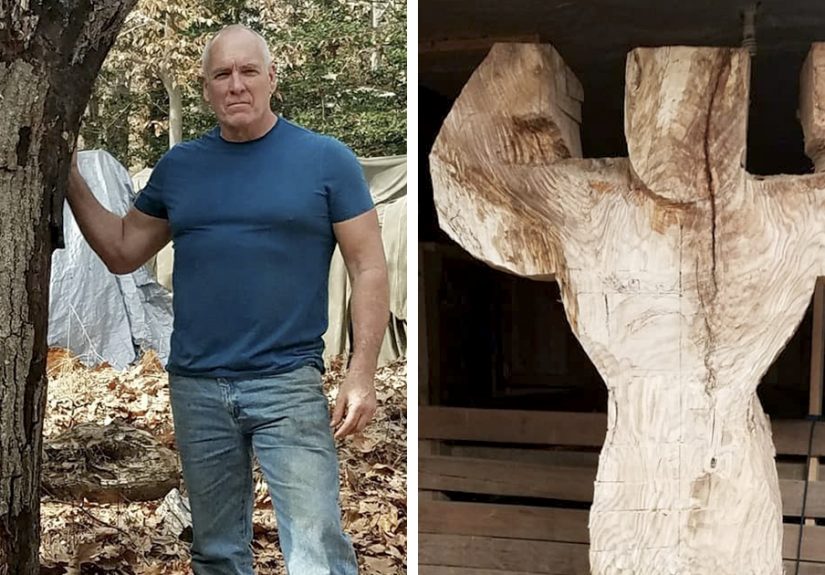
The headline version: wood sculptor James O’Neal created a life-size Arnold Schwarzenegger statue from an old tree trunk
and documented the process online. The longer, better version: he took a gnarly piece of wood with wild grain, burls, knots, and natural scars and
carved a full human figure so convincing you can almost hear it telling you to “get to the chopper.”
According to the documentation shared about the project, the statue was carved from black oak, stands about 1.88 meters
tall (right around Arnold’s famously imposing height), and took roughly six months to complete. The pose choice wasn’t random either:
O’Neal carved Arnold in a classic bodybuilding stancebecause if you’re going to carve Arnold, you don’t pick “casual Tuesday at the DMV.” You pick a
pose that says, “My biceps have their own biceps.”
O’Neal isn’t new to carving famous figures. He’s created wooden tributes to other sports legends too, which makes sense: athletes have bold silhouettes,
recognizable stances, and iconic moments that translate beautifully into sculpture. But Arnold is special because he’s not just an athlete or actorhe’s
basically a whole genre of human accomplishment.
Why Arnold Works So Well as a Wooden Statue
Arnold Schwarzenegger is one of those rare public figures who can be summarized in a single sentence that still feels unreal: he’s a champion bodybuilder,
blockbuster movie star, and former governor of California. That mix of mythic physique, cinematic presence, and cultural impact makes him a sculptor’s dream.
And then there’s the nickname: “The Austrian Oak.” Carving Arnold from a tree trunk isn’t just cleverit’s practically poetic. Wood is a
material that already carries strength, age, and history. When you carve a person known for discipline and resilience from a material known for endurance,
the symbolism basically writes itself (while you stand there applauding like a dork).
There’s also a visual reason this works: bodybuilding poses exaggerate anatomy in a way that helps sculpture. Strong lines, clear muscle groups, and dramatic
contrasts between light and shadow make the human form “read” from a distance. In other words, the statue doesn’t need a caption. Your eyes instantly go,
“Yup. That’s Arnold.”
How Do You Carve a Life-Size Person Out of a Tree Trunk?
Turning a tree trunk into a recognizable human figure is part engineering, part anatomy class, and part “please don’t let me mess up the nose.” The process
varies by artist, but the fundamentals are surprisingly logical when you break them down.
1) Start With the Right Trunk (Because Wood Has Opinions)
The trunk sets the rules. Diameter matters because you need enough mass for shoulders, chest depth, and negative space (like gaps between arms and torso).
Grain matters because wood doesn’t behave like clay; it splits, checks, and changes direction. Knots and burls can be obstaclesor they can become the most
interesting “features” of the final piece if the artist works with them instead of fighting them.
O’Neal leaned into the character of the black oak. Instead of carving the wood into a sterile, smooth “perfect” surface, he kept the natural complexity.
That choice turns the statue into something more than a realistic portraitit becomes a collaboration between human design and the tree’s history.
2) Pick a Pose That Fits the Material
A life-size carving isn’t just a scaled-up tabletop figurine. It has to stand, balance, and survive real-world physics. A pose with arms far away from the
body creates fragile “bridges” of wood that can snap. Many sculptors choose poses with built-in support: elbows close to the torso, hands resting against hips,
or a stance where the arms create a stable visual triangle.
Bodybuilding poses are helpful here because they’re designed for symmetry and stability. They emphasize wide shoulders and a strong coreforms that naturally
match the vertical architecture of a trunk.
3) Rough Out the Silhouette First (Big Moves, No Details)
The early stage is about removing lots of wood quickly to establish the overall shape. Think “blocky mannequin,” not “portrait.” Artists often mark a centerline
down the trunk, map out key proportions (head height, shoulder width, hip placement), and carve broad planes that define the figure.
This is where many sculptures are won or lost. If the proportions are off early, no amount of later detailing will save it. The goal is to nail the big
geometry: stance, torso angle, and the relationship between head, shoulders, and arms.
4) Refine Anatomy Like a Sculptural Editor
Once the silhouette is right, the sculptor begins “editing” the formsharpening transitions, deepening shadows, and defining muscle groups so the figure reads
in three dimensions. On a bodybuilding figure, that might mean clarifying the deltoids, biceps, chest separation, and abdominal structure.
Here’s a key trick: the goal isn’t medical accuracyit’s visual accuracy. Sculpture often exaggerates slightly so shapes remain readable from a distance.
Deep undercuts and clean edges help the statue hold its form in outdoor light.
5) Face and Hands: The “Don’t Blink” Phase
Faces and hands are where viewers decide whether something feels alive or uncanny. Even if the body looks fantastic, a weak face can derail the whole piece.
Many sculptors simplify facial planes at first, then gradually add recognizable landmarks: brow shape, cheek structure, jawline, and the relationship between
nose and mouth. With Arnold, that strong jaw and confident expression are part of the signature.
And yesthis is also the moment where the artist’s internal monologue becomes a mix of calm professionalism and mild panic. (Art is glamorous.)
When the Wood Fights Back: Grain, Cracks, and the Beauty of “Imperfection”
Wood moves. It expands and contracts with moisture changes, and it can develop checks (cracks) as it dries. That’s not a flaw in the artistit’s part of the
material’s personality. The best wood sculpture often acknowledges this instead of pretending wood is stone.
O’Neal’s carving highlights this philosophy. The black oak’s grain and knots aren’t hidden; they’re integrated. It’s a reminder that this statue isn’t just
“Arnold in wood.” It’s “Arnold and the tree,” both histories visible at the same time.
Practical measures can reduce damage over time: sealing end grain, keeping water from pooling on horizontal surfaces, and choosing finishes designed for outdoor
exposure. But even with perfect care, wood will still age. In a way, that’s the point. A wooden statue is a living-looking object made from a once-living thing.
Tools, Technique, and Safety (Because Chainsaws Are Not “Vibes-Based”)
The romance of chainsaw carving is real: the roar, the flying chips, the dramatic “a face is emerging from the trunk” moment. But safety is not optionalespecially
in long projects where fatigue sneaks in.
Standard guidance for chainsaw work emphasizes basics that matter even more for sculpture: use proper personal protective equipment (PPE), check equipment before
cutting, clear the work area, and avoid working alone. A big carving can also hide surpriseslike embedded metal, old nails, or gritso scanning and inspecting the
wood before cutting is a smart habit.
For PPE, common recommendations include head protection, eye protection, hearing protection, cut-resistant leg protection (like chaps), gloves, and sturdy footwear.
Sculpture may look like art, but the tool doesn’t care. It’s still a chainsaw.
Another overlooked safety factor: the statue itself. As carvings get taller or more complex, stability becomes a real concern. The finished piece needs a secure base
and thoughtful placementespecially if it’s displayed outdoors where wind, rain, and curious humans can test its balance.
Preserving a Wooden Statue So It Doesn’t Turn Into “Modern Art (Accidentally)”
Wood can last a long time outdoors, but it needs help. Sunlight breaks down surface fibers, moisture encourages fungal growth and decay, and temperature swings make
wood move in ways that can stress delicate details.
Outdoor enemies of wood (a short villain list)
- Water (especially repeated wetting and drying)
- UV light (surface degradation and graying)
- Fungi and insects (if conditions stay damp)
- Mechanical damage (bumps, scrapes, “someone climbed on it for a selfie”)
Smart preservation habits
Protective strategies generally fall into two categories: reduce water exposure and shield the surface. Penetrating treatments
like water repellents or water-repellent preservatives are often discussed in wood durability research because they help reduce liquid water uptake. Film-forming
finishes (paints, varnishes, certain exterior coatings) can create a stronger barrier but may require maintenance as they weather.
For outdoor display, it helps to:
- Keep the statue off direct ground contact to reduce moisture wicking.
- Design or position it so water doesn’t sit on flat surfaces.
- Use a finish appropriate for exterior exposure and recoat as needed.
- Inspect regularly for new cracks, insect activity, or soft spots.
If the statue is displayed indoors, preservation becomes a different game: avoid direct sunlight, keep humidity reasonably stable, and protect the surface from
abrasion. Museums often emphasize humidity control and minimizing rapid environmental swings because wood responds dramatically to moisture changes.
Arnold Statues Are Kind of a Thing (And That’s Not an Accident)
O’Neal’s tree-trunk sculpture isn’t the first time Arnold has been immortalized in three dimensions. One of the most notable tributes is a large bronze statue in
Columbus, Ohio, tied to Arnold’s bodybuilding legacy and the city’s long-running fitness events. The existence of multiple public monuments points to
something bigger than fandom: Arnold represents a very American kind of reinventionarrive with a dream, work relentlessly, and become a symbol.
That’s also why a wooden Arnold works so well online. It’s not just a portrait; it’s a story of transformation. A fallen tree becomes a cultural icon. A rough trunk
becomes a recognizable human figure. And suddenly your social feed is full of people cheering for woodworking like it’s the Super Bowl.
What Makes This Project So Shareable?
If you’re wondering why a wood sculpture can rack up attention like a celebrity announcement, here’s the secret: it hits multiple “scroll-stoppers” at once.
- Instant recognition: Arnold is globally recognizable, even in silhouette.
- Process satisfaction: Watching rough wood turn into a detailed figure is deeply satisfying.
- Material surprise: A tree trunk feels too crude for realismuntil it isn’t.
- Storytelling: The grain, knots, and imperfections make the piece feel alive and unique.
It’s also a reminder that craftsmanship travels well on the internet. You don’t need to be a sculptor to appreciate the time, patience, and risk involved.
One wrong cut can’t be “Ctrl+Z’d.” That tension makes the payoff even sweeter.
Quick Questions People Ask About Tree-Trunk Sculptures
Is this “chainsaw carving” or traditional wood carving?
Large trunk sculptures often use chainsaws for roughing and shaping, then transition into smaller tools (or smaller saws and grinders) for detail work. The tool list
changes, but the sculptural thinking stays the same: big forms first, refinement later.
How long do outdoor wood statues last?
It depends on wood species, climate, and maintenance. With good design (keeping water off vulnerable areas), proper finishing, and periodic upkeep, outdoor wood can last
years to decades. Without care, decay can start much soonerespecially in damp environments.
Does carving from one trunk limit realism?
It limits some poses (like wide, unsupported gestures), but it can actually help realism by forcing strong structure. Many artists use the trunk’s natural
mass as a feature rather than trying to make it disappear.
Bonus: of “Experience” What It Feels Like to See a Tree Trunk Turn Into Arnold
Even if you’ve never held a carving tool in your life, watching a life-size figure emerge from a tree trunk is the kind of experience that recalibrates your sense of
what “possible” looks like. It starts with a logjust a big, heavy cylinder of wood that feels more like yard debris than art. Then the first cuts happen, and your
brain begins playing a strange game: it tries to predict the final form before there’s enough information to be sure.
At the roughing stage, the statue can look almost comically blockylike a Minecraft character who got lost on the way to the gym. But that’s the magic. When the artist
commits to the silhouette, you suddenly see a stance: shoulders widening, a chest line forming, the hint of arms positioned for a pose. That’s usually when a crowd
(or a comment section) gets louder, because the transformation becomes undeniable. It’s no longer “wood being cut.” It’s “a person arriving.”
The sensory side is unforgettable too. There’s the soundan aggressive, mechanical roar that quiets only when the artist pauses to check angles. There’s the scent of
fresh-cut wood, which is oddly calming for something being created with a tool that could also fell a tree in seconds. And there’s the constant snowfall of chips,
collecting like curly confetti at the base. If you’ve ever stood near a carving demo, you know the chips stick to everything, and somehow you don’t mind because it
feels like being close to the action.
The most satisfying moments come in the refinement phase. Small changes suddenly create huge recognition: the curve of a jawline, the set of the brow, the deeper cut
that turns a flat plane into a cheekbone. With a figure as iconic as Arnold, the “click” of recognition is dramatic. People go from “Is that…?” to “Oh, that’s
definitely Arnold,” and then they start laughingnot because it’s funny, but because it’s absurdly impressive.
And when the artist leaves in parts of the grainknots, burls, the weird scar patterns that the tree earned over decadesit adds another layer to the experience.
The statue doesn’t just represent a person; it represents time. You’re looking at a celebrity likeness and the tree’s autobiography at once. That combination makes
the work feel more human, not less. It’s a reminder that craft isn’t just about perfection; it’s about decisions. The best carvings don’t erase the material’s
identitythey turn it into part of the story.
By the end, you’re not just impressed with the statue. You’re impressed with the patience. A project like this is months of showing up, making careful cuts, solving
problems you can’t fully anticipate, and staying committed when the piece is still awkward and unfinished. Seeing that processwhether in person or through a
documented buildcan be strangely motivating. It makes you want to attempt something ambitious in your own life, even if your version of “life-size Arnold” is
simply finishing a project you started last month.