Table of Contents >> Show >> Hide
- The Short Answer: Yes in Principle, But Only Under Strict Conditions
- What Are Australia’s Hand-Me-Down F/A-18 Hornets?
- Why Ukraine Wanted Western Fighter Jets
- The Case for Sending Australian F/A-18 Hornets to Ukraine
- The Case Against Sending the Hornets
- Would the F/A-18 Hornet Be Better Than the F-16 for Ukraine?
- What Australia Should Do Instead
- The Best Policy: Capability Over Symbolism
- Experience-Based Reflections: What This Debate Teaches About Defense Aid
- Conclusion: Should Australia Give Ukraine the Hornets?
Few defense debates sound as simple as this one: Australia had retired F/A-18 Hornet jets. Ukraine needs fighter aircraft. Therefore, put the jets on a very large boat, send them to Europe, and let history clap politely. Easy, right?
Not quite. Military aviation has a habit of turning “free aircraft” into a spreadsheet that eats budgets for breakfast. A fighter jet is not like an old pickup truck you can hand to a neighbor with half a tank of gas and a cheerful “good luck.” It needs trained pilots, ground crews, spare parts, weapons integration, secure communications, maintenance manuals, export approvals, airfield support, and a logistics pipeline that does not collapse the first time a hydraulic pump throws a tantrum.
Still, the question matters. Australia’s retired F/A-18A/B Classic Hornets became a serious talking point after Russia’s full-scale invasion of Ukraine. The Royal Australian Air Force had retired its Classic Hornets after decades of service and replaced them with F-35A Lightning II fighters. Around 41 former Australian Hornets were discussed as potential candidates for transfer to Ukraine, but the proposal ran into political, technical, and operational complications. As of 2026, Ukraine’s Western fighter program has focused mainly on F-16s, while the old Australian Hornet fleet has become less of a ready-made answer and more of a case study in why defense aid is rarely as simple as “send the planes.”
The Short Answer: Yes in Principle, But Only Under Strict Conditions
Australia should support Ukraine with high-value military aid, and donating retired combat aircraft can make strategic sense when the aircraft are airworthy, supportable, and wanted by the receiving military. But Australia should not give Ukraine old F/A-18 Hornets simply because they look dramatic in a headline. A transfer would only be wise if the jets passed a hard technical inspection, came with spare parts and maintenance support, received U.S. export approval, and fit Ukraine’s broader fighter strategy.
In other words, the answer is: yes, if they are useful; no, if they become flying museum exhibits with a maintenance bill attached. Ukraine needs capability, not symbolic clutter.
What Are Australia’s Hand-Me-Down F/A-18 Hornets?
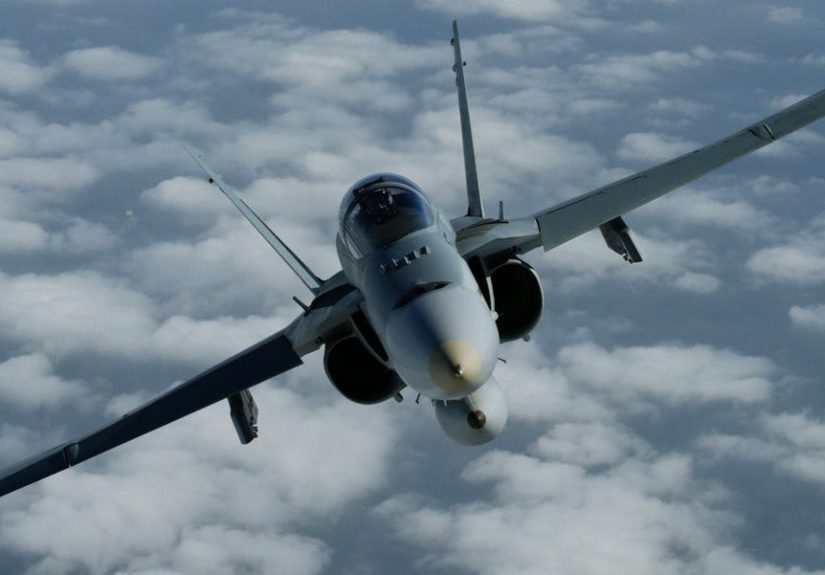
The F/A-18 Hornet is an American-designed twin-engine, multirole fighter built for both air-to-air and air-to-ground missions. The “F/A” name is not decorative: it means fighter and attack. The Hornet can intercept aircraft, escort strike packages, drop precision weapons, and conduct battlefield support missions. It is rugged, versatile, and famous enough that even people who cannot tell a wingtip missile rail from a garden rake have probably seen one in action footage.
Australia operated the F/A-18A/B Classic Hornet for decades. These were not the newer F/A-18E/F Super Hornets, but earlier-generation aircraft that still gave the Royal Australian Air Force a serious multirole combat capability. The Classic Hornets served Australia from the mid-1980s until retirement in 2021, after the F-35A gradually took over frontline duties.
By the time the Ukraine debate began, these jets were no longer part of Australia’s active combat fleet. That is why the idea seemed attractive: Australia would not be weakening its current air force by transferring aircraft it had already retired. In defense policy, that is the rare moment when everyone briefly believes they have found a bargain. Then the engineers enter the room and start asking about corrosion, fatigue life, avionics support, and where exactly the spare radar components are hiding.
Why Ukraine Wanted Western Fighter Jets
Ukraine entered the full-scale war with a Soviet-era fighter fleet built around aircraft such as the MiG-29 and Su-27. Ukrainian pilots used those aircraft skillfully, but Russia’s larger air force, long-range missiles, glide bombs, drones, and dense air defense network created a brutal operating environment. Ukraine needed Western fighters not because one type of jet would magically win the war, but because modern airpower is a system: radar, missiles, electronic warfare, data links, training, munitions, and maintenance all work together.
Western fighters can help Ukraine in several ways. They can improve air defense against cruise missiles and drones, launch precision-guided weapons, threaten Russian aircraft, and force Russia to adapt. Even when they do not dominate the sky, they complicate Russian planning. In war, making the other side nervous is not everything, but it is a respectable hobby.
The F-16 became Ukraine’s main Western fighter pathway because it is widely used, has a large training ecosystem, and is supported by a broad coalition of countries. That matters. A fighter jet with many donor nations behind it is easier to sustain than a small orphan fleet that relies on one narrow supply chain. The F/A-18 Hornet, however, still had a potential appeal: it was tough, multirole, and available in retired Australian stocks.
The Case for Sending Australian F/A-18 Hornets to Ukraine
1. Ukraine Needs More Combat Aircraft
Ukraine’s air force has been fighting under enormous pressure. Aircraft are lost, airframes wear out, and pilots need machines that can carry modern weapons. Even a limited number of Western fighters can strengthen Ukraine’s defensive options, especially when combined with ground-based air defense, drones, and long-range strike systems.
The Australian Hornets, if serviceable, could have added numbers. In a war of attrition, numbers matter. A single squadron cannot change the entire war, but extra aircraft can spread risk, rotate training, cover more missions, and reduce pressure on existing fleets.
2. The Hornet Is a Proven Multirole Fighter
The Classic Hornet is not a fifth-generation stealth aircraft, but it is not a paper airplane either. It was designed for demanding naval aviation, which means it has a robust structure, twin engines, and strong landing gear. That toughness could matter in Ukraine, where airfields face missile attacks and wartime runway conditions are not exactly spa-level luxury.
The Hornet can conduct air defense, strike, and close air support missions. Depending on configuration and weapons integration, it can carry missiles and precision-guided bombs useful for modern combat. It also has a long record of service with U.S. and allied forces, which means it is a known quantity rather than a mystery wrapped in rivets.
3. Australia Could Turn Retired Assets Into Strategic Impact
Retired aircraft sitting in storage represent sunk cost. If they can be made operational and transferred responsibly, they can deliver far more strategic value in Ukraine than in a storage facility or scrap process. For Australia, this would also signal that support for Ukraine is not just rhetorical. It would show that Canberra is willing to contribute serious military capability, not merely write checks and send polite statements.
Australia has already provided significant military assistance to Ukraine, including armored vehicles, ammunition, training support, and other equipment. Donating fighter aircraft would be a different level of contribution. It would place Australia among the countries willing to transfer complex combat systems, not just surplus kit from the back shelf of the defense cupboard.
4. It Could Free Other Allies to Focus on F-16 Support
If the Hornets had been delivered early and in usable condition, they might have complemented the F-16 pipeline rather than replaced it. Ukraine could have used them for specific mission sets while continuing to train on F-16s. In theory, this would diversify Ukraine’s options and give commanders more flexibility.
That said, “in theory” is where many defense ideas go to wear a nice suit before reality tackles them.
The Case Against Sending the Hornets
1. Old Fighter Jets Are Never Truly Free
The sticker price of a donated aircraft may be zero, but the actual cost can be enormous. A retired F/A-18 needs inspections, refurbishment, spare engines, avionics support, weapons certification, ground equipment, simulators, technical documentation, and trained maintainers. Without that ecosystem, the jet becomes an expensive sculpture with afterburners it cannot safely use.
Australia’s Classic Hornets were retired for a reason. They had served well, but aging fighters become more expensive to maintain. Fatigue, corrosion, and obsolete components create problems that do not disappear because the aircraft has been reassigned to a noble cause. A retired fighter can still be useful, but only if its remaining service life is clear and supportable.
2. Ukraine Chose to Prioritize the F-16
Ukraine’s fighter transition has already required a huge investment in pilots, maintainers, airfield systems, logistics, and tactics. Adding another Western fighter type would multiply complexity. The F-16 and F/A-18 are both American-designed fourth-generation aircraft, but they are not interchangeable. Different engines, parts, manuals, training programs, ground equipment, and maintenance practices mean a second fighter type creates a second logistical universe.
For a country at war, simplicity is not boring; it is survival. If Ukraine can concentrate resources on one Western fighter family, it may gain more real combat power than by collecting multiple small fleets. A hangar full of different aircraft types may look impressive until someone asks who is certified to fix them all at 2 a.m. during a missile alert.
3. U.S. Approval Is Required
The F/A-18 is a U.S.-origin aircraft with American technology and weapons compatibility. Australia could not simply hand the jets to Ukraine without U.S. approval. Any transfer would require diplomatic coordination, export permissions, and likely restrictions on sensitive systems. This is standard practice, not red tape invented by bored officials with too many stamps.
In wartime, timing matters. If a transfer takes months or years to approve, inspect, refurbish, and deliver, it may arrive too late to solve the problem it was meant to address. Military aid must be judged not only by what it can do, but by when it can do it.
4. Airfield Vulnerability Is a Real Problem
Russia has repeatedly targeted Ukrainian airfields, fuel depots, infrastructure, and maintenance sites. Western fighters require careful basing, protection, dispersal, and repair capacity. Adding Hornets would increase the number of high-value assets Ukraine must protect. If the aircraft cannot be dispersed, hidden, maintained, and armed safely, their battlefield value drops sharply.
This does not mean fighter jets are useless. It means fighters are part of a system. Air defense, hardened shelters, mobile maintenance teams, deception, runway repair, and intelligence support all matter. A jet is glamorous; the logistics network behind it is the unglamorous hero wearing grease-stained coveralls.
Would the F/A-18 Hornet Be Better Than the F-16 for Ukraine?
Not necessarily. The Hornet has advantages: twin engines, rugged construction, naval heritage, and multirole flexibility. The F-16 has different advantages: a huge global user base, abundant training experience, extensive modernization paths, and a large coalition already supporting Ukraine. In a long war, the support network may be more important than the aircraft’s brochure.
The F/A-18 could have been useful if introduced as a well-supported package. But as a small, aging fleet without a deep sustainment plan, it could have distracted from the F-16 program. Ukraine does not need a fighter jet collection. It needs a combat aviation system that can be trained, repaired, armed, and expanded.
What Australia Should Do Instead
If the original Australian Hornet transfer is no longer practical, Australia still has meaningful options. It can help fund Ukraine’s F-16 sustainment, provide spare parts through allied channels, train Ukrainian personnel, contribute air defense systems, support drone defense, and send munitions that Ukraine can use immediately. Australia can also help with maintenance, engineering, and logistics expertise, which often sounds less exciting than fighter jets but may matter more on the battlefield.
Australia should also keep looking at retired or surplus defense assets with a practical lens. The right question is not “Would this make a powerful headline?” The right question is “Can Ukraine use this within a realistic timeline, with support, training, and ammunition?” If the answer is yes, send it. If the answer is no, do not create a problem wrapped in patriotic ribbon.
The Best Policy: Capability Over Symbolism
The debate over Australia’s hand-me-down F/A-18 Hornets reveals a broader truth about military aid. Symbolic gestures matter in diplomacy, but wars are fought with working systems. A donated fighter aircraft is valuable only if it can fly combat missions, survive enemy pressure, and be maintained over time.
Australia should have seriously explored the Hornet option early, and it appears that officials and experts did exactly that. But once technical condition, logistics, export approval, and Ukraine’s own priorities came into focus, the case became less clear. If the jets were airworthy, supportable, and requested by Ukraine, donating them would have been a strong move. If not, Australia was right to avoid turning a good intention into a costly distraction.
Experience-Based Reflections: What This Debate Teaches About Defense Aid
One useful way to understand the Hornet debate is to think about it from the perspective of anyone who has worked around complicated machinery. A fighter jet is obviously more advanced than a used car, a farm tractor, or a factory machine, but the basic lesson is familiar: the machine itself is only half the story. The other half is the ecosystem that keeps it working.
Imagine a small business receiving a free industrial machine from another company. On paper, it is a fantastic deal. The machine once cost millions. It can do valuable work. It looks impressive on the shop floor. Then the questions begin. Who knows how to operate it? Are spare parts still available? Does it use a power supply the building can support? Are the manuals complete? Can technicians repair it locally? Is the software licensed? Does it meet current safety standards? Suddenly “free” has become a project.
That is the F/A-18 question in miniature. Ukraine does not simply need aircraft; it needs aircraft that can be absorbed into a wartime system. The best military aid feels boring behind the scenes because everything lines up: training, spare parts, fuel, weapons, documentation, mission planning, and repair cycles. The worst aid looks heroic on television but becomes a logistics puzzle for exhausted personnel already fighting a war.
There is also a human side. Pilots cannot simply jump from one fighter type to another like switching rental cars at an airport. Maintenance crews cannot master a new aircraft overnight. Weapons officers, air traffic controllers, fuel crews, armorers, and planners all need procedures. Every new platform creates a learning curve, and in wartime, learning curves can be measured in lives.
That does not mean countries should avoid bold transfers. Sometimes urgency demands risk. Ukraine has repeatedly shown that it can adapt quickly, improvise brilliantly, and integrate Western equipment under pressure. From artillery systems to armored vehicles and air defense platforms, Ukrainian forces have often turned complex foreign aid into real battlefield capability. If any military can make difficult equipment work under impossible conditions, Ukraine has earned a place near the top of the list.
But admiration should not replace planning. A responsible donor asks hard questions before delivery. Are the aircraft safe? Can they be supported for more than a few months? Are there enough engines and spare parts? Can the weapons Ukraine needs be integrated? Will this help more than funding ammunition, air defense interceptors, drones, or F-16 sustainment? These are not excuses for inaction. They are the questions that separate useful help from expensive theater.
The Hornet debate also shows how public opinion can push governments to think creatively. Many ordinary observers looked at retired jets and asked, reasonably, why they should sit idle while Ukraine fought for survival. That instinct is morally powerful. Waste is hard to defend when another democracy is under attack. Yet the final decision still has to survive contact with engineering reality.
The best lesson is balance. Australia should be generous, fast, and serious in supporting Ukraine. It should not hide behind bureaucracy when useful equipment can be sent. But it should also avoid donating systems that Ukraine does not want, cannot maintain, or cannot integrate without weakening higher-priority programs. In defense aid, generosity and discipline must fly in formation.
Conclusion: Should Australia Give Ukraine the Hornets?
If the question is moral, the answer leans yes: Australia should help Ukraine with every practical tool it can responsibly provide. If the question is operational, the answer is more cautious: only if the Hornets are airworthy, supportable, approved for transfer, and aligned with Ukraine’s fighter strategy.
The hand-me-down F/A-18 Hornet idea was not foolish. It was creative, urgent, and rooted in a real need. But old fighters do not become battlefield assets by wishful thinking. They need maintenance, training, weapons, spare parts, and a clear role. If those pieces are missing, the better contribution may be funding, air defense, ammunition, drones, engineering support, or sustainment for aircraft Ukraine is already integrating.
So should Australia give Ukraine hand-me-down F/A-18 Hornet jets? It should have done so only if the jets could become reliable combat aircraft rather than symbolic donations. Ukraine needs wings, yesbut wings with engines, crews, parts, weapons, and a plan. Anything less is just aviation nostalgia with a very expensive fuel bill.
Note: This article is based on publicly available defense information, official military background, and reputable reporting on Australia’s retired Classic Hornets, Ukraine’s fighter requirements, and Western aircraft support programs available up to May 2026.