Table of Contents >> Show >> Hide
- What “High Fantasy” Means in Anime (Without Being a Snob About It)
- How This Fan-Ranked List Was Built
- The Best High Fantasy Anime Of All Time, Ranked By Fans
- #1: Frieren: Beyond Journey’s End
- #2: Fullmetal Alchemist: Brotherhood
- #3: Hunter x Hunter (2011)
- #4: Berserk (1997)
- #5: Made in Abyss
- #6: Mushoku Tensei: Jobless Reincarnation
- #7: The Twelve Kingdoms
- #8: Record of Lodoss War
- #9: Delicious in Dungeon (Dungeon Meshi)
- #10: Re:Zero − Starting Life in Another World
- #11: Overlord
- #12: That Time I Got Reincarnated as a Slime
- #13: Magi: The Labyrinth of Magic
- #14: The Vision of Escaflowne
- #15: Slayers
- How to Pick Your Next High Fantasy Anime (Based on Your Mood)
- of Fan Experiences: The High Fantasy Anime Life
- Conclusion
High fantasy is the genre that looks at reality, shrugs, and says: “Cool. Anyway, here’s a continent-sized map with five kingdoms, three ancient prophecies,
and a dragon union negotiating dental benefits.” In anime, high fantasy tends to mean fully built worldsnew histories, new rules, new magic systems,
and stakes that feel mythic (even when the hero’s main skill is “accidentally making friends with every monster”).
This list pulls from what fans consistently elevate in polls, ratings, and community chatter, then filters it through one simple question:
Which series deliver the most satisfying “I live here now” fantasy immersion? Expect legendary classics, modern masterpieces,
and a few dark horses that fans keep recommending like it’s their sacred quest.
What “High Fantasy” Means in Anime (Without Being a Snob About It)
High fantasy usually checks a few boxes: a largely invented world (or a heavily transformed one), magic as a real force, distinct cultures and politics,
and a journey that changes characters on a big, storybook scale. In anime, you’ll see high fantasy show up as:
knights-and-mages epics, dungeon-crawling party adventures, demon king narratives, and isekai that actually commit to worldbuilding instead of
treating the fantasy realm like a theme park with Wi-Fi.
High Fantasy vs. “Fantasy Vibes”
Some series are fantasy, surebut not necessarily high fantasy. Urban fantasy (modern cities + supernatural), supernatural thrillers,
or “one weird power in the real world” stories can be amazing, but this ranking leans toward expansive settings where the world itself is a main character.
How This Fan-Ranked List Was Built
“Ranked by fans” doesn’t mean one magical, universal leaderboard (if only). It means patterns: titles that repeatedly rise to the top across
fan-voted lists, large community ratings, and years of recommendations. Then we weigh “staying power” (does the fandom still evangelize it?),
plus craft elements fantasy fans care aboutworldbuilding, magic rules, lore density, and emotional payoff.
Translation: if a show is constantly being brought up when people ask, “What’s the best fantasy anime?”, it probably earns a seat at the round table.
If it also makes you feel like you need a passport to leave the setting… that’s top-tier high fantasy.
The Best High Fantasy Anime Of All Time, Ranked By Fans
#1: Frieren: Beyond Journey’s End
Fans didn’t just like Frierenthey adopted it, built it a cozy cabin, and asked it to please stay forever. It flips the usual fantasy formula:
the Demon King is defeated early, and the story lives in the “after.” That choice unlocks something rarean epic world viewed through grief, memory,
and the slow realization that immortality isn’t a superpower; it’s a responsibility.
Why fans rank it so high: breathtaking worldbuilding with quiet emotional precision, a magic system that feels studied (not random),
and a tone that’s equal parts mythic and human. If you want fantasy that feels like a campfire story told by someone who’s actually lived it,
this is your crown jewel.
#2: Fullmetal Alchemist: Brotherhood
Yes, it’s alchemy. Yes, it has militaries, conspiracies, and science-y rules. And yesfans still plant Brotherhood on the fantasy throne because
its “magic” has costs, constraints, and consequences that feel more real than reality. The world isn’t just set dressing; it’s an engine that drives ethics,
politics, and tragedy.
Why fans keep it near the top: tight storytelling, huge emotional payoffs, and a power system that’s basically “high fantasy with receipts.”
It’s epic, but disciplinedlike a wizard who also does spreadsheets.
#3: Hunter x Hunter (2011)
Hunter x Hunter often gets labeled “adventure shōnen,” but fans argue (correctly) that it’s also a masterclass in fantasy world design.
It has strange lands, secret societies, mythical beasts, and a power system (Nen) that feels like a language you can learnthen watch characters use
creatively like strategic poetry.
Why fans rank it: enormous scope, unforgettable arcs, and a sense of wonder that doesn’t vanish once the plot gets serious.
It’s the rare epic that can be playful, terrifying, and brilliant in the same breath.
#4: Berserk (1997)
Dark fantasy doesn’t automatically equal high fantasybut Berserk is a foundational pillar for fans who like their swords enormous,
their destinies complicated, and their worlds soaked in grim myth. The tone is heavy, the themes are intense, and the journey is emotionally punishing
but the medieval horror-fantasy atmosphere is legendary.
Why fans still champion it: iconic characters, a haunting sense of fate, and the kind of dark, operatic worldbuilding that influenced
generations of fantasy storytelling. Consider this the “handle with care” recommendation for anyone who wants high fantasy with teeth.
#5: Made in Abyss
If high fantasy is about entering a world that changes you, Made in Abyss takes that idea and turns it into a vertical nightmare-wonderland.
The Abyss is less a location and more a living mythologylayered ecosystems, lost civilizations, strange relics, and rules that punish curiosity
(which is rude, honestly, because curiosity is the whole point).
Why fans rank it: unmatched atmosphere, exploratory storytelling, and lore that feels ancient and dangerous. It’s fantasy adventure
with a constant undercurrent of “this place does not care about you.”
#6: Mushoku Tensei: Jobless Reincarnation
Love it or wrestle with it, fans keep placing Mushoku Tensei high in the fantasy conversation because of one major reason:
the world feels lived-in. Languages, regions, social structures, and travel time matter. Magic feels like a craft, not a cheat code.
And character growthmessy, gradual, and sometimes uncomfortabledrives the journey.
Why fans rank it: deep worldbuilding, strong production, and a long-form fantasy arc that treats “becoming better” as a real quest,
not a motivational poster.
#7: The Twelve Kingdoms
Before isekai became an entire streaming aisle, The Twelve Kingdoms gave fans a high fantasy epic with serious political texture and
mythological weight. It’s not “I got reincarnated and became a vending machine.” It’s “I got thrown into a brutal world and have to earn my identity,
my ethics, and my right to survive.”
Why fans rank it: layered kingdoms, moral complexity, and an arc that feels like classic fantasy literatureonly animated,
and occasionally emotionally devastating in the best way.
#8: Record of Lodoss War
When fans say “classic high fantasy anime,” Record of Lodoss War is the name that drops like a legendary artifact. It’s swords-and-sorcery
with clear inspiration from tabletop fantasy: party dynamics, quests, ancient evils, and a world built to be explored.
Why fans rank it: it’s foundational. Even if you’ve never watched it, you’ve probably watched something that learned from it.
Think of it as the genre’s “heritage castle”a little old-school, but still gorgeous.
#9: Delicious in Dungeon (Dungeon Meshi)
Fantasy parties have been crawling dungeons for decades, but Delicious in Dungeon asked the truly important question:
“Okay, but what do they eat down there?” Fans adore it because it treats the dungeon like an ecosystem, not a video game hallway.
Monsters have biology. Resources matter. Cooking becomes both comedy and survival strategy.
Why fans rank it: inventive world logic, charming character chemistry, and a tone that can pivot from goofy to genuinely moving
without breaking the spell.
#10: Re:Zero − Starting Life in Another World
Re:Zero is isekai high fantasy with a twist: the power isn’t “become overpowered instantly,” it’s “try, fail, suffer, learn.”
Fans keep it high in the rankings because it’s emotionally intense and because its fantasy world has real politics, factions, mysteries,
and consequences that don’t reset just because the protagonist wants a do-over.
Why fans rank it: high-stakes character drama inside a rich fantasy settingplus enough mysteries to keep theory-crafters fed for years.
#11: Overlord
What happens when the fantasy “final boss” becomes the main character? Fans love Overlord for flipping the usual hero’s journey into an
empire-building saga. It’s high fantasy with monstrous politics, moral ambiguity, and an increasingly complex world that reacts to power like
power actually matters.
Why fans rank it: a bold premise, a massive cast, and a setting that feels like a campaign map where every kingdom is sweating.
#12: That Time I Got Reincarnated as a Slime
If you’ve ever watched high fantasy and thought, “This kingdom could use better HR,” Slime is for you. Fans rank it highly because it’s
optimistic fantasy that still respects worldbuilding. It’s about building a nation, negotiating alliances, and creating a place where different races
can coexistwithout losing the fun of magic, monsters, and flashy power-ups.
Why fans rank it: cozy-meets-epic vibes, smart “society building,” and a cast you want to hang out withpreferably in a tavern
that serves something other than “suspicious stew.”
#13: Magi: The Labyrinth of Magic
Magi taps into a grand, mythic fantasy feel with labyrinths, relics, empires, and a sense of ancient power moving behind politics.
Fans often recommend it because it’s adventurous and colorful on the surface, while quietly exploring power, ideology, and what “ruling” should mean.
Why fans rank it: big-world adventure energy, compelling rivalries, and lore that expands like a storybook that keeps revealing hidden pages.
#14: The Vision of Escaflowne
A classic that fans still bring up with the reverence of someone opening a treasured VHS case. Escaflowne blends high fantasy kingdoms,
prophecy, and romance with a distinct identityespecially for viewers who like their fantasy a little surreal and emotionally sweeping.
Why fans rank it: memorable atmosphere, unique world flavor, and that old-school “epic destiny” energy that feels like it should come
with a dramatic cape.
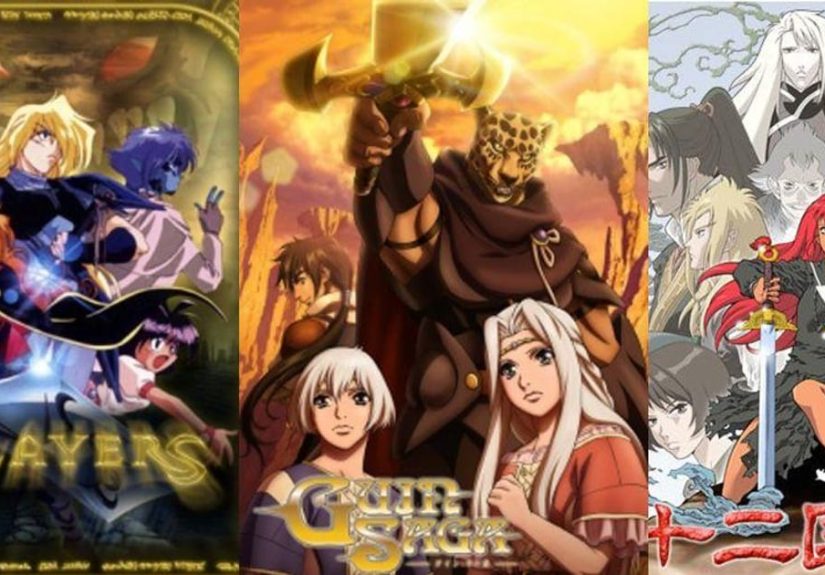
#15: Slayers
High fantasy doesn’t always have to be solemn and candlelit. Slayers is proof that a classic fantasy world can also be hilarious,
chaotic, and powered by a protagonist who treats danger like a minor inconvenience between snacks. Fans keep it in the conversation because it’s
genuinely funny while still delivering adventures that feel properly “quest-shaped.”
Why fans rank it: iconic comedy-adventure tone, classic fantasy aesthetics, and a timeless reminder that sometimes the best magic spell
is “confidence.”
How to Pick Your Next High Fantasy Anime (Based on Your Mood)
- Want soulful, reflective fantasy? Start with Frieren.
- Want airtight plotting and big emotion? Fullmetal Alchemist: Brotherhood.
- Want wonder + strategy? Hunter x Hunter (and settle in).
- Want dungeon adventuring with a fresh hook? Delicious in Dungeon.
- Want darker, heavier fantasy? Berserk (content warning: it’s intense).
- Want isekai with strong world structure? Re:Zero, Overlord, or Slime.
- Want a classic epic vibe? Lodoss War or Escaflowne.
of Fan Experiences: The High Fantasy Anime Life
There’s a specific kind of experience high fantasy anime fans share, even if they’ve never met. You can spot it in the wild: someone stares into the
middle distance and whispers, “I’d give anything to watch that again for the first time,” like they’re describing a mythical beast that only appears
during lunar eclipses and season finales.
The ritual usually starts innocently. You pick a show because a friend says it has “good worldbuilding.” Two episodes later, you’re pausing to admire
background architecture like you’re an interior designer for elves. By episode five, you’ve accepted that your brain now contains a second calendar system,
at least three fictional currencies, and a moral dilemma about whether dragons should be allowed to vote. (They’re wise, but also… they’re dragons.
They’d campaign entirely on “more treasure.” Hard to compete with that.)
Then comes the great “map moment.” High fantasy anime loves mapssometimes literal, sometimes implied. Either way, you feel the world expand.
When Frieren lingers on the quiet spaces between battles, you realize the journey is the point. When Delicious in Dungeon explains
dungeon ecology like a nature documentary hosted by a hungry wizard, you start thinking, “Honestly, this makes more sense than my grocery budget.”
And when The Twelve Kingdoms hits you with political consequences, you suddenly understand why fantasy fans can argue about fictional succession laws
for three straight hours and call it “a relaxing evening.”
High fantasy anime also changes how you watch things. You stop asking, “Is the hero strong?” and start asking, “What does this world value?”
In Fullmetal Alchemist: Brotherhood, power has a price and truth doesn’t care about your feelings. In Re:Zero, repeating a day
doesn’t make trauma disappearit stacks it like armor you can’t take off. In Overlord, the fantasy question becomes, “What happens when the
monster is organized?” and suddenly you’re watching kingdom diplomacy like it’s the playoffs.
And of course, there’s the fan-to-fan language: “Trust me, it gets incredible,” “The first arc is setup,” “Don’t google anything,” and the classic,
“I’m not emotionally prepared to talk about that scene.” High fantasy anime fandom runs on recommendations the way fantasy worlds run on prophecies:
someone is always destined to watch a certain show, and the rest of us are merely the messengers shouting, “PLEASE, JUST START EPISODE ONE.”
The best part? When you finally finish a top-tier high fantasy series, you don’t feel like you consumed contentyou feel like you returned from a long trip.
There’s that gentle, bittersweet quiet. You miss the characters like friends. You miss the world like a place. And then, inevitably, you start the next quest:
hunting for another series that makes you forget what day it isin the healthiest, most magical way possible.
Conclusion
The best high fantasy anime of all time aren’t just popularthey’re inhabitable. Fans rank them highly because they offer worlds with rules,
cultures, history, and heart. Whether you want gentle, reflective mythmaking (Frieren), classic party-based adventure (Lodoss War),
dungeon survival with comedy (Delicious in Dungeon), or a sprawling, strategic epic (Hunter x Hunter), the common thread is immersion:
that feeling you could step through the screen and immediately understand why everyone is panicking about the Demon King’s return.
Pick one. Pack snacks. And if someone offers you a mysterious glowing artifact… maybe ask one follow-up question first.