Table of Contents >> Show >> Hide
- Why the “Mac Finds His Pride” dance hit so hard
- Meet the choreographers: Alison Faulk and Leo Moctezuma
- Why a partner danceand why a woman?
- Why the rain matters: turning the set into a metaphor
- Rob McElhenney’s training: obsession, discipline, and a lot of stretching
- Making it perfect: choreography for the camera, not just the stage
- The moment that seals it: Frank says “I get it”
- What writers and creators can learn from this sequence
- Conclusion: a five-minute dance that changed how people talk about a sitcom
- 500 More Words of Real-World Experience: Trying to Nail a “Mac Finds His Pride” Moment
If you’ve watched It’s Always Sunny in Philadelphia long enough, you’re trainedlike a very specific kind of Pavlovian goblinto expect the emotional payoff of a season finale to be: someone getting duct-taped, someone getting sued, and someone (usually Frank) emerging from something they should not have been inside.
So when “Mac Finds His Pride” ends with a five-minute contemporary dance set to Sigur Rós, played with full sincerity, the whiplash is real. Not “I need an ice pack” real. More like “Did I sit on the remote and accidentally switch to an arthouse film festival?” real. And that’s the trick: the show doesn’t abandon its identityit weaponizes your expectations, then uses dance to make you feel something you didn’t consent to feeling.
The reason it works isn’t just the surprise. It’s craftsmanship: choreographers who treated the sequence like storytelling, a production team that filmed it like a short film, and a star (Rob McElhenney) who treated learning to dance like a personal missionnot a gag, not a stunt, not a “we’ll fix it in editing” situation. This is the behind-the-scenes anatomy of one of modern TV comedy’s most unexpectedly iconic moments.
Why the “Mac Finds His Pride” dance hit so hard
Sitcoms have rules. Sunny practically has them carved into a barstool: no hugging, no learning, no becoming better people. And yet this finale sneaks in a sincere emotional arc without turning the show into an after-school special. That’s partly because the story is still Sunny-shaped:
Mac is desperate to be understood, Frank is confused but trying, and the rest of the Gang is mostly thinking about how to monetize Pride like it’s a limited-time drink special.
The dance lands because it does what Mac cannot: it communicates inner conflict without the character having to deliver a clean, TED Talk-style monologue. Mac’s problem isn’t that he lacks wordsit’s that words have failed him in every room that matters (family, faith, identity, and the internal committee meeting in his brain that never adjourns).
The final number becomes an emotional translation device: struggle, resistance, collapse, support, release. The audience doesn’t need a glossary. You understand the grammar of falling and getting back up.
Meet the choreographers: Alison Faulk and Leo Moctezuma
The dance was choreographed by Alison Faulk and Leo Moctezuma, a duo with deep experience building movement that reads clearly on cameraespecially partner work, which is its own special flavor of “beautiful” and “terrifying” at the same time.
The non-negotiable: “This can’t be a joke”
From the start, the creative brief was unusually strict for a show famous for weaponizing bad ideas: McElhenney wanted the dance to be serious. He didn’t want the sequence to wink at the audience, undercut itself, or turn into an “LOL, Mac tried art” punchline. The comedy, paradoxically, would come from the fact that it wasn’t a bitbecause that sincerity is so uncharacteristic for Mac in the world of Paddy’s Pub.
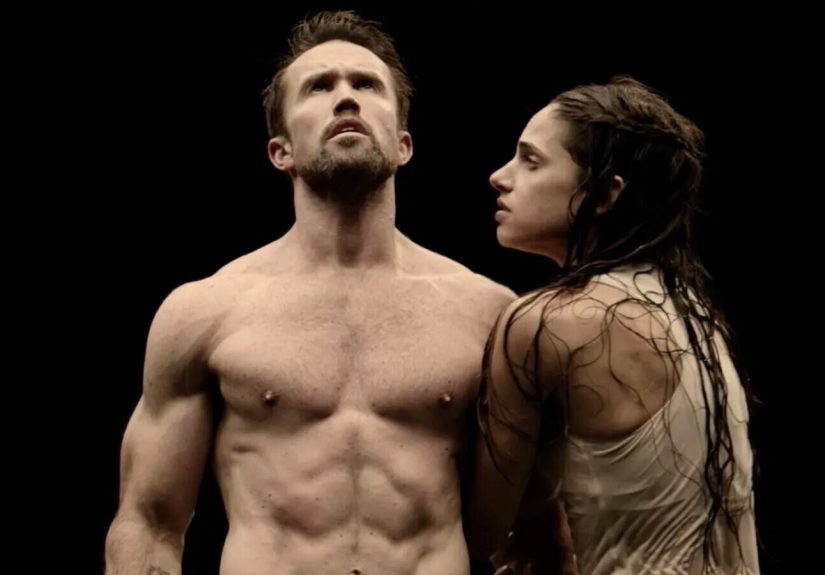
Faulk has described the piece as a visual “wrestling with yourself,” with the partner representing Mac’s internal dualitysupportive, angelic, and grounding, but also inseparable from him. In other words: not “a random dancer,” but the embodiment of the thing Mac can’t quite hold onto yetself-acceptance.
Why a partner danceand why a woman?
Here’s where the dance gets smarter than people expect: the partner choice isn’t about romance. It’s narrative engineering.
McElhenney wasn’t a trained dancer going into this, so building the choreography around a partner gave the piece liftliterally and emotionally. Partner work creates instant stakes: trust, tension, support, weight-sharing, and the sense that you can’t survive the storm alone.
As for why the partner is a woman (ballet dancer Kylie Shea), the logic is symbolic rather than literal. In the choreographers’ framing, she represents another side of Macan inner presence that pulls him up, steadies him, and keeps him moving forward when he collapses. It’s a way to show the push-and-pull of identity without turning it into a romance plot or an explanatory speech. She’s not “the object of desire.” She’s the light inside the fight.
Why the rain matters: turning the set into a metaphor
The water isn’t just a cool visual. It changes the physics of the dance. Every step becomes harder; every lift costs more; every fall looks more dangerous. That physical resistance makes the emotional idea unavoidable: acceptance is not a straight line, and it’s rarely dry, clean, or convenient.
Rain also lets the piece show contrastdarkness and struggle early, then brightness at the end. It’s a simple visual narrative: storm → endurance → clarity. In five minutes, the sequence does what a lot of TV tries (and fails) to do in five episodes: it externalizes internal conflict without spelling it out.
The signature symbolism: the “thrown down / get up again” moment
One of the most memorable beats is a moment where Mac swings Shea, she hits the water and crumples, and then rises into a clean, controlled extension. It’s not subtleand it shouldn’t be. It’s the image of “I want to quit” colliding with “I’m not quitting.” The choreography makes the case that resilience isn’t a motivational poster; it’s a repeated act, even when you’re exhausted.
Moctezuma has connected that struggle to a broader LGBTQ+ experience: self-doubt, trauma, the fight for acceptanceinternally and externally. In that reading, the dance isn’t just Mac’s story; it’s a compressed emotional map many viewers recognized immediately.
Rob McElhenney’s training: obsession, discipline, and a lot of stretching
To sell a serious dance sequence, you can’t fake commitment. You can fake a British accent for a superhero movie. You can’t fake partner work in pouring rain without someone getting launched into the craft services table.
McElhenney approached the job like he was training for a different kind of roleone where the camera can’t hide hesitation. Reports from behind the scenes describe an intense regimen: strength training, cardio conditioning, flexibility work, and repeated dance rehearsals lasting hours, multiple times a week.
From “I can’t dance” to rehearsing like it’s a sport
The choreographers’ approach treated dance as athletic skill, not vibes. They taught him vocabularyhow to hold weight, how to lift safely, how to move with intention instead of “acting like a guy who is dancing.” That difference matters. Acting can imitate motion; it can’t imitate balance, timing, and trust.
Faulk and Moctezuma have described sessions in a garage studio space, multiple times per week, with McElhenney showing up after shooting days to train. On top of learning choreography, he was also transforming his bodybecause the finale reveals that Mac’s “best shape ever” wasn’t vanity; it was preparation.
Partner work is basically trust with consequences
Solo dance is hard. Partner dance adds a second human being and subtracts your margin for error.
You’re not just remembering steps; you’re managing grip, timing, counterweight, and the tiny micro-decisions that prevent injury.
That’s why McElhenney’s dedication shows up onscreen: the lifts look grounded, not frantic; the transitions look earned; the emotional collapse looks like the end of something physically demanding, not a staged dramatic beat. The camera can feel when someone is truly tired.
Making it perfect: choreography for the camera, not just the stage
A big reason the number feels “iconic” is that it’s filmed like a piece of narrative cinemanot like a sitcom cutaway. The production gives the dance room to breathe, and the direction avoids turning it into a montage of cool moves. You’re allowed to read faces, pauses, effort, and failure.
Editing decisions that protect the emotion
Behind-the-scenes accounts describe the choreographers being included in editorial conversations so the dance wouldn’t be chopped into nonsense. That matters because movement has meaning across time:
if you cut too aggressively, you destroy cause-and-effectwhy the collapse happens, why the support matters, why the ending feels like release instead of just “final pose.”
Music choice: why Sigur Rós works here
The song “Varúð” gives the scene permission to be sincere without sounding manipulative. It’s expansive, mournful, and patientexactly what the show usually refuses to be. That sonic patience lets the choreography build from tension to tenderness without rushing to “the point.”
In a typical sitcom, a big emotional reveal might be underlined with dialogue. Here, the underline is rhythm and breath.
The moment that seals it: Frank says “I get it”
The emotional knockout isn’t Luther walking out (though that hurts). It’s Frankconfused, stubborn, and weirdly earnestfinally understanding something he couldn’t access through words. After watching Mac perform the dance, Frank’s reaction becomes the audience’s release valve: “Oh my God. I get it.”
It’s not a grand political statement. It’s not a perfect apology. It’s a small human breakthrough from a character who normally communicates through scams and yelling. And because it’s Frank, it feels honestlike understanding is sometimes messy, late, and still meaningful.
What writers and creators can learn from this sequence
1) Surprise works best when it’s earned
The dance isn’t random. It’s the culmination of seasons of Mac’s identity crisis, played for laughs until the show decidescarefullyto let the character have a real moment. The whiplash is the point, but the emotional logic is consistent.
2) Don’t explain what you can show
The number succeeds because it trusts visual storytelling. It doesn’t translate itself into dialogue. It lets the audience do the emotional math.
3) Sincerity needs protection
In a comedy, sincerity is fragile. One cheap joke can puncture it. The commitmentfrom McElhenney, the choreographers, the director, the editorscreates a safe container where the emotion can exist without being embarrassed.
4) “Perfect” is usually a schedule, not a mood
This is the unglamorous truth: iconic moments come from repetition. Training blocks. Notes. Refinement. The kind of dedication that looks boring on a calendar and electrifying on a screen.
Conclusion: a five-minute dance that changed how people talk about a sitcom
“Mac Finds His Pride” didn’t just deliver a memorable sceneit expanded what audiences believe Sunny can do. It proved that even a show built on moral bankruptcy can, once in a while, create something genuinely tender without losing its edge.
The choreography worked because it wasn’t decoration; it was narrative. The performance worked because it wasn’t half-committed; it was trained. And the scene became iconic because it respected the audience enough to be sincere, even when sincerity felt like the biggest risk of all.
500 More Words of Real-World Experience: Trying to Nail a “Mac Finds His Pride” Moment
You don’t have to be on a hit TV show to understand what made McElhenney’s dedication feel so real. Anyone who has tried to learn a demanding routine as an adultespecially if you’re starting from “zero dance ability” and a lifetime of stiff-shouldered confidenceknows the emotional rollercoaster is basically built into the process.
At first, it’s humbling in a way that only mirrors can accomplish. You think you’re doing a clean turn, and the mirror says, “Sweetie, you are rotating like a malfunctioning office chair.” Then your teacher gives you one tiny correctionwhere your weight sits in your feet, how you place your hands, when you breatheand suddenly the move doesn’t feel like chaos. It feels like language. That’s the moment people get addicted: not because they’re “good,” but because they can feel themselves learning.
Partner work adds a whole other layer of real-world experience: trust. Most beginners assume lifts are about strength, but they’re mostly about timing, alignment, and communication. If one person is early, the other person pays for itusually with a bruised ego and a new appreciation for the phrase “core engagement.” You start to understand why choreographers treat dancers like athletes. Your body isn’t just “moving.” It’s negotiating physics with another human.
Then comes the repetitionthe part audiences never see. You don’t just run the routine once. You run it again, and again, and again, until your brain stops panicking and your body starts recognizing patterns. Somewhere around run number 30, you hit the most irritating milestone in the world: you can do the whole thing, but only when you’re not thinking about it. The second you think “Nailed it,” you don’t. You trip over the same transition you’ve tripped over for a week. It’s not failure; it’s your nervous system learning under pressure.
And yes, there’s a “rain version” of this even if you’re not literally dancing in water. It’s the day you show up tired, stressed, or distractedyour personal stormand you have to perform anyway. That’s when the routine becomes more than steps. It becomes emotional management. You learn how to keep going while you’re uncomfortable. You learn how to breathe through mistakes instead of freezing. You learn how to recover without apologizing mid-move (a surprisingly hard habit to break).
The most powerful part is the transformation in confidence. Not the loud, performative kind. The quiet kind that comes from doing something hard repeatedly until it becomes possible. That’s why scenes like “Mac Finds His Pride” resonate: they remind people what it looks like when someone refuses to hide behind irony and does the workmessy, repetitive, unglamorous workuntil the emotion has a clean path to the surface. In real life, perfection is rare. But commitment is visible. And commitment, honestly, is what people remember.