Table of Contents >> Show >> Hide
- Step 1: Decide What’s Worth Saving
- Step 2: Clean It Like You Mean It
- Repurpose the Canopy: 12 Practical, Actually-Doable Ideas
- 1) A farmer’s market tote that doesn’t quit
- 2) Waterproof picnic blanket (with a “wipe-off” attitude)
- 3) Outdoor cushion covers or pillow shams
- 4) A DIY shade sail for a small patio or garden nook
- 5) Grill cover or firewood cover
- 6) Gardening kneel pad or tool roll
- 7) Reusable car sunshade or windshield cover
- 8) Pet bed cover that handles mud-paws
- 9) Beach bag “wet zone” pouch
- 10) Camping tarp patches and gear repairs
- 11) Patio table runner that laughs at spills
- 12) Party bunting and outdoor decor
- Repurpose the Frame & Pole: 10 Surprisingly Useful Builds
- 1) Garden trellis for climbing plants
- 2) Tomato support “umbrella cage”
- 3) String-light mast
- 4) Bird feeder or wind-chime stand
- 5) Laundry drying “tree” for small items
- 6) Portable backdrop stand for photos or crafts
- 7) Shade frame for seedlings
- 8) Hanging herb drying rack
- 9) DIY privacy screen skeleton
- 10) Garden hose guide or vertical tool station
- Tools, Materials, and “Avoid Regret” Tips
- When Recycling Is the Better Move
- Real-Life (and Totally Repeatable) Repurpose Experiences
- Experience #1: The “Windstorm Tote Bag” victory
- Experience #2: Turning the frame into a garden trellis (and accidentally overachieving)
- Experience #3: The “picnic blanket that laughs at spills” moment
- Experience #4: A string-light mast that made the patio feel “done”
- Experience #5: Learning the hard way that drying matters
- Conclusion
Your patio umbrella had one job: stand tall, look cute, and block the sun like a tiny personal cloud.
Then a surprise gust of wind showed up and chose violence. Now you’ve got a crooked pole, a torn canopy,
and the uneasy feeling you just lost the world’s most expensive circle of fabric.
Before you toss it to the curb (where it will absolutely get picked up by the neighborhood raccoon
as a new cape), consider this: a damaged patio umbrella is basically a DIY supply kit in disguise.
The canopy is tough outdoor fabric, the frame is usually sturdy metal, and the ribs and hardware
are ready to become something useful again. Repurposing it saves money, reduces waste, and gives
you a project with a high “I made that” satisfaction-to-effort ratio.
Step 1: Decide What’s Worth Saving
The fastest way to repurpose an umbrella is to figure out which parts are still “team player” material.
Most umbrellas fail in one of three places: the canopy fabric, the ribs/struts, or the lift system (crank, cord, pulley).
Quick triage checklist
- Canopy: Small tears, seam splits, or faded spots are totally usable. If it’s moldy beyond cleaning or shredding into confetti, it’s a no.
- Frame & pole: If it’s bent like a paperclip but not cracked, you can often still reuse it for garden projects. Cracks at joints usually mean “repurpose parts,” not “trust it overhead.”
- Crank/cord system: If the umbrella won’t open because the cord snapped, the frame may still be perfect for a second lifeeven if you never crank it again.
If the umbrella is only lightly damaged, you might even repair it first and repurpose later. But if the canopy is torn
or the mechanism is toast, don’t worryrepurposing is where the fun starts.
Step 2: Clean It Like You Mean It
Outdoor umbrellas collect the greatest hits of nature: pollen, bird “surprises,” tree sap, and mysterious grit
that appears overnight. Cleaning first makes everything safer (less mold), nicer (less “why is it crunchy?”),
and easier to cut/sew.
How to clean a removable canopy
- Shake or vacuum: Remove loose dirt and debris so you’re not washing a sandbox.
- Pretreat stains: Use liquid laundry soap or an enzyme-based stain remover on visible spots.
- Wash gently: If the fabric care tag allows, wash in cold water with a heavy-duty detergent.
- Air dry completely: Don’t close or fold anything until it’s fully drymoisture is mildew’s love language.
How to clean an attached canopy
- Move to shade: Cleaning solution shouldn’t bake on in direct sun.
- Scrub with mild soap: Use a soft brush or sponge and a bucket of warm soapy water.
- Rinse thoroughly: Hose it down until the runoff is clear.
- Dry fully before folding: This is the difference between “fresh” and “musty attic vibes.”
Mildew notes (aka: the “don’t make a science fair volcano” section)
Some outdoor fabrics (including many solution-dyed acrylics) can handle a diluted bleach-and-soap solution,
while others can fade or weaken. Always spot test first. If you use bleach, follow product guidance and use it
in a well-ventilated area. And never mix bleach with ammonia, vinegar, or other acidsthose combinations can
produce dangerous fumes.
Also: skip the pressure washer. It feels powerful, sure, but it can damage fibers and seams and turn “minor tear”
into “free fringe upgrade.”
Repurpose the Canopy: 12 Practical, Actually-Doable Ideas
Patio umbrella fabric is built for weather. That means it’s often UV-resistant, quick-drying, and tougher than
typical indoor textiles. Translation: it’s perfect for projects that get used hard.
1) A farmer’s market tote that doesn’t quit
Cut two large panels, add boxed corners, and sew on sturdy straps (webbing is ideal). Outdoor fabric makes a tote
that can handle produce, beach gear, or your emotional support water bottle collection.
2) Waterproof picnic blanket (with a “wipe-off” attitude)
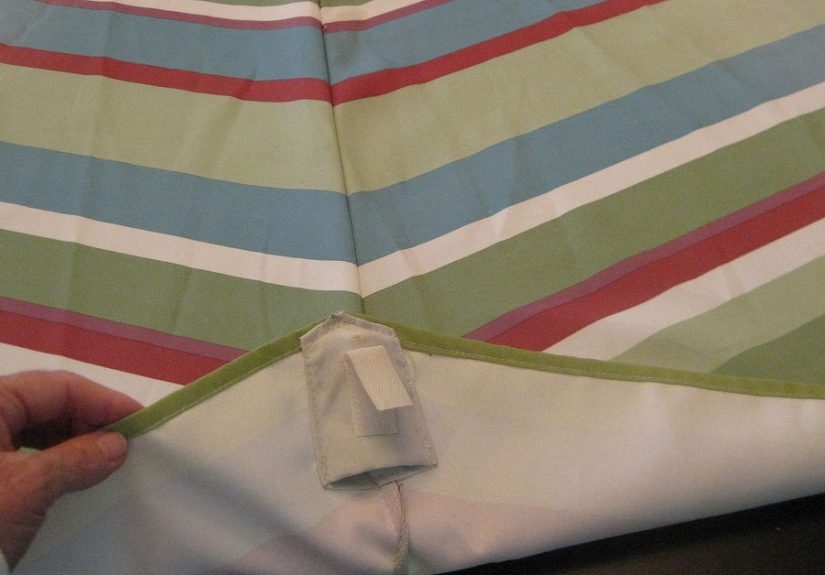
If your canopy has a coated side, use it as the bottom layer. Sew or tape a softer fabric to the top for comfort.
Add corner loops so you can stake it down when the breeze tries to steal your lunch.
3) Outdoor cushion covers or pillow shams
If you can sew a straight line, you can make envelope-style pillow covers. Use the existing umbrella hem as a finished edge
to reduce sewing and keep things tidy.
4) A DIY shade sail for a small patio or garden nook
Umbrella canopies can become a mini shade sail. Reinforce corners with extra fabric patches, add grommets, and tension it
between posts or a fence. It won’t replace a commercial sail for big spans, but for a compact sitting area or sandbox shade,
it’s a solid upgrade.
5) Grill cover or firewood cover
This is the “no one will judge you” project. Cut to size, hem the edges, and add ties. Keep it away from hot surfaces
and open flamesthis is a cover, not a superhero suit.
6) Gardening kneel pad or tool roll
Layer the canopy fabric with foam (old yoga mat, anyone?) for a wipe-clean kneel pad. Or make a tool roll with pockets
that keeps hand tools organized and easy to carry.
7) Reusable car sunshade or windshield cover
Cut a rectangle to fit your windshield, sew a simple edge binding, and add small tabs for suction cups or magnets
(only if they won’t scratch your vehicle). It’s not fancy, but it can reduce dashboard heat like a champ.
8) Pet bed cover that handles mud-paws
Outdoor fabric is perfect for a removable, washable pet bed cover. Add a zipper if you’re feeling ambitiousor go with
an envelope closure and call it “minimalist.”
9) Beach bag “wet zone” pouch
Use leftover canopy scraps to sew a zip pouch for swimsuits, sunscreen, or anything you don’t want leaking into your bag.
Consider lining it with a washable plastic tablecloth for extra spill insurance.
10) Camping tarp patches and gear repairs
Umbrella fabric can work as patch material for tarps, shade canopies, or tent vestibules (depending on fabric type).
Use outdoor thread and a zig-zag stitch, and seal seams if needed.
11) Patio table runner that laughs at spills
Cut a long strip, hem it, and you’ve got an outdoor runner that wipes clean. Add corner weights (washable bean bags work)
so it stays put when your outdoor fan turns into a mild hurricane.
12) Party bunting and outdoor decor
Triangle flags, table skirts, even a quick “privacy panel” for a railingcanopy fabric holds color well and doesn’t wilt
at the first hint of humidity.
Repurpose the Frame & Pole: 10 Surprisingly Useful Builds
The metal frame is the unsung hero: it’s lightweight, strong, and already designed to open into a radial structure.
That’s a fancy way of saying it’s great for garden supports and hanging things.
1) Garden trellis for climbing plants
Remove any sharp ends, then mount the pole securely in the ground or a large planter. Open the ribs partially and run
twine from rib to pole for peas, beans, or flowering vines. It’s basically a plant chandelier.
2) Tomato support “umbrella cage”
Flip the frame upside down over a large tomato plant. Use soft plant ties to guide stems upward. The ribs act like
built-in supports, and your tomato gets a personal trainer.
3) String-light mast
Keep the pole, ditch the canopy, and use the top hub as a point to anchor string lights. Set it in an umbrella stand,
a weighted planter, or a DIY base. Instant patio glow without drilling into your house.
4) Bird feeder or wind-chime stand
The hub and ribs make excellent hanging points. Just make sure the base is heavy and stable so the first enthusiastic
squirrel doesn’t turn it into a circus act.
5) Laundry drying “tree” for small items
Open the ribs, clip socks and lightweight items with clothespins, and let the breeze do its thing. This works especially
well for pool towels and swimsuits (the ones you always forget are still wet).
6) Portable backdrop stand for photos or crafts
Use the pole as a vertical support and mount a crossbar (a broom handle works) near the top. Hang a sheet, a roll of paper,
or a fabric backdrop. Perfect for product photos, kids’ art, or your “I’m selling stuff online” era.
7) Shade frame for seedlings
Attach shade cloth to the ribs to create a gentle sun filter for tender plants. This is especially helpful during heat waves
when seedlings are basically screaming, “Too bright!”
8) Hanging herb drying rack
Add hooks to the ribs and hang bundles of herbs upside down in a breezy covered area. Bonus: your patio will smell like you
have your life together.
9) DIY privacy screen skeleton
Use the pole and a few ribs as structure for outdoor curtains or a fabric panel. You can zip-tie curtain rings to ribs
and slide fabric on/off as needed.
10) Garden hose guide or vertical tool station
Mount the pole near a shed or fence. Add hooks and hang lightweight tools, gloves, and a hose loop. It’s not glamorous, but
it’s the kind of organized that feels like a small vacation.
Tools, Materials, and “Avoid Regret” Tips
What you’ll want on hand
- Work gloves and safety glasses (because metal edges don’t care about your plans)
- Wire cutters or a small hacksaw
- Sandpaper or a metal file for smoothing sharp ends
- Zip ties, outdoor-rated cord, and stainless or coated screws
- Outdoor thread (polyester) and a sturdy needle (or a heavy-duty hand needle)
- Grommet kit (optional but very helpful for shade-sail style projects)
Keep it safe and stable
- Stability first: If you’re using the pole upright, give it a heavy base (umbrella stand, weighted planter, or anchored sleeve).
- Cap sharp ends: Rubber chair-leg caps or heat-shrink tubing can tame cut metal ends.
- Watch wind load: Fabric panels catch wind. If it’s acting like a sail, it needs stronger anchoringor it needs to be smaller.
- Don’t rely on damaged joints overhead: If a rib is cracked, avoid using it to hang heavy items above seating areas.
When Recycling Is the Better Move
If the fabric is too far gone (crumbly, heavily mildewed, or ripping at every seam), repurpose the usable parts and recycle
what you can. As a general environmental rule, reduce and reuse come before recyclingbut recycling is still
a win compared with sending everything to the landfill.
Disassemble for better recycling odds
- Metal pole and ribs: Often accepted as scrap metal once separated from fabric and plastic bits.
- Plastic parts: Small mixed plastics can be tricky; check local rules.
- Fabric canopy: Some areas treat it as trash; others may accept it through textile programs depending on material and condition.
If you’re not sure what your local system accepts, your best bet is to separate materials as much as possible. Mixed-material items
are the hardest to recycle, but individual components have a much better chance.
Real-Life (and Totally Repeatable) Repurpose Experiences
You don’t need a workshop or a woodworking degree to make this stuff work. Here are a few “this is what usually happens”
scenarios that show how repurposing a damaged patio umbrella plays out in real homesmessy, practical, and surprisingly satisfying.
Experience #1: The “Windstorm Tote Bag” victory
The canopy tears near the seam, and the first instinct is to declare it “ruined.” But a tear near the edge is actually the easiest
kind to work around because the rest of the panel is still strong. The move: cut two large sections from the undamaged areas, keep
the existing hem as your top edge, and sew sides and a boxed bottom. The first version usually comes out a little lopsidedlike a tote
bag that had one too many iced coffeesbut it holds everything. The best part is realizing outdoor fabric doesn’t sag the way thin cotton
does, so the bag feels sturdy even when you’re hauling groceries. Suddenly, the broken umbrella isn’t trash; it’s your new “I refuse to pay
for a fancy tote” tote.
Experience #2: Turning the frame into a garden trellis (and accidentally overachieving)
The frame looks intimidating until you notice it’s already a radial structureperfect for vines. Once the canopy is removed, you open the ribs
partway, smooth any sharp spots, and anchor the pole in a large planter. Then you run twine from rib to rib like spokes. The surprise is how fast
plants take to it. Beans and morning glories don’t need a Pinterest-perfect trellis; they just need something to grab. A month later, the whole thing
is covered, and you’ve created a shaded green dome that makes your yard look like it belongs in a gardening magazineexcept you built it out of something
that used to flop dramatically in the wind. The lesson: simple structures + climbing plants = instant garden glow-up.
Experience #3: The “picnic blanket that laughs at spills” moment
Umbrella fabric is a hero for outdoor messes. After cleaning the canopy thoroughly, you cut a large circle or rectangle and pair it with a softer top layer
(an old sheet works). Sew around the edges, leave a small gap, flip it right-side out, and topstitch. The first time you use it, someone drops a drink.
Instead of panic, you wipe it off like it’s no big deal. That’s the moment it clicks: repurposing isn’t just eco-friendlyit’s practical. A store-bought
waterproof blanket can be pricey, but a DIY version from an old canopy gives you the same “bring it anywhere” confidence. Bonus: if it gets dirty, you’re
not emotionally attached in a stressful way. You’re attached in a smug way.
Experience #4: A string-light mast that made the patio feel “done”
A lot of outdoor spaces don’t need more furniturethey need better lighting. When the umbrella’s crank mechanism fails, the pole still has plenty of life.
Set it in a heavy base, wrap the pole with outdoor-rated zip ties holding a string-light cord, and use the top hub to fan lights outward. The result feels
like you upgraded your patio without spending much at all. The only “oops” that tends to happen is underestimating wind: if lights are stretched too tight,
gusts will tug at the cord. The fix is easyleave a little slack and use more attachment points. After sunset, the patio looks cozy, and no one is thinking,
“Is that… an umbrella pole?” They’re thinking, “Why does this feel like a restaurant patio and not my backyard?”
Experience #5: Learning the hard way that drying matters
The most common repurposing mistake is washing the canopy and then folding it “just for a minute” while you gather supplies. That minute turns into overnight,
overnight turns into “What is that smell?”, and suddenly you’re in a battle with mildew. The fix is prevention: let the fabric dry completelyreally completely
before cutting or storing. If you’re in a humid area, hang it with airflow on both sides. Once people get this right, the projects get easier because the fabric
behaves better: it cuts cleaner, sews smoother, and doesn’t leave you second-guessing if you’re turning your tote bag into a science experiment. It’s not the
most exciting tip, but it’s the one that saves the whole project.
Conclusion
A damaged patio umbrella isn’t a failureit’s a material upgrade waiting to happen. Clean what you can, salvage what’s strong, and turn the canopy into gear
you’ll actually use: totes, covers, picnic blankets, shade panels. Turn the frame into garden support, lighting, storage, or a backyard helper that keeps working
long after its “umbrella days” are over. And if some parts truly can’t be saved, disassemble and recycle responsibly. Your patio (and your wallet) will thank you.