Table of Contents >> Show >> Hide
By the end of 2025, the internet had done what it does best: built a giant, messy, loud, extremely online opinion board and started throwing tomatoes at famous people. Some of those tomatoes were earned by very serious scandals. Some were tossed because a celebrity seemed overexposed, out of touch, or trapped in the world’s longest public relations pratfall. And some, frankly, were launched with the emotional maturity of a comment section running on three hours of sleep and two iced coffees.
If you were searching for the most disliked celebrities of 2025, you probably noticed something weird right away: there was no official government-issued “national celebrity annoyance spreadsheet.” What existed instead was a mash-up of crowd-voted rankings, legal headlines, ugly controversies, social media backlash, bad reviews, and that increasingly common modern condition known as fame fatigue. In other words, this wasn’t one clean list. It was a cultural weather report, and the forecast was spicy.
Note: This article reflects a snapshot of public backlash in 2025 based on crowd-voted rankings and major entertainment/news coverage. A disliked celebrity is not always disliked for the same reason, and public opinion is rarely neat, fair, or consistent.
First, a giant flashing disclaimer with confetti
Not all celebrity backlash belongs in the same bucket. That matters here. In 2025, some public figures faced criminal proceedings or the fallout from longstanding allegations. Others got clobbered by criticism because of tone-deaf branding, ugly lawsuits, weird interviews, social media history, or sheer overexposure. Putting every famous person into one giant “people are mad online” blender can flatten serious differences.
So instead of pretending this was a perfectly objective morality scoreboard, it makes more sense to say this: in 2025, a handful of names kept coming up again and again whenever people talked about the least popular, most controversial, or most publicly dunked-on celebrities of the year.
The celebrities who kept landing in the 2025 backlash zone
Sean “Diddy” Combs
If one name hovered over celebrity backlash in 2025 like a very dark storm cloud, it was Sean “Diddy” Combs. His legal troubles dominated entertainment coverage and public conversation for much of the year, and they fundamentally changed how many people talked about his legacy. Once known as a mogul, hitmaker, and party-throwing symbol of luxury, he became, for many observers, the clearest example of how fast fame can collapse when courtroom reality enters the chat.
That is why Combs became a recurring answer in conversations about the most hated celebrities of 2025. It was not about meme-level irritation. It was about the way legal scrutiny, testimony, and headline after headline turned him from a legacy figure into one of the most publicly condemned names in entertainment. In a year full of celebrity mess, this was the kind of story that swallowed the room.
Ye
Ye remained one of the most polarizing celebrities on Earth in 2025, which is a polite way of saying he kept finding new ways to make people ask, “Sir, what now?” His public image was already badly damaged before 2025, but the backlash persisted because the controversies never fully moved into the rearview mirror. When a celebrity becomes less known for the work and more known for the fallout radius around the work, the reputation problem stops being temporary and starts becoming the main brand.
That is what happened with Ye. Even when music and performances re-entered the conversation, they were shadowed by criticism over extremist rhetoric and inflammatory behavior. Some fans still defended him through the classic “separate the art from the artist” routine, but plenty of the public had clearly run out of patience. In the most disliked celebrities of 2025 conversation, Ye was less a surprise entry and more a permanent resident with an aggressively renewed lease.
Meghan Markle
Then there was Meghan Markle, who demonstrates a very different kind of backlash. She was not in the same category as celebrities facing criminal proceedings, and pretending otherwise would be absurd. But in terms of public irritation, criticism, and internet eye-rolling, she absolutely remained one of the most discussed names of 2025.
Her Netflix lifestyle series With Love, Meghan became one of those projects that split audiences before half the people criticizing it had even found the remote. Some viewers saw a harmlessly glossy lifestyle show. Others saw something polished to the point of unreality: beautiful cookware, curated domesticity, expensive aesthetics, and a tone that critics considered detached from normal life. The result was a familiar Meghan cycle: some people defended her, some people were tired of the pile-on, and some people seemed delighted to treat every whisk, pan, and floral garnish as evidence in a cultural trial.
That made Markle one of the year’s most publicly debated celebrities. Not because she committed the worst acts in celebrity culture, but because she remained one of its most efficient lightning rods. In 2025, even a cooking-adjacent lifestyle show could turn into a referendum on class, image, branding, and whether the internet has ever met a duchess it didn’t want to overanalyze.
Elon Musk
Yes, Elon Musk is not a traditional Hollywood celebrity. But in the modern fame economy, he is absolutely a celebrity-level public figure, and in 2025 he attracted the kind of backlash many entertainers would recognize immediately. The difference is that his controversies were tied not to a movie or music cycle, but to politics, corporate identity, public protest, and brand damage.
Musk’s role in public life became so central to the conversation around Tesla that the company’s cars sometimes looked less like vehicles and more like rolling opinion polls. Protest activity, trade-ins, and coverage about damage to brand loyalty helped solidify the sense that Musk himself had become a liability in the eyes of many consumers. That is a brutal place for any public figure to be. Once people stop reacting only to your statements and start reacting to your name as a symbol, your fame enters the backlash major leagues.
So while Musk may sit outside a traditional celebrity list in some people’s minds, his 2025 public image was absolutely part of the most disliked public-figure conversation. Fame, after all, no longer requires a red carpet. Sometimes it just needs a social platform, a giant company, and enough controversy to power a medium-sized country.
Karla Sofía Gascón
Karla Sofía Gascón had one of the most dramatic image reversals of the year. Awards attention should have made 2025 a victory lap. Instead, resurfaced social media posts and the backlash that followed derailed a huge moment. And when controversy hits in the middle of an awards campaign, it does not just create criticism. It creates spectacle.
That spectacle mattered. Gascón’s name entered mainstream backlash coverage fast, and the tone around her shifted from celebration to damage control almost overnight. Public attention in cases like this tends to move at warp speed: one minute people are discussing the work, and the next they are discussing apologies, reactions, distancing, and whether the entire campaign has been set on fire with a very expensive lighter.
She became one of 2025’s clearest examples of how quickly reputation can collapse when old posts collide with a new spotlight. The internet has many hobbies, but excavating old receipts remains one of its favorite cardio exercises.
Blake Lively and Justin Baldoni
The Blake Lively and Justin Baldoni saga turned into one of those celebrity disputes that consumed oxygen far beyond the original project. What should have been remembered as a movie release became instead a sprawling mess of claims, countersuits, public statements, legal arguments, online tribalism, and enough discourse to keep podcast microphones warm for months.
The unusual part of this story was that both sides took reputational hits in different corners of the internet. Depending on who you asked, one person was the victim, the other was the villain, and the third group believed the only true loser was everyone forced to read ten thousand social posts about it before breakfast. By the time the dispute kept evolving through the courts and media coverage, it had become less about a film and more about digital warfare by celebrity proxy.
That kind of relentless public conflict tends to create fatigue, and fatigue is a major ingredient in modern celebrity dislike. Sometimes people are not just mad. Sometimes they are simply exhausted.
The repeat names: Jake Paul, Logan Paul, Ellen DeGeneres, Chris Brown, Woody Allen, and other familiar fixtures
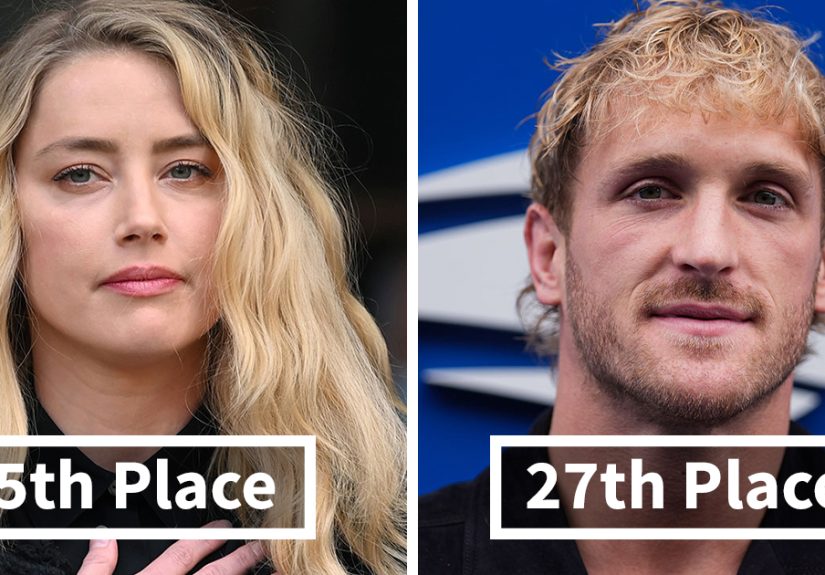
One of the more telling parts of the 2025 most disliked celebrities discussion was how many names felt weirdly familiar. Jake Paul and Logan Paul remained easy entries because internet notoriety ages like glitter: it gets everywhere and refuses to leave. Ellen DeGeneres continued to carry the aftermath of a public image crash that reshaped how people viewed her long-running “nice” persona. Chris Brown and Woody Allen remained tied to long-running controversy, proving that public memory can be selective in some cases but very sticky in others.
This is what makes celebrity backlash so fascinating and so uneven. Some stars get dragged for a bad year. Others become permanent shorthand for public mistrust. Once your name becomes a cultural reflex, escaping the list gets a lot harder.
Why these names rose to the top in 2025
1. Scandal still beats talent
One thing 2025 made painfully clear is that talent does not erase controversy. A hit catalog, a respected résumé, a loyal fandom, or a carefully managed image can buy time, but not always forgiveness. Public trust is weirdly durable until it suddenly is not, and then the floor drops out all at once.
2. Overexposure is now its own offense
You do not need a criminal scandal to become one of the least popular celebrities of the year. Sometimes it is enough to feel unavoidable. If audiences see too much of the same personal brand, the same self-mythology, the same curated authenticity, backlash starts brewing. Celebrity culture in 2025 did not just punish wrongdoing. It also punished repetition, smugness, and “please stop making me look at this” energy.
3. The internet merges serious misconduct with petty annoyance
This may be the strangest part of all. Crowd-voted rankings often mix genuinely disturbing allegations or convictions with celebrities people mostly find annoying, fake, or exhausting. That tells us less about moral clarity and more about internet behavior. Online culture does not sort feelings neatly. It stacks them in one chaotic drawer and slams it shut.
4. Women and men are still judged differently
Another uncomfortable truth: female celebrities often attract massive dislike for reasons that sound dramatically smaller than the reasons male celebrities do. In 2025, that pattern still showed up. Men often drew condemnation for violence, legal trouble, or explicit controversy. Women often drew disproportionate backlash for tone, branding, ambition, or seeming “inauthentic.” That does not mean criticism of female celebrities is never fair. It means the scale and texture of the criticism can be wildly uneven.
So who were the most disliked celebrities of 2025?
If you combine crowd-voted lists with the major stories that dominated public conversation, the recurring names were some version of Sean “Diddy” Combs, Ye, Meghan Markle, Elon Musk, Karla Sofía Gascón, Blake Lively, Justin Baldoni, Jake Paul, Logan Paul, Ellen DeGeneres, and a few other permanently polarizing figures. The exact order changed depending on the source and the timing. The pattern did not. The same names kept surfacing, and that repetition is the real story.
In plain English: the most disliked celebrities of 2025 were the ones who became symbols. Symbols of scandal. Symbols of overexposure. Symbols of hypocrisy. Symbols of internet fatigue. And once the public turns a celebrity into a symbol, the backlash stops being about one bad headline and starts becoming the whole vibe.
What following this backlash actually felt like in 2025
Watching celebrity backlash unfold in 2025 felt a little like living inside a giant airport terminal where every television was tuned to a different scandal, every phone was buzzing with outrage, and somehow the snacks were still overpriced. There was always another clip, another statement, another leaked filing, another apology, another “this is being taken out of context,” and another wave of people insisting they were done talking about it while somehow continuing to talk about it for six straight weeks.
For regular audiences, the experience was not just anger. It was whiplash. One minute you were reading about a truly serious case that made the entire idea of celebrity protection feel rotten. The next minute the internet was melting down over cookware, branding language, or an interview that sounded like it had been focus-grouped by a scented candle. The result was a strange emotional pileup. Real disgust, cheap mockery, valid criticism, old grudges, fandom loyalty, and boredom all got mixed together until nobody could remember where one feeling ended and the next began.
There was also a weird kind of exhaustion to it. Many people were not passionately invested in every celebrity story, but they were constantly surrounded by them. Celebrity culture in 2025 did not politely knock on the front door. It climbed through the algorithm and sat on the couch. Even if you did not care, the discourse cared enough for both of you. By the third or fourth scandal cycle, a lot of people stopped reacting with surprise and started reacting with a sigh that basically translated to, “Of course. Naturally. Why would this year choose peace?”
And yet people kept watching. That is the uncomfortable magic trick of celebrity backlash. The public often claims it hates celebrity culture, but it is also endlessly fascinated by the collapse of celebrity image. We love the rise, sure, but we are practically seated in premium lounge chairs for the fall. There is something irresistible about watching a polished public persona spring a leak. Maybe it feels like justice. Maybe it feels like gossip with better lighting. Maybe it just feels like one of the few places where rich and famous people look as messy as the rest of us.
Another major part of the 2025 experience was confusion over scale. Some backlash felt absolutely deserved and tied to serious conduct. Other backlash felt like internet punishment for being cringe in high definition. That difference mattered, but online conversation did not always treat it carefully. Instead, everything got stacked together under one broad category of “people are mad,” which made the public mood feel both more intense and less precise. It was outrage by collage.
There was also the parasocial angle. Fans did not just defend celebrities; they often defended the version of themselves attached to those celebrities. Criticizing a public figure could instantly become a fight about politics, gender, race, class, media bias, internet misogyny, or whether everyone else had lost the plot. In that sense, the most disliked celebrities of 2025 were not just famous people. They were cultural arguments wearing expensive jackets.
And maybe that is the most honest way to describe the year. Following celebrity backlash in 2025 felt like trying to sort a junk drawer during an earthquake. Every time you thought you understood what people were mad about, another piece rattled loose. But through all the noise, one truth stayed constant: public opinion is messy, emotional, wildly inconsistent, and very, very online. Which, come to think of it, might be the most 2025 sentence ever written.
Conclusion
The people may have spoken, but they definitely did not use indoor voices. The most disliked celebrities of 2025 were not simply the least talented or the least famous. They were the people who triggered the strongest public reactions, whether through serious legal trouble, public controversy, relentless overexposure, or branding so polished it made audiences reach for the sarcasm button.
If 2025 proved anything, it is that celebrity dislike is no longer just about bad behavior or bad press. It is about symbolism. The public now reacts not only to what celebrities do, but to what they seem to represent: privilege, hypocrisy, chaos, narcissism, cultural exhaustion, or the unsettling feeling that fame has become one giant performance nobody remembers buying tickets for. That is why the year’s most disliked celebrities were so different on paper, yet somehow felt like part of the same story.
And that story was simple: in 2025, public affection became harder to keep, public patience became shorter than ever, and the internet remained the only place where a courtroom update, a lifestyle show, a brand protest, and a three-year-old tweet could all end up in the same giant blender of celebrity judgment. Delicious? No. Fascinating? Absolutely.