Table of Contents >> Show >> Hide
- The Headline, Decoded
- Meet QSO1, the Black Hole With the Vanishing Hometown
- Why a Galaxy-Light Black Hole Is Such a Big Deal
- So Where Did the Galaxy Go?
- What Little Red Dots Are Teaching Astronomers
- What This Means for the Story of the Early Universe
- The Human Experience of a “Galaxy-Missing” Black Hole
- Conclusion
- SEO Tags
Note: The phrase “missing its galaxy” is headline shorthand. Based on the best available evidence, this object does not appear to be a supermassive black hole floating in total isolation. Instead, it seems to live in an extraordinarily tiny, chemically primitive host galaxy that is so underdeveloped it almost looks like the black hole showed up before the neighborhood did.
Space is usually pretty committed to tradition. Stars gather into galaxies, galaxies grow central black holes, and those black holes sit in the middle like moody landlords collecting cosmic rent. So when astronomers spotted an object that seemed to be all black hole and barely any galaxy, the reaction was not exactly, “Ah yes, totally normal Tuesday.”
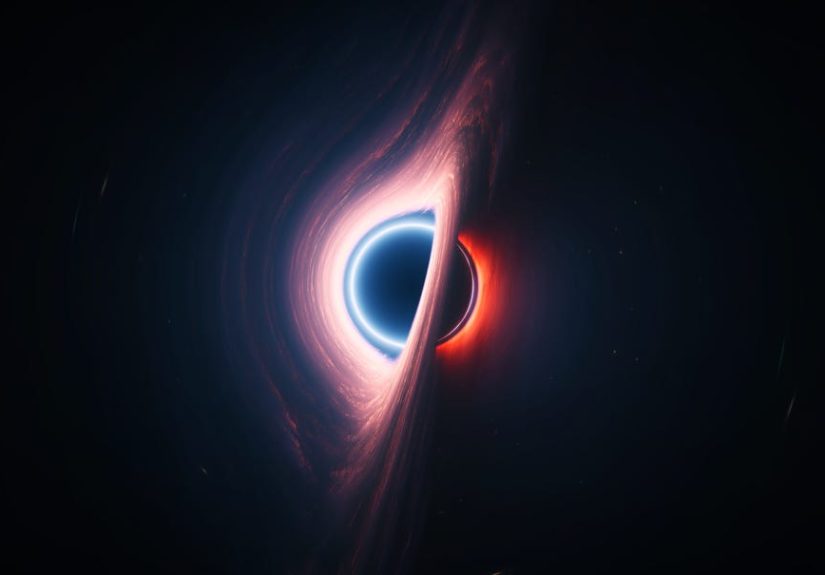
The object at the center of this mystery is known as A2744-QSO1, often shortened to QSO1. It belongs to the now-famous class of early-universe oddballs nicknamed little red dots, compact and brilliant objects revealed by the James Webb Space Telescope. QSO1 appears to host a ravenous black hole that is already enormous by early-universe standards, while the galaxy around it looks tiny, chemically young, and almost suspiciously unfinished. If most supermassive black holes grow up in well-furnished galactic mansions, this one looks like it moved into a studio apartment before the drywall was even installed.
The Headline, Decoded
When people say this black hole is “missing its galaxy,” they do not mean astronomers found a cartoonish black hole drifting through the void with a tiny bindle over its shoulder. What they mean is more subtle and, honestly, more interesting. QSO1 seems to contain a black hole with a mass in the tens of millions of suns, while the visible stellar population around it appears remarkably small. In some analyses, the black hole may outweigh the stars of its host system by more than a factor of two.
That ratio is the cosmic equivalent of finding a city hall that is bigger than the city. In the nearby universe, supermassive black holes usually make up only a tiny fraction of their galaxy’s mass. But QSO1 looks wildly lopsided. It hints that, at least in some corners of the early cosmos, black holes may have bulked up before galaxies had time to catch up.
And that is what makes the object such a headline magnet. It is not just a weird black hole. It is a direct challenge to the usual storyline of galaxy evolution.
Meet QSO1, the Black Hole With the Vanishing Hometown
QSO1 is seen at a time when the universe was only about 700 million years old, which is basically cosmic infancy. The James Webb Space Telescope can study such distant objects because their light has been stretched into infrared wavelengths by the expansion of the universe. In QSO1’s case, astronomers also got a lucky assist from gravitational lensing, where a massive foreground cluster bends and magnifies the background light. Without that extra magnifying glass, this object would have been even harder to study.
What astronomers saw was not a large, mature galaxy packed with stars. Instead, they found an extremely compact source with signatures of active black hole feeding. Its light shows broad hydrogen emission lines, a telltale sign that gas is whipping around at high speed close to a black hole. Follow-up studies also found that the system is incredibly low in heavy elements, meaning it has not been enriched much by generations of stars living, dying, and exploding. In plain English: this place looks chemically young, almost pristine, and not at all like a galaxy that has been building itself for ages.
That combination is what turned heads. A massive black hole is one surprise. A massive black hole inside a host that seems tiny and primitive is a bigger surprise. A massive black hole inside a host that tiny and primitive only 700 million years after the Big Bang? That is when theorists start reaching for coffee, whiteboards, and possibly emotional support markers.
Why Astronomers Took It Seriously
This was not a one-image wonder or a blurry smudge that happened to resemble a black hole if you squinted with enough optimism. QSO1 has been studied through spectroscopy, variability, and higher-resolution follow-up work. Researchers have identified strong evidence that the source is powered by accretion, meaning matter is actively falling toward a black hole and heating up enough to blaze across cosmic distances.
Even more striking, later work argued that the black hole’s mass is not just a rough guess based on a noisy spectrum. By using lensing and detailed kinematic modeling, astronomers found evidence consistent with a central point mass of about fifty million solar masses. Meanwhile, the stellar contribution appears so limited that the black hole may dominate the system in a way almost unheard of.
Why a Galaxy-Light Black Hole Is Such a Big Deal
Supermassive black holes are supposed to be deeply entangled with their host galaxies. Over the last few decades, astronomers have found relationships between black hole mass and the properties of galactic bulges, suggesting the two grow together over time. The galaxy feeds the black hole, the black hole affects the galaxy, and both evolve in a long gravitational tango.
QSO1 looks like a couple that skipped straight to the dramatic middle act without rehearsing the beginning.
If the black hole is already enormous while the galaxy is still puny, then one of two things must be true. Either the black hole formed from an unusually large seed and got a major head start, or black holes in the early universe could grow much faster than many standard models allow. Neither answer is boring. Both would reshape how astronomers think about the first billion years of cosmic history.
There is also a bigger implication. Since Webb started returning deep-field data, astronomers have found many little red dots that are brighter, denser, and stranger than expected. Some early headlines suggested these objects might “break cosmology,” because if all that light came from stars, some galaxies would have become implausibly massive far too soon. But if a large share of the light instead comes from feeding black holes hidden inside compact systems, the situation changes dramatically. The universe does not need rewriting quite so aggressively. It just turns out early black holes may have been spectacular scene-stealers.
So Where Did the Galaxy Go?
This is the wrong question in one sense and the perfect question in another. The wrong part is assuming there must have been a normal galaxy there first and that it somehow vanished. The more useful question is: why does the host look so small and chemically unevolved compared with the black hole inside it?
Several ideas are competing for the job.
1. The Black Hole Was Born Big
One leading explanation is the direct-collapse black hole scenario. In this picture, an enormous cloud of primordial gas collapses more or less directly into a massive black hole seed, bypassing the slower route where ordinary stars form first, die, and leave behind smaller black holes that later merge and grow. This “heavy seed” model is appealing because QSO1 seems too massive, too early, and too metal-poor for the more gradual, star-first route to feel comfortable.
Think of it as the difference between building a skyscraper floor by floor and discovering someone airdropped the penthouse in first.
2. The Seed Might Be Even More Exotic
Another possibility is that QSO1 descends from a primordial black hole, a hypothetical object that formed extremely early from density fluctuations in the young universe rather than from stars. This is a more radical idea, but it has gained attention because QSO1’s chemically primitive environment makes it look like the black hole may have started growing before much star formation got underway nearby.
To be clear, this is not a settled answer. It is a scientific maybe, not a triumphant definitely. But the fact that serious researchers are discussing it tells you how peculiar the object is.
3. The Black Hole May Be Wrapped in a Dense Cocoon
A broader breakthrough in 2026 added another important piece of context. A major study of little red dots argued that many of them are actually young supermassive black holes shrouded in dense ionized cocoons. In that model, the strange broad lines and weak X-ray or radio signatures do not mean “not a black hole.” They mean the black hole is buried inside thick gas that reshapes the light we receive.
That idea helps explain why little red dots look so odd and why they seem to disappear later in cosmic history. They may represent a short-lived phase in black hole growth, the astrophysical version of an awkward but important adolescence. For QSO1, this does not erase the mystery of the tiny host, but it does reinforce the idea that we may be watching an early black hole growth phase that had been invisible to previous telescopes.
4. Maybe It Was Kicked Out? Probably Not the Best Fit Here
A different kind of “missing galaxy” story has also made headlines recently: runaway supermassive black holes that may have been flung from galactic centers after violent gravitational interactions. That is a real and fascinating possibility in other systems. But for QSO1, the current discussion leans more toward unusual birth and growth scenarios than toward an ejection story. In other words, this does not look like a black hole that packed its bags after a family argument. It looks more like one that started growing before the house was finished.
What Little Red Dots Are Teaching Astronomers
QSO1 would already be exciting if it were the only one of its kind. But the larger little-red-dot population is what turns one strange object into a genuine scientific movement. Webb surveys have shown that these compact red sources were especially common during the universe’s first 1.5 billion years. Many of them show spectral evidence consistent with accreting black holes, and many of them do not have obvious counterparts in the nearby universe.
That pattern matters. It suggests that little red dots may mark a phase of early black hole growth that becomes rarer as galaxies evolve, enrich themselves with heavier elements, and reorganize their gas and dust. In other words, Webb may not just be showing astronomers rare curiosities. It may be revealing a normal stage of youth for some of the universe’s first giant black holes.
That would be huge. For years, one of the great astrophysical headaches has been explaining how supermassive black holes appeared so quickly after the Big Bang. There simply did not seem to be enough time for tiny stellar-mass black holes to grow into monsters under conservative assumptions. QSO1 and its cousins do not solve that puzzle outright, but they are finally giving astronomers something better than hand-waving and caffeine: actual evidence.
What This Means for the Story of the Early Universe
The deeper lesson here is not just that one black hole is weird. It is that the early universe may have been much messier, faster, and more creative than astronomers once assumed. Maybe some black holes formed from very massive seeds. Maybe some fed at breakneck speeds. Maybe dense gas cocoons changed how they looked and fooled earlier estimates. Maybe more than one pathway was operating at once.
Science tends to improve not when the universe behaves, but when it refuses to. QSO1 is valuable precisely because it does not fit neatly inside the old boxes. It forces astronomers to test ideas about heavy seeds, pristine gas, accretion physics, and galaxy assembly all at once. It also reminds us that telescopes like Webb are not simply confirming what scientists already believed. They are finding things that make researchers say, in highly professional language, “Well, that is odd.”
And sometimes that oddness is where the next chapter begins.
The Human Experience of a “Galaxy-Missing” Black Hole
There is also something wonderfully human about this story. From the outside, black hole research can sound like a parade of equations, acronyms, and objects with names that seem generated by a very sleepy barcode scanner. But discoveries like QSO1 are really experiences before they become explanations.
First comes the visual shock. Astronomers spend years learning what galaxies are supposed to look like, what spectra are supposed to suggest, what balances are supposed to hold. Then Webb delivers a small red dot that seems too bright, too compact, too early, and too black-hole-heavy to behave itself. The experience is not instant certainty. It is cognitive whiplash. You do not immediately think, “Eureka.” You think, “That cannot be right. Please tell me the telescope sneezed.”
Then comes the slower experience of checking everything. Researchers compare images from different instruments, examine the line profiles, test whether the source varies over time, model the lensing, and argue about whether the red color comes from stars, dust, gas, or some combination that makes everyone need a fresh notebook. The glamorous version of science is the press release. The real experience is a long marathon of skepticism, recalculation, and repeated attempts to prove yourself wrong before the universe gets to do it for you.
There is also the emotional experience of scale. QSO1 is not just far away in distance. It is far away in time. The light reaching Webb began its journey more than 13 billion years ago, back when the universe was barely out of diapers. Looking at such an object is a strange intellectual feeling. You are seeing evidence from a time when galaxies were still assembling themselves and black holes may have been trying growth strategies modern galaxies no longer advertise. It gives astronomy a double perspective: you are studying something ancient, but also something young.
For students and science fans, stories like this create a different kind of experience: the thrill of watching a field change in real time. Textbooks usually arrive after the arguments are over. QSO1 exists in the deliciously inconvenient phase before consensus. That means readers get to witness science in its most alive form, where evidence is accumulating, models are being refined, and multiple explanations are still battling it out under the bright lights of new data.
And yes, there is some cosmic comedy in it too. A giant black hole with barely any galaxy sounds like the universe skipped the instructions and built the engine before the car. It sounds backward. It sounds rude. It sounds exactly like the sort of thing nature does when humans start feeling too confident.
Maybe that is why this story resonates beyond astrophysics circles. It captures a universal feeling: the moment when the world does not match the script you brought with you. In ordinary life, that can be unsettling. In science, it is often the start of a breakthrough. QSO1 is not just a remote object in a deep field image. It is an experience of surprise, humility, and discovery packed into one tiny red speck.
Conclusion
So, is this supermassive black hole truly missing its galaxy? Not exactly. The better answer is stranger: it appears to inhabit a host so tiny, primitive, and underbuilt that the black hole seems to have leapfrogged the normal order of cosmic construction. QSO1 is helping astronomers investigate how the first giant black holes formed, whether some were born from massive seeds, how little red dots fit into early galaxy evolution, and why the young universe was so good at producing objects that look almost deliberately provocative.
For now, the mystery is not fully solved. But thanks to Webb and a rapidly growing pile of follow-up studies, the question has gone from “What on Earth is that?” to “Which extraordinary explanation survives the data?” In black hole research, that counts as progress with excellent dramatic flair.