Table of Contents >> Show >> Hide
- Why the 10% SaaS Discount Matters
- The SaaS Market Has Changed Since the “Go-Go” Years
- Why SaaS Discounts Are Trending Down
- What This Means for SaaS Buyers
- What This Means for SaaS Sellers
- The Real Story: SaaS Value Is Under Review
- Specific Example: The 10% Discount vs. the Better Deal
- How to Negotiate SaaS Deals in a Lower-Discount Market
- Common Mistakes Buyers Make
- Common Mistakes Sellers Make
- Experience-Based Insights: What SaaS Buyers and Sellers Learn the Hard Way
- Conclusion
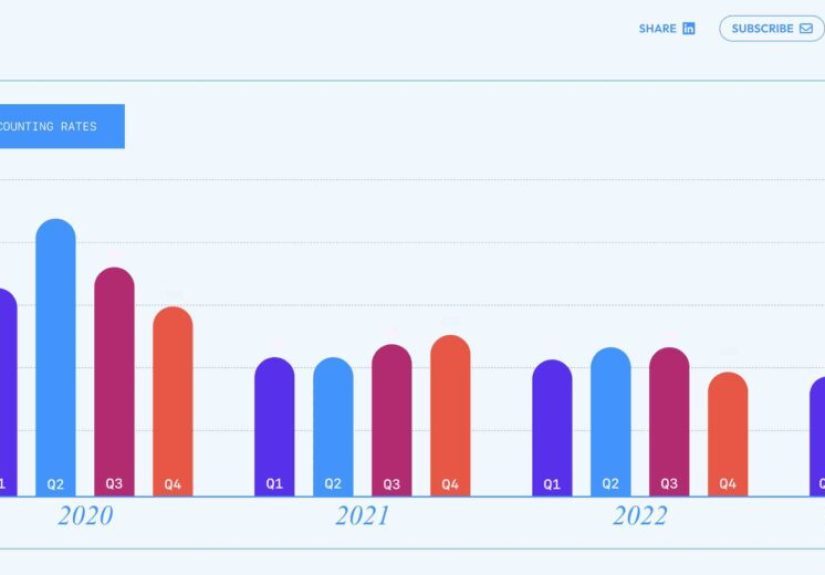
For years, SaaS buyers have treated discounts like the secret menu at a fast-food restaurant. Ask nicely, wait until quarter-end, mention a competitor, and suddenly the price drops. At least, that was the folklore. But newer pricing data from Vendr, discussed by SaaStr, points to a more disciplined reality: the average SaaS discount is roughly 10%, and the broader trend has been moving downward from the high-discount days of 2020.
That may sound surprising. After all, many companies are still tightening budgets, consolidating tools, and questioning every software renewal like it is asking for a raise. Yet the SaaS discount story is not simply “buyers have more leverage, so vendors cut prices.” In today’s software market, leverage is uneven. Some legacy tools are fighting for survival inside crowded tech stacks. AI-native platforms, infrastructure tools, security software, and mission-critical systems may have enough demand to resist deep discounting. In other words, SaaS pricing has grown up. It now wears a blazer, checks usage data, and asks procurement to schedule a meeting next Thursday.
Why the 10% SaaS Discount Matters
A 10% average SaaS discount is important because it gives both buyers and sellers a practical benchmark. It does not mean every contract should land at exactly 10% off list price. Small self-service tools may offer little or no discount. Large enterprise agreements may receive 15%, 20%, or more depending on term length, volume, timing, implementation effort, and competitive pressure. But the number helps reset expectations.
Buyers often enter negotiations thinking a dramatic discount is hiding behind the first quote. Sellers often worry that procurement will not take the deal seriously unless the price is visibly reduced. The Vendr signal suggests something more balanced: discounting is still part of SaaS sales, but excessive discounting is becoming less normal. The best SaaS deals increasingly depend on clean scope, clear usage assumptions, fair contract terms, and credible valuenot theatrical haggling.
The SaaS Market Has Changed Since the “Go-Go” Years
During the 2020 and 2021 boom, software budgets expanded quickly. Companies bought tools to support remote work, digital transformation, customer acquisition, data operations, automation, security, and collaboration. Many SaaS vendors were growing fast, investors rewarded top-line expansion, and sales teams were often encouraged to close deals quickly. Discounts became a lever to accelerate signatures.
That environment has cooled. SaaS buyers are now more cautious. Finance teams want stronger justification before approving new software. IT teams are fighting tool sprawl. Department heads are being asked whether three overlapping project management platforms are really necessary, or whether the company has accidentally built a tiny software museum.
At the same time, global software spending is still growing. Gartner’s 2026 forecast shows software as one of the strongest IT spending categories, helped by cloud adoption, AI-related demand, and enterprise modernization. So the market is not collapsing. It is becoming more selective. Buyers are not necessarily buying less software forever; they are buying with sharper pencils.
Why SaaS Discounts Are Trending Down
1. Vendors are protecting margins
SaaS companies are under pressure to improve profitability, not just revenue growth. The easy-money era made “growth at all costs” fashionable. Today, many boards, investors, and executives care more about efficient growth. Deep discounting may help close a deal, but it can damage gross margins, distort customer expectations, and make renewals painful.
If a customer receives 35% off in year one, what happens in year two? The vendor either keeps the discount and accepts lower revenue, or pushes for a price increase and risks churn. Neither option is delightful. It is the business equivalent of eating cake for breakfast: fun once, questionable as a lifestyle.
2. Buyers are consolidating, not just negotiating
BetterCloud’s State of SaaSOps research found that the average number of SaaS applications at companies fell after years of growth. Zylo’s SaaS Management Index also highlights a massive waste problem, with many organizations paying for unused or underused licenses. This changes the negotiation dynamic. Buyers are not only asking, “Can we get a lower price?” They are asking, “Do we need this tool at all?”
That can reduce discounts in an unexpected way. When a buyer decides a product is strategic, they may accept a fair price rather than fight endlessly for a few extra points. When a product is not strategic, the buyer may cancel instead of negotiate. The middle groundrenewing reluctantly with a huge discountis less attractive to both sides.
3. AI has created new pricing power
AI has complicated SaaS buying. Tropic’s software spending analysis notes that AI-native and hybrid AI tools are changing software budgets and pricing conversations. Some vendors now charge for usage, credits, seats, workflows, models, or outcome-based units. That makes traditional discounting less straightforward.
A 10% discount on subscription fees may look nice on a purchase order, but it means very little if usage-based charges explode later. Smart buyers now negotiate price caps, renewal protections, usage alerts, and true-up rules. In AI software, controlling the meter can matter more than shaving a few dollars off the sticker price.
4. Pricing transparency is improving
Platforms such as Vendr exist because SaaS pricing has historically been cloudy. One company pays one amount, another company pays a different amount, and everyone pretends this is perfectly normal while procurement quietly opens seventeen browser tabs. As more pricing benchmarks become available, both buyers and sellers gain better context.
Transparency tends to reduce extreme outcomes. Buyers become less likely to overpay wildly. Sellers become less likely to offer random, panic-driven discounts. The result is a market where pricing may become more rational, even if it remains far from simple.
What This Means for SaaS Buyers
For buyers, the biggest lesson is simple: do not build your SaaS negotiation strategy around discount percentage alone. A 10% discount on a bloated contract is not a win. A smaller discount on a right-sized agreement with flexible terms may be much better.
Audit usage before negotiating
Before renewal, review actual usage. How many employees log in monthly? Which features are used? Which teams depend on the tool? Are there duplicate products doing the same job? If only half the licenses are active, the best negotiation move may be reducing seats, not demanding a larger discount.
Ask for price protection
If discounts are shrinking, price protection becomes more valuable. Buyers should negotiate renewal caps, limits on annual increases, and clear rules for add-on modules. A modest discount with a 5% renewal cap may beat a larger discount followed by a surprise price jump next year.
Watch contract length carefully
Multi-year agreements can be useful when the software is essential and adoption is proven. But long contracts can become expensive mistakes if the tool is new, experimental, or tied to a fast-changing AI category. Buyers should match contract length to confidence level. If confidence is high, negotiate longer. If confidence is low, preserve optionality.
What This Means for SaaS Sellers
For SaaS sellers, the message is equally clear: discounting should be a strategy, not a reflex. A sales team that immediately drops price trains the market to wait. It also weakens the perceived value of the product. If your software saves time, reduces risk, increases revenue, or improves productivity, the negotiation should focus on measurable value before price concessions.
Create a discounting policy
SaaS companies should define when discounts are allowed, who approves them, and what the company receives in return. A discount should usually be tied to something useful: faster signature, longer commitment, upfront payment, case study participation, larger volume, or reduced support complexity.
Use packaging instead of random price cuts
Good packaging can reduce the need for heavy discounting. Vendors can offer tiered plans, usage bands, feature bundles, or phased rollouts. Instead of saying, “Fine, here is 20% off,” a seller can say, “Let’s align the package with your current usage and add expansion options when adoption grows.”
Prepare for smarter procurement teams
Procurement teams are becoming more data-driven. They compare benchmarks, examine usage, challenge shelfware, and ask about AI charges. Sellers who arrive with vague ROI claims and a mysterious quote may struggle. Sellers who bring transparent pricing logic, customer outcomes, and flexible commercial structures will have a better chance.
The Real Story: SaaS Value Is Under Review
The downward trend in SaaS discounts is not just a pricing story. It is a value story. Buyers are tired of paying for software that looks great in a demo and then quietly becomes another forgotten icon in the company app launcher. Vendors are tired of closing discounted deals that create renewal headaches later.
This is why the SaaS market is shifting from “How much can we discount?” to “What is this product actually worth?” That is a healthier question. It forces buyers to examine adoption and business impact. It forces sellers to prove outcomes. It also makes the negotiation less theatrical and more operational.
Specific Example: The 10% Discount vs. the Better Deal
Imagine a company receives a $120,000 annual quote for a customer support platform. The vendor offers a 10% discount, bringing the contract to $108,000. That seems reasonable. But after reviewing usage, the buyer discovers that only 70 of 100 seats are active. If the company reduces the contract to 75 seats and negotiates a 5% renewal cap, the total savings may exceed the headline discount.
Now imagine another vendor offers 25% off a $200,000 analytics platform, but the agreement includes uncapped usage fees, automatic renewal, and a 12% annual price escalator. The discount looks impressive on day one. By year two, it may look like a raccoon got into the budget spreadsheet.
The lesson: discount percentage is only one part of SaaS cost. Contract structure, utilization, renewal terms, implementation effort, support needs, and integration costs all matter.
How to Negotiate SaaS Deals in a Lower-Discount Market
Benchmark before you negotiate
Buyers should gather pricing benchmarks before entering negotiation. Even if exact apples-to-apples comparisons are difficult, benchmark data helps identify whether a quote is reasonable. It also gives procurement a factual basis for discussion instead of relying on vibes, folklore, or someone in a Slack channel saying, “I think we got 30% off once.”
Negotiate total value, not just price
Ask for implementation support, training, premium support, sandbox environments, flexible payment terms, security reviews, or additional admin features. Sometimes the vendor cannot move much on price but can improve the overall value of the agreement.
Use renewal timing wisely
Start renewal reviews early. Waiting until the final week gives the vendor leverage because switching becomes unrealistic. A 90- to 120-day renewal window gives the buyer time to review usage, compare alternatives, involve stakeholders, and negotiate calmly.
Document business outcomes
The best SaaS relationships include measurable success criteria. For example, a sales tool might be expected to improve pipeline visibility, reduce manual data entry, or increase rep productivity. A security tool might reduce risk exposure or speed compliance reviews. When outcomes are clear, renewal conversations become more objective.
Common Mistakes Buyers Make
The first mistake is chasing a discount while ignoring shelfware. Unused licenses are often a larger savings opportunity than a slightly better discount. The second mistake is signing long contracts for unproven tools. The third mistake is accepting vague AI pricing without caps or usage visibility. The fourth mistake is letting business units buy software independently without centralized visibility.
None of these mistakes are rare. In many companies, SaaS purchasing happens across departments, credit cards, expense reports, and urgent “we need this by Friday” moments. Without governance, the stack becomes messy. And once the stack becomes messy, discounts become a bandage on a much bigger problem.
Common Mistakes Sellers Make
Sellers make mistakes too. The most common is discounting before establishing value. Another is creating complex pricing that buyers cannot explain internally. A third is hiding renewal increases until late in the process. A fourth is treating procurement like an enemy rather than a stakeholder with a job to do.
Strong SaaS sellers understand that procurement is not automatically anti-software. Procurement is anti-surprise. Clear pricing, clean terms, and honest expectations can reduce friction. In a world where average discounts are trending down, trust becomes a commercial advantage.
Experience-Based Insights: What SaaS Buyers and Sellers Learn the Hard Way
In real SaaS buying conversations, the best deal is rarely the one with the loudest discount. It is the one that still feels sensible six months after signature. Many teams learn this the hard way. They celebrate a discount during procurement, announce a “great deal,” and then realize later that adoption is weak, integrations are unfinished, or the renewal terms are not friendly. The invoice may be discounted, but the regret arrives at full price.
One practical experience many finance and operations teams share is that SaaS savings often come from boring work. Nobody throws confetti for cleaning up inactive licenses. Nobody makes a movie about consolidating duplicate survey tools. But those actions can save more money than a heroic negotiation call. A company with 500 unused seats does not primarily have a discount problem. It has a visibility problem.
Another common lesson is that stakeholders must be aligned before negotiation begins. Procurement may want the lowest price. IT may care about security and integration. Finance may care about payment timing. The business team may care about features and speed. If those groups do not agree internally, the vendor can sense the confusion. The negotiation slows down, the renewal deadline approaches, and suddenly the buyer has less leverage.
Experienced buyers also know that switching costs are real. A vendor may be expensive, but replacing it can involve migration, retraining, data cleanup, workflow changes, and temporary productivity loss. That does not mean buyers should accept any price increase. It means they should calculate the true cost of switching before threatening to leave. A credible alternative is powerful. An empty threat is just procurement karaoke.
On the seller side, experienced revenue leaders know that discount discipline protects future growth. A sales representative may want to close the quarter with a big price cut, but that discount becomes part of the customer’s expectations. At renewal, customer success inherits the problem. Finance sees lower expansion potential. Product teams may receive less revenue to fund innovation. One rushed discount can echo through the business longer than expected.
The healthiest SaaS relationships usually feel less like a wrestling match and more like a planning session. The buyer explains what success looks like. The seller explains what the product can realistically deliver. Both sides discuss adoption, support, pricing, risk, and growth. There may still be a discount, but it is not the star of the show. It is a supporting actor with a modest trailer.
The most useful mindset is this: negotiate the agreement you want to live with, not the discount you want to brag about. That means checking usage before renewals, asking for pricing transparency, clarifying AI and consumption charges, limiting surprise increases, and matching contract length to confidence. It also means sellers should price with logic, defend value with evidence, and avoid training buyers to wait for quarter-end drama.
Vendr’s roughly 10% average SaaS discount benchmark is not a magic rule. It is a reminder that SaaS buying is becoming more mature. The market is moving away from chaotic discount theater and toward data-backed purchasing. Buyers who prepare will still find savings. Sellers who prove value will still win deals. Everyone else will spend a lot of time arguing over percentages while the real money hides in usage, terms, and outcomes.
Conclusion
The average SaaS discount being about 10% and trending down tells us something important about the modern software market. Buyers still have leverage, but that leverage is shifting from “give me a bigger discount” to “prove this product deserves budget.” Sellers still need flexibility, but they must protect pricing discipline and long-term customer value.
In the next phase of SaaS, the winners will not be the companies that negotiate the hardest for sport. They will be the teams that understand usage, benchmark pricing, manage renewals early, control AI-related costs, and connect software spend to business outcomes. A discount is nice. A clean, valuable, right-sized SaaS contract is better.
Note: This article is written in original language for web publishing and synthesizes current SaaS pricing, procurement, discounting, renewal, and software spend trends from reputable U.S.-focused industry sources without inserting source links into the body content.