Table of Contents >> Show >> Hide
- Why Winterizing a Sprinkler System Matters
- When Should You Winterize Your Sprinkler System?
- Tools and Supplies You May Need
- Step 1: Shut Off the Irrigation Water Supply
- Step 2: Turn Off or Adjust the Sprinkler Controller
- Step 3: Relieve Pressure in the System
- Step 4: Choose the Right Drainage Method
- How to Blow Out a Sprinkler System Safely
- How to Winterize the Backflow Preventer
- Do Not Forget Drip Irrigation Lines
- Common Sprinkler Winterization Mistakes
- Should You Winterize Your Sprinkler System Yourself or Hire a Pro?
- Spring Startup: The Reward for Doing Winter Right
- Real-World Experience: What Homeowners Learn After a Few Winters
- Conclusion
Winter has a sneaky way of finding the one thing you forgot to protect. For many homeowners, that “one thing” is the sprinkler system quietly sitting underground, full of water, waiting for the first hard freeze to turn a normal lawn-care tool into a springtime repair bill. Learning how to winterize your sprinkler system is not glamorous, but neither is explaining to your wallet why a cracked pipe, broken backflow preventer, or split valve box suddenly needs emergency attention.
The good news? Sprinkler winterization is mostly about timing, drainage, and not getting too enthusiastic with compressed air. Whether you have a simple residential irrigation setup, a multi-zone lawn sprinkler system, or drip lines mixed into your landscape beds, the goal is the same: remove enough water from pipes, valves, sprinkler heads, and exposed parts so freezing temperatures cannot expand that water and damage the system.
This guide walks you through the full process in clear, homeowner-friendly language. You will learn when to winterize, what tools you may need, how manual drains and automatic drains work, how the sprinkler blowout method is done, and when it is smarter to hire a pro than to wrestle with an air compressor like it owes you money.
Why Winterizing a Sprinkler System Matters
Water expands when it freezes. That tiny science-class fact becomes a big homeowner problem when trapped water sits inside irrigation pipes, sprinkler heads, valves, fittings, or a backflow preventer. As temperatures drop below freezing, the expanding water can crack plastic pipe, damage seals, split brass components, and push fittings apart. The system may look perfectly fine all winter, then greet you in spring with weak zones, soggy patches, geyser-style sprinkler heads, or the dreaded sound of water running where water should definitely not be running.
Winterizing your sprinkler system helps prevent freeze damage before it starts. It also gives you a chance to inspect your irrigation system, identify broken sprinkler heads, clean filters, shut down the controller correctly, and protect above-ground plumbing. Think of it as tucking your lawn sprinkler system into bed for the season. A little care now can save a lot of muttering later.
When Should You Winterize Your Sprinkler System?
The best time to winterize your sprinkler system is before the first hard freeze, not after the weather app starts shouting in all caps. In many colder regions of the United States, that means early to mid-fall. In milder climates, you may have more flexibility, but any area that experiences freezing temperatures should take irrigation winterization seriously.
A practical rule is to schedule sprinkler winterization when nighttime temperatures are regularly approaching freezing and your lawn no longer needs frequent watering. Do not wait until the ground is frozen. Frozen soil can make valve boxes harder to access, and a sudden cold snap can damage exposed components before you get the chance to drain them.
Regional Timing Examples
In northern states such as Minnesota, Colorado, Michigan, and New York, many homeowners winterize in September or October. In transition areas such as parts of Virginia, Missouri, Utah, or Kansas, October and November are common. In warmer southern areas, winterization may only be needed before occasional deep freezes, but exposed backflow preventers and above-ground pipes still deserve attention.
If you are unsure, check your local first frost date and pay attention to extended forecasts. Sprinkler systems do not care about the calendar. They care about temperature.
Tools and Supplies You May Need
The exact tools depend on your sprinkler system type, but a basic winterization kit may include:
- Adjustable wrench or channel-lock pliers
- Flathead screwdriver for test cocks or drain screws
- Insulated gloves and safety glasses
- Foam pipe insulation or an outdoor backflow cover
- Bucket or towel for small drains
- Air compressor and proper adapter for blowout systems
- Owner’s manual or zone map, if available
For the blowout method, the compressor matters. Many small garage compressors can build pressure but may not provide enough air volume to clear irrigation lines efficiently. Sprinkler blowouts generally need high air volume and controlled pressure. In plain English: this is not the moment to prove that your tiny pancake compressor is secretly a superhero.
Step 1: Shut Off the Irrigation Water Supply
Start by turning off the main water supply to the sprinkler system. This valve may be located in a basement, crawl space, utility room, garage, valve box, or near the water meter. In many systems, the irrigation shutoff valve is separate from the home’s main water shutoff. Turn the valve fully off so no additional water can enter the sprinkler lines.
If your shutoff valve is in an unheated area, protect it with insulation after the system is drained. A shutoff valve can freeze too, especially if it sits near an exterior wall or inside a poorly insulated utility space.
Step 2: Turn Off or Adjust the Sprinkler Controller
Next, set the irrigation controller to “off,” “rain mode,” or “standby,” depending on the model. Do not simply unplug every controller unless the manufacturer recommends it. Some controllers benefit from remaining powered because the small amount of warmth from the transformer can reduce moisture issues inside the cabinet.
If your controller uses a backup battery, fall is a smart time to replace it. Also consider taking a quick photo of your watering schedule before changing settings. Future-you in spring will appreciate not having to rebuild the program from memory while standing in the garage holding a cup of coffee and a look of regret.
Step 3: Relieve Pressure in the System
After shutting off the water, open one irrigation zone manually or from the controller to relieve pressure. This step helps prevent trapped water from sitting under pressure inside the pipes and valves. Run each zone briefly, or open manual bleed screws on the valves if your system uses them.
Do not skip pressure relief. A pressurized system is harder to drain and can surprise you when you open a valve or drain port. Surprise water is rarely charming, especially when it lands inside your sleeve.
Step 4: Choose the Right Drainage Method
There are three common ways to winterize sprinkler lines: manual drain, automatic drain, and blowout. Your system may use one method or a combination of methods. If you do not know which type you have, look for low-point drain valves, check your installation paperwork, or ask an irrigation professional to identify it.
Manual Drain Method
A manual drain system has valves at low points in the irrigation piping. Once the main water supply is off and pressure is relieved, you open these drain valves and let gravity remove water from the lines. Open all manual drains, including any near the mainline, zone lines, and backflow assembly if present.
Manual drainage is simple, but it only works well when the system was designed with proper slope and drain locations. Low spots, uneven trenches, or pipe sections that dip can trap water. For that reason, some manual-drain systems still benefit from a professional blowout in colder climates.
Automatic Drain Method
Automatic drain valves open when water pressure drops below a certain level. They are usually installed at low points in the sprinkler system. After you shut off the water and relieve system pressure, these valves release water automatically.
Even with automatic drains, inspect the system. Automatic drain valves can clog with soil, roots, or debris. If a valve sticks closed, water remains trapped. If it sticks open during the watering season, you may notice puddling or low pressure. Automatic does not mean magical; it still needs a little supervision.
Blowout Method
The blowout method uses compressed air to push water out through sprinkler heads. This is the most common winterization method in areas with cold winters, especially for in-ground sprinkler systems. It is also the method most likely to cause damage if done carelessly.
Compressed air should be used with caution. Always wear safety glasses, keep people and pets away from sprinkler heads, and never stand over irrigation components during a blowout. High-pressure air can send debris flying, damage sprinkler heads, overheat dry pipes, or break fittings if the pressure is too high.
How to Blow Out a Sprinkler System Safely
If your system requires a blowout and you are comfortable doing it yourself, follow a careful sequence. When in doubt, hire a certified irrigation professional. A professional sprinkler blowout is often cheaper than replacing a cracked backflow preventer or digging up a damaged line in April.
1. Connect the Compressor Downstream of the Backflow Preventer
Attach the air compressor to the designated blowout port or quick-connect fitting on the irrigation mainline. The connection should be downstream of the backflow preventer. Do not blow compressed air through the backflow device unless the manufacturer specifically says it is designed for that procedure. Backflow preventers contain internal parts that can be damaged by improper air pressure and water movement.
2. Use Controlled Pressure
Most residential systems should be blown out at low pressure, commonly around 40 to 50 psi, depending on the pipe material and manufacturer recommendations. Some older instructions mention higher limits for rigid PVC than for polyethylene pipe, but many major irrigation manufacturers advise keeping blowout pressure at or below 50 psi. The safer principle is simple: use enough air volume to move water, not excessive pressure to bully the system.
High air volume matters more than high pressure. Too much pressure can crack fittings, damage valves, or launch sprinkler parts. Too little air volume may leave water trapped in the lines. If your compressor cannot maintain adequate flow, you may need to blow out zones in shorter cycles or rent a more suitable compressor.
3. Open One Zone at a Time
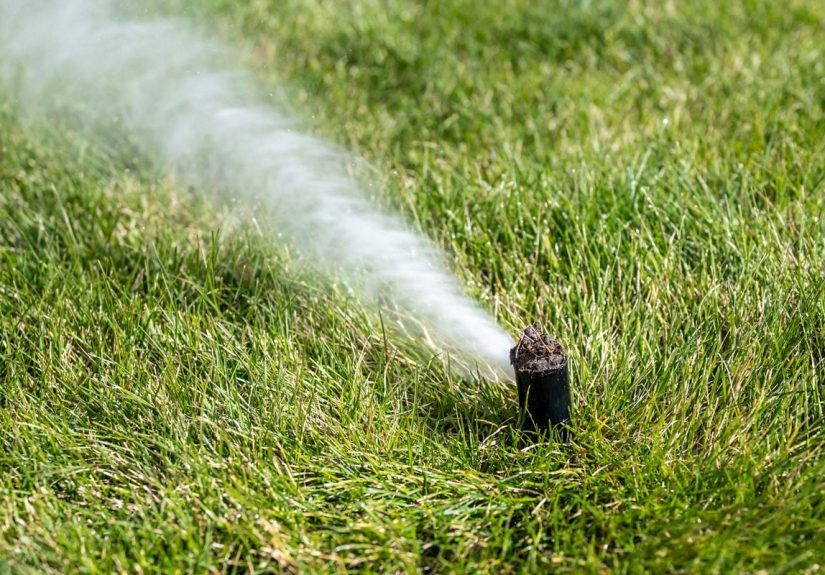
Activate one sprinkler zone before opening the compressor valve. This gives the air a path out of the system. Slowly introduce air and let water spray from the sprinkler heads. At first, you may see a steady stream. Then it becomes mist. When mostly air is coming out, stop that zone and move to the next.
Do not run compressed air through a dry zone for long periods. Air moving through dry pipes creates friction and heat, which can damage plastic components. Two short cycles per zone are better than one heroic marathon blast.
4. Work Through Every Zone
Repeat the process for each irrigation zone, including lawn zones, planting-bed zones, and side-yard zones that are easy to forget. If you have a zone map, use it. If you do not, make one while you work. Labeling zones now makes spring startup, troubleshooting, and future winterization much easier.
5. Shut Down the Compressor Before Closing the Final Zone
When you finish the last zone, turn off the compressor and release remaining air pressure safely. Then disconnect the compressor hose. Never disconnect fittings while they are under pressure. That is how small parts become fast-moving projectiles, and nobody needs a sprinkler adapter flying across the yard like a tiny brass meteor.
How to Winterize the Backflow Preventer
The backflow preventer is one of the most freeze-sensitive parts of a sprinkler system because it often sits above ground. Its job is to help prevent irrigation water from flowing backward into the drinking water supply. It may be a pressure vacuum breaker, reduced pressure assembly, or another approved device depending on local code.
To winterize it, shut off the water supply first. Then open the test cocks and drain ports to remove trapped water. Many systems require the ball valves on the backflow preventer to be left at about a 45-degree angle during winter. This half-open position gives any remaining moisture room to expand instead of being trapped behind a closed valve.
After draining, protect exposed parts with foam insulation or a weather-resistant backflow cover. Insulation helps, but it is not a substitute for draining. Wrapping a water-filled backflow preventer is like putting a coat on a snowman and expecting him to move to Florida.
Do Not Forget Drip Irrigation Lines
Many landscapes include drip irrigation for shrubs, trees, vegetable beds, or foundation plantings. Drip systems may seem less vulnerable because they use flexible tubing, but filters, pressure regulators, valves, emitters, and fittings can still hold water.
Start by turning off the water supply and removing or draining the filter, pressure regulator, and backflow device if they are part of a removable head assembly. Open end caps on drip lines to allow water to drain. In areas with hard freezes, some drip systems may also need a gentle blowout, especially if the tubing has many elbows, check valves, or low spots.
Before storing removable drip components, clean filters and inspect washers. Small maintenance tasks now can prevent frustrating low-flow problems when you restart watering in spring.
Common Sprinkler Winterization Mistakes
Even careful homeowners make a few classic mistakes. The most common is waiting too long. The first serious freeze can arrive before your weekend schedule looks convenient. Another mistake is using too much air pressure during a sprinkler blowout. More pressure does not mean better winterization. It often means more risk.
Homeowners also forget the backflow preventer, skip drip zones, overlook hose bibs connected to irrigation lines, or leave the controller running. Some close every valve tightly after draining, which can trap small amounts of water. Others insulate exposed pipes without draining them first. Insulation slows freezing; it does not perform miracles.
Finally, many people assume that if water stopped spraying, the system is fully winterized. Not always. Low spots, valve bodies, and sprinkler heads can retain water. That is why a methodical zone-by-zone process matters.
Should You Winterize Your Sprinkler System Yourself or Hire a Pro?
You can winterize some sprinkler systems yourself, especially if the system has manual drains and clear access points. However, hiring a professional is often the better choice if your system requires a blowout, has a complex backflow assembly, includes many zones, or has an unknown layout.
A professional irrigation technician will usually have the right compressor, know how to regulate pressure, understand backflow requirements, and recognize signs of worn valves or damaged heads. If you are a new homeowner and have never winterized the system before, consider hiring a pro the first year and watching the process. Take notes. Ask where the shutoff valve, drain ports, blowout connection, and backflow drains are located. That knowledge pays off every season.
Spring Startup: The Reward for Doing Winter Right
Good winterization makes spring startup smoother. When freezing weather has passed and the soil has thawed, close drain valves and test cocks, return backflow valves to the proper operating position, and slowly open the main water supply. Opening valves too quickly can create water hammer, which may damage pipes and fittings.
Run each zone manually and inspect sprinkler heads, spray patterns, leaks, sunken heads, clogged nozzles, and broken drip emitters. Adjust spray so water lands on the lawn and garden, not the sidewalk, driveway, fence, mailbox, or your neighbor’s very confused cat.
Real-World Experience: What Homeowners Learn After a Few Winters
The first time many homeowners winterize a sprinkler system, they treat it like a mysterious underground machine. By the third year, it becomes a normal fall chore, somewhere between cleaning gutters and pretending you will finally organize the garage. Experience teaches a few valuable lessons that do not always show up on a basic checklist.
First, labeling matters. A simple zone map can save an amazing amount of time. Walk the yard while each zone is running during the growing season and write down what it covers: front lawn, parkway strip, backyard beds, side yard, vegetable garden, and so on. When winter comes, you will know exactly which zones need attention. If one zone does not spray during blowout, you will know something is wrong instead of wondering whether that zone ever existed.
Second, valve boxes deserve respect. They collect soil, mulch, leaves, spiders, and sometimes the kind of mystery debris that makes you reconsider homeownership. Cleaning valve boxes before winter makes it easier to access manual drains and inspect wiring. It also keeps drain ports from clogging. A small hand trowel and a pair of gloves can turn a messy valve box into a manageable one.
Third, the backflow preventer is often the weak link. Many homeowners focus on underground pipes while forgetting the shiny above-ground device sitting in the cold wind. Because it is exposed, the backflow assembly can freeze faster than buried lines. Draining it correctly and leaving valves in the recommended winter position can prevent expensive replacement. Adding an insulated cover is a smart finishing touch, especially in areas with repeated freeze-thaw cycles.
Fourth, do not confuse “mostly drained” with “safe.” A sprinkler line can look empty while water remains trapped in low points or valve bodies. This is especially true on properties with slopes, uneven trenches, or older irrigation repairs. If your yard has been modified over the years, the original drainage design may no longer work perfectly. That is one reason periodic professional service can be helpful.
Fifth, listen during the blowout. The sound of each zone changes as water clears. At first, sprinkler heads sputter and spray. Then the water turns to mist. Finally, you hear mostly air. That is the point to stop, not the point to keep going for “just a little extra.” Long blasts of air through dry pipes can create heat and stress. Short, controlled cycles are safer and usually more effective.
Sixth, take photos before and after. Photograph the shutoff valve, drain locations, controller settings, backflow assembly, and compressor connection point. Store the photos in a phone album named “Sprinkler Winterization.” It sounds overly organized until the next fall, when you find the album and feel like a genius in work gloves.
Finally, winterization is not just about avoiding damage. It helps you understand your irrigation system. You notice which sprinkler heads lean, which zones drain slowly, which valve box needs cleaning, and which parts may need repair in spring. A well-maintained sprinkler system uses water more efficiently, protects your landscape investment, and starts the next season with fewer surprises. And in home maintenance, fewer surprises is basically a luxury vacation.
Conclusion
Knowing how to winterize your sprinkler system is one of those homeowner skills that quietly saves money, stress, and springtime chaos. The basic process is straightforward: shut off the irrigation water supply, turn off or adjust the controller, relieve pressure, drain the system, protect the backflow preventer, and use the blowout method carefully if your system requires it.
The most important reminders are simple. Winterize before the first hard freeze. Do not use excessive air pressure. Drain exposed components. Protect the backflow preventer. Include drip irrigation zones. When the system is complex or unfamiliar, hire a professional and learn from the process.
A winterized sprinkler system is not exciting, but it is satisfying. While your neighbors are dealing with cracked fittings and soggy spring lawns, you can enjoy that peaceful homeowner feeling of having handled one more seasonal task like a responsible adult. Maybe even with a smug little cup of coffee. You earned it.