Table of Contents >> Show >> Hide
- Magnetic North vs. Geographic North: Two Different “Norths”
- A Pole on the Move: From Canada to Siberia
- What’s Pushing the Magnetic North Pole?
- How a Wandering North Affects Everyday Life
- Is a Magnetic Pole Reversal Coming?
- Living With a Moving North: What You Can Actually Do
- Experiences From a Wandering North: How the Drift Shows Up in Real Life
If your compass could talk, it would probably say something like, “Look, I’m doing my best, but north just won’t sit still.” For more than a century, the magnetic North Pole has been quietly wandering across the Arctic. In the last few decades, though, it stopped ambling and started speed-walking toward Siberia, forcing scientists, pilots, smartphone makers, and even oil drillers to keep recalibrating their idea of “north.”
So what exactly is going on with Earth’s magnetic field? Why is the magnetic North Pole moving so fast, and what does it mean for our everyday lives? Let’s unpack the science, the mystery, and the surprisingly practical consequences of a restless planet.
Magnetic North vs. Geographic North: Two Different “Norths”
First, a quick vocabulary check. The geographic North Pole is the fixed point where Earth’s rotational axis pokes through the top of the planet at 90°N. It’s the spot you see on globes, maps, and dramatic movie scenes where someone plants a flag in the ice.
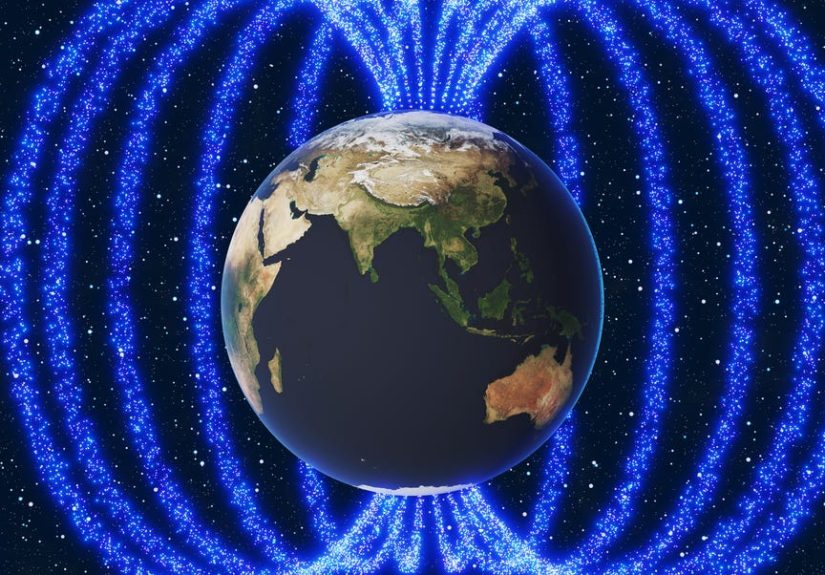
The magnetic North Pole is different. It’s the point on Earth’s surface where the planet’s magnetic field lines dive straight down into the ground. If you held a compass that could tilt freely in three dimensions, the needle would point straight down there instead of along the horizon.
Because Earth’s magnetic field is lumpy, dynamic, and not perfectly aligned with the rotation axis, the magnetic North Pole is offset from the geographic poleand it moves. That’s why maps and navigation apps talk about magnetic declination, the angle between true (geographic) north and magnetic north. Hikers, pilots, and sailors have to factor in that angle when they navigate.
In other words, there’s the “north” your globe loves, and there’s the “north” your compass actually follows. And the compass version has a serious case of wanderlust.
A Pole on the Move: From Canada to Siberia
The magnetic North Pole hasn’t ever been truly still, but for a long time it moved slowly enough that only specialists cared. That changed in the late 20th century, when its motion sped up dramatically.
From a Quiet Stroll to a High-Speed Trek
The first precise measurement of magnetic north came in 1831, when British explorer James Clark Ross found it on Canada’s Boothia Peninsula. Since then, it has traveled more than 1,200–1,500 miles (roughly 2,000–2,250 kilometers) across the Canadian Arctic and into the Arctic Ocean, heading toward Siberia.
For much of the 20th century, this drift was modesttens of kilometers per year. Then, in the 1990s and early 2000s, something changed. The pole’s speed jumped to roughly 30–37 miles (50–60 kilometers) per year, making it one of the fastest recorded shifts in modern history.
By around 2017, the magnetic North Pole was just a few hundred miles from the geographic North Pole instead of more than a thousand miles away, as it had been in the 1960s.
The 2020s: Still Moving, but Slowing Down
Recent observations and magnetic models show that the pole is still moving toward Siberia, but the pace has eased off. The World Magnetic Model (WMM)the global standard used by NATO, the U.S. Department of Defense, civilian aviation, and many GPS systemsis updated every five years to account for this drift.
In the 2020 update, scientists reported the speed had slowed from roughly 55 kilometers per year over the previous two decades to about 40 kilometers per year. Newer analyses around the WMM2025 release suggest the pole’s motion has eased further to about 20 miles (around 35 kilometers) per year, even as it continues marching toward Russia.
So we’ve gone from “north is drifting” to “north is sprinting” and now to “north is still jogging, but at a more reasonable pace.” The big question is: what’s driving all of this motion?
What’s Pushing the Magnetic North Pole?
The short answer: liquid metal deep inside Earth. The long answer is more fun.
Inside the Geodynamo
Earth’s magnetic field is generated by a process called the geodynamo. Our planet has a solid inner core made mostly of iron, surrounded by a thick outer core of molten, electrically conductive iron and nickel. As this liquid metal churns due to heat escaping from the inner core and the planet’s rotation, it acts like a gigantic, self-sustaining dynamo. Moving electric charges create magnetic fields; the combined effect is Earth’s global magnetic field.
The key point: the flow inside the outer core is not smooth or symmetric. It has swirling currents, jets, and patches of stronger or weaker magnetic intensity. These internal changes slowly reshape the magnetic field we measure at the surface, including the location of the magnetic poles.
The “Blobs” and the Tug-of-War
In recent years, scientists have homed in on a particularly vivid explanation: a tug-of-war between two magnetic “blobs” deep under the Arctic. Using satellite data and advanced models, researchers identified two major patches of magnetic flux in the outer coreone beneath northern Canada and another beneath Siberia.
For much of the last century, the Canadian patch was stronger, anchoring the magnetic North Pole near the Canadian Arctic. But in the last few decades, the Canadian patch has weakened while the Siberian patch has grown stronger. Think of it as two kids on opposite sides of a magnetized rope: for a long time, Canada was winning. More recently, Siberia has been pulling harder.
As the balance shifted, the pole started racing toward the Siberian side, explaining the sudden acceleration in the 1990s and 2000s. Some scientists describe these regions as blobs or lobes of magnetic energyless poetic than “mysterious forces,” but a lot more accurate.
Secular Variation: This Is Normal… Mostly
The ongoing drift is part of what geophysicists call secular variationthe slow, continuous change in Earth’s magnetic field over decades and centuries. The poles have never been fully fixed; even in historical data going back to the 1500s, the magnetic North Pole wanders around the Arctic in complex loops.
What’s unusual about the recent movement is the speed and the shift in direction. It’s like watching a normally slow-moving glacier suddenly hop onto a conveyor belt. That’s why scientists had to issue an emergency update to the World Magnetic Model in 2019 and now track the pole particularly carefully.
How a Wandering North Affects Everyday Life
“Okay,” you might be thinking, “that’s cool geophysics, but does it actually matter to me?” Surprisingly, yes. The moving magnetic North Pole affects more than compasses in old adventure movies.
Navigation, Maps, and Your Smartphone
Many navigation systemsespecially those that convert GPS positions into directionsuse models of Earth’s magnetic field to calculate heading relative to magnetic north. The World Magnetic Model underpins navigation for commercial aviation, shipping, military operations, and countless consumer devices.
If the model is out of date, your “magnetic north” heading becomes less accurate. For a hiker with a handheld compass, that might mean a degree or two of errornot ideal, but manageable. For an aircraft landing in poor visibility or a ship navigating narrow channels, tiny errors can add up.
Even the runway numbers at airports, which are based on magnetic heading, sometimes get renumbered as the magnetic pole drifts. When the heading shifts enough, that “Runway 18” (indicating roughly 180°) may need to become “Runway 17” or “19.”
Drilling, Surveying, and Infrastructure
Industries like oil and gas rely on highly accurate magnetic data for directional drilling. When you’re steering a drill bit thousands of feet underground, you can’t exactly peek out the window. You rely on precise models of the magnetic field to know which way you’re actually pointing.
Surveyors, telecom engineers, and utility companies also use magnetic models to align equipment, towers, and long infrastructure lines. For them, the pole’s rapid motion means frequent recalibration rather than a one-time adjustment.
Wildlife and the Northern Lights
Many animalssea turtles, birds, salmon, even some insectsappear to use Earth’s magnetic field as part of their navigation toolkit. The field changes slowly enough, though, that evolution can “track” it, and animals likely rely on a mix of cues: stars, the Sun, scents, and landmarks. So far, there’s no evidence that the current drift is throwing migratory species into total chaos.
The aurora borealis (northern lights), which tend to cluster in an oval around the geomagnetic poles, may shift position slightly over time as the field changes. For northern skywatchers, this might mean subtle changes in where displays are most frequentbut not a dramatic disappearance of the aurora.
Is a Magnetic Pole Reversal Coming?
Whenever people hear “Earth’s magnetic field is changing,” the next question is usually, “Are we about to have a pole flip?”
Earth’s magnetic field has reversed many times in the geologic past. These geomagnetic reversals swap the positions of magnetic north and south and occur, on average, every few hundred thousand years. The last full reversalknown as the Brunhes–Matuyama reversalhappened about 780,000 years ago, and there have been shorter, partial excursions as well.
So are we overdue? Maybebut “overdue” doesn’t mean “tomorrow.” Reversals take thousands of years to unfold and involve large-scale changes in the structure of the field, not just a rapidly drifting pole.
Right now, scientists see clear signs of a shifting, somewhat weakening field, but no smoking gun that a reversal is imminent. Multiple agencies, including NOAA and international geomagnetic observatories, are monitoring the situation closely. For the moment, the consensus is: no need to panic, but definitely worth watching.
Living With a Moving North: What You Can Actually Do
Unless you’re planning a trip to the high Arctic, the moving magnetic North Pole isn’t going to rearrange your daily life. But there are a few practical takeaways:
- Check your local magnetic declination if you use a traditional compass for hiking, sailing, or backcountry navigation. Many national mapping agencies and online tools let you look this up using the latest World Magnetic Model.
- Keep firmware up to date on navigation devices. Aviation and marine systems that rely on heading data often incorporate WMM updates via software patches.
- Don’t confuse “north on your screen” with “north forever.” The lines on maps don’t move, but the magnetic field behind some of your instruments does.
Think of magnetic north as that slightly unpredictable friend: extremely useful to have around, but not always where you expect them to be.
Experiences From a Wandering North: How the Drift Shows Up in Real Life
The movement of the magnetic North Pole can sound abstractnumbers, degrees, kilometers per year. But it quietly shows up in real-world experiences, from weekend hikes to high-tech engineering projects. Here are some grounded, relatable ways people notice the wandering pole.
A Hiker’s Slightly Confused Compass
Imagine you’re a dedicated backpacker who learned to navigate with a paper map and a trusty compass years ago. Back then, your local guidebook told you to correct for, say, 10° of west declination. Fast-forward a decade or two: you pull out the same compass and map, follow the old instructions, and find your trail a bit off. Not disastrously wrongbut wrong enough that you’re bushwhacking instead of strolling down a nice, clear path.
What changed? Not the mountain, not the mapthe magnetic field did. As the pole migrates, the declination for your region shifts by fractions of a degree each year. Over time, those tiny changes add up. Experienced outdoor educators increasingly remind students to check up-to-date declination values instead of relying on a number they memorized in high school.
Pilots Adjusting to Subtle Shifts
Commercial and military pilots don’t chase the pole directly, but they absolutely care where it is. Runways are numbered based on their magnetic heading, rounded to the nearest 10 degrees. When the magnetic pole drifts, those headings slowly change.
Every so often, an airport will officially renumber a runway: what used to be Runway 18 (roughly 180°) might become Runway 17 or 19. To passengers, it’s just a different number painted on the tarmac; to pilots, it’s a visible reminder that Earth’s magnetic field is a living, changing system.
Flight management systems also use magnetic models in their calculations. When the World Magnetic Model gets updated, airlines and avionics manufacturers roll those changes into software updates so that autopilots, route planners, and cockpit instruments stay in sync with reality.
Directional Drillers and Invisible Curves Underground
Directional drillingused to reach offshore oil, gas, and even some geothermal resourcesdepends heavily on precise heading information. Engineers send tools thousands of feet underground and must know not just how deep they are, but exactly which direction they’re heading in three dimensions.
Downhole instruments measure the local magnetic field and gravity to estimate orientation. When Earth’s magnetic field changes, the calibration of those instruments has to change too. Engineers might not think about “blobs of molten iron under Siberia,” but they definitely care when a new magnetic model becomes available, because it can shave errors off their well paths and reduce the risk of missing a target reservoir.
Urban Tech: Smartphones and Compass Apps
Even if you never leave the city, the drifting pole still sneaks into your daily routine. Many smartphones include a digital compass that uses both the local magnetic field and data from motion sensors. When you open a maps app and it tells you which direction you’re facing, there’s usually a magnetic model under the hood.
As long as your phone’s operating system stays up to date, those models get refreshed automatically, so you rarely notice the changes. But if you dig into the settings or developer documentation, you’ll often find a reference to the World Magnetic Model and its update cycle. That’s the moving North Pole working behind the scenes every time you try to figure out which way to walk out of a subway station.
Scientists Chasing North Across the Ice
Of course, some people experience the pole’s motion much more directly: the teams that periodically trek into the Arctic to measure it. When survey groups head north with magnetometers on sleds, ski across sea ice, and take measurements in brutal conditions, they’re literally chasing a moving target.
Each expedition adds new data points that feed into global models of Earth’s magnetic field. Scientists then combine those surface measurements with readings from satellites orbiting high above the planet. Together, they refine the World Magnetic Model, update navigation systems worldwide, and improve our understanding of the geodynamo itself.
In a way, these expeditions are a reminder of how deeply connected our technology is to a very old, very physical process: hot, swirling metal 3,000 kilometers beneath our feet. It’s a nice bit of cosmic irony that the same molten iron that protects us from solar radiation by generating Earth’s magnetic shield also forces us to rewrite navigation software and repaint runway numbers every so often.
So the next time your map app asks you to “move your phone in a figure-eight” to calibrate the compass, you can smile and think: this tiny dance is part of a much bigger storyone that starts in Earth’s core, races through the Arctic, and ends in the palm of your hand.