Table of Contents >> Show >> Hide
- Classic & Timeless Cabinet Looks
- 1) Shaker doors for almost any kitchen style
- 2) Inset cabinet doors for tailored, furniture-like charm
- 3) Raised-panel cabinets for traditional depth
- 4) Creamy off-white cabinets instead of bright white
- 5) Full-height uppers to the ceiling
- 6) Glass-front uppers for a lighter, collected feel
- 7) Beadboard or tongue-and-groove cabinet panels
- 8) Furniture-style toe kicks and legs on an island
- Modern & Minimal Cabinet Ideas
- Warm, Rustic, and Natural Cabinet Styles
- Color, Finish, and Pattern Plays
- 21) Two-tone cabinets (light uppers, darker lowers)
- 22) Moody navy or charcoal for a dramatic anchor
- 23) Green cabinets for a natural, calming vibe
- 24) Warm greige, mushroom, or putty neutrals
- 25) Soft black cabinets for modern elegance
- 26) High-gloss lacquer for a sleek, reflective finish
- 27) Fluted or reeded cabinet fronts for subtle texture
- 28) Statement cabinet interiors or open-shelf back panels
- Hardware and Details That Change Everything
- Storage Superpowers You’ll Thank Yourself For
- How to Choose the Right Cabinet Ideas (Without Regret)
- Real-Life Cabinet Experiences (500+ Words of Lessons, Wins, and “Oops” Moments)
- Conclusion
Kitchen cabinets are basically the “face” of your kitchenlike eyebrows for your house. You can change countertops,
lights, even the faucet, but cabinets set the tone: sleek and modern, cozy and classic, bold and moody, or bright and
timeless. The good news? You don’t need a celebrity budget (or a personal carpenter named Luca) to get cabinets that
feel intentional and look expensive.
Below are 38 cabinet ideas that work across design stylesfrom traditional to ultra-modern, farmhouse to coastal,
cottage to industrial. Mix one or two for a subtle refresh, or stack several ideas together for a full “whoa, did you
remodel?” moment. (If your neighbor asks, you’re allowed to say it was “a curated evolution.”)
Classic & Timeless Cabinet Looks
1) Shaker doors for almost any kitchen style
Shaker-style cabinet doors are the jeans-and-white-tee of kitchens: simple frame, clean lines, endlessly adaptable.
Dress them up with polished nickel hardware for traditional vibes or keep them crisp with matte black for modern
contrast.
2) Inset cabinet doors for tailored, furniture-like charm
Inset doors sit flush inside the cabinet frame, giving a custom, high-end look. They feel especially right in
historic homes, transitional kitchens, or anywhere you want that “built-in millwork” vibe without going full manor
house.
3) Raised-panel cabinets for traditional depth
If your dream kitchen includes warmth, detail, and a little architectural “hello,” raised-panel doors bring
dimension. Pair with classic crown molding and a timeless neutral paint color for a look that doesn’t chase trends.
4) Creamy off-white cabinets instead of bright white
Want the lightness of white without the “dentist’s office glare”? Choose warm whitescreamy, ivory, or soft
boneespecially if your floors are wood-toned or your counters have warm veining.
5) Full-height uppers to the ceiling
Taller upper cabinets feel more custom, reduce dust-collecting dead space, and visually lift the room. Add simple
trim at the top for a finished look that reads intentionallike you planned it, not like you ran out of wall.
6) Glass-front uppers for a lighter, collected feel
Glass-front cabinets break up a wall of solid doors and add personality through display. Use them for your “nice”
dishes, matching glassware, or your carefully curated stack of bowls that proves you’re an adult.
7) Beadboard or tongue-and-groove cabinet panels
Add subtle texture by choosing beadboard-style inserts on doors or islands. It’s especially effective for cottage,
farmhouse, coastal, and traditional kitchens where you want softness and detail without going ornate.
8) Furniture-style toe kicks and legs on an island
Turn an island into a focal point by adding furniture legs, decorative panels, or a shaped toe kick. This works
beautifully in traditional and transitional kitchens and helps the island feel less like a box and more like a
centerpiece.
Modern & Minimal Cabinet Ideas
9) Flat-panel (slab) doors for clean modern lines
Slab doors create an uninterrupted surface that feels modern, calm, and architectural. They’re great for
contemporary, Scandinavian, and minimalist kitchensespecially when paired with integrated pulls or slim bar
hardware.
10) Frameless (European-style) cabinets for more storage space
Frameless cabinets have a sleek look and maximize interior space. They’re a favorite for modern layouts, tight
kitchens, and anyone who values function with a side of “I have my life together.”
11) Handleless or integrated pulls for a seamless look
Consider finger pulls, edge pulls, or recessed channels for that smooth, uninterrupted cabinet face. This detail
instantly reads high-end and works beautifully with slab doors and minimalist color palettes.
12) Super-matte finishes for a soft, modern feel
Matte cabinet finishes reduce glare and hide minor fingerprints better than high-gloss. They feel sophisticated and
modernespecially in warm neutrals, charcoal, deep green, or soft black.
13) Minimalist uppers + strong lowers
If you want a modern look without losing storage, keep upper cabinets simple (or fewer) and let lower cabinetry do
the heavy lifting with drawers, pull-outs, and deep storage. The kitchen feels airy without sacrificing function.
14) A “hidden” appliance wall
Use tall cabinet panels to disguise the refrigerator, pantry storage, and even small appliances. This creates a
clean, cohesive wall that feels customlike your toaster has a private suite.
Warm, Rustic, and Natural Cabinet Styles
15) Natural wood cabinets for warmth and texture
Wood cabinets (oak, walnut, maple) add instant warmth. Go lighter for Scandinavian or coastal kitchens, or richer
walnut for modern farmhouse and elevated rustic. A clear or low-sheen finish keeps the grain doing the talking.
16) Rift- or quarter-sawn oak for subtle, designer texture
If you love wood but want it refined, rift- or quarter-sawn oak has a straighter, calmer grain pattern. It reads
upscale and intentionalperfect for modern organic kitchens.
17) Two-step “wood + paint” mix for a balanced look
Combine painted cabinets with a wood island or wood lowers. The mix adds depth and keeps the kitchen from feeling
flat. It’s a smart way to use bold color without committing to it everywhere.
18) Rustic finishes with a modern silhouette
Love rustic materials but not heavy designs? Try wood cabinetry with clean slab fronts, simple hardware, and modern
lighting. You’ll get warmth and character without the “log cabin cosplay.”
19) Open shelving as a cabinet “breather”
Swap one run of uppers for open shelves to lighten the room. This works well in farmhouse, coastal, and modern
kitchensjust keep it curated. (If it’s chaotic, it stops being “styled” and becomes “evidence.”)
20) A built-in hutch or coffee cabinet zone
Create a dedicated hutch area with uppers, drawers, and a little countertop landing spot. It adds furniture-like
charm and makes daily routines smootherespecially if you’re a “don’t talk to me until coffee” household.
Color, Finish, and Pattern Plays
21) Two-tone cabinets (light uppers, darker lowers)
Two-tone cabinetry adds depth and keeps the room feeling open. A classic approach: light uppers to bounce light
around, deeper lowers to ground the space. It’s designer-approved and surprisingly forgiving in real life.
22) Moody navy or charcoal for a dramatic anchor
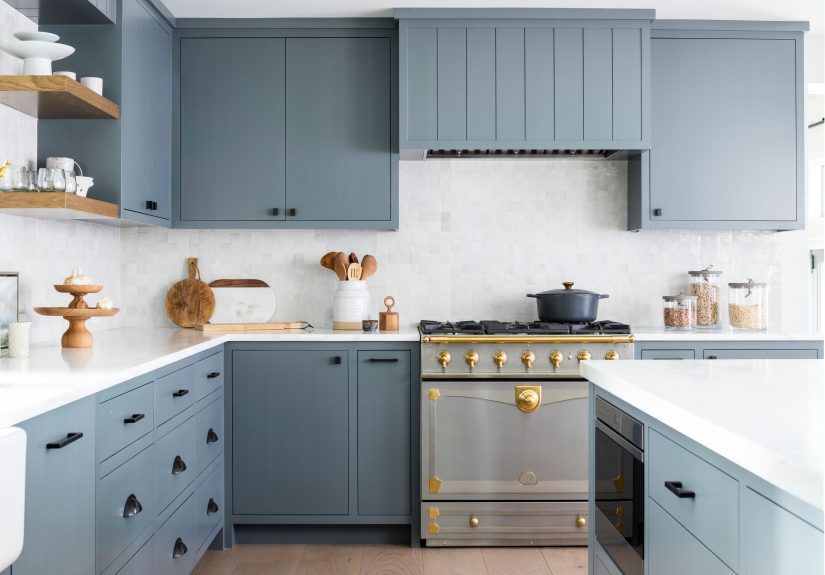
Navy and charcoal cabinets feel rich and sophisticated, especially when paired with warm metal hardware and light
countertops. Use them on lowers or an island if you want drama without turning the kitchen into a cave.
23) Green cabinets for a natural, calming vibe
Greenssage, olive, forestpair beautifully with wood, stone, and brass. They can read traditional, modern, or
cottage depending on the door style and hardware.
24) Warm greige, mushroom, or putty neutrals
If you’re over cool gray but not ready for color, warm neutrals are the sweet spot. They look cozy, timeless, and
intentionalespecially with natural wood accents and textured stone.
25) Soft black cabinets for modern elegance
Black cabinets can look stunning and upscale when balanced with good lighting and lighter surfaces. Choose a softer
black (not harsh pitch-black) and consider it for lowers, an island, or a feature wall.
26) High-gloss lacquer for a sleek, reflective finish
If you love a modern, gallery-like kitchen, glossy cabinets bounce light and feel crisp. Best for contemporary
homesand for people who don’t mind a little extra wiping (because shine shows everything).
27) Fluted or reeded cabinet fronts for subtle texture
Fluted fronts add vertical texture and a custom feel, especially on an island or beverage center. It’s an easy way
to elevate a neutral kitchen without adding busy patterns.
28) Statement cabinet interiors or open-shelf back panels
Paint the inside of glass-front cabinets a contrasting color, add wallpaper to the back, or use a wood backing.
It’s a small detail that makes the whole kitchen feel layered and “designed,” not just assembled.
Hardware and Details That Change Everything
29) Mix knobs and pulls thoughtfully
A common approach: knobs for doors, pulls for drawers. It looks balanced and feels practical. Keep finishes
consistent, and choose shapes that match your stylesleek bars for modern, cup pulls for classic, and so on.
30) Warm metals (brass, champagne bronze) for instant glow
Warm metals can make even basic cabinets feel elevated. They add warmth to white, cream, navy, and green cabinetry,
and they look especially good when the rest of the palette has cozy undertones.
31) Matte black hardware for crisp contrast
Matte black reads modern and graphic, especially on white or wood cabinets. It’s also great for industrial and
modern farmhouse kitchensjust keep other black accents (lighting, faucet) in the same family.
32) Add crown molding or simple trim for a custom look
Trim can make stock cabinets feel custom. Crown molding adds classic polish, while a simple top trim works well for
modern and transitional styles. The goal is “finished,” not “fussy.”
33) Consider lighted cabinets (inside or under-cabinet)
Under-cabinet lighting improves function and makes kitchens feel high-end at night. Interior cabinet lightinglike
in glass-front uppersadds a soft glow that feels fancy even when you’re microwaving leftovers.
Storage Superpowers You’ll Thank Yourself For
34) Prioritize drawers over doors on the base cabinets
Deep drawers are easier than digging into dark base cabinets. Use them for pots, pans, dishes, and food storage.
Once you go drawer-heavy, you may start judging other kitchens. Quietly. In your head.
35) Pull-out trash and recycling
A pull-out trash cabinet is one of the most satisfying upgrades for daily life. It keeps bins hidden, makes cleanup
easier, and frees up floor space.
36) A real pantry cabinet with pull-outs
Tall pantry cabinets with pull-out shelves keep ingredients visible and accessibleno more “black hole” pantry where
snacks go to disappear. If you cook often, this is a game-changer.
37) Corner solutions that actually work
Corners don’t have to be wasted. Look for lazy Susans, swing-out corner units, or pull-out corner drawers. It’s one
of the best ways to reclaim awkward spaceespecially in L-shaped layouts.
38) Built-in spice, tray, or baking-sheet pull-outs
Narrow pull-outs next to the range for spices and oils, vertical dividers for trays, and dedicated baking-sheet
storage keep everything tidy and easy to grab. Small upgrades, big daily payoff.
How to Choose the Right Cabinet Ideas (Without Regret)
The best cabinet design isn’t the one that looks hottest on social mediait’s the one that fits your home’s style
and your actual habits. If you’re a serious cook, prioritize drawers, pull-outs, and durable finishes. If
your kitchen is a social hub, consider glass-fronts, warm metals, and a statement island. And if you have kids, pets,
or a friend group that “gestures wildly while holding red wine,” choose finishes that aren’t high-maintenance.
Quick rule: pick one “hero” choice (color, wood, or texture), then keep the rest supportive. That’s
how kitchens look cohesive instead of like a design mood board exploded.
Real-Life Cabinet Experiences (500+ Words of Lessons, Wins, and “Oops” Moments)
Let’s talk about the part no one glamorizes: living with your cabinets every single day. Not the “first reveal”
momentmore like the 200th time you open the same drawer while hungry, distracted, and holding a dripping spoon.
Over time, cabinets become less about the photo and more about the flow. And that’s where the best decisions shine.
First lesson: drawers are the secret MVP. People who switch from base cabinets with doors to deep
drawers tend to have the same reaction: “Why didn’t I do this sooner?” It’s not just convenienceit’s visibility.
You stop buying duplicates because you can actually see your cookware and containers. (Also, fewer items fall on your
toes. This matters more than designers admit.)
Second lesson: hardware is not just jewelryit’s ergonomics. In real kitchens, tiny knobs can feel
annoying on heavy drawers, and overly sleek pulls can be slippery when your hands are wet. Many homeowners end up
loving hardware that looks slightly “boring” but feels great. The best test? Pretend you’re making pasta on a chaotic
Tuesday night and try opening a drawer with one hand.
Third lesson: the “perfect” white is wildly personal. Bright, clean whites can look amazing in
sunny kitchens, but in lower light they can feel stark. Warmer whites and creamy off-whites tend to be more forgiving
across different bulbs, seasons, and wall colors. If you’re choosing paint, it’s worth sampling the color in the
morning, afternoon, and at nightbecause your cabinets will live in all three.
Fourth lesson: two-tone cabinets are the compromise everyone can live with. In a lot of homes, one
person wants “timeless,” the other wants “fun,” and the kitchen is the negotiation table. Two-tone solves that.
Classic light uppers keep the space bright, while darker lowers or a bold island adds personality. It also hides scuffs
and shoe marks better on the base cabinets (which take the most abuse).
Fifth lesson: finishes matter more than you think. High-gloss looks stunning when pristine, but it
can show fingerprints and smudges depending on color and lighting. Super-matte finishes often feel more relaxed and
forgivingespecially in family kitchens. If your household includes kids, pets, or adults who somehow touch everything
with buttery hands, matte may be your best friend.
Sixth lesson: storage features feel like magic once you have them. Pull-out trash is a daily win.
Pantry pull-outs stop food from disappearing into the back of a shelf. A narrow spice pull-out near the range makes
cooking smoother. None of these are flashy… until you’re cooking and everything is right where it should be. It’s the
kitchen equivalent of finding your keys in the exact spot you left them: deeply satisfying.
Finally: don’t underestimate lighting. Under-cabinet lighting makes countertops more usable, but it
also makes cabinets look betterlike they’re in a showroom, except you’re wearing socks that don’t match. If you’re
investing in cabinets (or even just painting), lighting is the finishing touch that makes the whole upgrade feel
complete.
If you take anything from these real-life notes, let it be this: the best cabinet choices are the ones that make
your kitchen easier to use and nicer to look at. Style is importantbut so is the daily rhythm of cooking,
cleaning, grabbing snacks, and living your life. Cabinets should support that, not fight it.
Conclusion
The right kitchen cabinets can make your whole home feel more put-togetherwhether you go classic Shaker, sleek slab,
warm wood, or a bold two-tone moment. Start with the style that fits your home, choose a color and finish that makes
sense for your lifestyle, and then layer in the details that change everything: hardware, lighting, and smart storage.
Do that, and your kitchen won’t just look goodit’ll work beautifully, too.