Table of Contents >> Show >> Hide
- Why Neutrals Work for Better Rest (It’s Not Just “Because Pinterest Said So”)
- Before You Start: Pick Your Neutral “Undertone Family”
- 16 Neutral Bedroom Ideas for a Restful Retreat
- 1) Start with Warm Whites (Not “Hospital Bright” White)
- 2) Embrace Greige for Instant Warmth and Modern Vibes
- 3) Do Tone-on-Tone Bedding (Layered, Not Matchy-Matchy)
- 4) Choose a Statement Headboard in a Calm Material
- 5) Mix Natural Wood Tones for Depth (Yes, You Can)
- 6) Add Texture in Three Zones: Bed, Floor, Windows
- 7) Layer Window Treatments for Softness and Better Sleep
- 8) Anchor the Room with a Neutral Rug That Has a Pattern (Quietly)
- 9) Use Warm Metals for a Soft Glow (Brass, Bronze, Aged Nickel)
- 10) Upgrade Lighting: Dimmable, Warm, and Layered
- 11) Add Contrast with Black (Just a Little, We’re Not Goth-Decorating)
- 12) Keep Wall Decor Simple: One Oversized Piece or a Calm Gallery
- 13) Add “Neutrals in Disguise” for Personality (Sage, Dusty Blue, Soft Blush)
- 14) Bring in Nature: Greenery, Branches, or Natural Stone
- 15) Reduce Visual Noise: Hide the Clutter, Keep the Calm
- 16) Make It Sleep-Friendly: Dark, Quiet, Cool, Comfortable
- Styling Cheats That Make Neutral Bedrooms Look “Designer” Fast
- Common Neutral Bedroom Mistakes (and How to Fix Them)
- Real-Home Experiences: What Neutral Bedrooms Feel Like Day-to-Day (500+ Words)
- 1) Mornings get easier because the room stops yelling at you
- 2) Neutral doesn’t mean boringit means you notice the good stuff
- 3) Seasons become your “accent color,” and it’s oddly satisfying
- 4) The “hotel effect” is real… but only if you edit your stuff
- 5) Sleep feels more protected when the environment is consistent
- Conclusion: Calm, Cozy, and Actually Sleepy (The Dream)
A neutral bedroom is like a good supporting actor: it makes everything else look better, never steals the scene,
and absolutely does not keep you awake replaying plot twists at 2 a.m. Done right, neutral bedroom decor
feels calm, warm, and intentionally “put together”not “I gave up and bought the first beige comforter I saw.”
Below are 16 neutral bedroom ideas that balance style and sleep. You’ll get practical design moves (color, texture,
lighting, layout) plus the little comfort upgrades that turn your room into a genuinely restful retreat. No keyword
stuffing. No sad-beige spirals. Just a cozy, modern sanctuary you’ll actually want to come home to.
Why Neutrals Work for Better Rest (It’s Not Just “Because Pinterest Said So”)
Neutrals are low-drama in the best possible way. Soft whites, creams, taupes, warm grays, and earthy browns
don’t demand attention, which helps your bedroom feel visually quieter. A calmer visual field can make winding down
easierespecially when you pair it with sleep-friendly choices like softer lighting and less clutter.
Think of your bedroom as a retreat: it should feel comfortable, dimmable, and gently layered. Neutrals give you a
flexible foundation, so you can add depth through texture (linen, wool, wood grain) instead of loud color contrasts
that scream “I’m still awake!”
Before You Start: Pick Your Neutral “Undertone Family”
Here’s the secret to neutral bedrooms that look expensive and cohesive: neutrals aren’t truly neutral. Most have
undertoneswarm (yellow, red, peach) or cool (blue, green, violet). If you mix undertones randomly, the room can
look slightly… off. Like one pillow is clean and the other is “mysteriously dingy,” even though they’re both new.
Quick undertone test
- Warm neutrals (cream, oatmeal, camel, warm taupe) feel cozy and inviting.
- Cool neutrals (stone, cool gray, soft greige) feel crisp and airy.
- Best practice: choose one direction and stay mostly in that lane, then add contrast with texture.
16 Neutral Bedroom Ideas for a Restful Retreat
1) Start with Warm Whites (Not “Hospital Bright” White)
Warm white walls are the MVP of calming bedroom colors. They reflect light softly and make bedding look cloud-like,
not sterile. If your space gets harsh daylight, a creamy off-white can soften the glare. If your room is darker, a
warm white keeps it from feeling cave-like in a bad way (we want “cozy cave,” not “abandoned basement”).
Try: warm off-white walls + crisp white trim for subtle contrast that still reads “neutral bedroom retreat.”
2) Embrace Greige for Instant Warmth and Modern Vibes
Greige (gray + beige) is the diplomat of the neutral worldcool enough to feel modern, warm enough to feel livable.
It pairs beautifully with light oak, walnut, black accents, and soft linens. If you’re nervous about beige feeling
dated, greige is your friendly compromise.
Easy win: greige walls + ivory bedding + a walnut nightstand = calm, current, and quietly luxe.
3) Do Tone-on-Tone Bedding (Layered, Not Matchy-Matchy)
Neutral bedroom ideas live and die by texture, and bedding is the biggest texture playground you’ve got. Instead of
buying one “perfect” beige set, layer tones: ivory sheets, a cream duvet, oatmeal pillows, a taupe throw. The bed
looks styled, not staged.
- Mix weaves: percale sheets + linen duvet + knit throw
- Keep patterns subtle: thin stripes, tiny checks, or a soft matelassé texture
4) Choose a Statement Headboard in a Calm Material
In a neutral bedroom, shape matters. A curved headboard, a channel-tufted design, or a simple upholstered panel can
add visual interest without loud color. Linen, bouclé, and soft leather are neutral-friendly materials that read
warm and intentional.
Design trick: if everything is low-contrast, make the headboard your “anchor silhouette.”
5) Mix Natural Wood Tones for Depth (Yes, You Can)
A neutral bedroom doesn’t mean every wood finish must match like a furniture showroom. Mixing wood toneslight oak
with mid-tone walnut, for exampleadds warmth and realism. The key is consistency in undertone: don’t mix an orange
honey pine with a super gray-washed finish unless you love chaos.
6) Add Texture in Three Zones: Bed, Floor, Windows
Texture is how you keep neutral bedroom decor from looking flat. Pick at least one “cozy” texture for each zone:
- Bed: chunky knit throw, quilted coverlet, layered pillows
- Floor: wool rug, low-pile patterned rug, or a natural fiber layer
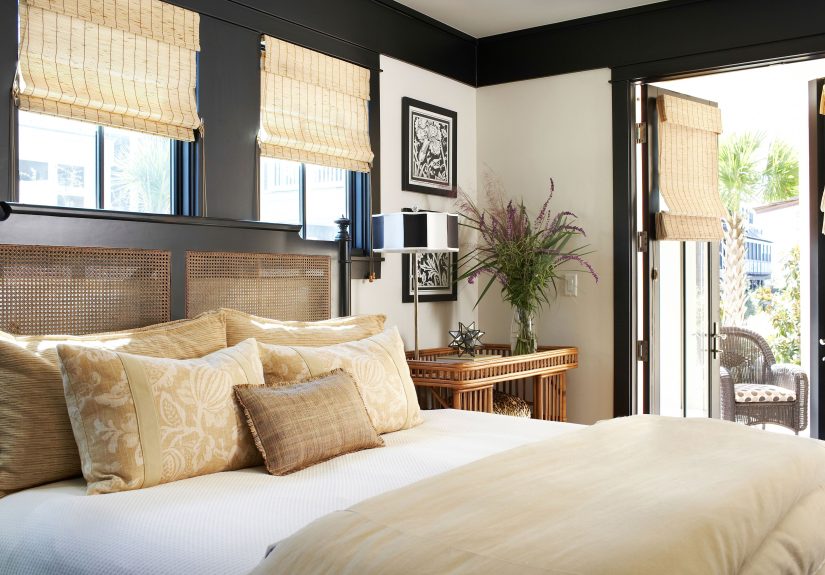
- Windows: linen curtains, woven shades, or soft drapery panels
7) Layer Window Treatments for Softness and Better Sleep
Curtains aren’t just decorativegood window treatments help the room feel finished and can support a darker, calmer
sleep environment. Layer a woven shade or Roman shade with curtain panels for depth. In a neutral palette, the
fabric itself becomes the design.
Pro tip: hang curtains high and wide to make the room feel taller (and your windows feel fancy).
8) Anchor the Room with a Neutral Rug That Has a Pattern (Quietly)
A rug is the easiest way to add “movement” to a neutral bedroom without splashing color everywhere. Look for faded
patterns, subtle geometrics, or tone-on-tone motifs. It adds visual interest while staying calm.
Practical note: if you hate stepping on cold floors, a plush wool rug is basically a daily mood upgrade.
9) Use Warm Metals for a Soft Glow (Brass, Bronze, Aged Nickel)
Warm metallics bring life to neutralslike adding a little espresso to your latte. A brass sconce, bronze drawer
pulls, or an aged nickel lamp can make the room feel warmer and more layered without shifting the palette.
10) Upgrade Lighting: Dimmable, Warm, and Layered
If your overhead light makes you look like you’re being interrogated, it’s not helping your restful retreat goals.
Aim for layered lighting: bedside lamps or sconces, plus a soft overhead option on a dimmer. Warm bulbs feel gentler
at night and make neutrals look richer.
- Bedside: lamp or sconce for reading
- Ambient: overhead fixture on a dimmer
- Optional: a soft accent light (like a small table lamp on a dresser)
11) Add Contrast with Black (Just a Little, We’re Not Goth-Decorating)
A touch of black creates structure in a neutral bedroom: a thin black frame, a matte-black sconce, or a black
curtain rod. It sharpens the palette and keeps beige from drifting into “all one tone forever.”
12) Keep Wall Decor Simple: One Oversized Piece or a Calm Gallery
Neutral bedrooms shine when the art feels intentional. One large piece above the bed can look modern and soothing.
If you prefer a gallery wall, keep frames consistent and choose calm imageryblack-and-white photography, sketches,
landscapes, or minimal abstracts.
13) Add “Neutrals in Disguise” for Personality (Sage, Dusty Blue, Soft Blush)
If you’re afraid neutrals will feel boring, borrow a trick designers love: add one muted accent color that reads
neutral from across the room. Sage green, dusty blue, and soft blush pair beautifully with warm whites and greige.
You get personality without the visual loudness.
Example: cream walls + oatmeal bedding + two sage pillows = calm, not bland.
14) Bring in Nature: Greenery, Branches, or Natural Stone
Biophilic touches make neutral bedrooms feel fresher. A plant, a vase of branches, or a stone tray on the nightstand
adds organic shape and texture. Bonus: it’s an easy way to make the room feel “styled” without buying 47 decorative
objects you’ll eventually dust while muttering to yourself.
15) Reduce Visual Noise: Hide the Clutter, Keep the Calm
The fastest way to make a neutral bedroom feel like a restful retreat is to reduce clutter. Neutrals look best when
the space feels edited. Use closed storage (dressers, baskets with lids) and keep surfaces simple.
- Nightstand “capsule”: lamp, coaster, book, charger, one small tray
- Use under-bed storage intentionally (no chaos bins that attack your shins)
16) Make It Sleep-Friendly: Dark, Quiet, Cool, Comfortable
Neutral bedroom decor is step one. Comfort is the closer. Prioritize the basics: keep the room dark at night, reduce
noise where you can, and aim for a comfortably cool temperature. If light leaks are an issue, blackout liners are a
surprisingly glamorous solution. If noise is the villain, a fan or white-noise machine can be your hero.
Styling Cheats That Make Neutral Bedrooms Look “Designer” Fast
Use the 60-30-10 rule (but make it neutral)
Instead of bold colors, apply the ratio to materials:
60% main neutral (walls + big furniture), 30% supporting neutral (bedding + rug), 10% accent (metal, black detail,
muted green, or a texture moment like bouclé).
Repeat finishes on purpose
If you use brass on a sconce, repeat brass on a frame or drawer pull. If you introduce black in curtain rods, repeat
black in art frames. Repetition makes neutrals feel intentional.
Common Neutral Bedroom Mistakes (and How to Fix Them)
Mistake: Everything is the same beige
Fix: keep the color quiet, but vary texture and sheenlinen, wool, leather, matte ceramic, warm metal.
Mistake: The room feels cold
Fix: warm it up with wood tones, creamy whites, and softer lighting. Add a knit throw and a rug with a warm undertone.
Mistake: The room feels “unfinished”
Fix: window treatments + a larger rug + at least one statement piece (headboard, art, or light fixture).
Neutrals need structure.
Real-Home Experiences: What Neutral Bedrooms Feel Like Day-to-Day (500+ Words)
Neutral bedroom ideas photograph beautifully, but the real question is: how do they live? In real homes,
neutral bedrooms tend to create a specific kind of daily comfortless sensory clutter, more “ahh, finally” energy.
Here are a few real-life patterns people notice after switching to a calmer neutral bedroom decor approach.
1) Mornings get easier because the room stops yelling at you
When your palette is warm white, cream, greige, and soft taupe, the room doesn’t greet you with a visual argument.
You’re not negotiating with neon pillows or high-contrast walls before your coffee. Instead, you wake up to a space
that feels steady. Even if the rest of your day is a circus (email! traffic! group chats!), your bedroom stays
consistent. Many people describe it as “my room feels like it’s on my side.”
2) Neutral doesn’t mean boringit means you notice the good stuff
In a colorful room, your eye bounces from one bold thing to the next. In a neutral bedroom, you start noticing
texture and quality: the crispness of the sheets, the softness of a quilt, the cozy weight of a throw. That’s why
neutrals pair so well with “little luxuries.” A linen duvet suddenly feels like a character in the story, not just
a background prop. Even small upgradeslike swapping shiny polyester pillows for textured cottonmake a bigger
impact because the palette isn’t competing for attention.
3) Seasons become your “accent color,” and it’s oddly satisfying
A neutral bedroom is a perfect canvas for seasonal swaps without redecorating your entire life. In fall, you toss on
a camel knit throw and maybe a deeper taupe pillow. In winter, you go fluffierfaux shearling, heavier textures,
warmer lamp light. In spring, you lighten up with airy linens and maybe a muted sage accent. Because the base is
stable, your room changes with you. It’s like having a capsule wardrobe, but for your sleep sanctuaryand you don’t
have to pretend you enjoy shopping for “statement” anything.
4) The “hotel effect” is real… but only if you edit your stuff
People often try to copy that boutique-hotel calm and then keep 19 items on the nightstand (water bottle, charger,
three lip balms, receipts, one mysterious LEGO). Neutrals amplify clutter. The good news: once you edit down to the
essentials, the room instantly feels more luxurious. A small tray for the basics, a closed drawer for the rest, and
suddenly your neutral bedroom retreat reads “intentional,” not “in progress.”
5) Sleep feels more protected when the environment is consistent
Beyond style, a neutral bedroom tends to support better sleep routines because the room becomes a cue: low light,
soft bedding, fewer distractions. When the space is dimmable and calm, it’s easier to build habitsreading instead
of scrolling, relaxing instead of “just one more episode.” Neutrals aren’t a magic spell, but they’re a strong
foundation. Add comfortable bedding, supportive pillows, and a darker, quieter environment, and the room starts
behaving like the restful retreat you always wanted it to be.
Conclusion: Calm, Cozy, and Actually Sleepy (The Dream)
The best neutral bedroom ideas aren’t about eliminating personalitythey’re about creating a peaceful base that
supports rest. Choose a consistent undertone, build depth with layered textures, and upgrade your lighting and
comfort essentials. With the right mix of warm neutrals, tactile materials, and a clutter-light layout, your bedroom
can look elevated while feeling genuinely restorative. That’s not just good designit’s self-care with a duvet.