Table of Contents >> Show >> Hide
- Why Sage Makes a Great Garden Neighbor
- At-a-Glance: The 18 Best Sage Companion Plants
- The 18 Sage Companions (With Real-World Reasoning)
- How to Arrange Sage Companions Without Starting a Water War
- Plants Commonly Considered “Not Great” With Sage
- of Practical “Been-There” Wisdom (So You Don’t Have to Learn the Hard Way)
- Conclusion: Build a Sage “Neighborhood,” Not a Monoculture
(GPT-5 family).
Research synthesized from reputable US sources including: University of Minnesota Extension, WVU Extension, Michigan State University Extension, University of Delaware Cooperative Extension, UC ANR, Clemson HGIC, Kansas State Research & Extension, University of Arizona Cooperative Extension, Bonnie Plants, Burpee, Better Homes & Gardens, The Old Farmer’s Almanac, and select local nonprofit garden resources.
Sage (that slightly bossy, wonderfully aromatic Salvia officinalis) is the friend in your garden group chat who actually shows up with a plan.
It likes sunshine, hates wet feet, and smells like it’s been appointed head of security. Plant it well, and it can help you build a vegetable patch that’s
more balanced, more pollinator-friendly, and a little less like a 24/7 buffet for pests.
This guide walks through 18 sage companion plants that pair well with sage’s Mediterranean vibeplus how to arrange them so everyone gets along.
Expect practical tips, a few “learn-from-my-mistakes” moments, and just enough garden humor to keep your trowel from getting too serious.
Why Sage Makes a Great Garden Neighbor
Companion planting is basically strategic matchmaking: you place plants together to use space better, attract beneficial insects, and sometimes reduce pest pressure.
It’s not magic (sorry), but it can stack the odds in your favor when you combine scent, flowers, and smart spacing.
What sage brings to the party
- Strong aroma that can confuse certain pests and help “mask” nearby crops.
- Pollinator value when allowed to flowerbees love a good sage bloom.
- Drought tolerance once established, making it ideal for low-water borders and raised beds.
- Structure: it’s a woody herb that can act like a small evergreen anchor in mixed plantings.
The golden rule: pair sage with plants that like full sun and well-drained soil. If you pair it with a thirsty crop,
you’ll end up negotiating watering schedules like you’re splitting rent with a roommate who takes 45-minute showers.
At-a-Glance: The 18 Best Sage Companion Plants
Here’s your quick list. Below, you’ll get the “why it works” and “how to use it” for each.
- Rosemary
- Thyme
- Lavender
- Oregano
- Chives
- Garlic
- Onions
- Marigolds
- Calendula
- Nasturtiums
- Borage
- Yarrow
- Chamomile
- Dill
- Parsley
- Carrots
- Cabbage (and other brassicas)
- Strawberries
The 18 Sage Companions (With Real-World Reasoning)
1) Rosemary
Rosemary and sage are basically cousins who love the same vacation spot: hot sun, lean soil, and good drainage. Planted together, they form a fragrant border
that’s easy to maintain and highly attractive to pollinators when in bloom. Keep airflow decent so the “Mediterranean shrub club” doesn’t invite mildew to move in.
2) Thyme
Thyme plays two roles: groundcover and pollinator snack bar. Creeping thyme can act like a living mulch around sage, shading soil, reducing splashes onto leaves,
and making weeds regret their life choices. Let it flower for maximum beneficial-insect traffic.
3) Lavender
Lavender matches sage’s dry-soil preference and adds a perfume that screams, “This garden is booked and busy.” Together they create a pollinator-friendly strip
that’s also visually gorgeous. Think of lavender as sage’s fancy neighbor who always has great curb appeal.
4) Oregano
Oregano is a sturdy companion that thrives in similar conditions and can be allowed to sprawl slightly as a soft edge plant. When it blooms, it brings in small
beneficial insects that help keep the garden ecosystem humming. Bonus: you’ll feel suspiciously wealthy harvesting two herbs for one pasta night.
5) Chives
Chives are compact, easy, and loaded with pollinator-friendly flowers. They’re also a classic “helper” plant in mixed beds, often included to discourage pests
and add biodiversity without hogging space. Tuck chives near sage without crowding the baseairflow matters.
6) Garlic
Garlic is the bouncer standing next to sage at the garden entrance: aromatic, assertive, and hard to ignore. Plant garlic in a nearby row or cluster at the edge
of your herb bed to add scent diversity and reduce “single-crop scent trails” that pests follow.
7) Onions
Like garlic, onions add a strong scent profile and fit well near sage as long as drainage is good. Use onions in the “sunny, dry-ish” portion of a bed and keep
sage as the perennial anchor while onions rotate seasonally around it.
8) Marigolds
Marigolds are the social butterflies of companion planting: they bring color, attract beneficial insects, and (in some contexts) are used to help manage soil pests
like nematodes. Place them near sage and vegetables as a bright, functional border that looks intentionaleven if you’re improvising.
9) Calendula (Pot Marigold)
Calendula is a gentle workhorse: long blooming, cheerful, and useful for drawing pollinators and beneficial insects into the area. It also makes a great “buffer”
plant between sage (dry) and slightly thirstier vegetables (moderate), smoothing out your watering compromises.
10) Nasturtiums
Nasturtiums are the sacrificial decoys of the gardenoften grown as a “look over here!” plant for certain pests while also attracting pollinators. They can spill
out of beds, so give them room and keep them from smothering young sage. Think of them as a fun friend who needs boundaries.
11) Borage
Borage is famous for its starry blue flowers and for attracting a wide range of beneficial insects. It can get large, so plant it where it won’t shade sage. If
you want more pollinators for nearby fruiting crops, borage near sage is like adding a neon “OPEN” sign for bees.
12) Yarrow
Yarrow brings clusters of small flowers that support many beneficial insects, plus it tolerates dry conditions once established. It’s an excellent perimeter plant
near sageespecially if you’re building a “beneficial insect border” around a vegetable patch.
13) Chamomile
Chamomile adds delicate blooms and can be a handy companion in herb-heavy plantings. It generally prefers decent drainage and can fit nicely as a seasonal filler.
Keep it close enough to share pollinator traffic, but not so close that airflow around sage gets cramped.
14) Dill
Dill is a beneficial-insect magnet when flowering, which can help support natural predators in the garden. Because dill can get tall and floppy, plant it behind
sage (north side) or stake it. If you’re pairing dill with brassicas elsewhere, note that compatibility advice can vary by sourceobserve and adjust.
15) Parsley
Parsley is a quietly powerful companion because it flowers into tiny umbels that attract helpful insects, and it can handle partial shade. Use sage as a light windbreak
or structure nearby, then place parsley where it gets sun but not the harshest afternoon blast.
16) Carrots
Carrots can benefit from aromatic neighbors, and sage is often listed among herbs used around carrots for pest management strategies. The trick is water: carrots
need more consistent moisture than sage. Solution: keep carrots in the same bed, but not the same watering zonethink “neighbors,” not “roommates.”
17) Cabbage (and other brassicas like broccoli/cauliflower/kale)
Aromatic herbs are frequently recommended as part of an integrated approach to discouraging brassica pests (the moth-and-caterpillar circus). Plant sage near the
edge of your brassica block rather than inside dense rows. You’ll add scent disruption and pollinator support without stealing too much root space.
18) Strawberries
Strawberries pair well with a “scent shield” approach: strongly aromatic herbs nearby can make it harder for pests to home in on the berries. Plant sage as a
sunny-side border near strawberries, but give both adequate airflow to reduce humidity-related disease issues.
How to Arrange Sage Companions Without Starting a Water War
Create “micro-zones” in one bed
Instead of mixing everything randomly, design two lanes:
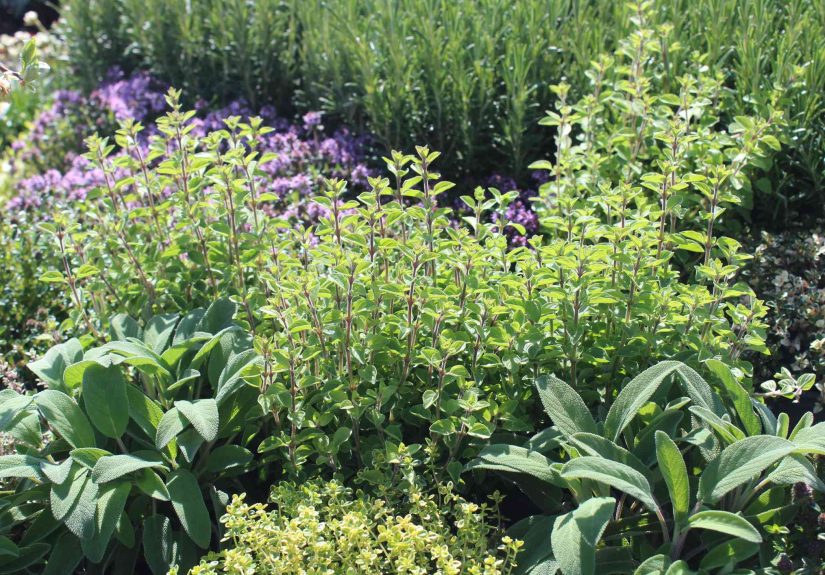
(1) the dry lane for sage + Mediterranean herbs (rosemary, thyme, lavender, oregano),
and (2) the moderate lane for plants that enjoy more consistent moisture (carrots, parsley, dill during establishment).
A narrow band of flowers (calendula, marigolds, nasturtiums) makes a great peace treaty between lanes.
Spacing that keeps sage healthy
Sage appreciates room and airflow. A common guideline is spacing plants roughly 18–24 inches apart so the base doesn’t stay damp and cranky.
If your climate is humid, spacing and morning sun matter even morewet leaves are basically an invitation for disease.
Let some companions bloom (on purpose)
Pollinator and beneficial-insect benefits are strongest when certain herbs and flowers actually flower. Choose a few plants (like yarrow, borage, thyme,
calendula) to “go full bloom mode,” and keep others trimmed for harvest. Yes, you can have both productivity and a garden that looks like a tiny festival.
Plants Commonly Considered “Not Great” With Sage
Companion planting advice varies, but two issues come up repeatedly: water mismatch and crowding. Very thirsty plants can push you
to overwater sage, and sprawling vines can shade it out. If you’re determined to try a questionable pairing, separate them with distance or containers and watch
how the plants respond in your specific microclimate.
of Practical “Been-There” Wisdom (So You Don’t Have to Learn the Hard Way)
Here’s what tends to happen when gardeners actually try building a sage-centered companion planting bedespecially in real backyards where “perfect conditions”
are mostly a rumor.
First: the watering tug-of-war. Sage is happiest when the soil dries a bit between waterings. Carrots and young dill, meanwhile, prefer steadier
moisture while they’re getting established. The easiest fix is to plant sage on the slightly higher side of a bed (or in a raised-bed corner) where drainage is best,
then keep the thirstier companions a foot or two away on flatter ground. If you’re using drip irrigation, put sage on a separate emitter line or lower-flow emitters.
That one small tweak can prevent the classic “sage looks sad and floppy” mystery.
Second: airflow is not optional. When people cram sage into the middle of a lush mixed bed, it can trap humidity around the base. The plant may survive,
but it won’t thriveand you’ll notice fewer flavorful leaves and more “why does this look dusty?” moments. Treat sage like a small shrub: give it breathing room,
prune lightly to keep it bushy, and don’t be afraid to remove a neighboring plant that’s getting too clingy. This is gardening, not a reality dating showsome contestants
need to go.
Third: flowers are the secret saucebut only if you let them work. A lot of gardeners plant marigolds or calendula and then deadhead aggressively
because they want everything tidy. Neat is nice, but beneficial insects often need continuous blooms and a bit of “messy habitat” to stick around. A compromise:
keep the front edge tidy for looks, and allow a small patch of flowers (borage, yarrow, calendula) to bloom freely on a side strip. You’ll usually notice more bees,
more hoverflies, and fewer “what is chewing that?” surprises.
Fourth: nasturtiums need boundaries. They’re fantastic, but they can sprawl like they pay rent. If you plant nasturtiums near young sage, train them
outwardlet them cascade off the bed edge or into a path border. If you let them pile into the center, sage gets shaded and airflow drops. Nasturtiums aren’t “bad”;
they’re just enthusiastic.
Fifth: think seasonally. Sage is perennial in many regions, but some companions are cool-season stars. In spring, tuck lettuce-like space fillers (or parsley)
near sage while the sage is waking up. By summer, shift your emphasis to heat lovers and pollinator plants. This rotation keeps the bed productive without forcing
sage to compete with a constant crowd.
Finally: don’t expect companion planting to replace basic plant care. Healthy soil, correct sun exposure, and appropriate spacing do the heavy lifting. Companion
plants are the supporting cast that can improve resilienceand make your garden feel more alive. When it works, it doesn’t look like a miracle. It looks like a garden
that’s quietly, consistently doing better.
Conclusion: Build a Sage “Neighborhood,” Not a Monoculture
The best sage companion plants do two things: they match sage’s love of sun and drainage, and they add diversityscents, flowers, and growth habits
that make your garden harder for pests to exploit. Start with the dry-lane classics (rosemary, thyme, lavender, oregano), add a few pest-and-pollinator boosters
(marigolds, calendula, borage, yarrow), then place moisture-lovers (carrots, parsley, dill) just far enough away that sage doesn’t get overwatered.
If you build your planting like a tiny communitywith sage as the wise old neighbor who keeps the block organizedyou’ll get a healthier crop, a more interesting bed,
and a garden that feels less like work and more like a place you actually want to hang out.