Table of Contents >> Show >> Hide
- Before You Start: The Rules That Make Everything Easier
- Way #1: Hide the Medicine in Food or a Pill Pocket
- Way #2: Give the Pill Directly by Mouth
- Way #3: Give Liquid Medicine with an Oral Syringe
- Way #4: Ask About Compounded, Flavored, or Transdermal Options
- Common Mistakes That Make Medication Time Harder
- When to Call Your Vet Instead of Improvising
- Real-Life Experiences: What Giving a Cat Medicine Actually Feels Like
- Conclusion
If you have ever tried to give a cat medicine, you already know this truth: cats did not attend medical school, and many of them strongly object to amateur pharmacy work happening in their kitchen. One minute you are holding a tiny tablet. The next minute your cat is acting like you have betrayed the ancient feline code.
The good news is that giving a cat medicine does not have to become a daily wrestling match. With the right method, a little preparation, and a willingness to think like a cat instead of a bulldozer, you can make the process safer, calmer, and far more successful. In most cases, the best approach depends on the type of medication, your cat’s personality, and whether the drug can be hidden in food, given directly by mouth, dispensed as a liquid, or changed to another form entirely.
This guide breaks down 4 ways to give a cat medicine, plus the mistakes that make the job harder and the real-life lessons cat owners learn after a few rounds of “Where did the pill go?” Whether your cat is a mellow lap loaf or a tiny striped attorney preparing a lawsuit, these vet-informed strategies can help.
Before You Start: The Rules That Make Everything Easier
Before you even open the pill bottle, set yourself up for success. Cats are masters of reading the room, and if the room says “panic,” they will absolutely join the chaos.
1. Confirm exactly how the medication should be given
Some cat medications can be crushed, split, or mixed into food. Others absolutely should not be altered. A capsule may need to stay whole. A tablet may need an empty stomach. A liquid may need refrigeration. So before you play home pharmacist, double-check the label and your veterinarian’s instructions.
2. Prepare the dose before you bring in the cat
Draw up the liquid, set out the pill, grab the towel, and have treats ready first. Hunting for a syringe while your cat slides under the couch is not a medication plan. It is a sitcom episode.
3. Choose a quiet, low-drama spot
Use a stable surface with minimal distractions. Shut the door if needed. Keep dogs, kids, and random vacuum cleaners out of the scene. A calm environment helps your cat stay calmer, and that helps you keep all of your fingers.
4. Stay gentle, not forceful
Firm handling is sometimes necessary, but rough handling usually backfires. If your cat becomes frantic, stop and regroup. Repeated daily battles can damage trust and make tomorrow’s dose even harder.
5. Follow pills with a little water or soft food when appropriate
One of the smartest tips many owners miss is that dry-pilling a cat is not ideal. A pill or capsule can hang up in the esophagus, so many veterinarians recommend following it with a small amount of water or a soft treat if your medication instructions allow it.
6. Reward immediately
A favorite treat, a lickable snack, brushing, petting, or playtime can help your cat build a less terrible association with medicine time. The goal is progress, not applause, although applause is welcome if your cat swallows the pill on the first try.
Way #1: Hide the Medicine in Food or a Pill Pocket
For many cat owners, this is the easiest and least stressful method. If your veterinarian says the medication can be given with food, hiding it in a small bite of something delicious may let your cat do the hard work for you.
Best for
Cats who are food-motivated, pills that can be given with meals, and owners who prefer a low-conflict routine.
How to do it
- Use a very small amount of wet food, lickable treat, or a cat-specific pill pocket.
- Hide the medication completely so it is not obvious by sight or smell.
- Offer one plain bite first if your cat is suspicious.
- Then give the medicated bite.
- Watch to make sure your cat actually swallows it and does not leave the tablet on the floor like a tiny act of protest.
Why this works
When it works, it feels almost magical. There is no mouth prying, no towel burrito, and no dramatic eye contact that says, “I will remember this.” Food-based dosing can reduce stress for both the cat and the human, which matters a lot for medications that must be given daily or long-term.
What to watch out for
Do not bury the medication in a full bowl of food and hope for the best. If your cat eats only half the meal, you have no idea how much medicine was swallowed. Also, avoid turning your cat’s favorite prescription diet into a medication trap. If your cat starts associating that food with a bad taste, you may create a bigger problem than the original illness.
There is another catch: not every hiding food is a smart choice. Salty deli meat, cheese, or rich human foods may not be appropriate for cats with kidney disease, heart disease, gastrointestinal issues, or other medical conditions. Ask your veterinarian what hiding option fits both the medication and your cat’s health needs.
Way #2: Give the Pill Directly by Mouth
When your cat can detect one molecule of medicine hidden inside a treat and rejects it with Sherlock Holmes-level confidence, direct pilling may be your best option. It sounds intimidating, but with practice, it can become quick and efficient.
Best for
Tablets or capsules that cannot be crushed, cats who refuse medicated food, and situations where you need to know the full dose went in.
How to do it
- Hold your cat securely on a table, counter, or your lap.
- If needed, wrap the body in a towel with only the head exposed.
- Hold the top of the head gently and tilt the nose upward.
- Use your other hand to open the lower jaw.
- Place the pill as far back on the tongue as you safely can, or use a pet piller if that is easier.
- Close the mouth, hold it shut briefly, and gently rub the throat or blow lightly on the nose to encourage swallowing.
- Follow with a small amount of water, soft food, or a lickable treat if your veterinarian says that is appropriate.
Make it easier with a pill gun
A pet piller, sometimes called a pill gun or pill popper, can be a lifesaver for owners who do not want their fingers too close to the business end of a determined cat. It helps place the pill farther back in the mouth, which may improve the odds of a successful swallow.
The biggest mistake
The biggest mistake is hesitating halfway through. Cats are lightning fast. If you slowly approach with a pill while apologizing out loud, your cat will likely clamp down, twist away, or spit the pill into another ZIP code. Be calm, gentle, and decisive.
When direct pilling is the right move
This method is especially useful for medications that must stay whole or drugs that taste terrible when crushed. It is not glamorous, but it is often the most reliable method when precision matters.
Way #3: Give Liquid Medicine with an Oral Syringe
Liquid medication can be easier than pills for some cats, especially if the drug comes flavored or can be mixed into a small food portion. But if food does not work, you may need to give it by syringe.
Best for
Cats who struggle with tablets, medicines already formulated as liquids, and cats who do well with careful, slow handling.
How to do it
- Shake the medication if the label says to do so.
- Measure the exact dose into an oral syringe.
- Hold your cat securely, with a towel wrap if needed.
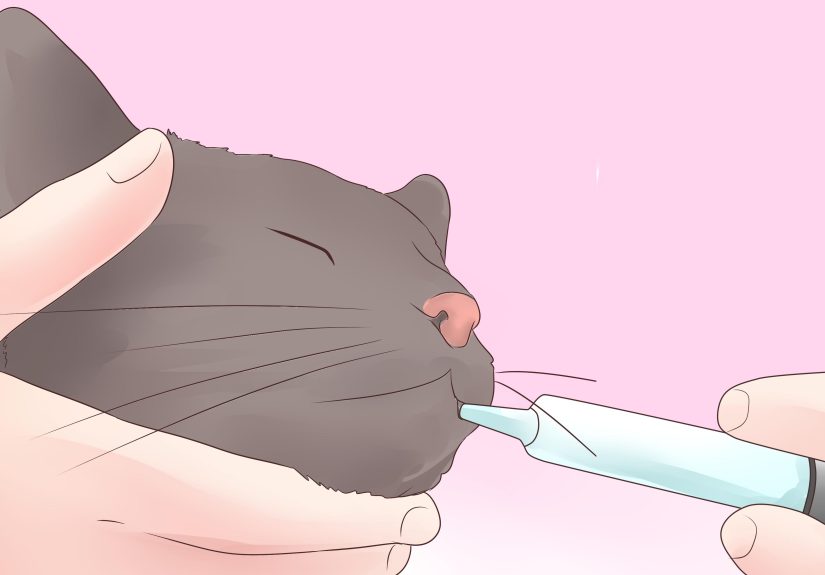
- Insert the tip of the syringe into the side of the mouth, just behind the canine tooth.
- Aim toward the cheek pouch or tongue, not straight down the throat.
- Dispense the liquid slowly in small amounts so your cat can swallow.
- Offer praise and a treat afterward.
Why the side of the mouth matters
Squirting liquid straight to the back of the throat is a fast way to cause coughing, panic, or aspiration risk. Slow and sideways is the better strategy. Think “gentle stream,” not “cat car wash.”
What if your cat foams at the mouth?
Do not panic. Some cats drool or foam after liquid medicine simply because they hate the taste. It can look dramatic, but it is not always dangerous. What matters is whether your cat swallowed enough of the dose and whether there are signs of coughing, choking, or major distress.
Important caution
If your cat spits out some of the liquid, do not automatically re-dose. Unless you are certain none of it was swallowed, you could accidentally give too much. When in doubt, call your vet or pharmacist and ask what to do next.
Way #4: Ask About Compounded, Flavored, or Transdermal Options
Sometimes the best way to give a cat medicine is to stop trying to force the original format. If your cat turns every dose into a full-contact sport, ask your veterinarian whether the medication can be changed.
Options that may help
- Compounded liquid: The medication is specially prepared in a liquid form that may be easier to measure and give.
- Smaller tablets or capsules: Tiny pills can be less offensive to everybody involved.
- Flavored formulations: Some cats tolerate certain flavors better than bitter standard forms.
- Transdermal gel: Certain medications can be applied to the inside of the ear flap instead of being swallowed.
Why this matters
Long-term treatment only works if it can actually be given. For chronic conditions like hyperthyroidism, hypertension, pain, nausea, or appetite problems, the most medically perfect drug means very little if your cat turns into a furry tornado every 12 hours.
One honest limitation
Alternative forms are helpful, but they are not universal and they are not always equivalent. Not every medication can be compounded. Not every transdermal version is ideal for every cat or every condition. Some cats need closer monitoring when a formulation changes. So this is not a DIY swap. It is a conversation with your veterinarian.
Transdermal tips
If your cat is prescribed a transdermal gel, apply it exactly as directed, usually on clean, dry skin on the inner ear flap. Wear gloves if instructed. Apply the correct amount, avoid leaving a thick glob on the ear, and distract your cat with food or play so they do not immediately rub it off.
Common Mistakes That Make Medication Time Harder
- Using a full meal to hide medicine: You cannot guarantee the full dose was eaten.
- Crushing pills without permission: Some medications lose effectiveness or become unsafe when altered.
- Dry-pilling without follow-up: Pills can stick and irritate the esophagus.
- Forcing a frantic cat past the breaking point: Fear makes every future dose worse.
- Re-dosing automatically after spit-up: This can accidentally double the dose.
- Using random human foods or medicines: Cats are not tiny people in whiskers. Some human meds and even dropped pills can be dangerous or toxic.
When to Call Your Vet Instead of Improvising
Call your veterinarian if your cat coughs repeatedly after dosing, seems to choke, bites through a capsule, vomits after each dose, refuses food after you have been hiding medicine in meals, or becomes impossible to medicate safely at home. Also call if you think your cat got the wrong dose, swallowed someone’s human medication, or only got part of a critical medicine.
There is no trophy for “most stubborn attempt to medicate a cat.” If the current method is not working, a better formulation or a different technique can protect both your cat’s health and your relationship with them.
Real-Life Experiences: What Giving a Cat Medicine Actually Feels Like
Ask ten cat owners about giving medicine, and you will usually get ten different stories plus one scar comparison. The reason is simple: cats are individuals, and the method that works beautifully for one cat may fail spectacularly for another.
One common experience is the “food trick honeymoon.” At first, the owner hides a tablet in wet food, and the cat gobbles it up like nothing happened. Everyone feels brilliant. Then by day three, the cat becomes a forensic scientist. The food is sniffed, licked once, and abandoned. The pill is found later on the floor, slightly damp, like a tiny insult. That is when many owners learn an important lesson: success on Monday does not guarantee success on Tuesday. Cats adapt.
Another familiar story comes from owners of shy or anxious cats. They often discover that their cat is easier to medicate when the whole routine is quieter and shorter. Instead of chasing the cat around the house, they start preparing the syringe first, closing the bathroom door, wrapping the cat gently in a towel, giving the dose calmly, and then offering a favorite treat. The medication itself did not change, but the routine did. That often makes all the difference.
Owners of cats with chronic illness usually become surprisingly skilled over time. The first week feels impossible. Hands shake. The cat squirms. The owner worries the pill went nowhere useful. But repetition builds confidence. Eventually, many people develop a rhythm: lift, dose, water chaser, treat, release. It is not glamorous, but it becomes manageable. Some even say the calm confidence matters more than perfect technique.
There are also owners who reach a breaking point and feel guilty about it. Maybe the cat hisses every time the medicine bottle appears. Maybe the owner dreads the twice-daily battle. Maybe everybody in the house starts hiding at pill time. This experience is more common than people admit, and it does not mean the owner is failing. Often, it means the format is wrong. When those owners ask their veterinarian about a compounded liquid, a flavored version, a smaller tablet, or a transdermal option, the entire household breathes easier. Sometimes the best solution is not “try harder.” It is “change the plan.”
Then there is the experience of learning what not to do. Owners discover that hiding medicine in a favorite meal can backfire when the cat starts avoiding that food entirely. They learn that squirting liquid too quickly leads to foam, offended blinking, and a look of personal betrayal. They learn that hesitation during direct pilling gives the cat enough time to become an escape artist. Most of all, they learn that cats respond to pattern. If medicine is always followed by panic, resistance grows. If medicine is followed by a lickable treat, gentle praise, and freedom, some cats slowly become less dramatic about the process.
The biggest real-world takeaway is this: giving a cat medicine is rarely about winning a showdown. It is about reducing stress, protecting the dose, and adjusting the method until it suits the cat in front of you. Some days will still be messy. Some days the pill will vanish and you will question reality itself. But with patience, smart technique, and veterinary help when needed, medication time can move from chaos to routine. Maybe not elegant routine. But routine nonetheless.
Conclusion
The best way to give a cat medicine depends on the drug and the cat. For some, a pill pocket is the clear winner. For others, direct pilling is the only reliable option. Liquid syringes help when tablets are a no-go, and compounded or transdermal alternatives can be game-changers for long-term treatment. The real secret is not forcing one method forever. It is choosing the safest method your cat will actually tolerate.
When in doubt, ask your veterinarian to demonstrate the technique, confirm whether the medication can be crushed or mixed with food, and help you troubleshoot if dosing becomes a battle. That is not cheating. That is good cat management. And your cat, after a brief pause for judgment, may eventually agree.