Table of Contents >> Show >> Hide
- Why Cornflour Slime Works
- Before You Start: Supplies and Safety
- 1. Classic Cornflour Slime: The Famous Oobleck Recipe
- 2. Color-Changing Cornflour Slime
- 3. Dish Soap Cornflour Slime
- 4. Glue and Cornflour Slime Without Borax
- 5. Fluffy Cornflour Slime With Shaving Cream
- Troubleshooting Cornflour Slime
- Cleanup and Disposal
- Educational Benefits of Making Cornflour Slime
- Best Recipe for Each Situation
- Real Experience: What I Learned Making 5 Types of Cornflour Slime
- Conclusion
Cornflour slime is the rare craft project that can make a kitchen table look like a science lab, a mud pie station, and a tiny alien landing zone all at once. It is squishy, strange, dramatic, and surprisingly educational. Best of all, most versions need only pantry ingredients: cornflour, water, food coloring, dish soap, glue, or shaving cream. No complicated chemistry degree required. A mixing bowl and a sense of humor will do nicely.
Before we dive in, let’s clear up one small but important naming issue. In many countries, “cornflour” means the fine white starch used to thicken sauces. In the United States, that same ingredient is usually called cornstarch. For this article, cornflour means cornstarch: the silky white powder that turns gravy glossy, cookies tender, and children suspiciously quiet when they discover it can become slime.
The classic cornflour slime is often called oobleck. It is famous because it acts like both a liquid and a solid. Press it quickly, and it firms up. Let it rest in your hand, and it drips through your fingers like a slow-motion puddle. That odd behavior makes it a perfect sensory play activity, a simple STEM experiment, and a rainy-day boredom destroyer. Below are five easy ways to make cornflour slime, plus troubleshooting tips, safety notes, cleanup advice, and real-world experience to help your slime session go smoothly.
Why Cornflour Slime Works
Cornflour slime works because cornstarch particles do not truly dissolve in water. Instead, they stay suspended. When you move the mixture slowly, the particles slide past one another and the slime flows. When you hit, squeeze, slap, or stir it quickly, those tiny particles crowd together and resist motion. That is why classic oobleck can feel hard for a second, then melt back into a puddle as soon as the pressure disappears.
This makes cornflour slime a non-Newtonian fluid, which is a fancy science phrase meaning, “This goo does not follow the normal liquid rules, and frankly it is proud of that.” Water has a fairly predictable flow. Honey flows more slowly, but still predictably. Cornflour slime changes depending on how much force you apply. It is science wearing a messy little costume.
Before You Start: Supplies and Safety
Basic Supplies
You do not need a craft-store treasure hunt to make cornflour slime. Most recipes use a few common items:
- Cornflour or cornstarch
- Water
- Food coloring or washable liquid watercolor
- Dish soap, shampoo, or body wash for softer slime variations
- White school glue for moldable cornflour slime
- Shaving cream for fluffy slime
- Mixing bowls, spoons, measuring cups, and a tray
- Paper towels, a trash bag, and a washable table covering
Safety Tips
Cornflour slime is generally simple and kid-friendly, but it is still a hands-on activity that needs supervision. Do not let children eat slime, especially recipes containing soap, glue, fragrance, or shaving cream. Keep slime away from eyes and mouths. Wash hands before and after play. If someone has sensitive skin, test a tiny amount first or stick with the classic cornflour-and-water version.
Also, never pour thick cornflour slime down the sink. It may look innocent, but once cornstarch settles and dries, it can become a pipe-clogging villain. Let it dry out and throw it in the trash, or scoop wet slime into a sealed bag before disposal.
1. Classic Cornflour Slime: The Famous Oobleck Recipe
This is the essential version: simple, dramatic, and perfect for explaining solids, liquids, pressure, and why your child is suddenly yelling, “Watch this!” every twelve seconds.
Ingredients
- 2 cups cornflour or cornstarch
- 1 cup water
- Food coloring, optional
How to Make It
- Pour the cornflour into a large mixing bowl.
- If using food coloring, mix it into the water first. This helps the color spread more evenly.
- Slowly add the water to the cornflour while stirring with a spoon or your hands.
- Keep mixing until all the powder is wet.
- Test the texture. Punch it gently with a finger. It should resist pressure. Scoop it slowly, and it should run like thick liquid.
Texture Check
If the slime is too runny, add more cornflour one tablespoon at a time. If it is too dry or crumbly, add water a teaspoon at a time. The best texture is firm when squeezed but drippy when relaxed. Think “pudding with a secret superhero identity.”
Best Experiments to Try
- Roll it into a ball, then stop moving your hands and watch it melt.
- Tap the surface quickly with a spoon.
- Drag your finger slowly through the slime, then try again quickly.
- Place a small toy on top and see whether it sinks fast or slowly.
Classic cornflour slime is the best recipe for science lessons, classrooms, sensory bins, and first-time slime makers. It does not stretch like glue-based slime, but it wins the award for “most likely to make adults say, wait, that is actually cool.”
2. Color-Changing Cornflour Slime
Once you have mastered basic oobleck, add color. Colorful cornflour slime is more visually exciting and works especially well for themed play: green monster slime, blue ocean slime, purple galaxy goo, orange pumpkin slime, or pink birthday-party slime. The science stays the same, but the drama level increases significantly.
Ingredients
- 2 cups cornflour or cornstarch
- 1 cup water
- 5 to 10 drops food coloring
- Optional: biodegradable glitter or small foam beads
How to Make It
- Add food coloring to the water and stir well.
- Pour cornflour into a bowl or shallow tray.
- Add the colored water slowly, mixing as you pour.
- Adjust with more cornflour or water until the slime becomes thick, smooth, and pressure-sensitive.
- Add glitter or foam beads only after the texture is right.
Color Ideas
For a swampy slime look, use green with one drop of yellow. For unicorn slime, divide the base mixture into three bowls and make pink, blue, and purple batches. For space slime, use blue and purple with a tiny sprinkle of glitter. Avoid too much glitter, because nobody wants their kitchen to look like a disco ball exploded.
Pro Tip
Add coloring to the water before adding it to cornflour. If you drip food coloring directly onto the dry powder, you may get little concentrated color spots that take longer to blend. They still work, but your hands may look like you lost a fight with a marker.
3. Dish Soap Cornflour Slime
Dish soap cornflour slime is softer, smoother, and more moldable than classic oobleck. It is not the same kind of non-Newtonian fluid as the water version, but it makes a pleasant sensory dough-slime hybrid. It is excellent when you want a slime that holds together a little better and smells cleaner than your average craft project.
Ingredients
- 1 cup cornflour or cornstarch
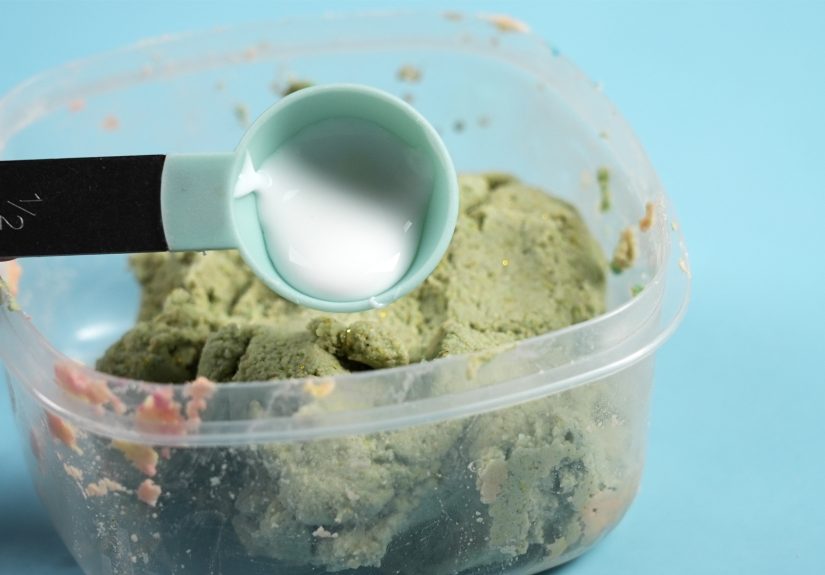
- 1/2 cup dish soap
- Food coloring, optional
How to Make It
- Add dish soap to a bowl.
- Stir in food coloring if desired.
- Add cornflour gradually, mixing as you go.
- Knead the mixture with your hands once it becomes thick.
- Let it rest for two minutes, then knead again.
How It Should Feel
This slime should be soft, smooth, and slightly stretchy, though not as elastic as borax-style slime. If it sticks to your fingers too much, add more cornflour. If it crumbles, add a small squirt of dish soap. The final result should feel like a silky putty that can be squeezed, folded, and stretched a little.
Safety Note
Use mild dish soap and supervise children closely. This version is not taste-safe. Avoid using strong degreasing soaps, heavily perfumed products, or anything that irritates skin. After play, wash hands thoroughly.
4. Glue and Cornflour Slime Without Borax
Many traditional slime recipes use glue plus an activator such as borax, liquid starch, or contact lens solution. This cornflour slime recipe skips those classic activators and uses cornstarch to thicken glue into a soft, moldable slime. It is less stretchy than standard slime, but it is easy, satisfying, and beginner-friendly.
Ingredients
- 1/4 cup white school glue
- 3/4 cup cornflour or cornstarch
- Food coloring, optional
- 1 teaspoon water, optional
How to Make It
- Pour white glue into a bowl.
- Add food coloring and mix until the color is even.
- Add cornflour slowly, stirring after each addition.
- When the mixture becomes too thick to stir, knead it by hand.
- If the slime feels too stiff, add a tiny amount of water or a few extra drops of glue.
What Makes This Version Different?
Glue and cornflour slime is more like soft modeling putty than classic oobleck. It does not flow as dramatically, but it is easier to pick up and play with on a tray. It works well for kids who want something squishable without the fast-dripping chaos of water-based cornflour slime.
Common Mistakes
The most common mistake is dumping in all the cornflour at once. Add it gradually. Glue thickness varies by brand, and humidity can affect the texture too. Slime recipes are a little like pancakes: the recipe gives you a starting point, but your eyes and hands make the final decision.
5. Fluffy Cornflour Slime With Shaving Cream
Fluffy cornflour slime is the cloud-like cousin of regular slime. Shaving cream adds volume and softness, while cornflour thickens the mixture. This version is light, puffy, and extremely fun to poke. It is also the one most likely to inspire someone to say, “It looks like frosting,” which is your cue to remind everyone that it is absolutely not frosting.
Ingredients
- 1/2 cup white school glue
- 1 cup shaving cream
- 1 1/2 to 2 cups cornflour or cornstarch
- Food coloring, optional
How to Make It
- Add glue to a large bowl.
- Mix in food coloring until the color is even.
- Fold in shaving cream gently.
- Add cornflour 1/2 cup at a time, stirring well.
- Knead the slime until it becomes soft, fluffy, and less sticky.
Texture Tips
If the slime is sticky, dust your hands with cornflour and knead more. If it becomes too dry, add a little more glue or shaving cream. The finished slime should be airy and squishy, not powdery. It may lose some puffiness after storage, but a few seconds of kneading can bring back some of the softness.
Storage
Store fluffy cornflour slime in an airtight container for a short time, usually one to two days. Because it contains shaving cream and glue, it is best treated as a temporary craft rather than a long-term toy. If it smells odd, dries out, or changes texture unpleasantly, throw it away.
Troubleshooting Cornflour Slime
My Slime Is Too Watery
Add cornflour one tablespoon at a time. Stir or knead after each addition. For classic oobleck, watery slime usually means the suspension is too thin. The mixture needs enough cornflour particles to create that firm-under-pressure effect.
My Slime Is Too Dry
Add liquid slowly. For oobleck, use water. For dish soap slime, add a small amount of soap. For glue slime, add a few drops of glue or water. Do not panic and pour in half a cup of liquid at once unless you enjoy restarting projects with dramatic flair.
My Slime Is Sticky
Sticky slime usually needs more cornflour or more kneading. Dust your hands lightly with cornflour and work it in. For fluffy slime, wait a minute before adding more powder; sometimes the shaving cream needs time to settle into the mixture.
My Oobleck Does Not Turn Solid When I Tap It
It is probably too thin. Add more cornflour and test again. Proper oobleck should resist fast pressure but flow under gentle movement. If it splashes like soup, it needs more starch. If it breaks like dry clay, it needs more water.
Cleanup and Disposal
Cornflour slime cleanup is easy if you plan ahead and mildly ridiculous if you do not. Use a tray, washable tablecloth, or baking sheet under the bowl. Keep paper towels nearby. For classic oobleck, let spilled slime dry, then scrape or vacuum the powder. Wet wiping can spread it around like a tiny paste parade.
Do not pour cornflour slime into the sink. Scoop it into the trash or let it dry first. For glue, soap, or shaving cream versions, seal the slime in a disposable bag before throwing it away. Wash bowls and spoons only after removing as much slime as possible with paper towels.
Educational Benefits of Making Cornflour Slime
Cornflour slime is more than a messy craft. It teaches observation, measurement, cause and effect, texture comparison, and early chemistry concepts. Children can predict what will happen when more water is added, test how pressure changes the texture, compare different recipes, and describe what they feel. That is real scientific thinking, even if the scientist is wearing pajamas and has green slime on one elbow.
You can turn the activity into a simple experiment by asking questions:
- What happens if we add more cornflour?
- Does warm water change the texture?
- Which recipe stretches the most?
- Which slime is easiest to clean?
- Can we make a ball that stays solid for five seconds?
These questions encourage kids to compare, test, and revise. That is the heart of STEM learning. The slime is just the charmingly gooey delivery system.
Best Recipe for Each Situation
Best for Science Lessons
Choose classic cornflour slime. It shows non-Newtonian behavior clearly and needs only water and cornstarch.
Best for Parties
Choose colorful cornflour slime. Set up several bowls with different colors and let kids mix small batches.
Best for Less Mess
Choose glue and cornflour slime. It holds together better than oobleck and is easier to pick up.
Best for Sensory Play
Choose dish soap cornflour slime. It feels smooth, soft, and pleasant to knead.
Best for Dramatic Texture
Choose fluffy cornflour slime. It is puffy, squishy, and delightfully pokeable.
Real Experience: What I Learned Making 5 Types of Cornflour Slime
The first thing you learn when making cornflour slime is that the recipe is less of a strict command and more of a polite suggestion. Cornflour has opinions. Water has opinions. The weather may also join the meeting. One day, two cups of cornflour and one cup of water creates perfect oobleck. Another day, the same recipe needs an extra spoonful of powder. This is normal. The best tool is not a measuring cup; it is your sense of texture.
Classic oobleck is still the most impressive version. It gives the biggest “wow” moment because it behaves so strangely. When you slap it, it feels firm. When you scoop it slowly, it runs away like it has somewhere better to be. Kids love this contradiction. Adults love it too, although they sometimes pretend they are only watching for educational reasons. The trick is to use a wide bowl or tray. A deep bowl makes it harder to test the surface, while a shallow tray lets everyone poke, press, roll, and experiment.
Colorful oobleck is more exciting, but food coloring deserves respect. A few drops are enough. Too much coloring can stain hands, cutting boards, and the confidence of the person responsible for cleanup. Mixing the color into the water first gives the smoothest result. If you add color straight to the cornflour, it can form intense little spots that take longer to blend. Children may enjoy that marbled effect, but your fingers may not.
Dish soap cornflour slime is a good option when you want a softer, more putty-like feel. It is less scientifically dramatic than oobleck, but it is easier to knead and less likely to drip off the table. The scent can be pleasant, though strong soaps can become overwhelming. A mild, unscented or lightly scented soap works best. This recipe also proves that patience matters. Letting the mixture rest for a minute or two often improves the texture.
Glue and cornflour slime feels the most like a traditional craft slime, but it is not endlessly stretchy. Expect squish, softness, and moldability rather than giant stretchy ribbons. Adding cornflour slowly is the secret. If you dump it all in at once, the mixture can become lumpy and stubborn. Kneading helps, but gradual mixing saves time and prevents frustration. This version is great for small-batch play because it is easier to store briefly and less likely to ooze into every corner of the tray.
Fluffy cornflour slime is the most theatrical. It looks big, soft, and cloud-like, especially when tinted pastel colors. It is also the recipe most sensitive to balance. Too much cornflour makes it dry; too much shaving cream makes it sticky and foamy. Add the powder slowly and stop when the slime feels soft but no longer coats your hands heavily. It is a temporary slime, not a forever slime, so enjoy it the day you make it.
The biggest cleanup lesson is simple: prepare before you mix. Cover the table, use a tray, keep slime away from carpet, and do not invite the sink drain to participate. Dried oobleck is easier to clean than wet oobleck, which feels backwards but is true. Let spills dry, brush them up, and then wipe the surface. For soap or glue recipes, remove as much as possible before washing tools.
Overall, cornflour slime is one of the best low-cost activities because it welcomes experimentation. It is okay if the first batch is too wet. It is okay if the second batch is too dry. Adjusting the recipe is part of the learning. The goal is not perfection; the goal is discovery, laughter, and maybe one adult whispering, “That is actually amazing,” while poking slime for the tenth time.
Conclusion
Learning how to make cornflour slime is simple, affordable, and surprisingly educational. With just cornflour and water, you can create classic oobleck, a non-Newtonian fluid that behaves like a liquid and a solid depending on pressure. Add color for visual fun, dish soap for a smoother sensory slime, glue for a moldable no-borax version, or shaving cream for fluffy slime. Each recipe offers a different texture, a different kind of play, and a different opportunity to explore science at home.
Whether you are planning a classroom STEM activity, a rainy-day craft, a birthday party station, or a screen-free afternoon, cornflour slime delivers maximum fun with minimal supplies. Just remember the golden rules: add liquid slowly, adjust texture patiently, supervise children, avoid tasting, and never pour thick slime down the drain. Your table may get messy, but your pipes deserve peace.
Note: This article uses “cornflour” in the common slime-making sense of cornstarch, the fine white starch used for classic oobleck and related sensory slime recipes.