Table of Contents >> Show >> Hide
- Why Yvonne Koné Still Defines Copenhagen Cool
- At Work: A Brand Built on Restraint, Craft, and Character
- The Shop: A Masterclass in Quiet Retail Theater
- At Home: Light, Calm, and the Art of Having Less
- What Copenhagen Cool Looks Like in Practice
- Why Yvonne Koné’s World Feels So Modern
- The Experience of Copenhagen Cool: Living the Yvonne Koné Mood
- Conclusion
If Copenhagen had a dress code, it would probably be this: wear something beautifully made, say very little about it, and let the materials do the flirting. That logic has long defined the world of Yvonne Koné, the Danish designer whose work helped turn quiet luxury into something more interesting than a whispery trend phrase. In her orbit, “minimal” does not mean sterile, and “practical” does not mean boring. It means a bag that gets better with age, a room that feels calm without becoming sleepy, and a color palette that knows exactly when to behave and when to smirk.
Koné’s appeal comes from balance. Her design language has been shaped by Danish restraint, Italian craftsmanship, and a more playful relationship with color than strict Scandinavian stereotypes usually allow. At work, that balance shows up in clean-lined leather goods and shoes that value proportion, comfort, and function. At home, it appears in interiors that are edited but not cold, airy but not empty, and full of subtle decisions that make daily life feel a little more elegant. The result is a version of Copenhagen cool that feels lived in rather than staged for social media, which is refreshing in an era when even a fruit bowl can look like it hired a publicist.
This is what makes Yvonne Koné such a compelling design figure. She does not just create products; she creates a mood. Her shop, her home, and her wider creative philosophy tell the same story from different angles: keep the lines simple, choose materials with integrity, make room for feeling, and never underestimate the power of a very good wall color.
Why Yvonne Koné Still Defines Copenhagen Cool
Koné founded her namesake accessories label in 2011, building it around handcrafted leather bags made in Italy and guided by a distinctly Danish aesthetic. From the beginning, her work stood out because it never relied on noise. Instead of flashy hardware, oversized logos, or trend-chasing silhouettes, she leaned into clarity: strong proportions, reduced detailing, and pieces designed to age well rather than date quickly.
That point matters. The phrase “quiet luxury” gets tossed around so often now that it sometimes sounds like a beige cashmere emergency. Koné’s work offers a better version of the idea. Her approach is not about looking expensive for the sake of it. It is about valuing materials, shape, tactility, and endurance. The official brand story emphasizes small-batch Italian production, close relationships with a family-run workshop in Tuscany, and a commitment to slowing down the pace of fashion. That makes the label feel less like a trend machine and more like an argument for patience.
Her own comments over the years reinforce that philosophy. She has described being more interested in objects than in the constant churn of fashion because accessories and shoes can be steadier, slower, and more thoughtful. That perspective explains why her best pieces feel so resolved. They are not screaming for attention. They are built to make sense in real life, on real streets, with real weather, real commutes, and real people who have things to carry and places to go.
At Work: A Brand Built on Restraint, Craft, and Character
Danish minimalism, but make it human
Koné’s work is often described as minimalist, and that is true in the broadest sense. The lines are clean. The silhouettes are edited. The palette usually behaves. But what makes her designs memorable is that they never feel emotionally flat. There is always a touch of softness somewhere: a rounded shape, a tactile leather, an unexpected dusty color, or a proportion that turns a functional object into something sculptural.
This is where her background becomes important. Coverage of her wardrobe and design philosophy has long noted the interplay between her Scandinavian roots and the color sensibility connected to her Ivorian heritage. That combination gives the work a specific personality. It is pared back, yes, but not humorless. Controlled, but not severe. Useful, but still stylish enough to make you feel like you have your life together even when your tote contains a laptop, two receipts, a lip balm, and at least one mysterious pen.
Made in Italy, designed for actual life
Koné’s products are crafted in Italy, and that is not presented as a vague luxury cliché. The brand has repeatedly emphasized its long-term relationship with a family-owned Italian workshop and a design process centered on durability, timelessness, and material quality. Some of its most iconic bags are named after the artisans behind them, including the Filippo line, which gives the products a rare sense of human connection. You are not just buying a silhouette; you are buying into a chain of skilled hands, deliberate choices, and design discipline.
That discipline extends to how the bags are constructed. The current brand language highlights reduced metal hardware, innovative handles and straps, and a preference for simplicity that actually increases the design challenge. In other words, if you remove the flashy extras, every line has to work harder. Every curve has to earn its keep. That is why the best Koné pieces feel so resolved. There is nowhere for weak design to hide.
Even retail descriptions from major U.S. stockists reinforce the same message: clean-lined Danish design, pebbled calfskin, suede, practical closures, adjustable straps, and Italian construction. These are luxury accessories, but they are not fantasy props. They are meant to be carried, worn, and aged. They are designed for women who like elegance, but also enjoy the radical convenience of not babying every single object they own.
The Shop: A Masterclass in Quiet Retail Theater
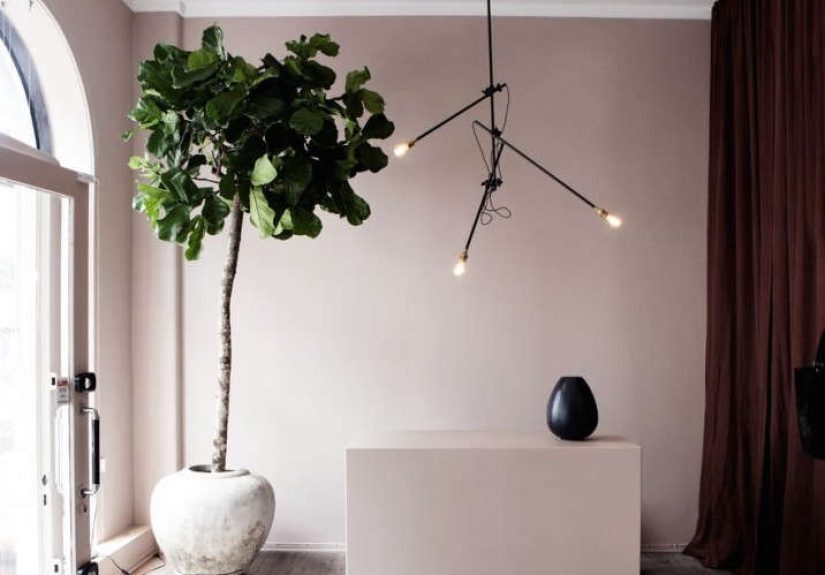
If the products express Koné’s aesthetic in miniature, her Copenhagen store shows it at room scale. One of the most memorable details from published tours of the boutique is the wall color: a dusty, powdery pink chosen with designer Oliver Gustav. It was not a sugary, precious pink. It was a grown-up pink, a calm pink, the kind of pink that wears good shoes and never overshares. In the store, it becomes the perfect foil for dark leather goods and sharp silhouettes.
The boutique was set inside a former antiques shop in a landmarked building on Store Strandstræde, near Nyhavn. That setting matters because it frames Koné’s work inside an older Copenhagen context rather than some generic luxury box. There are original arched windows, terracotta display blocks, pale wood floors, and objects with just enough patina to keep the space from feeling precious. The effect is serene, but not sleepy. It invites you to slow down, which is increasingly rare in retail unless you are standing in a checkout line behind someone comparing oat milk brands.
What is especially revealing is Koné’s attention to paint and atmosphere. In interviews about her home as well as her shop, she speaks about wall color almost like a living component of the space. She has said that when the color is right, she feels like she is getting a hug just by looking at the wall. That line tells you nearly everything you need to know about her version of luxury. It is not about visual excess. It is about emotional precision.
At Home: Light, Calm, and the Art of Having Less
Koné’s home interiors echo her work philosophy so closely that they feel like three-dimensional mood boards for the brand. Across different published glimpses of her Copenhagen apartments, the recurring themes are consistency, flexibility, and warmth. There are custom bookcases, white-oiled or pale wood floors, carefully chosen seating, and a strong preference for a few simple items over too many possessions. She has spoken openly about liking beauty but not needing a lot of belongings, which may be the most Copenhagen sentence ever formed.
Her home life is not built around dramatic makeover moments. Instead, it is shaped by small but meaningful interventions: fresh paint, curtains, flowers, sunlight, open balcony doors, custom storage, and furniture with clean silhouettes. She has described home as the place where she recharges, aligns herself, and feels safe. That idea of the home as a restorative tool fits neatly into broader Scandinavian design culture, which places enormous value on functionality, natural materials, and emotional comfort.
Design publications covering Scandinavian interiors often return to the same principles: simplicity, utility, light woods, neutral palettes, natural textures, and the kind of order that makes everyday life easier rather than stricter. Koné’s home embodies those ideas, but with a twist. She does not treat minimalism as a permanent freeze-dried state. She likes movement. She has said she changes paint tones regularly and values interiors that stay flexible and open to redecoration. That is a useful reminder that real minimalism is not about owning nothing and sitting in a white room with one chair and excellent posture. It is about giving the right things enough space to matter.
What Copenhagen Cool Looks Like in Practice
So what, exactly, is the formula? Start with function. Copenhagen style rarely separates beauty from usefulness for long. A chair should look good, but it should also welcome a body. A bag should be elegant, but it should also carry what you need without acting offended by the assignment. A home should photograph well, sure, but more importantly it should support the rhythms of daily life.
Then add materials with presence. Wood, leather, stone, wool, and linen remain central to Scandinavian interiors because they age gracefully and add warmth to restrained spaces. Koné’s world follows that rule closely. Her accessories are tactile. Her interiors lean on flooring, shelving, textiles, and objects that make calm feel physical, not theoretical.
Then there is color. Broader design reporting out of Copenhagen has shown that Scandinavian style is no longer defined by pure white and polite beige alone. Color is returning in more nuanced ways: dusty pinks, pale blues, earthy browns, muted greens, and tones that feel airy rather than loud. Koné was ahead of that curve. Her boutique’s powdery pink, her affection for repainting walls, and her balance of neutrals with richer accents all suggest a designer who understands that restraint does not require chromatic sadness.
Why Yvonne Koné’s World Feels So Modern
What makes Koné’s work and home so relevant now is not simply that they look good. Plenty of things look good for six minutes. Her spaces and products feel modern because they answer modern fatigue. People are overwhelmed by speed, clutter, algorithmic trends, and low-quality stuff dressed up as aspiration. Koné’s answer is to slow the frame down. Choose fewer things. Make them better. Let craftsmanship, light, and atmosphere do the heavy lifting.
That is the real lesson of Copenhagen cool as she practices it. It is not a shopping list. It is a mindset. Edit with care. Buy for longevity. Leave room for texture and air. Treat your home like a place that should restore you, not impress strangers on the internet. And if a dusty pink wall makes your leather bag look fantastic, that is not superficial. That is strategy.
The Experience of Copenhagen Cool: Living the Yvonne Koné Mood
To understand the emotional pull of Yvonne Koné’s aesthetic, imagine the day not as a glossy fantasy, but as a sequence of ordinary moments made better by good design. Morning begins with light. Not theatrical light, not some influencer sunrise with violin music in the background, just the kind of pale, direct Copenhagen daylight that makes wood grain, white walls, and clean textiles feel almost medicinal. In Koné’s world, that light matters because it wakes up materials. It turns leather from an object into a surface with mood. It makes a quiet room feel active without needing clutter, screens, or decorative overcompensation.
Then comes movement. One of the loveliest details associated with Koné’s home life is the simple routine of opening doors, letting in fresh air, adding flowers, and resetting the space. That is not grand decorating. It is maintenance as mood-making. It says that beauty is not a one-time event achieved with a shopping spree. Beauty is cumulative. It is what happens when a room is arranged with intention, cleaned with care, and allowed to breathe. There is something deeply appealing about a design philosophy that respects daily rituals instead of chasing dramatic reveals.
Walk from home into the city and the feeling continues. Koné has spoken about loving the contrast between urban energy and interior quiet, and that tension is central to Copenhagen cool. Outside, the streets are historic, textured, and alive. Inside, the atmosphere softens. Her shop is reportedly less than a 10-minute walk from home, which makes the transition between private life and creative work feel unusually seamless. You can almost sense how that affects the brand. The store is not a stage set disconnected from real living. It is an extension of a life already tuned to material, color, proportion, and pace.
Once inside the boutique, the experience is not built on excess. There is no visual shouting, no avalanche of product, no desperate need to prove luxury through overcrowding. Instead, there is calm. Dusty pink walls. Leather bags suspended with space around them. terracotta elements, pale surfaces, and objects selected with enough confidence to stand alone. That kind of retail environment changes the customer’s behavior. You do not rush. You notice texture. You think about how a bag sits, how a strap falls, how a color behaves in the room. The space teaches you how to look.
And that may be the most powerful part of the entire Yvonne Koné universe. It re-educates attention. At home, it encourages you to appreciate a well-painted wall, a custom shelf, a favorite chair, or a clear floor. At work, it asks you to care about stitching, leather quality, and proportion. In both settings, the message is the same: enough is enough, but enough should be excellent. That idea feels especially resonant today because so much modern consumption is built on the opposite logic. More content. More product. More options. More noise. Koné’s aesthetic offers a gentler proposition. Less, but better. Simple, but not plain. Calm, but never dull. Cool, yes, but the kind of cool that still knows how to make a home feel warm.
Conclusion
Yvonne Koné’s work and home reveal that Copenhagen cool is not about being austere, trendy, or aggressively minimalist. It is about editing with intelligence, honoring craftsmanship, and creating environments that support both style and daily life. Her shop shows how retail can feel calm and emotionally precise. Her home shows how minimalism can still be personal, flexible, and full of comfort. Her brand shows that the most lasting luxury often speaks in a lower voice.
In a culture that often mistakes volume for value, Koné’s universe feels quietly radical. It proves that good design does not need to shout, and that a bag, a room, or a wall color can communicate something powerful when it is handled with care. That is the real magic of Copenhagen cool. It is not just how things look. It is how they let you live.