Table of Contents >> Show >> Hide
- Why “No Obstacles” Matters (Even If You Don’t Use a Wheelchair)
- The Real-Life Star: The Robert S. Scott Organic Garden at The Redwoods
- Barrier-Free Design, Explained Like a Friendly Garden Tour
- What Grows Well in Mill Valley (and Why This Garden Can Shine Year-Round)
- Water-Wise, Bay-Friendly Gardening
- The Hidden Superpower: Community
- Steal This Blueprint: A 10-Step No-Obstacles Garden Plan
- FAQs
- Conclusion: The Point Isn’t PerfectionIt’s Participation
- 500-Word Experience: A Morning in a No-Obstacles Garden
Some gardens are basically outdoor obstacle courses: a sneaky step down, a narrow path that becomes a mud slip-n-slide,
and a “just hop over that hose” vibe that assumes everyone’s knees are 23 years old and full of optimism.
But in Mill Valley, there’s a shining counterexample: a garden designed so more people can actually use itcomfortably,
safely, and often with a grin.
This is the storyand the practical blueprintbehind a “no obstacles” garden: what it looks like in real life, why it works,
and how the same ideas can transform a backyard, a community plot, or a senior-living campus into a place where access is
the default (not a special request).
Why “No Obstacles” Matters (Even If You Don’t Use a Wheelchair)
Accessibility isn’t a niche feature; it’s a quality feature. A barrier-free garden helps people using wheelchairs, walkers,
canes, or strollers. It also helps anyone who’s ever tried to carry a watering can while stepping over a root, or who has
arthritis, a cranky back, limited vision, or simply a strong preference for not face-planting into a rosemary bush.
The best “no obstacles” gardens don’t feel clinical. They feel welcoming. The secret is universal design: build the space
so it works for the widest range of bodies and abilities without shouting, “LOOK, I’M ACCESSIBLE!”
(A garden should whisper “lavender,” not scream “compliance.”)
The Real-Life Star: The Robert S. Scott Organic Garden at The Redwoods
If you want to see “no obstacles” done right in Mill Valley, start with the Robert S. Scott Organic Garden at The Redwoods,
a senior community on a nature-rich campus. The garden sits near a creek and marsh, and it’s designed as a restorative
outdoor space where residents and their families can enjoy fresh air, movement, and each other’s company.
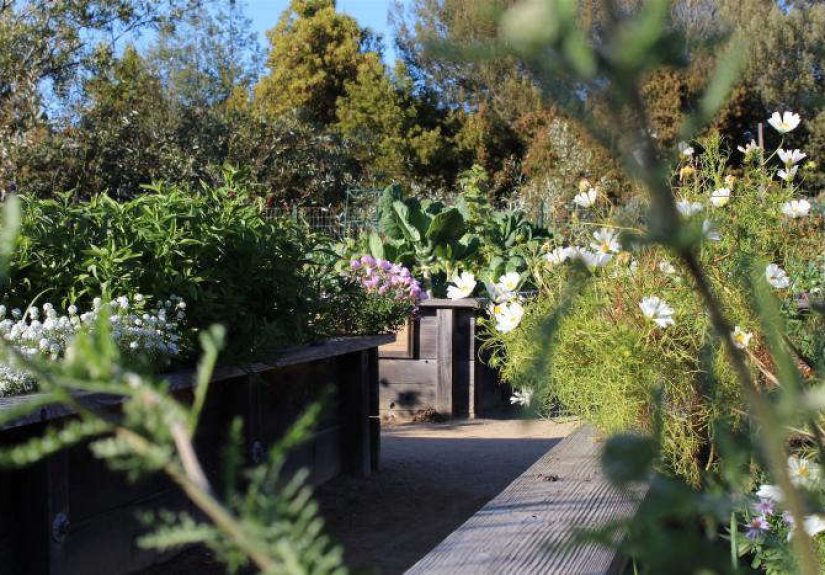
What makes it different isn’t just what’s growingit’s how it’s built. The garden is known for truly raised beds
(think waist height) and paths that are wide and level enough to navigate comfortably. In other words: less stooping,
less struggling, more gardening.
It’s also deeply social. This isn’t a “one-person hobby zone.” It’s a “grab a hat, grab a tool, and join the crew” kind of place.
Volunteers harvest ripe vegetables and share them with residents, turning food into a weekly community ritual rather than a solo victory lap.
What “No Obstacles” Looks Like on the Ground
- Raised beds that meet gardeners where they areeasy reach, less bending, more comfort.
- Wide, stable paths that don’t punish wheels, walkers, or tired ankles.
- Shared tools and simple supports (like seating and shade) that make participation easier.
- A year-round mindsetin a mild Northern California climate, something can be in motion most of the year.
Barrier-Free Design, Explained Like a Friendly Garden Tour
1) Paths That Don’t Fight Back
A path can be gorgeous and still be a menace. For a no-obstacles garden, aim for routes that are wide enough for comfortable passing,
firm underfoot (or underwheel), and predictable. “Predictable” is underrated. A surprise dip is great in a thriller novel, not in a walkway.
Practical rule of thumb: make main paths at least the width of a comfortable wheelchair route, and add turning and passing spots
where people can maneuver without doing a 37-point turn. If you’re using gravel, choose compacted, well-graded material that stays stable.
2) Raised Beds That Are Actually Accessible
Raised beds are the MVP of accessible gardening because they reduce kneeling, bending, and overreaching. The key is matching height
and width to real human reach. A tall bed isn’t automatically bettertoo high can be awkward; too wide can become “the unreachable middle.”
A smart approach is a mix: some beds at wheelchair-friendly height, some higher for people who prefer minimal bending,
and bed widths that let gardeners work without stepping into the soil. In community settings, this variety quietly says,
“You belong here,” to more people.
3) Turning Space, Rest Spots, and Shade (a.k.a. The Comfort Trifecta)
People don’t quit gardens because they hate tomatoes. They quit because it hurts. Comfort features keep the garden usable:
a bench at the right height, a shaded patio corner, and small “pause points” where someone can rest without feeling like
they’re blocking traffic.
In the best gardens, edges do double dutyledges become seats, raised-bed rims become supports, and shaded areas become natural gathering places.
Accessibility is often just good hospitality in sturdy shoes.
4) Tools That Make Gardening Easier (Not Harder)
Ergonomic tools matter more than most people think. Curved or vertical grips can reduce wrist strain. Long-handled tools
extend reach for gardeners who work seated or who can’t comfortably bend. And lightweight hoses with easy-grip nozzles
can turn watering from “upper-body workout” into “relaxing ritual.”
The pro move: test tools the way you’d test a mattressif it feels weird in the store, it will feel worse after 20 minutes of weeding.
What Grows Well in Mill Valley (and Why This Garden Can Shine Year-Round)
Mill Valley’s coastal influence and generally mild temperatures make it friendly territory for cool-season greens and a long growing window.
That doesn’t mean every plant will thrive everywherefog, shade, and microclimates are realbut it does mean an accessible garden can stay
engaging across seasons.
Edibles That Play Nice with a Community Garden
- Leafy greens: lettuce, kale, chardfast, forgiving, and satisfying.
- Herbs: rosemary, thyme, parsley, mint (plant mint in a container unless you enjoy chaos).
- Summer stars: cherry tomatoes, squash, beanscrowd-pleasers with big payoff.
- Edible flowers: nasturtiums add color and a peppery bite, and they’re hard not to love.
Sensory Plants for Joy You Can Smell
A no-obstacles garden is also a sensory garden by nature: fragrance, texture, and color are accessible no matter how long someone stays.
Consider lavender, salvias, lemon balm, and plants with interesting leaves (soft, fuzzy, or architectural) placed where hands can easily reach.
Water-Wise, Bay-Friendly Gardening
In California, “smart watering” is part ethics, part practicality, and part avoiding that sad moment when your water bill arrives
looking like a phone number. The good news: water-wise choices often make gardens easier to maintainperfect for an accessible space.
High-Impact Moves That Don’t Require a PhD in Irrigation
- Use drip irrigation to put water where plants need it (roots), not where it doesn’t (sidewalks).
- Mulch like you mean it to reduce evaporation and keep soil temperature stable.
- Group plants by water needs so you’re not overwatering half the bed to keep one thirsty plant happy.
- Capture rainwater when possible, especially during wet months.
Consider a Rain Garden for Runoff Control
If your site has runoff issues, a rain garden (a shallow, planted depression designed to absorb stormwater) can help slow water down
and reduce polluted runoff flowing into local waterways. It’s functional, attractive, and basically the opposite of watching water
race down a driveway like it’s late for a meeting.
The Hidden Superpower: Community
A truly accessible garden doesn’t just remove physical barriersit removes social ones. When a space is easy to enter, easy to move through,
and easy to work in, people show up more often. They talk. They trade tips. They laugh at the zucchini situation getting out of hand again.
Research on gardening among older adults links gardening with physical activity and multiple health-related benefits, and it’s also repeatedly
associated with social and emotional well-being. In a community setting like The Redwoods, design choices (wide paths, reachable beds, places
to sit) help convert “a garden” into “a weekly gathering that happens to produce tomatoes.”
Steal This Blueprint: A 10-Step No-Obstacles Garden Plan
- Start with a route: map a main path from entrance to beds to seatingmake it wide and stable.
- Design turning points: add space at corners so mobility devices can pivot comfortably.
- Choose raised beds with intention: pick heights and widths that match reach, not aesthetics alone.
- Leave generous spacing between beds: enough for wheelchairs, carts, and two humans who both love compost.
- Add seating early: benches and ledges aren’t “extras”they’re usability.
- Plan shade: umbrellas, pergolas, or fruit trees where appropriate (shade is a participation strategy).
- Make tools accessible: store tools where they’re easy to reach; consider ergonomic options.
- Simplify watering: drip lines and timers reduce labor and help consistency.
- Pick resilient plants: favor varieties that handle local conditions and aren’t heartbreak-prone.
- Build a culture, not just a layout: shared harvest days, “adopt-a-bed,” or weekly garden hours create momentum.
FAQs
- Does “accessible” mean expensive?
-
Not automatically. Some of the biggest wins are layout decisions: wider paths, better spacing, and a few raised beds built at thoughtful dimensions.
You can phase improvements over time instead of doing everything at once. - Is gravel always a bad idea for wheelchairs?
-
Loose gravel can be frustrating. But compacted, well-graded crushed stone can create a firm, stable surface when installed correctly.
The goal is stability, not a path that behaves like a ball pit. - What if my yard is sloped?
-
Think in terraces and short runs. Level areas for beds and seating, plus safe transitions between them, usually beat one long,
exhausting incline. - How do I keep the garden social?
-
Design for lingering: shade, seating, and a central gathering spot. Then schedule something small and predictablelike a weekly
“harvest table” where people can share what’s ready.
Conclusion: The Point Isn’t PerfectionIt’s Participation
A garden with no obstacles isn’t about turning nature into a spreadsheet. It’s about removing the frictions that keep people out:
the narrow path, the unreachable bed, the lack of a place to rest, the “maybe next year” feeling.
In Mill Valley, the Robert S. Scott Organic Garden shows what happens when accessibility is treated as a design starting point:
more hands in the soil, more neighbors in conversation, and more harvest sharedoften faster than you can say, “Who planted all this squash?”
500-Word Experience: A Morning in a No-Obstacles Garden
Imagine arriving on a cool Mill Valley morning when the air still has that soft coastal hush. You don’t have to “find” the entrance
because it feels obviousno awkward step, no narrow squeeze, no secret side gate that makes you feel like you’re sneaking in. The main
path is wide enough for two people to stroll side by side, and the surface feels steady underfoot. If you’re using wheels, it rolls
without that grinding resistance that turns a peaceful outing into an arm workout.
Before you even look at the beds, you notice the human stuff: a neat row of hats, gloves that look well-loved, and tools stored where
someone can actually reach them without doing a squat-and-pray maneuver. A couple of gardeners are already chattingnot performing a
grand “gardening demonstration,” just doing the ordinary work that becomes extraordinary when everyone can participate. Someone points
out a patch of greens that’s ready to cut, and the conversation instantly shifts into the classic garden dialect: part practical, part
delighted, and part “How did this grow so fast?”
The beds themselves feel like an invitation. They’re high enough that you can work without folding yourself into a pretzel, and the
edges are wide and sturdyperfect for resting a forearm, setting down a trowel, or pausing to admire a tomato that’s turning from green
to red with the confidence of a tiny sunset. Between beds, there’s space to move and space to stop. That sounds small, but it changes
everything. It means you can take your time without feeling like you’re in the way. It means conversations can happen without people
doing the anxious shuffle of “let me get out of your path.”
As you move through the garden, the sensory hits arrive in layers. There’s the peppery scent of nasturtiums, the bright snap of herbs
when a leaf is brushed, and the earthy smell of soil that’s been tended, not just stored. Somewhere nearby, water is delivered quietly
and efficientlyno dramatic sprinkler spray, no puddles forming where they shouldn’t. The garden feels organized without being rigid,
like it’s designed for real humans who sometimes forget where they put the pruners.
And then there’s the best part: the moment the garden stops being “a place to grow plants” and becomes “a place to grow community.”
Someone offers you a handful of cherry tomatoes to taste. Another person tells you about last week’s harvest and how quickly it disappeared.
A bench in the shade becomes a natural meeting point, and suddenly the garden is less about productivity and more about presence.
You leave with a lighter mood, a little dirt on your hands, and the unmistakable feeling that accessibility didn’t limit this garden
it expanded it.