Table of Contents >> Show >> Hide
- Who Is Kelley Carter, and Why Is Her Story Getting Attention?
- From Marketing Roles to the Corner Office
- Why Coastal Growth Changes the Agency Conversation
- What Kelley Carter’s Leadership Style Says About Modern Agencies
- Why Her Story Lands at the Right Time for the Independent Channel
- Lessons Agencies Can Take From Kelley Carter’s Example
- 500 More Words on the Real-World Experiences Behind This Topic
- Conclusion
- SEO Tags
Some career stories arrive with fireworks. Others arrive with spreadsheets, strategy decks, carrier calls, and the kind of calm leadership that keeps an agency growing while the market around it does somersaults. Kelley Carter’s story belongs firmly in the second category, which is exactly why it is so interesting.
Featured by IA Magazine, Carter represents a modern version of insurance leadership: operationally sharp, growth-minded, deeply aware of market pressure, and still convinced that technology should support human relationships instead of replacing them. In a world where coastal insurance can feel like trying to build a sandcastle during high tide, that balance matters.
Her rise at Choice Insurance Agency in Virginia Beach is not just a profile in career success. It is also a case study in what independent agencies need to do right now to grow: market smarter, communicate better, integrate people and processes well, and stay relentlessly useful to clients living in complicated risk environments.
Who Is Kelley Carter, and Why Is Her Story Getting Attention?
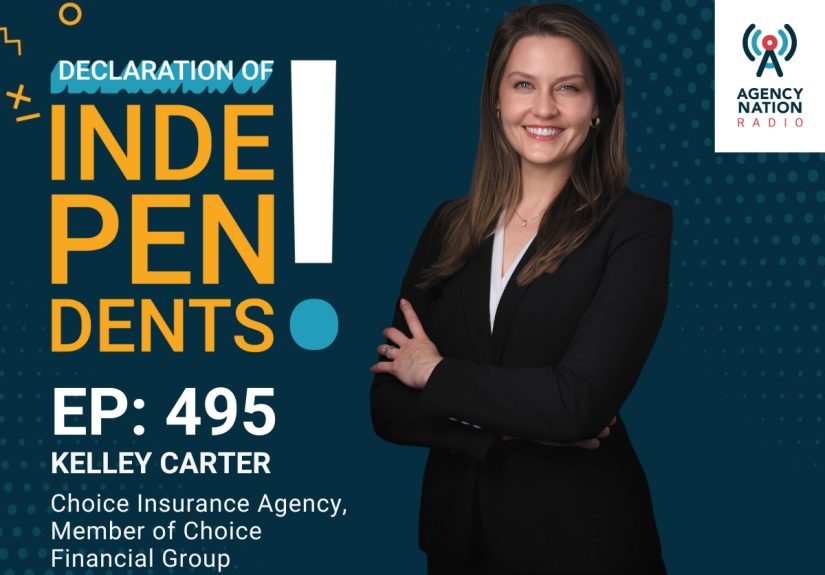
Kelley Carter serves as president of Choice Insurance Agency, a member of Choice Financial Group, in Virginia Beach, Virginia. Her profile stands out because it blends three themes that matter across the independent agency world: career development, agency growth, and coastal insurance strategy.
That combination is not accidental. Carter did not begin as the stereotypical hard-charging producer marching into the industry with a briefcase and a motivational quote. Her early years included agency marketing roles, which gave her a practical understanding of how brand positioning, customer communication, and prospect targeting can directly influence growth. That background matters more than ever now that agencies are expected to be part advisor, part educator, part translator, and part therapist during renewal season.
According to the broader coverage around her promotion, Carter joined Choice in 2013 and became a major force in the organization’s expansion. She later moved into leadership roles that included personal lines and operations, helping oversee integration work tied to more than a dozen agency mergers across the Eastern Seaboard. That is not small-change experience. That is the kind of resume line that quietly says, “Yes, I know where the bodies are buried in the operations manual.”
From Marketing Roles to the Corner Office
Why a Marketing Background Gave Her an Edge
Insurance is often sold as a product, but the best agencies know it is really a trust business. Carter’s background in agency marketing appears to have shaped how she thinks about growth: not as loud promotion, but as deliberate positioning. A good marketing mindset helps agencies answer four questions clearly:
- Who are we best equipped to serve?
- What problems do we solve better than competitors?
- How do we explain complex coverage in plain English?
- Why should clients stay when the market gets ugly?
That final question is a big one. In today’s hard market, retention is not a passive event. It is work. A client sees a higher premium, fewer options, or tighter underwriting and naturally assumes the agency has become a villain in loafers. In reality, the agency often becomes the one institution trying to guide the customer through a changing market without panic, confusion, or a dramatic interpretive dance.
Operations, M&A, and the Real Mechanics of Growth
Carter has also discussed how mergers and acquisitions are a major part of Choice’s culture and growth plan, alongside a strong focus on organic growth. That is an important distinction. Some agencies grow by buying. Others grow by selling better. The strongest agencies usually try to do both without breaking their service model.
Integration work is where leadership earns its paycheck. It is one thing to acquire agencies. It is another to align workflows, preserve client trust, coordinate carrier relationships, modernize systems, and keep teams from feeling like they were tossed into a corporate blender. Carter’s experience overseeing multiple integrations suggests that her value is not just visionary. It is operational. She appears to understand that growth without structure is just chaos wearing a necktie.
Why Coastal Growth Changes the Agency Conversation
Virginia Beach is not just a pleasant backdrop with ocean breezes and postcard energy. It is a major coastal market, and coastal markets come with unique insurance challenges. That reality gives Carter’s leadership story more depth.
Coastal Growth Is Real, but So Is Coastal Risk
Across the United States, coastal counties continue to matter enormously to the national economy and population footprint. Millions of Americans live in coastal areas, and those counties drive massive economic activity. Growth near the water is not slowing simply because insurers wish it would. People still want coastal homes, coastal businesses, and coastal lifestyles. Apparently, ocean views continue to beat underwriting anxiety in the home-buying process.
But growth near the coast means agencies must work inside a tension-filled triangle: demand, exposure, and affordability. That is especially true in places where hurricane risk, flood exposure, reinsurance costs, and carrier appetite all collide. In short, coastal growth may look exciting in a chamber-of-commerce brochure, but it becomes a lot more complicated when a carrier reduces capacity two months before peak storm season.
Virginia Beach Is a Good Example of the Challenge
Virginia Beach sits in a market where floodplain management and storm-related risk are not abstract policy topics. They shape real buying decisions. Local guidance makes clear that homeowners may need separate protection for wind and flood exposures, and that flood coverage is a distinct conversation rather than an automatic feature of a standard homeowners mindset. This is where independent agents become valuable: they explain what the client thought was covered, what is actually covered, and what still needs to be addressed before Mother Nature sends an invoice.
That context helps explain why Carter emphasizes communication and empathy. In a coastal market, clients do not just need quotes. They need education. They need help understanding why options changed, why one carrier pulled back, why deductibles moved, why flood matters, and why “but I’ve never had a claim” is emotionally valid and actuarially irrelevant.
What Kelley Carter’s Leadership Style Says About Modern Agencies
Technology Matters, but So Does the Human Touch
One of the most revealing parts of Carter’s profile is her focus on balancing technology with human connection. That sounds obvious until you look at how many businesses claim to be “high tech and high touch” while managing to be neither.
In the independent agency system, digital tools are essential. Marketing automation, comparative rating, workflow platforms, AI-assisted communication, analytics, and digital lead tools can all help agencies move faster and make better decisions. Trusted Choice has emphasized that data-driven and AI-supported strategies are increasingly central to agency marketing. Travelers Institute discussions have likewise framed the independent channel as one that can become more scalable and more effective through technology, not less personal.
Carter’s framing is smarter than tech hype. Her approach suggests that technology should improve speed, consistency, and insight, while people handle context, reassurance, and judgment. That matters in insurance because clients rarely call when they are thrilled. They call when they are confused, upset, exposed, or suddenly very interested in policy language they ignored for three years.
Carrier Relationships Still Matter More Than Buzzwords
In coastal insurance, carrier relationships are not just nice-to-have networking trophies. They are strategic assets. Carter has spoken about valuing carrier partners who remained supportive during the toughest coastal-market periods. That idea deserves attention.
When markets harden, agencies need more than appointments on paper. They need partners willing to collaborate on remarketing, renewal reviews, client communication, and practical solutions for difficult books of business. An agency that can preserve strong carrier ties during stressful cycles is better positioned to protect both retention and reputation.
This is one reason Carter’s rise feels relevant beyond her own company. She represents a leadership model centered on execution, not theater. Less “vision board.” More “how do we keep serving clients when market options shrink?” That is the kind of question agencies actually have to answer on Tuesday morning.
Why Her Story Lands at the Right Time for the Independent Channel
The timing of Carter’s profile matters. Independent agencies remain a dominant force in the U.S. property-casualty market, and industry research shows the channel continues to hold a strong share of business even amid hard-market pressure. That resilience is not magic. It reflects the continued demand for advice, market access, and personalized service.
Still, the environment is not easy. Treasury’s homeowners insurance analysis found that higher-risk ZIP codes paid substantially more in premiums and also saw higher nonrenewal rates. In other words, climate pressure is not just an abstract headline. It shows up in household budgets, underwriting decisions, and agency workloads. For agencies serving coastal communities, that means every renewal can become part coverage review, part risk lesson, and part customer-retention campaign.
Carter’s career arc shows why agencies increasingly need leaders who understand both growth and pressure. They need people who can modernize infrastructure, support producers, navigate mergers, deepen carrier partnerships, and still communicate clearly to customers who just want to know whether their home, business, or future remains protectable at a sane price.
Lessons Agencies Can Take From Kelley Carter’s Example
1. Growth Needs Structure
Fast-growing agencies often celebrate expansion without talking enough about integration. Carter’s operational background is a reminder that scale only works when systems, people, and service standards are aligned.
2. Communication Is a Revenue Skill
In difficult markets, communication is not soft. It is commercial. Agencies that explain market conditions well are more likely to retain clients, preserve trust, and create referral momentum.
3. Coastal Expertise Is Specialized Expertise
Coastal insurance is not just ordinary homeowners coverage with prettier scenery. It requires a strong grasp of flood, wind, carrier appetite, mitigation, and resilience conversations.
4. Technology Should Strengthen Relationships
The future does not belong to agencies that automate everything into a soulless blur. It belongs to agencies that use technology to free up time for better advice and more meaningful client interaction.
5. Leadership Is Often Quiet Competence
Carter’s story is compelling precisely because it is grounded in steady, practical leadership. She appears to have built influence through consistency, operational fluency, and growth-minded execution rather than flashy personal branding. In insurance, that tends to age very well.
500 More Words on the Real-World Experiences Behind This Topic
What makes a story like Kelley Carter’s especially useful is how familiar it feels to people inside the independent agency world. Many agencies have lived some version of this experience over the past few years, even if they are not based in Virginia Beach and even if they do not have oceanfront ZIP codes keeping everyone awake at night.
First, there is the experience of explaining change to clients who do not want change. An agency can do everything right, stay proactive, review renewals carefully, communicate early, and still spend much of the week delivering unwelcome news. Premiums rise. Underwriting tightens. Carrier options narrow. Flood requirements come into sharper focus. A coverage discussion that used to take ten minutes becomes a forty-minute conversation with a homeowner who suddenly feels personally betrayed by meteorology.
That is where the “human touch” Carter talks about becomes more than a nice phrase. It becomes a survival skill. Clients do not always remember the exact deductible you recommended, but they remember whether you helped them understand what was happening. They remember whether you treated them like a policy number or like a person with a mortgage, a family, a business, and a stress level already hovering near the ceiling fan.
Second, there is the experience of growth through change. Agencies expanding through mergers or acquisitions often look polished from the outside. Inside, however, growth can feel like renovating a house while still living in it. Teams are learning new systems, reconciling different service habits, adjusting to new reporting lines, and trying not to let the client experience wobble while the organization evolves behind the scenes. Leaders who can guide that process calmly are worth their weight in signed BOR letters.
Carter’s background in integration and operations reflects a reality many agencies know well: growth is not just sales. It is alignment. It is standardizing workflows without flattening culture. It is keeping service levels high while changing processes. It is building trust with acquired teams who may be asking, silently or not so silently, “So what exactly happens to us now?”
Third, there is the experience of working in a specialized geography. Coastal markets intensify everything. Storm season changes the mood. Carrier relationships become more precious. Clients are more exposed to news cycles about hurricanes, sea level rise, and insurer pullbacks. A simple request for a quote can open into a much larger conversation about mitigation, resilience, flood zones, roof age, claims history, and what “covered” really means.
That reality also creates opportunity. Agencies that truly understand their local market can become indispensable. They can help clients think beyond price and toward preparedness. They can explain why stronger roofs, better documentation, flood protection, and resilience upgrades matter. They can position themselves not just as sellers of insurance, but as guides through a changing risk environment.
And finally, there is the experience of career growth itself. Many strong leaders in insurance do not begin with a grand plan to become presidents of agencies. They begin by doing useful work well. They learn marketing. They learn service. They learn operations. They learn carrier relationships. They learn how to translate complexity into confidence. Then one day the title catches up to the value they have already been creating.
That is one of the most encouraging things about Kelley Carter’s story. It suggests that in this industry, careers can still be built through competence, adaptability, empathy, and sustained results. Not bad for a field that outsiders still occasionally describe with the enthusiasm usually reserved for beige paint. In truth, insurance is where economics, human behavior, weather, real estate, regulation, and entrepreneurship all show up at the same meeting. Carter’s story proves that when someone can lead at the intersection of all those forces, the result is not just career growth. It is agency growth with staying power.
Conclusion
The story behind Agency, Career and Coastal Growth With Kelley Carter works because it is bigger than one promotion. It captures what the independent agency system increasingly needs from its leaders: marketing intelligence, operational discipline, technology fluency, empathy in difficult markets, and the ability to grow without losing the plot.
In Carter’s case, the plot is clear. Build a strong team. Communicate well. Respect the complexity of coastal insurance. Use technology wisely. Stay close to carrier partners. Keep growth intentional. And never forget that every policy conversation eventually lands in a real household or business with real financial stakes.
That may not be the loudest leadership formula on the internet, but it is the kind that lasts. And in an industry facing climate pressure, market volatility, and rising client expectations, lasting is an awfully good strategy.